 Preview
 Send
Send Share
Share
 Details

 Download
 Similars
 X-Ray
X-Ray Diaporama
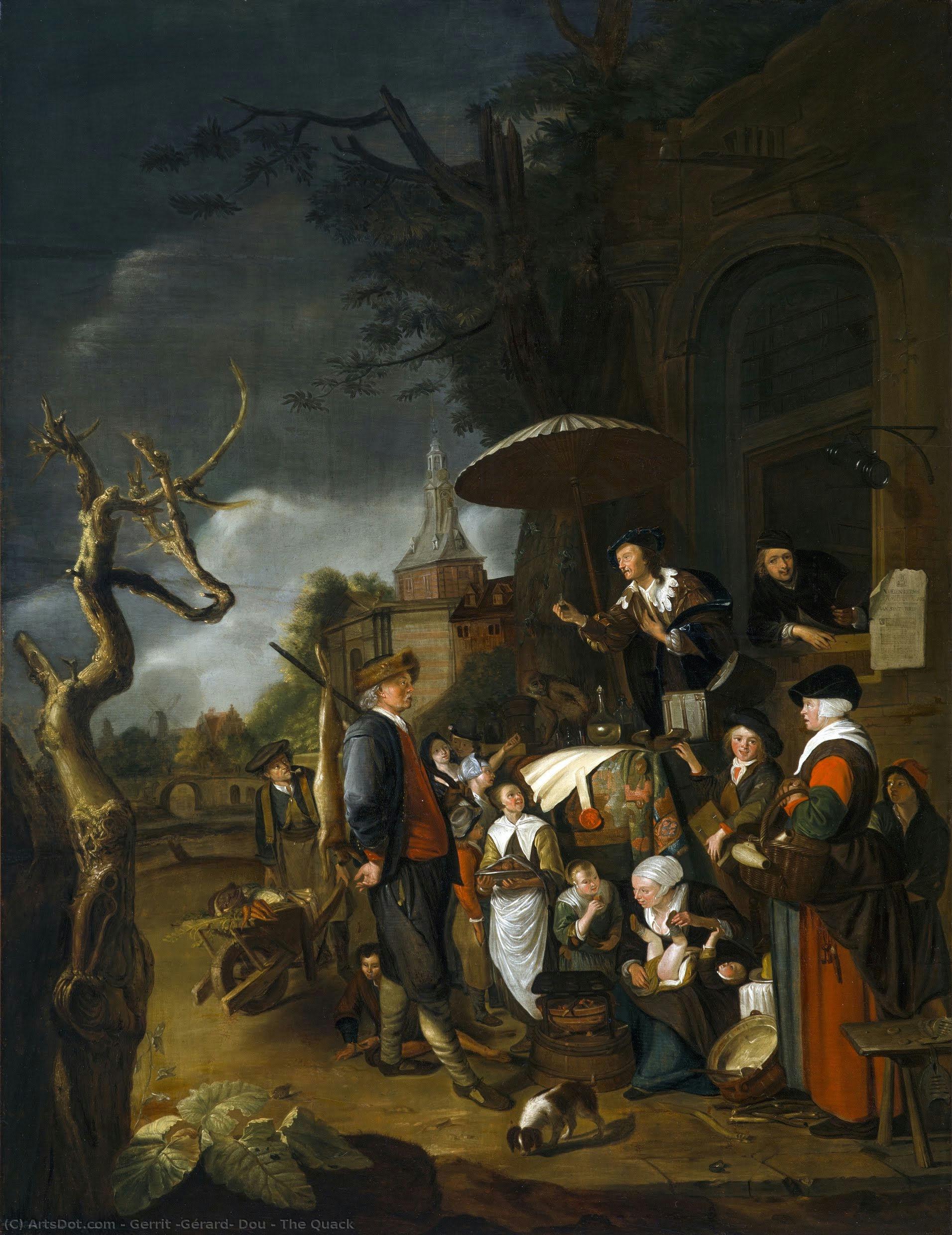
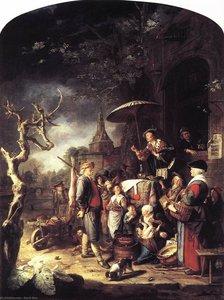
The Quack
 Oil On Canvas
- WallArt
- Baroque Dutch Painting
 1650
1650- Late Medieval
 112.0 x 87.0 cm
 Grohmann Museum
 Read More
Hand Made Oil Reproduction
Hand-painted oil on canvas in your size and frame, made to order by our artists. ( Buy Print Buy Image)




P118B $10

P118H $10

P118W $10

P438Z $10

P508JH $12

P508YH $12

P805H $10

P805Z $10

P919BZ $10

P919G $10

P919XJ $10

P959ZH $10

P968JZ $12

W106C $8

W218G $10

W218JH $8

W218Y $10

W307PJ $10

W316G $10

W316PJ $8

W316Y $10

W398PJ $8

W4111J $10

W500HY $15

W500JH $15

W692G $12

W849H $8

W940BG $15

W953PJ $8




Pick from our preset sizes that match the artwork's original proportions.

You may enter your own dimensions to fit a specific frame or space. If your selected size does not match the original image's proportions, we will either crop the artwork or extend the painting with additional hand-painted elements. A digital mockup will be sent for your approval before production begins.
Please note that the on-screen preview does not reflect the actual cropping or extension. Only the mockup will accurately show the final composition.
While custom sizes are available, we recommend selecting a dimension from the predefined list to preserve the original proportions.
After order, ArtsDot.com team will email client for instructions and provide a mockup preview
Worldwide Delivery () in 3/4 weeks instead of standard 5 weeks. (16 August). No compromise on quality.

Free Worldwide Express Shipping

High-Quality Linen Canvas

Full Shipping Insurance

Customs Tax Refund Guarantee

True Color Matching Guarantee

60-Day Return Policy (Defects Only)

100% Money-Back Guarantee

Bulk Discount Offer
 Glass option is only available in size under 110 CM

The Quack
Reproduction Medium
Reproduction Size
-


Total Price
$ 263
Artwork Description
A Window into 17th-Century Deception: Gerrit Dou’s “The Quack”
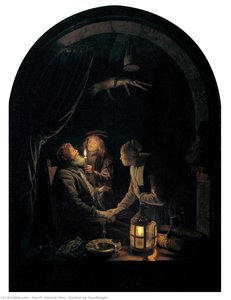
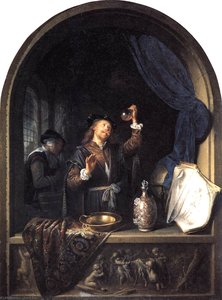
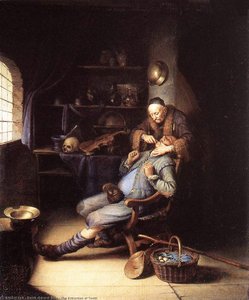
Gerrit Dou's "The Quack," painted circa 1650, is more than just a depiction of a street scene; it’s a meticulously rendered observation of human vulnerability and the burgeoning skepticism that accompanied scientific advancements. Executed in stark black and white, a hallmark of Dou’s style, the painting captures a moment of intense engagement – or perhaps, carefully manufactured anticipation – surrounding an itinerant healer offering his wares in a bustling urban environment. The scene unfolds with a dramatic tension, born from the interplay of light and shadow that defines Dou's masterful use of chiaroscuro, a technique perfected during this period to create a sense of depth and realism.
- Subject Matter: The painting’s subject is rooted in the realities of 17th-century life – the prevalence of itinerant healers, often charlatans exploiting public anxieties about health and well-being.
- Historical Context: Dou's work reflects a period marked by increasing scientific inquiry and a growing distrust of traditional remedies. The rise of “charlatans” like those depicted here challenged established medical practices and highlighted the potential for deception within the burgeoning field of medicine.
Technical Brilliance and Trompe-l’œil Mastery
Dou's technical skill is immediately apparent in the incredibly detailed rendering of textures – from the worn fabric of the onlookers’ clothing to the polished sheen of the healer’s umbrella. His use of *trompe l'oeil*, a technique designed to create an illusion of three-dimensionality, is particularly striking. The open umbrella, seemingly suspended in mid-air, and the carefully positioned birds contribute significantly to this effect, drawing the viewer into the scene and blurring the lines between reality and representation. This meticulous attention to detail was characteristic of Dou’s work and cemented his reputation as one of the leading artists of the Dutch Golden Age.
- Chiaroscuro: The dramatic use of light and shadow, a signature element of Dou's style, intensifies the emotional impact of the scene.
- Trompe-l’œil: The illusionistic elements create a sense of depth and realism, enhancing the viewer’s engagement with the artwork.
Symbolism and Social Commentary
"The Quack" transcends a simple portrait of a street vendor; it offers a subtle commentary on societal attitudes towards knowledge, authority, and the pursuit of health. The assembled crowd, their expressions ranging from curiosity to cautious hope, embodies the public’s willingness to believe in miracle cures – a vulnerability that unscrupulous individuals readily exploited. The inclusion of the birds adds another layer of symbolism, perhaps representing fleeting illusions or deceptive promises. The reference to Theriac, an ancient and increasingly adulterated medicine, underscores the theme of false hope and the manipulation of belief. This painting serves as a poignant reminder of humanity’s enduring susceptibility to deception, a theme that resonates even today.
Dimensions & Acquisition
This hand-painted reproduction faithfully captures the essence of Dou's original masterpiece. Measuring 112 x 87 cm, it is ideally suited for a variety of interior design settings – from formal studies to contemporary living spaces. Its timeless subject matter and exquisite execution make "The Quack" a compelling addition to any art collection, offering both aesthetic pleasure and intellectual stimulation.
Related Artworks
Artist Biography
biography of a prolific painter
gerrit (gérard) dou, a prominent figure in the dutch golden age painting, was born on april 7, 1613, in leiden, netherlands. he passed away on february 9, 1675, leaving behind an impressive legacy of highly polished paintings that continue to captivate art enthusiasts worldwide.artistic style and specialization
gerrit dou's artistic style is characterized by its minute and elaborate treatment, often featuring genre scenes and trompe l'oeil 'niche' paintings. his mastery of chiaroscuro is particularly notable, as seen in his candlelit night-scenes. this unique blend of skills has led to his association with the leiden fijnschilders.notable works and collections
* the astronomer by candlelight, a painting that showcases dou's expertise in capturing the subtleties of light, can be found on ArtsDot.com. * the leiden collection, new york, a renowned art museum, features works by gerrit dou, among other notable artists. for more information on the collection, visit the leiden collection, new york: a comprehensive guide on ArtsDot.com.influence and legacy
gerrit dou's influence can be seen in his pupils, including frans van mieris the elder and gabriël metsu. his work has also been featured in various museums, such as the museum huis ten bosch in the hague, netherlands, which houses an impressive collection of european art from the 16th to the 18th century.- key facts: * born: april 7, 1613, leiden, netherlands * died: february 9, 1675 * notable works: the astronomer by candlelight, genre scenes, and candlelit night-scenes * influenced: frans van mieris the elder, gabriël metsu, and others
- recommended reading: * gerrit (gérard) dou on ArtsDot.com * dutch golden age painting on wikipedia
conclusion
gerrit (gérard) dou's remarkable contributions to the dutch golden age have left an indelible mark on the art world. his captivating paintings, characterized by their intricate details and masterful use of light, continue to inspire artists and art enthusiasts alike. to explore more of his works and those of other notable artists, visit ArtsDot.com.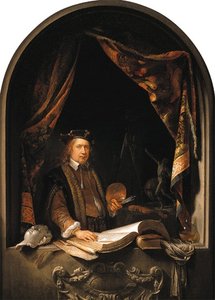
Gerrit Dou
1613 - 1675 , Netherlands
Quick Facts
- Artistic Movement Or Style: Fijnschilder (Fine Painting)
- Artists Or Movements Influenced By This Artist:
- Frans van Mieris the Elder
- Gabriel Metsu
- Artists Who Influenced This Artist: ['Rembrandt van Rijn']
- Date Of Birth: April 7, 1613
- Date Of Death: February 9, 1675
- Full Name: Gerrit Dou
- Nationality: Dutch
- Notable Artworks:
- The Astronomer by Candlelight
- Portrait of an Old Woman
- Genre scenes
- Candlelit night-scenes
- Place Of Birth: Leiden, Netherlands
Related Articles
Gerrit Dou: Intimacy & Light in the Dutch Golden Age
Explore the exquisite world of Gerrit Dou, a master of Dutch Golden Age painting. Discover his intimate genre scenes, signature use of light, and lasting legacy. Learn about collecting Dou's works & their value.

Golden Age Reflections: Dutch Baroque Painting & Cultural Innovation
Explore the Dutch Golden Age of painting! Discover key artists like Vermeer & ter Borch, their innovative techniques, and the rich cultural context behind these Baroque masterpieces. Learn about collecting & appreciating this iconic art period.

Dutch Masters: 10 Golden Age Paintings That Still Inspire |
Journey into the Dutch Golden Age! Explore 10 iconic paintings by Rembrandt, Vermeer & Hals. Discover the stories behind these Baroque masterpieces and find museum-quality art reproductions to elevate your home decor on .
Illuminating Realism: Exploring the Dutch Golden Age of Painting (1600-1700)
Explore the Dutch Golden Age of painting (1600-1700) with ArtsDot. Discover Rembrandt, Vermeer & other masters. Learn about techniques, history & find museum-quality reproductions.

Illuminating Innovation: Exploring the Dutch Golden Age of Painting
Explore the Dutch Golden Age of painting with ArtsDot. Discover Rembrandt, Vermeer & other Masters. Learn about key characteristics, iconic artworks, and lasting influence. Expert insights for collectors & enthusiasts.