 Send
Send Share
Share
 Details

 Download
 Similars
 Diaporama
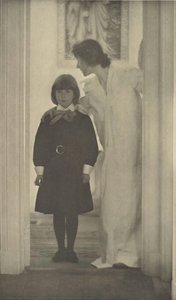
Blessed Art Thou among Women


 Read More
Hand Made Oil Reproduction
Hand-painted oil on canvas in your size and frame, made to order by our artists. ( Buy Print Buy Image)




































Pick from our preset sizes that match the artwork's original proportions.

You may enter your own dimensions to fit a specific frame or space. If your selected size does not match the original image's proportions, we will either crop the artwork or extend the painting with additional hand-painted elements. A digital mockup will be sent for your approval before production begins.
Please note that the on-screen preview does not reflect the actual cropping or extension. Only the mockup will accurately show the final composition.
While custom sizes are available, we recommend selecting a dimension from the predefined list to preserve the original proportions.
After order, ArtsDot.com team will email client for instructions and provide a mockup preview
Worldwide Delivery () in 3/4 weeks instead of standard 5 weeks. (23 August). No compromise on quality.

Free Worldwide Express Shipping

High-Quality Linen Canvas

Full Shipping Insurance

Customs Tax Refund Guarantee

True Color Matching Guarantee

60-Day Return Policy (Defects Only)

100% Money-Back Guarantee

Bulk Discount Offer
 Glass option is only available in size under 110 CM

Blessed Art Thou among Women
Reproduction Medium
Reproduction Size
-


Total Price
$ 263
Artwork Description
A Tender Embrace: Gertrude Käsebier’s “Blessed Art Thou Among Women”
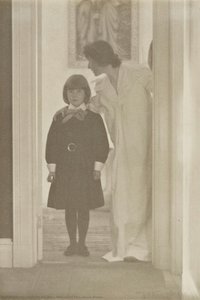
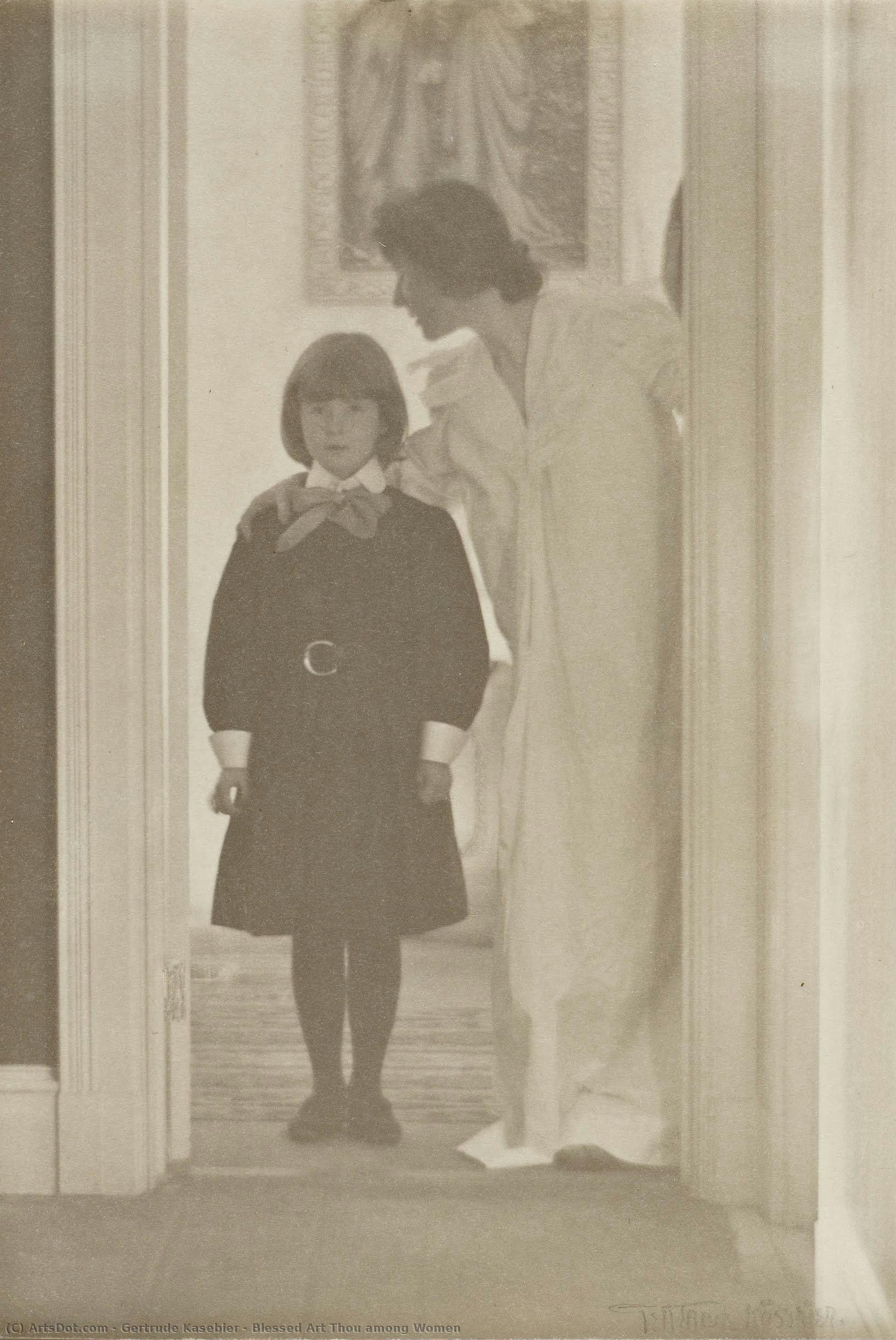
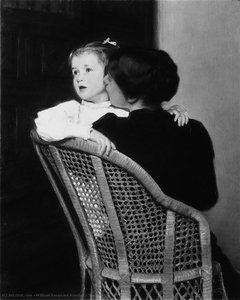
Gertrude Käsebier's 1899 photograph, "Blessed Art Thou Among Women," isn’t merely a portrait; it’s a carefully constructed tableau of domesticity, maternal love, and the quiet dignity of everyday life. Captured in soft, evocative tones, the image depicts Agnes Rand Lee, a celebrated poet, and her elder daughter, Harriet “Peggy,” nestled within the comforting embrace of their Boston home. Käsebier, a pioneering figure in American photography who challenged conventional notions of women’s roles through her artistic practice, imbued this scene with a profound sense of intimacy and timelessness – a testament to her unique vision and technical skill.
The photograph's genesis lies within Käsebier’s own complex personal life. While outwardly presenting as a successful portraitist, she endured a difficult marriage marked by emotional distance and financial strain. This internal struggle subtly informs the image; the gentle yet restrained pose of Agnes Lee speaks to a quiet strength, while Peggy’s youthful vulnerability hints at the hopes and anxieties inherent in childhood. The composition itself—the mother's arm encircling her daughter, the muted light filtering through the window—creates an atmosphere of serene contemplation, inviting the viewer into this private moment.
Pictorialism and the Language of Light
“Blessed Art Thou Among Women” is a quintessential example of Pictorialist photography, a movement that sought to elevate photography beyond mere documentation and imbue it with artistic expression. Rejecting the sharp realism favored by some contemporaries, Pictorialists like Käsebier employed soft focus, shallow depth of field, and carefully manipulated lighting to create images reminiscent of paintings—particularly those of the Pre-Raphaelite Brotherhood and the Hudson River School. The photograph’s hazy quality, achieved through a platinum printing process, lends it an ethereal beauty, blurring the lines between reality and dream.
Käsebier's mastery of light is particularly noteworthy. The diffused illumination, reminiscent of Rembrandt’s chiaroscuro technique, sculpts the figures with subtle gradations of tone, emphasizing their forms and creating a sense of depth and atmosphere. The light source, seemingly originating from an unseen window, casts gentle shadows that add to the image's emotional resonance, suggesting both warmth and introspection. The careful control over exposure and contrast demonstrates Käsebier’s meticulous attention to detail—a hallmark of her artistic approach.
Symbolism and the Ideals of Motherhood
Beyond its technical merits, “Blessed Art Thou Among Women” is rich in symbolic meaning. The title itself, taken from a biblical passage referencing Mary's humility and grace, immediately establishes the image’s thematic focus: the sacredness of motherhood. The presence of the painting above the doorway—a depiction of the Annunciation—further reinforces this connection to religious iconography, elevating the scene to a realm of spiritual significance.
However, Käsebier's interpretation of motherhood transcends simple piety. The photograph subtly critiques the idealized Victorian notion of domesticity, presenting a more nuanced and realistic portrayal of family life. The quiet intimacy between mother and daughter suggests a deep bond forged through shared experience and mutual affection—a connection that is both comforting and profoundly moving. It’s a tender reminder of the enduring power of maternal love in shaping human lives.
A Legacy of Vision
“Blessed Art Thou Among Women” remains a powerful testament to Gertrude Käsebier's artistic vision and her pioneering role in American photography. It is not just a beautiful image; it’s a poignant meditation on family, faith, and the complexities of human relationships. Reproductions of this iconic photograph continue to resonate with viewers today, offering a glimpse into a bygone era while simultaneously capturing timeless truths about the enduring bonds that connect us all.
Related Artworks
Artist Biography
A Pioneer of Pictorialism: The Life and Legacy of Gertrude Käsebier
Gertrude Käsebier, born Gertrude Stanton in 1852 in Fort Des Moines (now Des Moines), Iowa, emerged as a pivotal figure in the early history of American photography. Her journey to artistic recognition was remarkable, particularly for a woman navigating the societal constraints of the late 19th and early 20th centuries. The echoes of her father’s entrepreneurial spirit – he transported a sawmill to Colorado during the Gold Rush and served as the first mayor of Golden – resonated in Käsebier's own determination to forge a new path, though initially not within the realm of art. A difficult childhood marked by her father’s sudden death and her family’s subsequent relocation to Brooklyn, New York, instilled in her a resilience that would later define her artistic pursuits. Her mother bravely supported the family by establishing a boarding house, demonstrating a strength that undoubtedly influenced Käsebier's own independent spirit. Marriage at 22 brought three children, but also a profound unhappiness that subtly permeated some of her most poignant work. It wasn’t until relatively late in life, after her children were grown, that Käsebier turned seriously to art, enrolling at the Pratt Institute of Art and Design in Brooklyn at the age of 37.From Painting to Photography: Finding Her Vision
Initially intending to study painting, Käsebier’s artistic trajectory shifted decisively when she encountered photography. The influence of Arthur Wesley Dow, a prominent artist and educator at Pratt, proved transformative. Dow championed the theories of Friedrich Fröbel, emphasizing the interconnectedness of art, education, and motherhood – themes that would become central to Käsebier's photographic vision. She absorbed these ideas alongside principles from the Arts and Crafts movement, fostering an aesthetic sensibility focused on craftsmanship and emotional resonance. Further studies in Europe followed, including delving into the chemical processes of photography in Germany and painting with Frank DuMond in France. Upon her return to Brooklyn in 1895, she honed her skills as an assistant to portrait photographer Samuel H. Lifshey, gaining invaluable experience in studio management and printing techniques. This practical training laid the foundation for her own successful studio, established shortly thereafter. Her early exhibitions, notably the display of 150 photographs at the Boston Camera Club in 1897, signaled the arrival of a significant new voice in the photographic world.Motherhood, Native Americans, and Pictorialist Ideals
Käsebier’s artistic output was remarkably diverse, yet consistently characterized by a deep sensitivity to human emotion and social issues. She is perhaps best known for her evocative depictions of motherhood, images that transcended mere portraiture to explore the profound bond between mother and child. Works like “Blessed Art Thou Among Women” (1899) exemplify this focus, capturing moments of tenderness and spiritual grace. Simultaneously, she embarked on a groundbreaking project documenting the lives and culture of Native Americans, inspired by her childhood memories of Colorado and facilitated by her connection to William "Buffalo Bill" Cody. Photographs such as “Chief Iron Tail” and “Chief Flying Hawk,” now preserved at the Smithsonian Institution, offer dignified portraits that challenged prevailing stereotypes and celebrated Indigenous identity. These images were not simply ethnographic records; they were artistic statements imbued with respect and empathy. Käsebier was a key figure in the Pictorialist movement, which sought to elevate photography to the status of fine art by emphasizing artistic vision and manipulation of the photographic process. She embraced techniques like soft focus, textured printing, and hand-painting to create images that resembled paintings or etchings, prioritizing aesthetic expression over strict realism.A Lasting Influence
Käsebier’s influence extended beyond her own artistic achievements. As a founding member of the Photo-Secession, alongside Alfred Stieglitz and others, she played a crucial role in shaping the direction of American photography. Her work was prominently featured in *Camera Work*, Stieglitz's influential journal, further solidifying her reputation within the art world. She also actively promoted photography as a viable career path for women, challenging gender norms and paving the way for future generations of female photographers. Though she eventually distanced herself from Stieglitz’s increasingly modernist aesthetic preferences, preferring to remain committed to Pictorialism, her legacy endures. Her photographs continue to resonate with viewers today, offering glimpses into a bygone era while simultaneously exploring universal themes of love, loss, and cultural identity. Yoked and Muzzled – Marriage (c1915), a deeply personal work reflecting the constraints of her own marriage, stands as a testament to her courage in addressing difficult subjects through her art. Gertrude Käsebier’s pioneering spirit and artistic vision cemented her place as one of America's most important early photographers, leaving an indelible mark on the history of visual culture.Exploring Her Work Today
The enduring appeal of Gertrude Käsebier’s photographs lies in their ability to connect with viewers on a deeply emotional level. Her masterful use of light and shadow, combined with her sensitive portrayal of human subjects, creates images that are both visually stunning and profoundly moving. Discover more of Käsebier's works at https://ArtsDot.com/@/gertrudekasebier and explore the Metropolitan Museum of Art’s extensive collection featuring her iconic photographs. Her work serves as a powerful reminder of the transformative power of art and the importance of preserving cultural heritage. Influential photographers like Gertrude Käsebier continue to inspire new generations. Order your favorite photograph as a museum-quality oil reproduction today at ArtsDot.com.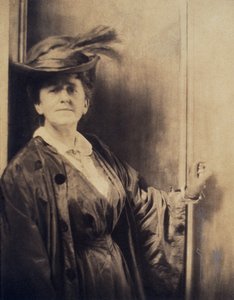
Gertrude Käsebier
1852 - 1934 , United States of America
Quick Facts
- Artistic Movement Or Style: Pictorialism
- Artists Or Movements Influenced By This Artist: ['New generations of photographers']
- Artists Who Influenced This Artist:
- Arthur Wesley Dow
- Frank Dumond
- Date Of Birth: May 18, 1852
- Date Of Death: 1934
- Full Name: Gertrude Käsebier
- Nationality: American
- Notable Artworks:
- Willie-Spotted-Horse
- Blessed Art Thou...
- Yoked and Muzzled
- Untitled
- Place Of Birth: Des Moines, USA
Related Articles

Monochrome Visions: Exploring the Aesthetic & Historical Significance of Black & White Photography
Explore the rich history & artistic power of black and white photography. From early techniques to iconic masters like Ansel Adams, discover why monochrome continues to captivate art lovers today. Expert insights for collectors.

Pictorialism: A Search for Artistic Photography's Soul – Aesthetics, Techniques & Legacy
Explore the captivating world of Pictorialism – a pivotal movement that transformed photography into fine art. Discover key artists like Stieglitz & Käsebier, techniques, and collecting tips from experts.
Beyond the Lens: Photography's Enduring Influence on Modern & Contemporary Art
Explore photography's pivotal role in shaping modern & contemporary art. Discover key movements, influential artists like Stieglitz, and expert collecting advice from ArtsDot.

Dark Masterpieces: 10 Iconic Paintings Dominated by Black Tones |
Explore 10 iconic paintings dominated by black tones, from Rembrandt’s chiaroscuro to Goya's dark expressions. Discover the stories behind these masterpieces & find museum-quality art reproductions for your home at .

Witnessing History Through Lens & Light: Documentary Photography's Enduring Legacy
Explore the powerful history of documentary photography – from its origins to contemporary masters like Gordon Parks & W. Eugene Smith. Discover how this art form shapes our understanding of society and witness pivotal moments in time.
![Portrait (Miss N.) [Evelyn Nesbit], from Camera Work No. 1](/media/artworks/images-thumb/67/b1/67b19cf9dd83b446f0b6d011e42e423b.jpg)