 Preview
 Send
Send Share
Share
 Details

 Download
 Similars
 X-Ray
X-Ray Diaporama
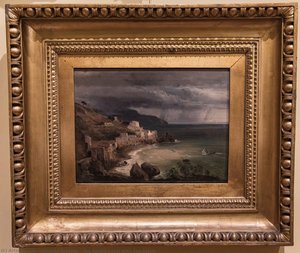
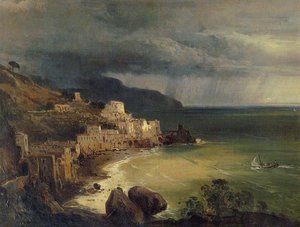
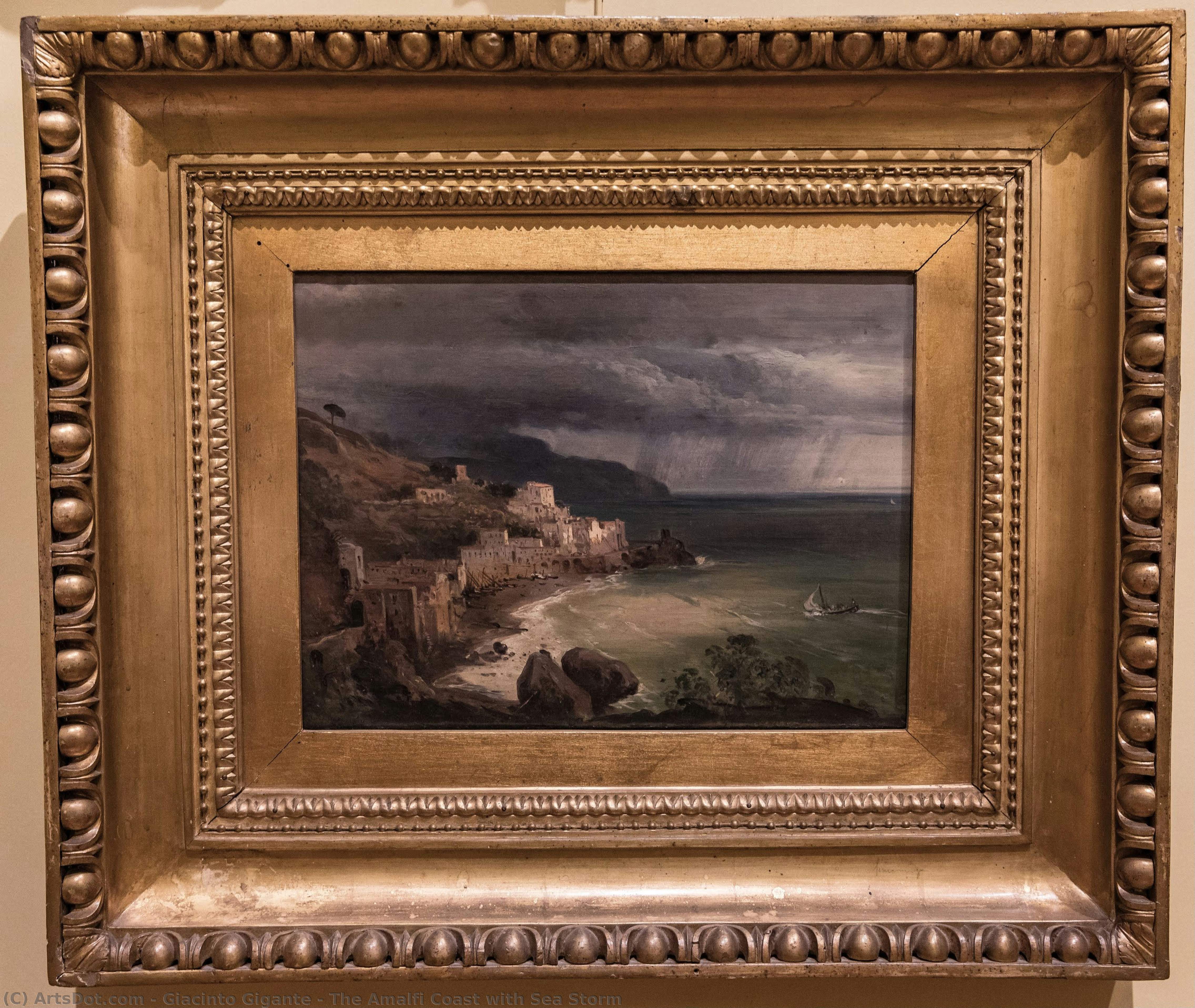
The Amalfi Coast with Sea Storm


 Read More
Giclée / Art Print
Museum-quality giclée or canvas print with fast production and flexible finish options. ( Buy Hand Made Painting Buy Image)




P118B $10

P118H $10

P118W $10

P438Z $10

P508JH $12

P508YH $12

P805H $10

P805Z $10

P919BZ $10

P919G $10

P919XJ $10

P959ZH $10

P968JZ $12

W106C $8

W218G $10

W218JH $8

W218Y $10

W307PJ $10

W316G $10

W316PJ $8

W316Y $10

W398PJ $8

W4111J $10

W500HY $15

W500JH $15

W692G $12

W849H $8

W940BG $15

W953PJ $8




Pick from our preset sizes that match the artwork's original proportions.

You may enter your own dimensions to fit a specific frame or space. If your selected size does not match the original image's proportions, we will either crop the artwork or extend the image with a mirrored or solid-fill edge. A digital mockup will be sent for your approval before production begins.
Please note that the on-screen preview does not reflect the actual cropping or extension. Only the mockup will accurately show the final composition.
While custom sizes are available, we recommend selecting a dimension from the predefined list to preserve the original proportions.
Worldwide Delivery () in 2 weeks instead of standard 4/5 weeks. (26 August)

Free Worldwide Express Shipping

High-Quality Linen Canvas

Full Shipping Insurance

Customs Tax Refund Guarantee

True Color Matching Guarantee

60-Day Return Policy (Defects Only)

100% Money-Back Guarantee

Bulk Discount Offer
 Glass option is only available in size under 110 CM

The Amalfi Coast with Sea Storm
Giclée / Art Print
Reproduction Size
-


Total Price
$ 63
Collectible Description
The Amalfi Coast with Sea Storm - A Vision of Turbulent Beauty
Giacinto Gigante’s “The Amalfi Coast with Sea Storm” isn't merely a landscape painting; it’s a distillation of the Neapolitan School’s obsession with capturing atmospheric grandeur. Executed around 1837, this canvas embodies the Romantic spirit—a fascination for untamed nature and an attempt to convey profound emotion through visual representation. Gigante, deeply influenced by Jacob Wilhelm Hüber's pioneering use of the “camera lucida,” meticulously rendered the dramatic coastline of Amalfi with a masterful understanding of light and shadow, creating an image that pulsates with energy.- Subject Matter: The painting depicts the rugged Amalfi Coast during a violent storm. Dominating the composition is a towering cliff face overlooking the turbulent sea, punctuated by a solitary castle perched precariously atop its crest.
- Style: Gigante’s style aligns perfectly with the Posillipo School's ethos—characterized by luminous color palettes and dynamic brushstrokes that prioritize capturing fleeting moments of atmospheric intensity. The artist skillfully blends realism with expressive abstraction, prioritizing emotional impact over precise topographical accuracy.
- Technique: Employing watercolor and gouache on canvas, Gigante achieved remarkable textural detail. Thick impasto strokes convey the force of the wind and waves, while thinner washes delicately depict the misty haze clinging to the cliffs—a testament to his technical prowess and dedication to observation.
Historical Context: Romanticism’s Embrace of Sublime Landscapes
The painting emerged during a period marked by significant intellectual and artistic upheaval – the Romantic era. Artists like Gigante sought inspiration in the grandeur of nature, rejecting Neoclassical ideals that favored idealized forms and restrained emotion. The sublime—defined as awe-inspiring beauty mixed with terror—became a central preoccupation, reflecting anxieties about humanity’s place within the vastness of the universe. Gigante's depiction of Amalfi aligns seamlessly with this broader artistic movement, capturing the Romantic fascination for confronting powerful forces beyond human control.Symbolism and Emotional Resonance
Beyond its technical brilliance, “The Amalfi Coast with Sea Storm” resonates deeply on an emotional level. The castle perched atop the cliff symbolizes resilience—a defiant assertion of permanence against the relentless onslaught of nature’s fury. The turbulent sea embodies chaos and unpredictability, mirroring the anxieties of a society grappling with rapid social change. Gigante's masterful use of color—particularly shades of grey and ochre—creates an atmosphere of brooding drama, inviting viewers to contemplate themes of vulnerability and fortitude.A Legacy of Luminosity: Gigante’s Influence on Landscape Painting
Giacinto Gigante stands as a cornerstone of Neapolitan landscape painting, securing his place in art history through his unwavering commitment to capturing the sublime beauty of the Amalfi Coast. His innovative technique—the camera lucida method—became a standard practice for artists striving to reproduce natural vistas with unprecedented accuracy and emotional depth. “The Amalfi Coast with Sea Storm” continues to inspire admiration for its evocative composition, masterful execution, and enduring portrayal of nature’s formidable power—a timeless masterpiece that encapsulates the spirit of Romanticism itself.Related Artworks


Artist Biography
A Neapolitan Master of Light and Atmosphere: The Life and Art of Giacinto Gigante
Giacinto Gigante, born in Naples in 1806, stands as a pivotal figure in Italian landscape painting, particularly renowned for his contributions to the Posillipo School. Coming from a family steeped in artistic tradition—his father, Gaetano Gigante, was also a painter—young Giacinto’s path toward becoming a master of vista and atmospheric perspective began early. His initial training around 1818 under his father's guidance laid a foundational understanding of form and composition. However, it was through subsequent apprenticeships with Jacob Wilhelm Hüber in 1820 and Antonie Sminck Pitloo from 1821 that Gigante’s artistic vision truly began to blossom. Hüber introduced him to the technical precision of drawing and the innovative use of the “camera lucida” for capturing panoramic views, while Pitloo instilled a deep appreciation for watercolor techniques and the importance of direct observation from nature—a cornerstone of the Posillipo School's ethos. These early influences shaped Gigante’s approach, blending meticulous technique with an emerging romantic sensibility.The Posillipo School and Artistic Development
Gigante quickly became a central member of the Neapolitan Posillipo School, a group of artists dedicated to portraying the breathtaking landscapes surrounding Naples—the Bay of Naples, Mount Vesuvius, the picturesque coastline, and the ancient ruins scattered throughout the region. The school’s emphasis on *plein air* painting – working outdoors directly from observation – was revolutionary for its time in Italy. Gigante's style wasn’t merely imitative; he synthesized the lessons learned from his mentors with a uniquely Italian sensibility. He absorbed influences from earlier masters like Jacob Philipp Hackert, known for his dramatic depictions of Italian landscapes, and further refined his skills under Pitloo’s tutelage. His training at the Royal Institute of Fine Arts reinforced technical drawing as a crucial element in accurately representing the natural world. Yet, Gigante didn't simply replicate what he saw; he infused his paintings with a romantic interpretation, capturing not just the physical appearance of a scene but also its mood, atmosphere, and emotional resonance. He skillfully conveyed movement, light, and shadow, creating vistas that were both realistic and deeply evocative.Recognition, Commissions, and Notable Works
Gigante’s talent was recognized early in his career. In 1823, he won a drawing competition at the Naples Royal Institute of Fine Arts, signaling his rising prominence within the artistic community. His debut exhibition at the first Esposizione di Belle Arti in 1826 further solidified his reputation. His ability to capture the beauty and grandeur of the Neapolitan landscape soon attracted the attention of discerning patrons, including royalty. He received commissions from Empress of Russia and the daughters of Francis II, demonstrating the international appeal of his work. Among his notable creations are captivating pieces like “Goatherd with goats in a rocky inlet,” showcasing impressionistic brushstrokes and rugged coastal beauty, and the dramatic oil painting "Temporale nel golfo di Amalfi" (Storm over the Gulf of Amalfi) from 1837, which exemplifies his Romantic interpretation of nature’s power. His watercolor “View of the Bell Tower of the Duomo of Sant’Erasmo at Gaeta” (1854) reveals a serene and delicate approach to landscape representation. A significant commission came in 1861 when he was tasked with creating a tempera painting for the Chapel of San Gennaro at Capodimonte, though this work is somewhat atypical of his usual style.Legacy and Historical Significance
Giacinto Gigante’s legacy extends far beyond his individual paintings. He is rightfully considered a master of Italian landscape painting, whose influence resonated through generations of artists. He directly impacted the development of painters such as Giulio Cesare Amidano and Andrea Landini, who built upon the foundations he laid within the Posillipo School. His work was instrumental in defining the aesthetic principles of the school—emphasizing *plein air* painting, a romantic interpretation of landscapes, and a commitment to capturing the unique character of the Neapolitan region. Furthermore, Gigante’s skillful use of watercolor techniques and his adaptation of tools like the camera lucida contributed to advancements in landscape representation, paving the way for future artistic innovations. He didn't merely paint what he saw; he translated the spirit of a place onto canvas, leaving behind a body of work that continues to inspire awe and admiration today. His paintings offer not just visual representations of Italy’s beauty but also a glimpse into the soul of a nation and the heart of an artist deeply connected to his homeland.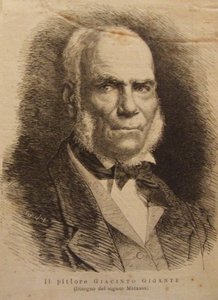
Giacinto Gigante
1806 - 1876 , Italy
Quick Facts
- Artistic Movement Or Style: Posillipo School
- Artists Or Movements Influenced By This Artist:
- Amidano
- Landini
- Artists Who Influenced This Artist:
- Huber
- Pitloo
- Hackert
- Date Of Birth: 1806
- Date Of Death: 1876
- Full Name: Giacinto Gigante
- Nationality: Italian
- Notable Artworks:
- Goatherd in a Rocky Inlet
- Temporale nel golfo di Amalfi
- View of the Bell Tower
- Place Of Birth: Naples, Italy
Related Articles
The Allure of the Horizon: A Comprehensive Exploration of Seascape Art Through History & Emotion
Explore the captivating world of seascape art! Discover its history, key artists & movements – from Dutch Masters to Impressionism. Expert insights for collectors and enthusiasts at ArtsDot.
Romanticism's Greatest Artworks: 10 Masterpieces for Your Home |
Journey through Romanticism's soul with 10 iconic artworks by Delacroix, Goya & Turner. Explore emotional landscapes and historical drama. Find museum-quality art reproductions to elevate your home at – Discover all masterpieces online!
Evoking the Horizon: A Historical & Artistic Exploration of Coastal Scenes in Painting
Explore the rich history of coastal scenes in painting! Discover Impressionist masterpieces, American realism & contemporary visions. Learn about renowned artists and find your perfect seascape at ArtsDot.
The Evocative Brushstroke: Exploring Emotion, Individuality & the Sublime in Romanticism's Artistic Landscape
Explore the passionate world of Romanticism! Discover masterpieces by Friedrich & Goya, delve into the sublime, and understand the movement's lasting impact on art history. Expert analysis & insights at ArtsDot.
The Sublime and the Sensual: Exploring Emotion & Individuality in Romanticism's Artistic Revolution
Explore the passionate world of Romanticism! Discover masterpieces by Friedrich & Goya, delve into the sublime, and understand the movement's lasting impact on art history. Expert analysis & insights.