

 Preview
 Send
Send Share
Share
 Details

 Download
 Similars
 X-Ray
X-Ray Diaporama
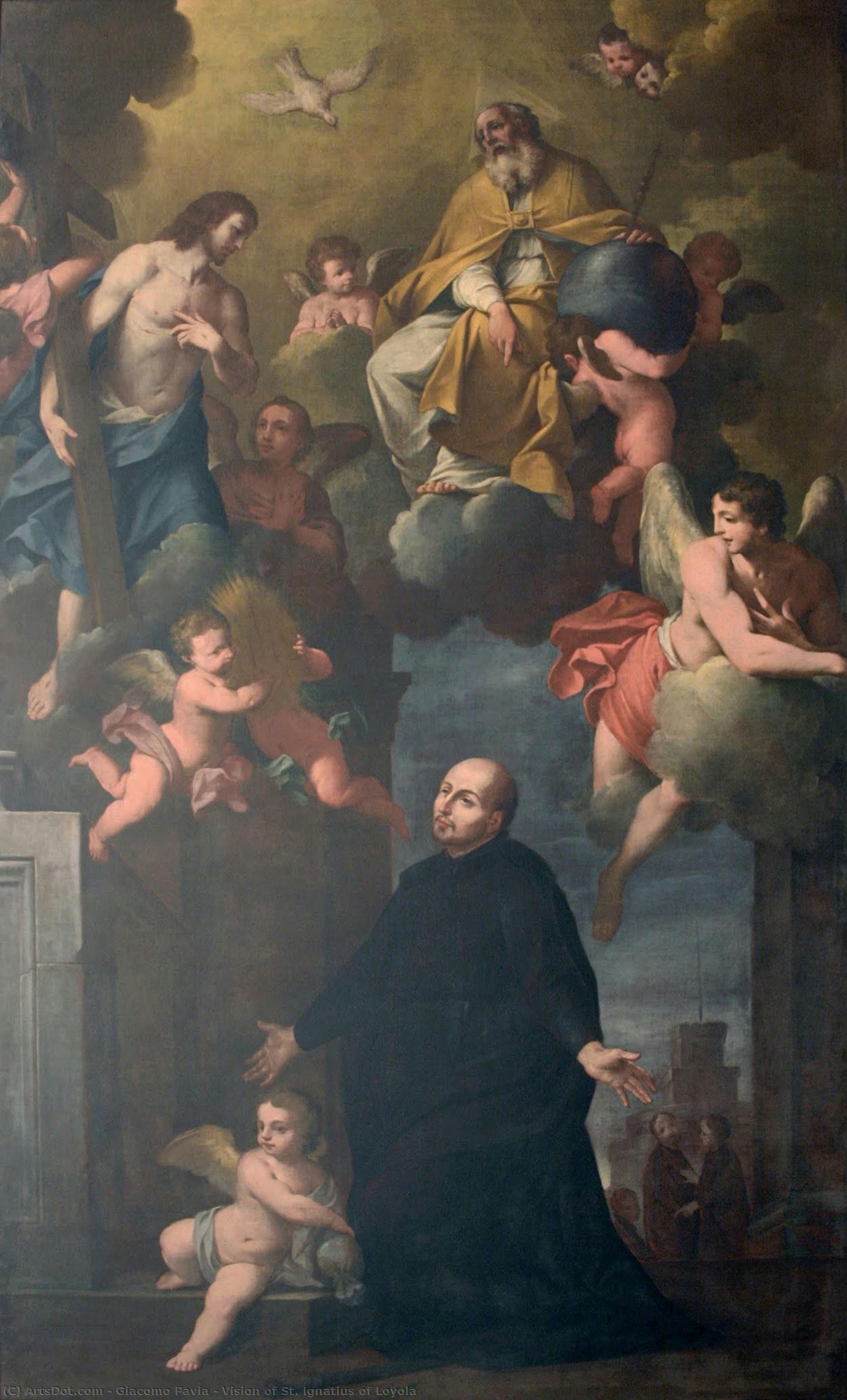
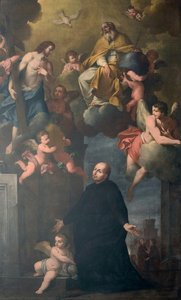
Vision of St. Ignatius of Loyola


 Read More
Giclée / Art Print
Museum-quality giclée or canvas print with fast production and flexible finish options. ( Buy Hand Made Painting Buy Image)




































Pick from our preset sizes that match the artwork's original proportions.

You may enter your own dimensions to fit a specific frame or space. If your selected size does not match the original image's proportions, we will either crop the artwork or extend the image with a mirrored or solid-fill edge. A digital mockup will be sent for your approval before production begins.
Please note that the on-screen preview does not reflect the actual cropping or extension. Only the mockup will accurately show the final composition.
While custom sizes are available, we recommend selecting a dimension from the predefined list to preserve the original proportions.
Worldwide Delivery () in 2 weeks instead of standard 4/5 weeks. (1 September)

Free Worldwide Express Shipping

High-Quality Linen Canvas

Full Shipping Insurance

Customs Tax Refund Guarantee

True Color Matching Guarantee

60-Day Return Policy (Defects Only)

100% Money-Back Guarantee

Bulk Discount Offer
 Glass option is only available in size under 110 CM

Vision of St. Ignatius of Loyola
Giclée / Art Print
Reproduction Size
-


Total Price
$ 63
Related Artworks






Artist Biography
The Dramatic Vision of Giacomo Pavia
In the heart of Bologna, a city destined to become a crucible of Baroque splendor, Giacomo Pavia was born in 1655. His life and work would eventually serve as a profound testament to the theatricality and emotional intensity that defined the Italian Baroque era. To study Pavia is to witness a master navigating the delicate balance between divine light and earthly shadow, a painter who did not merely depict scenes but orchestrated spiritual experiences upon the canvas. His career, spanning nearly forty years, was characterized by an unwavering commitment to the narrative power of art, seeking always to capture the fleeting moment of transcendence through meticulously crafted compositions.
The foundations of Pavia’s artistic language were laid under the guidance of two titans of the Bolognese school: Giuseppe Maria Crespi and Giovanni Gioseffo dal Sole. From Crespi, Pavia inherited a fascination with quadratura—the art of illusionistic painting that dissolves the boundaries between architecture and sky—and a sense of dramatic movement. From Dal Sole, he drew the mastery of chiaroscuro, learning how to manipulate deep shadows to pull figures into sharp, luminous relief. This dual lineage allowed Pavia to develop a style that was both structurally grand and intimately psychological, blending the monumental scale of the Baroque with a tender, humanistic touch.
A Tapestry of Sacred and Profane Themes
While Pavia is perhaps most celebrated for his religious devotion, his artistic range extended far beyond the confines of the altar. His oeuvre acts as a window into the diverse preoccupations of the late 17th and early 18th centuries, moving seamlessly from the celestial to the terrestrial. In his sacred works, such as the monumental Vision of St. Ignatius of Loyola, one finds a breathtaking display of swirling drapery and luminous color harmonies that evoke the very essence of divine revelation. These pieces were designed to overwhelm the senses, pulling the viewer into a state of religious fervor through the sheer kinetic energy of his brushwork.
Yet, Pavia was equally adept at capturing the quietude of the natural world and the vibrant pulse of social life. His landscapes often leaned toward the melancholic, utilizing atmospheric perspective to render ruins that whispered of timeless grandeur and the inevitable passage of time. Conversely, his genre scenes, such as the lively Merry Company, reveal a different facet of his genius. In these works, he captures the fleeting joys of aristocratic life, focusing on the subtle nuances of human interaction and the play of light across festive gatherings. This versatility allowed him to command respect across various patronage circles, from the clergy to the nobility.
Legacy within the Bolognese Tradition
The historical significance of Giacomo Pavia lies not only in his individual masterpieces but in his role as a vital link in the continuity of the Bolognese Baroque tradition. He did not merely replicate the styles of his masters; he refined them, infusing the established techniques of dynamism and theatricality with a unique psychological depth that resonated with the changing sensibilities of his era. His ability to convey profound emotion through bold color palettes and masterful light manipulation ensured that his work remained impactful long after his death in 1740.
Today, Pavia’s legacy is preserved through the enduring power of his imagery. He remains a significant figure for art historians studying the evolution of Italian painting, representing a period where art served as the ultimate bridge between the physical world and the spiritual imagination. His contributions helped sustain the vibrant artistic ecosystem of Bologna, leaving behind a body of work that continues to captivate with its dramatic intensity and its profound, enduring beauty.
giacomo pavia
1655 - 1740 , Italy
Quick Facts
- Artistic Movement Or Style: Baroque
- Artists Or Movements Influenced By This Artist: ['']
- Artists Who Influenced This Artist:
- giuseppe maria crespi
- giovanni gioseffo dal sole
- Date Of Birth: 1655 Bologna Italy
- Date Of Death: 1740 Spain
- Full Name: giacomo pavia
- Nationality: Italian
- Notable Artworks:
- Vision of St. Ignatius of Loyola
- Landscape with Ruins
- Merry Company
- Place Of Birth: Bologna Italy

