

 Preview
 Send
Send Share
Share
 Details

 Download
 Similars
 X-Ray
X-Ray Diaporama
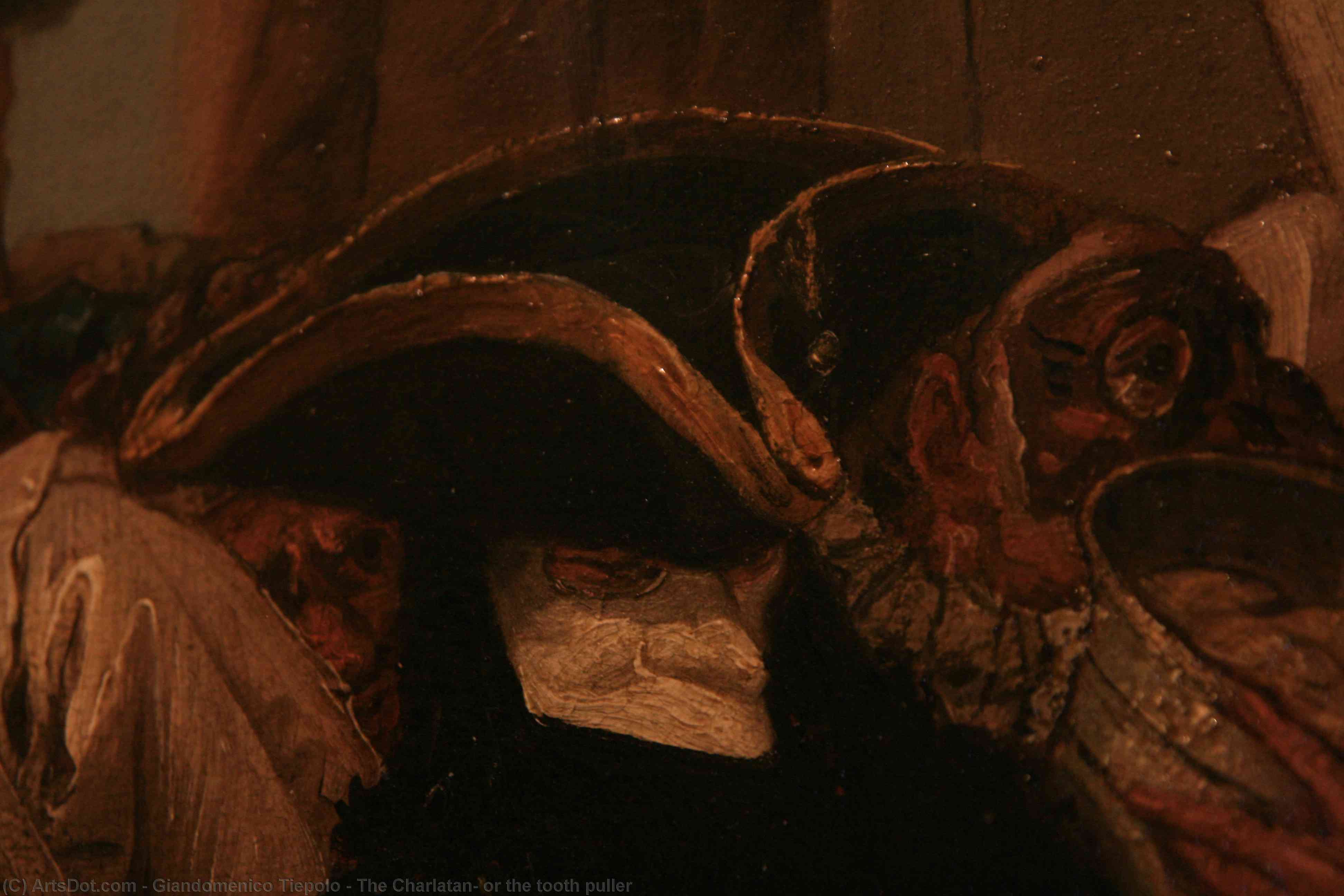
The Charlatan, or the tooth puller


 Read More
Purchase a high-resolution, enhanced digital image, far superior to the online preview.
Each file is meticulously prepared by our in-house specialists using advanced tools and expert manual retouching. We ensure every image has exceptional clarity, precise color accuracy, and fine detail.
The final file is delivered via email within 72 hours, optimized for immediate use in professional, editorial, and print environments. This is the same quality trusted by top-tier design studios, publishers, and galleries.
Digital Image
Download a high-resolution file for personal display, printing, and creative projects. ( Buy Print Buy Hand Made Painting)
Included in Every Digital Image Order
Expert Digital Delivery, Guaranteed
When you choose ArtsDot.com, you're not just getting an image - you're receiving a professionally enhanced digital artwork, crafted with precision and backed by a satisfaction guarantee. Here's everything that comes with your order, automatically:

Fast Email Delivery
Your high-resolution digital image file will be emailed to you within 72 hours of ordering - ready for immediate use.

AI-Enhanced Digital File
Your artwork is professionally optimized using advanced AI tools and manual editing, ensuring maximum detail, clarity, and color accuracy.

Free Lifetime Re-Delivery
Accidentally deleted or lost your file? No worries - we'll resend it to you anytime, free of charge.

No Import Fees - Ever
Enjoy your artwork instantly with zero customs, duties, or delivery fees - digital downloads are always tax-free.

Color Accuracy Guarantee
We ensure your digital image reflects the original colors as closely as possible using professional tools and color management.

60-Day Satisfaction Guarantee
If you're not satisfied with your digital image, we'll revise it or refund 100% within 60 days - no questions asked.

100% Money-Back Guarantee
Not satisfied? Get a full refund within 60 days of receiving your digital file - no questions asked.

Bulk Order Discounts
Buy 3 images, save 10% - Buy 5, save 15% - Buy 10+, save 20%. Great for creative projects, galleries, and agencies.
Collectible Description
A Venetian Tale of Illusion and Observation
Giandomenico Tiepolo’s “The Charlatan, or the Tooth Puller,” painted in 1754-55, is more than just a depiction of a theatrical scene; it's a masterful encapsulation of Rococo aesthetics and Venetian artistic tradition. Executed on canvas with oil paint—a technique favored by his father Giovanni Battista Tiepolo—the artwork captures a moment of bustling urban life against a backdrop of stylized birds and figures, offering viewers a glimpse into the complexities of human interaction and social satire.The Scene Unfolds: Composition and Narrative
The painting centers around Punchinello, a Venetian puppet character renowned for his mischievous antics and expressive gestures—a staple of popular theater during Tiepolo’s era. He attempts to reach a charlatan, presumably attempting to persuade him to extract a tooth. The crowd surrounding them adds dynamism to the composition, creating an immersive experience that reflects the vibrant atmosphere of Venice at the time. Notably, two birds hover above the scene, positioned strategically behind Punchinello's head—a recurring motif in Tiepolo’s work and indicative of his fascination with mythological symbolism. These birds aren’t merely decorative elements; they represent aspiration and divine intervention, subtly elevating the narrative beyond a simple portrayal of commerce and deception.Rococo Style: Decorative Grandeur Meets Subtle Detail
Tiepolo's style exemplifies the hallmarks of Rococo art—characterized by delicate ornamentation, pastel hues, and an emphasis on movement and illusion. The artist skillfully employs chiaroscuro—the dramatic interplay of light and shadow—to sculpt the figures and create depth within the canvas. Observe how Tiepolo renders textures with remarkable precision, capturing the folds of clothing and the expressive faces of the characters. This meticulous attention to detail contributes significantly to the painting’s overall impact, inviting viewers to linger on its surface and appreciate its artistic sophistication.Giovanni Battista Tiepolo's Legacy: Influence and Innovation
Giandomenico Tiepolo inherited his father’s groundbreaking approach to fresco painting—the invention of “oil ske- Artist: Giandomenico Tiepolo
- Year Painted: 1754-55
- Medium: Oil on Canvas
- Dimensions: 81 x 110 cm
- Location: Musée du Louvre, Paris
Related Artworks
Artist Biography
The Venetian Legacy of Giandomenico Tiepolo
In the luminous heart of eighteenth-century Venice, a period defined by the decadent splendor of the Rococo, Giandomenico Tiepolo emerged as a master of both grand spectacle and intimate human drama. Born in 1727, his life was inextricably woven into the fabric of one of art history's most formidable dynasties. As the son of the legendary Giovanni Battista Tiepolo, Giandomenico did not merely inherit a name; he inherited a visual language of light, movement, and theatricality. While much of his early career was spent in the shadow of his father’s monumental frescoes, Giandomenico possessed a singular creative spirit that allowed him to transcend mere imitation, eventually carving out a niche that blended the epic scale of his lineage with a poignant, often satirical, observation of Venetian life.
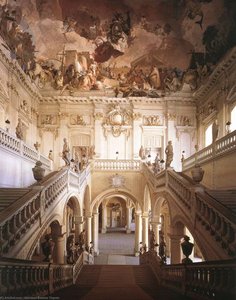
The formative years of Tiepolo’s development were characterized by a profound apprenticeship within the very workshops that decorated the palaces of Europe. Working alongside his father on ambitious projects, such as the breathtaking frescoes in Würzburg, Giandomenico mastered the technical complexities of large-scale composition and the innovative "oil sketch" technique. This method, which allowed for a more fluid and spontaneous capture of emotion, became a cornerstone of his approach. Through these collaborations, he learned to manipulate light to create depth and drama, yet he also began to develop an interest in much smaller, more delicate subjects that departed from the heroic myths favored by the previous generation.
A Mastery of Movement and Character
As his artistic identity matured, Giandomenico’s work began to exhibit a fascinating duality. On one hand, he maintained the grand tradition of Venetian decorative art, contributing significantly to opulent interiors like those found in Vicenza’s Villa Valmarana. On the other hand, he turned his gaze toward the streets and theaters of Venice, finding inspiration in the Commedia dell'arte. It is within this realm that his most enduring and evocative imagery resides—specifically his celebrated series featuring Punchinello. Through these characters, Tiepolo moved away from the divine and the mythological to explore the whimsical, the grotesque, and the deeply human.
His technical prowess was not limited to the brush; he was also a gifted etcher, using the medium to explore fine lines and atmospheric textures. This versatility allowed him to capture a wide spectrum of themes:
- Religious Devotion: Works such as The Agony in the Garden demonstrate his ability to handle profound spiritual tension with classical grace.
- Architectural Fantasies: His depictions of imaginary structures, like the View of the Gothic Pavilion, showcase a mastery of perspective and a romanticized vision of architectural grandeur.
- Social Satire: Through his etchings, he captured the fleeting, often melancholic essence of Venetian society, using masks and puppets to mirror the complexities of human identity.
Historical Significance and Enduring Spirit
The historical significance of Giandomenico Tiepolo lies in his role as a bridge between the soaring heights of the Baroque-Rococo era and the more introspective, observational styles that would follow. While he carried the torch of his father's monumentalism, he also anticipated the shift toward a more psychological and social realism. His ability to oscillate between the epic scale of a palace fresco and the intimate wit of a character study makes his oeuvre a unique window into the soul of late eighteenth-century Venice.
Ultimately, Tiepolo’s legacy is one of profound adaptability and emotional depth. He did not simply replicate the glory of the past; he reinterpreted it through a lens of contemporary observation. Whether through the sweeping narratives of his early training or the biting, beautiful etchings of his later years, Giandomenico Tiepolo remains a vital figure whose work continues to captivate with its blend of theatrical magic and tender humanity.
Giandomenico Tiepolo
1727 - 1804
Quick Facts
- Artistic Movement Or Style: Rococo
- Artists Or Movements Influenced By This Artist: ['Venetian Baroque']
- Artists Who Influenced This Artist: ['Giovanni Battista Tiepolo']
- Date Of Birth: 1727
- Date Of Death: 1804
- Full Name: Giandomenico Tiepolo
- Nationality: Italian
- Notable Artworks:
- The Agony in the Garden
- Untitled (AQR3XQ)
- St. Ambrosius Addressing St. Augustine
- Place Of Birth: Venice, Italy

