 Preview
 Send
Send Share
Share
 Details

 Download
 Similars
 X-Ray
X-Ray Diaporama
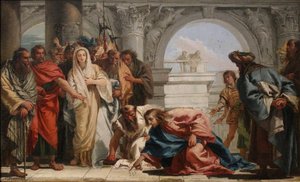
REBECCA AU PUITS


 Read More
Hand Made Oil Reproduction
Hand-painted oil on canvas in your size and frame, made to order by our artists. ( Buy Print Buy Image)




P118B $10

P118H $10

P118W $10

P438Z $10

P508JH $12

P508YH $12

P805H $10

P805Z $10

P919BZ $10

P919G $10

P919XJ $10

P959ZH $10

P968JZ $12

W106C $8

W218G $10

W218JH $8

W218Y $10

W307PJ $10

W316G $10

W316PJ $8

W316Y $10

W398PJ $8

W4111J $10

W500HY $15

W500JH $15

W692G $12

W849H $8

W940BG $15

W953PJ $8




Pick from our preset sizes that match the artwork's original proportions.

You may enter your own dimensions to fit a specific frame or space. If your selected size does not match the original image's proportions, we will either crop the artwork or extend the painting with additional hand-painted elements. A digital mockup will be sent for your approval before production begins.
Please note that the on-screen preview does not reflect the actual cropping or extension. Only the mockup will accurately show the final composition.
While custom sizes are available, we recommend selecting a dimension from the predefined list to preserve the original proportions.
After order, ArtsDot.com team will email client for instructions and provide a mockup preview
Worldwide Delivery () in 3/4 weeks instead of standard 5 weeks. (16 August). No compromise on quality.

Free Worldwide Express Shipping

High-Quality Linen Canvas

Full Shipping Insurance

Customs Tax Refund Guarantee

True Color Matching Guarantee

60-Day Return Policy (Defects Only)

100% Money-Back Guarantee

Bulk Discount Offer
 Glass option is only available in size under 110 CM

REBECCA AU PUITS
Reproduction Medium
Reproduction Size
-


Total Price
$ 313
Artwork Description
Rebecca au Puits - A Venetian Masterpiece Illuminated
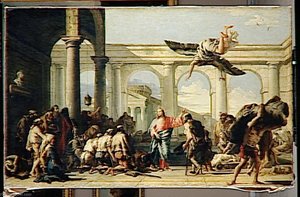
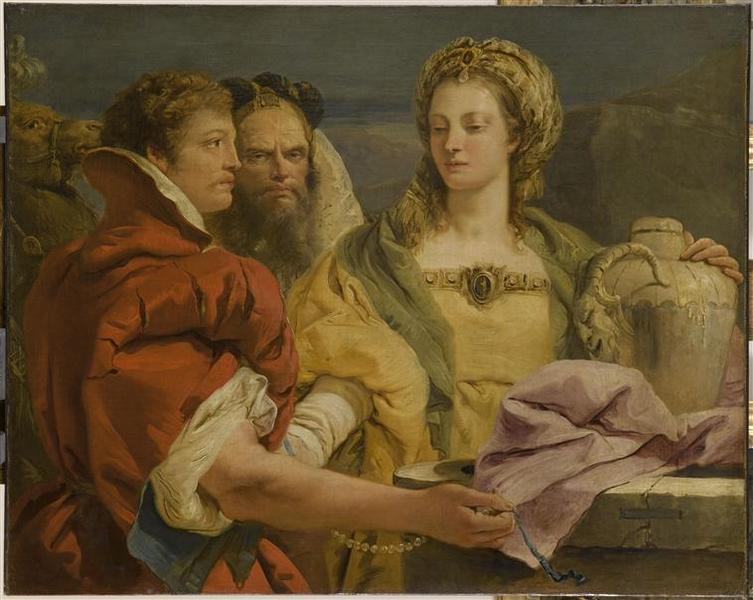
Giandomenico Tiepolo’s “Rebecca au Puits,” housed in the Louvre Museum, stands as a testament to the zenith of Rococo artistic expression—a captivating tableau born from the confluence of biblical narrative and Venetian stylistic grandeur. Painted circa 1751, this monumental artwork embodies the spirit of its time, reflecting the influence of his father, Giovanni Battista Tiepolo, whose frescoes redefined European art.
- Composition & Narrative: The scene unfolds outdoors near a well—a deliberate choice mirroring the arid landscape of Genesis 24. Rebecca stands prominently on the right side, facing Isaac who occupies a position slightly left and forward. Eliezer’s gesture towards Rebecca underscores the pivotal moment of recognition that initiates their destined union. A large amphora serves as a visual anchor, grounding the composition within the biblical context.
- Style & Influence: “Rebecca au Puits” firmly establishes Tiepolo's son’s stylistic allegiance to his father’s legacy—specifically, the masterful application of oil paint on canvas. This technique prioritizes luminous color palettes and subtle gradations of light and shadow, mirroring the Venetian tradition championed by artists like Giovanni Battista Tiepolo himself.
- Color Palette & Texture: The artwork's palette leans heavily into warm hues—rich reds, golds, browns, and creams—contrasting with cooler blues and greens that delineate the distant landscape. Visible brushstrokes contribute to a palpable textural richness, conveying the materiality of fabric folds and rocky terrain.
- Symbolism & Emotion: The amphora symbolizes life’s sustenance and purity—a motif recurrent throughout Tiepolo's oeuvre. Furthermore, the figures’ expressions convey anticipation and curiosity, capturing the emotional core of this divine encounter.
- Historical Context: Executed during the reign of Louis XV, “Rebecca au Puits” reflects the opulent tastes of the French aristocracy. It exemplifies the Rococo movement’s penchant for decorative elegance and idealized beauty—a stylistic hallmark that distinguishes Tiepolo's son from his contemporaries.
The painting’s enduring appeal lies in its ability to evoke a profound sense of serenity and contemplation—a reflection of Venetian artistic ideals during the Enlightenment. Its meticulous detail and luminous coloration continue to inspire admiration among art historians and collectors alike.
Further research into Giandomenico Tiepolo reveals his dedication to preserving his father’s artistic heritage, diligently transferring designs and furthering the Tiepolo family's reputation for grandeur and innovation. This commitment ensured that Giovanni Battista Tiepolo’s legacy would endure through generations of artists—a testament to the transformative power of familial influence in shaping artistic vision.
Related Artworks
Artist Biography
The Venetian Legacy of Giandomenico Tiepolo
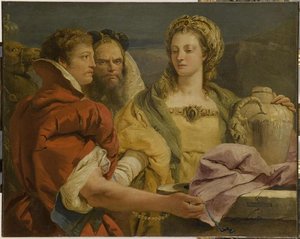
In the luminous heart of eighteenth-century Venice, a period defined by the decadent splendor of the Rococo, Giandomenico Tiepolo emerged as a master of both grand spectacle and intimate human drama. Born in 1727, his life was inextricably woven into the fabric of one of art history's most formidable dynasties. As the son of the legendary Giovanni Battista Tiepolo, Giandomenico did not merely inherit a name; he inherited a visual language of light, movement, and theatricality. While much of his early career was spent in the shadow of his father’s monumental frescoes, Giandomenico possessed a singular creative spirit that allowed him to transcend mere imitation, eventually carving out a niche that blended the epic scale of his lineage with a poignant, often satirical, observation of Venetian life.
The formative years of Tiepolo’s development were characterized by a profound apprenticeship within the very workshops that decorated the palaces of Europe. Working alongside his father on ambitious projects, such as the breathtaking frescoes in Würzburg, Giandomenico mastered the technical complexities of large-scale composition and the innovative "oil sketch" technique. This method, which allowed for a more fluid and spontaneous capture of emotion, became a cornerstone of his approach. Through these collaborations, he learned to manipulate light to create depth and drama, yet he also began to develop an interest in much smaller, more delicate subjects that departed from the heroic myths favored by the previous generation.
A Mastery of Movement and Character
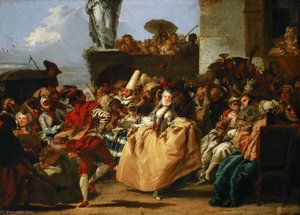
As his artistic identity matured, Giandomenico’s work began to exhibit a fascinating duality. On one hand, he maintained the grand tradition of Venetian decorative art, contributing significantly to opulent interiors like those found in Vicenza’s Villa Valmarana. On the other hand, he turned his gaze toward the streets and theaters of Venice, finding inspiration in the Commedia dell'arte. It is within this realm that his most enduring and evocative imagery resides—specifically his celebrated series featuring Punchinello. Through these characters, Tiepolo moved away from the divine and the mythological to explore the whimsical, the grotesque, and the deeply human.
His technical prowess was not limited to the brush; he was also a gifted etcher, using the medium to explore fine lines and atmospheric textures. This versatility allowed him to capture a wide spectrum of themes:
- Religious Devotion: Works such as The Agony in the Garden demonstrate his ability to handle profound spiritual tension with classical grace.
- Architectural Fantasies: His depictions of imaginary structures, like the View of the Gothic Pavilion, showcase a mastery of perspective and a romanticized vision of architectural grandeur.
- Social Satire: Through his etchings, he captured the fleeting, often melancholic essence of Venetian society, using masks and puppets to mirror the complexities of human identity.
Historical Significance and Enduring Spirit
The historical significance of Giandomenico Tiepolo lies in his role as a bridge between the soaring heights of the Baroque-Rococo era and the more introspective, observational styles that would follow. While he carried the torch of his father's monumentalism, he also anticipated the shift toward a more psychological and social realism. His ability to oscillate between the epic scale of a palace fresco and the intimate wit of a character study makes his oeuvre a unique window into the soul of late eighteenth-century Venice.
Ultimately, Tiepolo’s legacy is one of profound adaptability and emotional depth. He did not simply replicate the glory of the past; he reinterpreted it through a lens of contemporary observation. Whether through the sweeping narratives of his early training or the biting, beautiful etchings of his later years, Giandomenico Tiepolo remains a vital figure whose work continues to captivate with its blend of theatrical magic and tender humanity.
Giandomenico Tiepolo
1727 - 1804
Quick Facts
- Artistic Movement Or Style: Rococo
- Artists Or Movements Influenced By This Artist: ['Venetian Baroque']
- Artists Who Influenced This Artist: ['Giovanni Battista Tiepolo']
- Date Of Birth: 1727
- Date Of Death: 1804
- Full Name: Giandomenico Tiepolo
- Nationality: Italian
- Notable Artworks:
- The Agony in the Garden
- Untitled (AQR3XQ)
- St. Ambrosius Addressing St. Augustine
- Place Of Birth: Venice, Italy
Related Articles

Jacopo Tintoretto's Masterpieces: 25 Paintings That Define Venetian Drama | ArtsDot
Explore 25 breathtaking masterpieces by Jacopo Tintoretto, the Venetian master of drama and light. Discover the stories behind iconic Renaissance paintings & find museum-quality art reproductions to elevate your home decor on ArtsDot.com.

Rococo's Radiant Legacy: 10 Masterpieces for Your Home |
Indulge in the elegance of Rococo! Explore 10 masterpieces by Fragonard, Boucher & Watteau. Discover the stories behind these iconic paintings and bring timeless art to your home with museum-quality reproductions from .
Giambattista Tiepolo: A Rococo Master's Legacy of Light & Illusion
Explore the captivating world of Giambattista Tiepolo, master of Rococo art. Discover his innovative techniques, iconic frescoes, and lasting influence on Italian painting. A guide for discerning collectors.
Hermitage Masterpieces: 25 Art Treasures to Inspire Your Home Decor
Journey through the Hermitage Museum's 25 greatest artworks! Explore masterpieces by Rembrandt, Leonardo da Vinci & Vermeer. Find museum-quality art reproductions and curated decor ideas to bring timeless beauty home. Discover all masterpieces on ArtsDot.com.
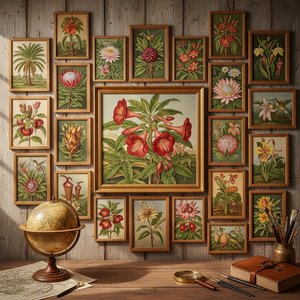
Marianne North's Masterpieces: 25 Botanical Paintings That Bloom With Adventure | ArtsDot
Journey through the vibrant world of Marianne North’s botanical paintings! Explore 25 iconic artworks from this Victorian artist, celebrating exotic flora & travel. Find museum-quality reproductions and curated decor ideas at ArtsDot.com.