 Preview
 Send
Send Share
Share
 Details

 Download
 Similars
 X-Ray
X-Ray Diaporama
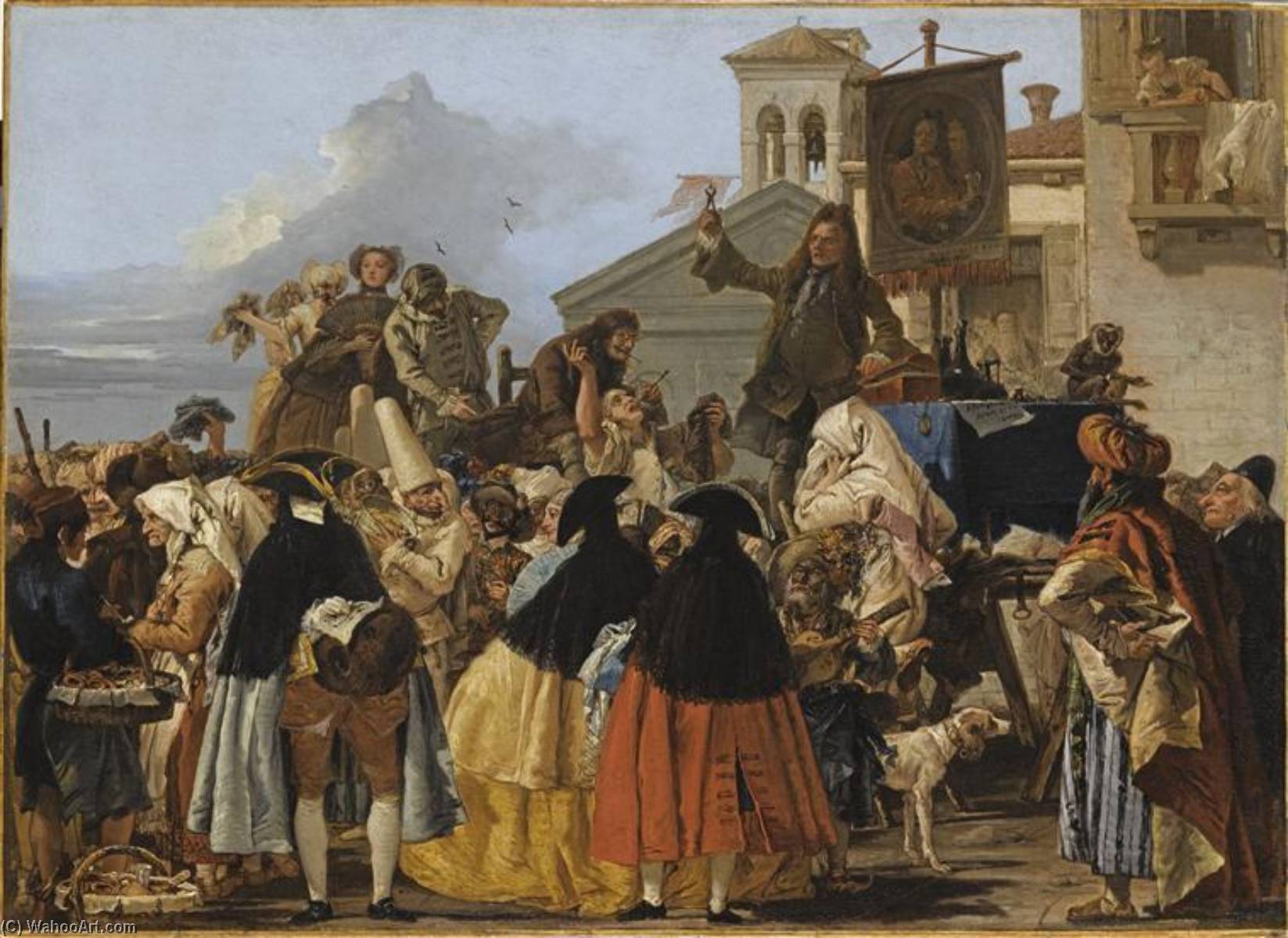
L'ARRACHEUR DE DENTS


 Read More
Hand Made Oil Reproduction
Hand-painted oil on canvas in your size and frame, made to order by our artists. ( Buy Print Buy Image)




P118B $10

P118H $10

P118W $10

P438Z $10

P508JH $12

P508YH $12

P805H $10

P805Z $10

P919BZ $10

P919G $10

P919XJ $10

P959ZH $10

P968JZ $12

W106C $8

W218G $10

W218JH $8

W218Y $10

W307PJ $10

W316G $10

W316PJ $8

W316Y $10

W398PJ $8

W4111J $10

W500HY $15

W500JH $15

W692G $12

W849H $8

W940BG $15

W953PJ $8




Pick from our preset sizes that match the artwork's original proportions.

You may enter your own dimensions to fit a specific frame or space. If your selected size does not match the original image's proportions, we will either crop the artwork or extend the painting with additional hand-painted elements. A digital mockup will be sent for your approval before production begins.
Please note that the on-screen preview does not reflect the actual cropping or extension. Only the mockup will accurately show the final composition.
While custom sizes are available, we recommend selecting a dimension from the predefined list to preserve the original proportions.
After order, ArtsDot.com team will email client for instructions and provide a mockup preview
Worldwide Delivery () in 3/4 weeks instead of standard 5 weeks. (16 August). No compromise on quality.

Free Worldwide Express Shipping

High-Quality Linen Canvas

Full Shipping Insurance

Customs Tax Refund Guarantee

True Color Matching Guarantee

60-Day Return Policy (Defects Only)

100% Money-Back Guarantee

Bulk Discount Offer
 Glass option is only available in size under 110 CM

L'ARRACHEUR DE DENTS
Reproduction Medium
Reproduction Size
-


Total Price
$ 613
Artwork Description
A Venetian Rhapsody: Unveiling “L’Arracheur de Dents”
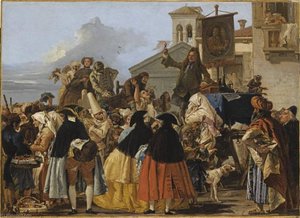
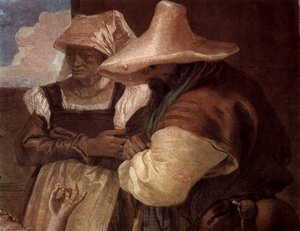
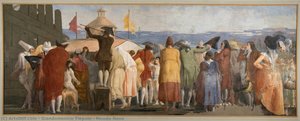
Giandomenico Tiepolo's "L’Arracheur de Dents" – The Tooth Puller – is not merely a painting; it’s a vibrant snapshot of 18th-century Venice, a theatrical tableau brimming with life, humor, and a touch of the macabre. Completed around 1754, this masterpiece captures a scene both commonplace and strangely captivating: a public tooth-puller, or “dentista,” performing his trade in the bustling heart of the city’s square. More than just a depiction of a medical procedure, it's an exploration of Venetian society, its customs, and its willingness to embrace even the most unusual spectacles. The painting immediately assaults the senses with Tiepolo’s signature style – loose, energetic brushwork, a riot of color, and a masterful ability to convey movement and atmosphere. He eschews precise detail in favor of capturing the *feeling* of the scene, creating an impressionistic experience for the viewer even centuries later.Composition and Color: A Symphony of Venetian Life
The composition is remarkably dynamic, drawing the eye into a swirling mass of figures. The tooth-puller himself, elevated on a makeshift platform, dominates the center, immediately commanding attention. Around him, a diverse crowd – merchants, women in elaborate gowns, children, and curious onlookers – are engaged in various activities: some observing with amusement, others seeking his services, and still others simply caught up in the general commotion. Tiepolo skillfully uses perspective to create depth, guiding our gaze from the foreground figures towards the receding buildings of the square, culminating in the imposing church tower adorned with a portrait—a subtle nod to the civic pride and patronage that fueled Venetian art. The color palette is rich and warm, dominated by ochre, terracotta, and deep blues – colors characteristic of Venice’s sun-drenched streets and buildings. Bright accents of red, yellow, and blue punctuate the scene, adding visual excitement and contributing to the overall sense of energy.Symbolism and Context: More Than Meets the Eye
The subject matter itself – a public tooth-puller – is inherently unusual and laden with symbolic meaning. In 18th-century Venice, dentistry was often performed in public spaces, sometimes by individuals who lacked formal training or medical expertise. This practice reflected a pragmatic approach to healthcare, where accessibility trumped strict regulations. The presence of the portrait on the church tower adds another layer of interpretation. It could represent a local patron, a symbol of civic authority, or perhaps even a commentary on the relationship between medicine and religion in Venetian society. The scene as a whole offers a glimpse into the everyday life of Venice – its commerce, its entertainment, and its willingness to embrace both the mundane and the extraordinary. The painting’s origins are linked to Ferdinand de Villeneuve, a French playwright who commissioned it for his wife, suggesting an interest in theatrical spectacle and social commentary.Technique and Artistic Influence: A Master at Work
Tiepolo's technique is characterized by its loose, expressive brushwork – a hallmark of the Rococo style. He employs rapid, gestural strokes to capture movement and create a sense of immediacy. The figures are rendered with varying degrees of detail, prioritizing capturing their essence over precise anatomical accuracy. This approach contributes significantly to the painting’s vibrant energy and dynamic composition. It's important to note that Tiepolo was deeply influenced by his father, Giovanni Battista Tiepolo, whose frescoes he had assisted in creating. However, Giandomenico developed a distinct style of his own, characterized by a greater emphasis on color and movement, while retaining the father’s masterful use of perspective and spatial illusion. The painting exemplifies the Venetian tradition of *veduta*, or cityscape paintings, which sought to capture the essence of the city's atmosphere and architecture.A Timeless Masterpiece: Reproductions and Beyond
“L’Arracheur de Dents” remains a captivating work of art, offering a unique window into 18th-century Venice. High-quality reproductions capture much of the original's vibrancy and charm, making it an ideal addition to any collection or interior space. When selecting a reproduction, consider factors such as print quality, canvas material, and framing options to ensure that you are capturing the essence of Tiepolo’s masterpiece. This painting is more than just decoration; it’s a conversation starter, a testament to Venetian artistry, and a reminder of the enduring power of visual storytelling.Related Artworks

Artist Biography
The Venetian Legacy of Giandomenico Tiepolo
In the luminous heart of eighteenth-century Venice, a period defined by the decadent splendor of the Rococo, Giandomenico Tiepolo emerged as a master of both grand spectacle and intimate human drama. Born in 1727, his life was inextricably woven into the fabric of one of art history's most formidable dynasties. As the son of the legendary Giovanni Battista Tiepolo, Giandomenico did not merely inherit a name; he inherited a visual language of light, movement, and theatricality. While much of his early career was spent in the shadow of his father’s monumental frescoes, Giandomenico possessed a singular creative spirit that allowed him to transcend mere imitation, eventually carving out a niche that blended the epic scale of his lineage with a poignant, often satirical, observation of Venetian life.
The formative years of Tiepolo’s development were characterized by a profound apprenticeship within the very workshops that decorated the palaces of Europe. Working alongside his father on ambitious projects, such as the breathtaking frescoes in Würzburg, Giandomenico mastered the technical complexities of large-scale composition and the innovative "oil sketch" technique. This method, which allowed for a more fluid and spontaneous capture of emotion, became a cornerstone of his approach. Through these collaborations, he learned to manipulate light to create depth and drama, yet he also began to develop an interest in much smaller, more delicate subjects that departed from the heroic myths favored by the previous generation.
A Mastery of Movement and Character
As his artistic identity matured, Giandomenico’s work began to exhibit a fascinating duality. On one hand, he maintained the grand tradition of Venetian decorative art, contributing significantly to opulent interiors like those found in Vicenza’s Villa Valmarana. On the other hand, he turned his gaze toward the streets and theaters of Venice, finding inspiration in the Commedia dell'arte. It is within this realm that his most enduring and evocative imagery resides—specifically his celebrated series featuring Punchinello. Through these characters, Tiepolo moved away from the divine and the mythological to explore the whimsical, the grotesque, and the deeply human.
His technical prowess was not limited to the brush; he was also a gifted etcher, using the medium to explore fine lines and atmospheric textures. This versatility allowed him to capture a wide spectrum of themes:
- Religious Devotion: Works such as The Agony in the Garden demonstrate his ability to handle profound spiritual tension with classical grace.
- Architectural Fantasies: His depictions of imaginary structures, like the View of the Gothic Pavilion, showcase a mastery of perspective and a romanticized vision of architectural grandeur.
- Social Satire: Through his etchings, he captured the fleeting, often melancholic essence of Venetian society, using masks and puppets to mirror the complexities of human identity.
Historical Significance and Enduring Spirit
The historical significance of Giandomenico Tiepolo lies in his role as a bridge between the soaring heights of the Baroque-Rococo era and the more introspective, observational styles that would follow. While he carried the torch of his father's monumentalism, he also anticipated the shift toward a more psychological and social realism. His ability to oscillate between the epic scale of a palace fresco and the intimate wit of a character study makes his oeuvre a unique window into the soul of late eighteenth-century Venice.
Ultimately, Tiepolo’s legacy is one of profound adaptability and emotional depth. He did not simply replicate the glory of the past; he reinterpreted it through a lens of contemporary observation. Whether through the sweeping narratives of his early training or the biting, beautiful etchings of his later years, Giandomenico Tiepolo remains a vital figure whose work continues to captivate with its blend of theatrical magic and tender humanity.
Giandomenico Tiepolo
1727 - 1804
Quick Facts
- Artistic Movement Or Style: Rococo
- Artists Or Movements Influenced By This Artist: ['Venetian Baroque']
- Artists Who Influenced This Artist: ['Giovanni Battista Tiepolo']
- Date Of Birth: 1727
- Date Of Death: 1804
- Full Name: Giandomenico Tiepolo
- Nationality: Italian
- Notable Artworks:
- The Agony in the Garden
- Untitled (AQR3XQ)
- St. Ambrosius Addressing St. Augustine
- Place Of Birth: Venice, Italy
Related Articles
Giambattista Tiepolo: A Rococo Master's Legacy of Light & Illusion
Explore the captivating world of Giambattista Tiepolo, master of Rococo art. Discover his innovative techniques, iconic frescoes, and lasting influence on Italian painting. A guide for discerning collectors.
Pietro Longhi's Venetian Scenes: A Study of Rococo Society & Domestic Life
Explore the captivating world of Pietro Longhi's Venetian scenes! Discover insightful analysis of his Rococo masterpieces & social commentary on 18th-century life. Learn about this 'Venetian Hogarth' and his lasting artistic legacy.

The Rococo Aesthetic: Opulence, Rebellion & the Pursuit of Pleasure in 18th-Century Art
Explore the opulent world of Rococo art! Discover its origins, key artists like Watteau & Boucher, and lasting influence on design. Expert insights for collectors & enthusiasts.

Rococo's Radiant Legacy: 10 Masterpieces for Your Home |
Indulge in the elegance of Rococo! Explore 10 masterpieces by Fragonard, Boucher & Watteau. Discover the stories behind these iconic paintings and bring timeless art to your home with museum-quality reproductions from .
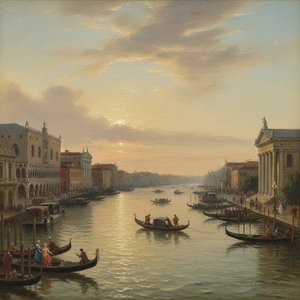
Francesco Guardi: Venetian Light, Atmospheric Perspective & the Rococo to Neoclassical Transition
Explore the captivating world of Francesco Guardi, master of Venetian light and atmosphere. Discover his transition from Rococo to Neoclassicism, influence on Impressionism & investment potential with ArtsDot.