 Preview
 Send
Send Share
Share
 Details

 Download
 Similars
 X-Ray
X-Ray Diaporama
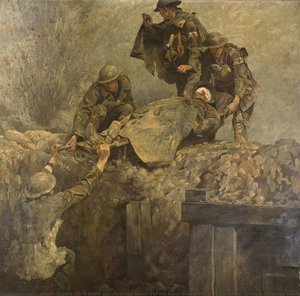
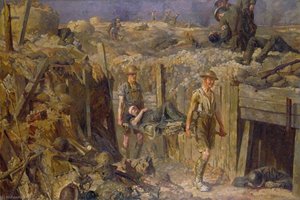
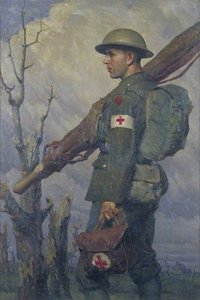
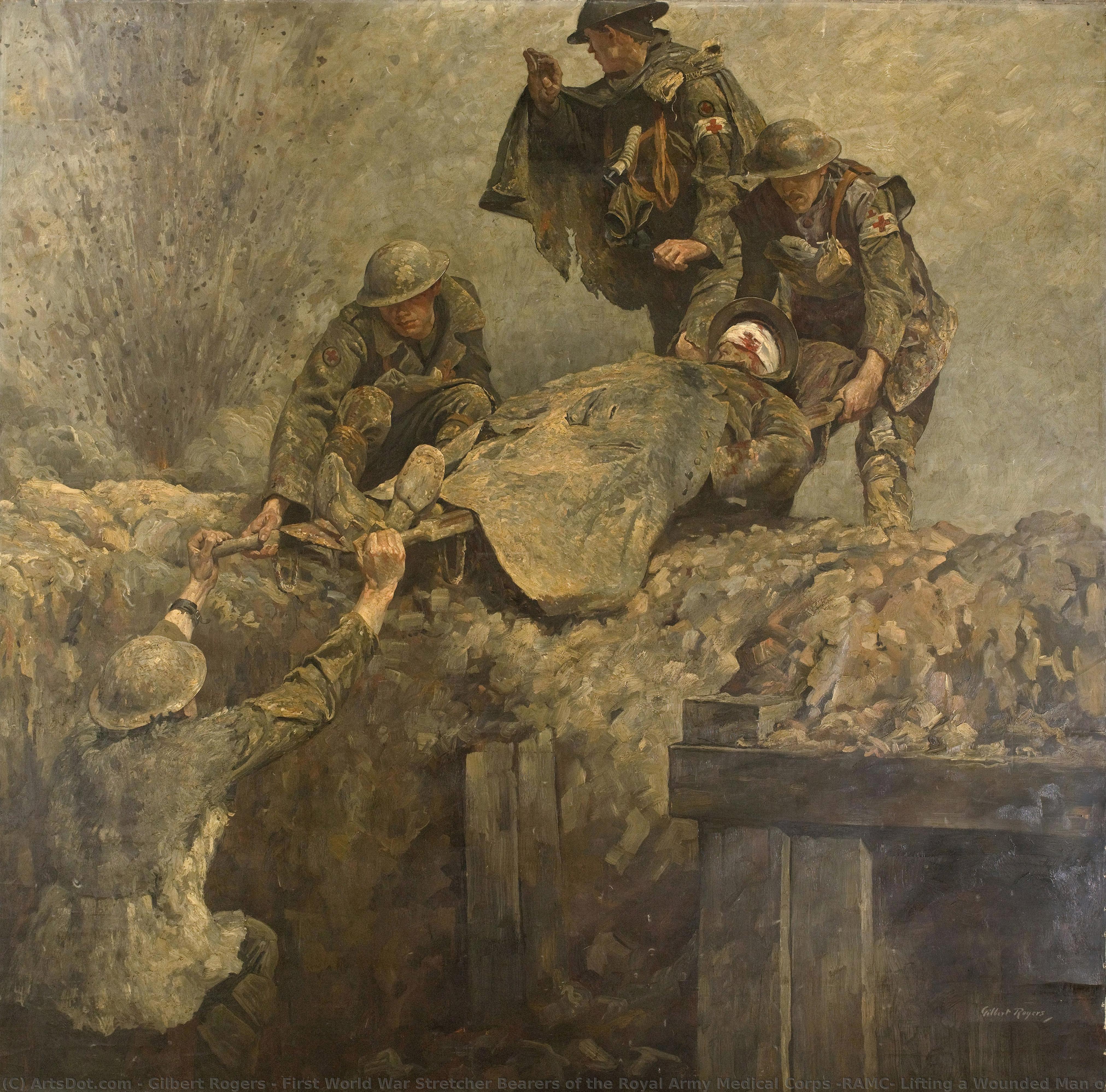
First World War Stretcher Bearers of the Royal Army Medical Corps (RAMC) Lifting a Wounded Man out of a Trench
 Oil On Canvas
- WallArt
- Impressionism
 1919
1919- Modern
 302.0 x 302.0 cm
 Read More
Hand Made Oil Reproduction
Hand-painted oil on canvas in your size and frame, made to order by our artists. ( Buy Print Buy Image)




P118B $10

P118H $10

P118W $10

P438Z $10

P508JH $12

P508YH $12

P805H $10

P805Z $10

P919BZ $10

P919G $10

P919XJ $10

P959ZH $10

P968JZ $12

W106C $8

W218G $10

W218JH $8

W218Y $10

W307PJ $10

W316G $10

W316PJ $8

W316Y $10

W398PJ $8

W4111J $10

W500HY $15

W500JH $15

W692G $12

W849H $8

W940BG $15

W953PJ $8




Pick from our preset sizes that match the artwork's original proportions.

You may enter your own dimensions to fit a specific frame or space. If your selected size does not match the original image's proportions, we will either crop the artwork or extend the painting with additional hand-painted elements. A digital mockup will be sent for your approval before production begins.
Please note that the on-screen preview does not reflect the actual cropping or extension. Only the mockup will accurately show the final composition.
While custom sizes are available, we recommend selecting a dimension from the predefined list to preserve the original proportions.
After order, ArtsDot.com team will email client for instructions and provide a mockup preview
Worldwide Delivery () in 3/4 weeks instead of standard 5 weeks. (24 August). No compromise on quality.

Free Worldwide Express Shipping

High-Quality Linen Canvas

Full Shipping Insurance

Customs Tax Refund Guarantee

True Color Matching Guarantee

60-Day Return Policy (Defects Only)

100% Money-Back Guarantee

Bulk Discount Offer
 Glass option is only available in size under 110 CM

First World War Stretcher Bearers of the Royal Army Medical Corps (RAMC) Lifting a Wounded Man out of a Trench
Reproduction Medium
Reproduction Size
-


Total Price
$ 263
Artwork Description
The Scene
The scene captures a moment of intense human drama as four soldiers from the Royal Army Medical Corps (RAMC) work together to lift a wounded man out of a trench. The soldier on the left side of the painting is prominently positioned, while another soldier stands on the right side. Two more soldiers are located closer to the center of the image, providing support and assistance during this challenging moment.Details
A backpack placed near the top left corner of the image likely contains medical supplies or equipment needed for treating the wounded soldier. The painting conveys a sense of urgency and danger, highlighting the sacrifices made by these brave soldiers as they risk their lives to save others.Artist and Style
Gilbert Rogers was known for his realistic and detailed depictions of war scenes. His style often featured bold brushstrokes and vivid colors, which added depth and emotion to his paintings. In this particular piece, the use of oil on canvas allows for a rich texture and a sense of realism that draws the viewer into the scene.Relevance
The painting serves as a poignant reminder of the sacrifices made by medical personnel during times of war. It highlights their bravery, dedication, and selflessness in the face of danger and uncertainty.Conclusion
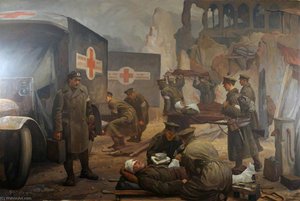
First World War Stretcher Bearers of the Royal Army Medical Corps (RAMC) Lifting a Wounded Man out of a Trench by Gilbert Rogers is a powerful and moving painting that captures the essence of human courage and compassion during wartime. It stands as a testament to the bravery and dedication of medical personnel who risk their lives to save others. For those interested in exploring more works by Gilbert Rogers, ArtsDot.com offers high-quality handmade oil painting reproductions of his pieces, including First World War Stretcher Bearers of the Royal Army Medical Corps (RAMC) Lifting a Wounded Man out of a Trench and First World War A Convoy of Ambulances of the Royal Army Medical Corps after a Battle.Related Artworks





Artist Biography
Gilbert Rogers (1881 – 1956): Witnessing War Through Impressionistic Vision
Gilbert Rogers was a British painter whose artistic output primarily focused on capturing the visceral experience of World War I, specifically depicting stretcher bearers and the medical corps. Born in London in 1881, Rogers possessed an innate fascination with art from a young age, honing his skills through self-study and experimentation before embarking on a formal artistic education at Slade School of Fine Art. This formative period instilled in him a deep appreciation for Impressionism, influencing his distinctive style and palette—characterized by loose brushstrokes and vibrant colors intended to convey mood and atmosphere rather than precise detail.- Early Life & Artistic Influences:
- Rogers’s upbringing fostered an interest in sketching and drawing landscapes, establishing a foundational understanding of composition and tonal variation.
The WWI Canvas: Capturing the Front Line Experience
Rogers's artistic career gained prominence during the First World War. Recognizing the urgent need for visual documentation of the conflict’s realities—particularly the grueling conditions faced by medical personnel—he volunteered his talents to depict scenes from hospitals and ambulance convoys. His most celebrated works include “First World War A Convoy of Ambulances of the Royal Army Medical Corps after a Battle,” an evocative portrayal of stretcher bearers navigating the aftermath of combat, meticulously rendered in oil on canvas. This painting exemplifies Rogers’s commitment to conveying emotion through color and brushwork—a hallmark of Impressionistic technique—creating a powerful impression of both chaos and compassion amidst the horrors of war. He collaborated closely with photographers like Bertram Wooster to produce composite images that combined photographic realism with artistic interpretation, furthering the effort to document the war's impact on human experience.- Notable Paintings:
- "First World War A Convoy of Ambulances of the Royal Army Medical Corps after a Battle" (1917): Demonstrates Rogers’s masterful use of Impressionistic brushstrokes to convey the emotional intensity of wartime trauma.
Technique & Artistic Style: Impressionism's Impact
Rogers embraced Impressionist principles wholeheartedly, prioritizing subjective perception over objective representation. He eschewed meticulous detail in favor of capturing fleeting moments and atmospheric conditions—a deliberate choice that aligns with the broader artistic movement’s rejection of academic conventions. Rogers skillfully blended pigments to achieve luminous color harmonies, layering brushstrokes to build up tonal depth and creating a sense of immediacy and dynamism on his canvases. His approach mirrored the pioneering efforts of artists like Monet and Renoir, who sought to capture the essence of light and color as experienced by the human eye—a stylistic decision that cemented Rogers’s legacy as a significant contributor to British Impressionism.Legacy & Historical Significance
Gilbert Rogers's paintings stand as poignant reminders of the First World War’s profound psychological toll on soldiers and medical staff alike. Beyond their aesthetic beauty, they serve as invaluable historical records—offering insights into the daily lives of those involved in treating wounded veterans. Rogers’s artistic vision transcended mere visual depiction; he aimed to communicate empathy and understanding for the suffering endured by individuals confronting unimaginable circumstances. His work continues to resonate with audiences today, prompting reflection on themes of resilience, compassion, and the enduring power of art to bear witness to human experience during times of crisis.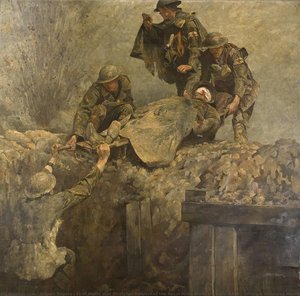
gilbert rogers
1881 - 1956
Quick Facts
- Artistic Movement Or Style: Impressionism
- Artists Or Movements Influenced By This Artist: ['Post-Impressionism']
- Artists Who Influenced This Artist:
- Claude Monet
- Pierre Auguste Renoir
- Date Of Birth: 1881
- Date Of Death: 1956
- Full Name: Gilbert Rogers
- Nationality: British
- Notable Artworks: ['First World War A Convoy of Ambulances']
- Place Of Birth: London, England
Related Articles
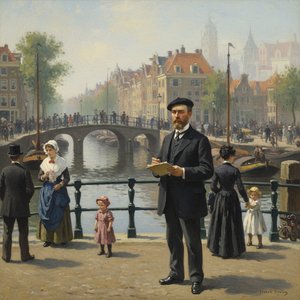
Isaac Lazarus Israëls: A Chronicle of Dutch Life & the Evolution of Impressionistic Realism
Explore the captivating world of Isaac Lazarus Israëls (1865-1934), a leading Dutch Amsterdam Impressionist. Discover his city scenes, portraits & travels through Asia – a chronicle of Dutch life and artistic evolution.
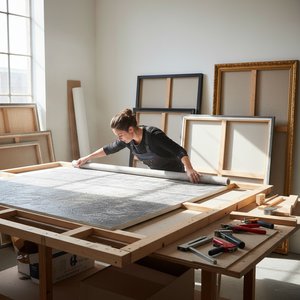
Large Format Framing & Canvas Stretching: A Pro's Guide for Freelance Decorators
Master large format framing & canvas stretching with this pro guide for freelance decorators. Learn expert techniques, avoid common pitfalls, & deliver flawless results.
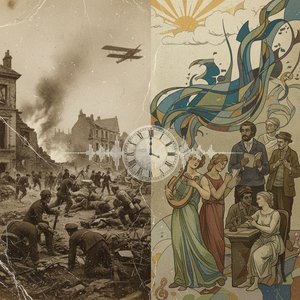
Echoes of a Turning Tide: Artistic Responses to 1916 – A Year of Conflict & Transformation
Explore the profound artistic responses to the tumultuous year of 1916. Discover how WWI shaped movements like Futurism & Expressionism, and delve into masterpieces by Kandinsky, Matisse, Nevinson & more. Learn about art history at ArtsDot.