

 Preview
 Send
Send Share
Share
 Details

 Download
 Similars
 X-Ray
X-Ray Diaporama
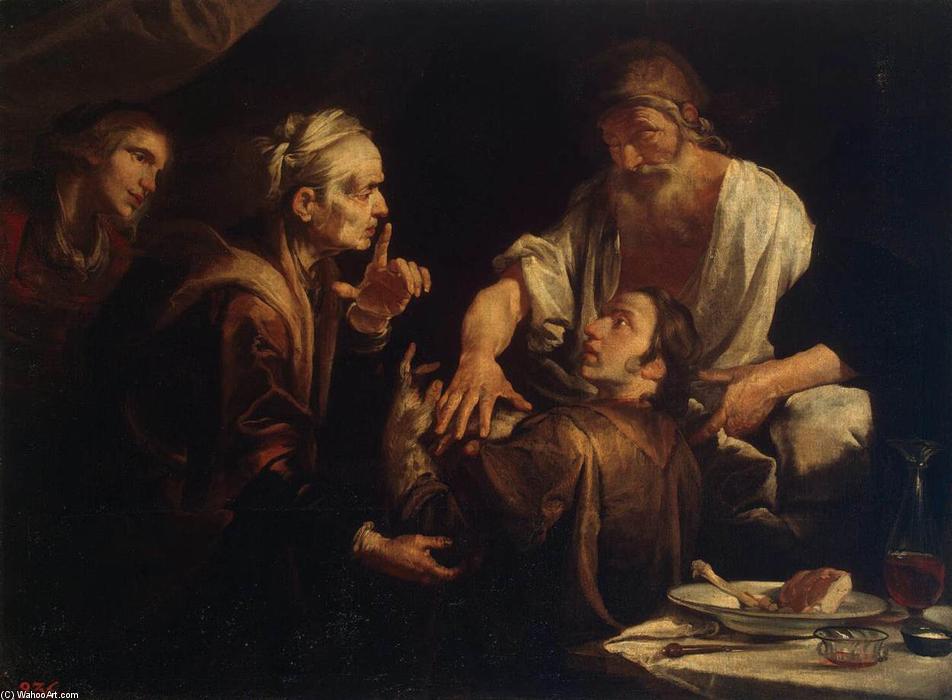
Isaac Blessing Jacob
 Oil On Canvas
- WallArt
- Baroque Painting
 1640
1640 131.0 x 178.0 cm
 Hermitage Museum
 Read More
Purchase a high-resolution, enhanced digital image, far superior to the online preview.
Each file is meticulously prepared by our in-house specialists using advanced tools and expert manual retouching. We ensure every image has exceptional clarity, precise color accuracy, and fine detail.
The final file is delivered via email within 72 hours, optimized for immediate use in professional, editorial, and print environments. This is the same quality trusted by top-tier design studios, publishers, and galleries.
Digital Image
Download a high-resolution file for personal display, printing, and creative projects. ( Buy Print Buy Hand Made Painting)
Included in Every Digital Image Order
Expert Digital Delivery, Guaranteed
When you choose ArtsDot.com, you're not just getting an image - you're receiving a professionally enhanced digital artwork, crafted with precision and backed by a satisfaction guarantee. Here's everything that comes with your order, automatically:

Fast Email Delivery
Your high-resolution digital image file will be emailed to you within 72 hours of ordering - ready for immediate use.

AI-Enhanced Digital File
Your artwork is professionally optimized using advanced AI tools and manual editing, ensuring maximum detail, clarity, and color accuracy.

Free Lifetime Re-Delivery
Accidentally deleted or lost your file? No worries - we'll resend it to you anytime, free of charge.

No Import Fees - Ever
Enjoy your artwork instantly with zero customs, duties, or delivery fees - digital downloads are always tax-free.

Color Accuracy Guarantee
We ensure your digital image reflects the original colors as closely as possible using professional tools and color management.

60-Day Satisfaction Guarantee
If you're not satisfied with your digital image, we'll revise it or refund 100% within 60 days - no questions asked.

100% Money-Back Guarantee
Not satisfied? Get a full refund within 60 days of receiving your digital file - no questions asked.

Bulk Order Discounts
Buy 3 images, save 10% - Buy 5, save 15% - Buy 10+, save 20%. Great for creative projects, galleries, and agencies.
Collectible Description
The Genesis of Grace: Gioacchino Assereto’s “Isaac Blessing Jacob”
Gioacchino Assereto's "Isaac Blessing Jacob," painted in 1640, isn’t merely a depiction of a biblical scene; it’s a profound meditation on lineage, faith, and the subtle dance between destiny and deception. Housed within the venerable halls of the Hermitage Museum in St. Petersburg, this oil-on-canvas work transcends its historical subject matter to become a powerful testament to the Baroque era's mastery of dramatic storytelling. The painting immediately draws the eye with its carefully orchestrated composition – an elderly Isaac, his face etched with the wisdom and weariness of age, kneels before his younger son Jacob, extending a hand laden with blessing. The youthful figure of Jacob, poised in anticipation, embodies both reverence and a nascent ambition that subtly foreshadows the events to come.
Assereto’s genius lies not just in his technical skill – evident in the rich textures of the fabrics, the luminous quality of the light, and the remarkably lifelike portrayal of each character – but also in his ability to infuse a narrative with palpable emotion. The artist skillfully employs chiaroscuro, the dramatic contrast between light and shadow, to heighten the scene’s intensity. The muted tones surrounding Isaac create an atmosphere of solemnity, while the focused illumination on the figures at the center draws our attention to this pivotal moment. Notice how the folds of Isaac's robe seem to ripple with age and experience, mirroring the weight of his legacy.
Baroque Drama: A Window into 17th-Century Genoa
To understand “Isaac Blessing Jacob,” one must appreciate its context within the vibrant artistic landscape of 17th-century Genoa. Assereto was a leading figure in the city’s flourishing Baroque scene, deeply influenced by the Caravaggist style that swept through Italy at the time. This influence is particularly evident in the painting's dynamic composition, dramatic lighting, and focus on capturing intense human emotion. The work reflects the era’s fascination with religious narratives, often imbued with psychological depth and a sense of theatrical grandeur. Genoa itself was a hub for artistic innovation during this period, attracting artists from across Europe who sought to master the techniques of realism and emotional expression.
Beyond its stylistic influences, the painting offers a glimpse into the social dynamics of the time. The presence of Rebekah in the background – depicted as an observant elder woman – suggests a complex family structure and hints at the role of women within this narrative. The inclusion of the table laden with provisions speaks to the importance of hospitality and ritual in Jewish tradition, further enriching the painting’s symbolic layers.
Symbolism and the Weight of Inheritance
At its core, “Isaac Blessing Jacob” is a potent allegory about inheritance – not just material possessions, but also lineage, faith, and destiny. The act of blessing itself represents the transmission of God's favor and promises to the next generation. However, Assereto subtly introduces an element of unease through Jacob’s posture and expression; there’s a hint of calculation in his eyes, foreshadowing the deception that will ultimately lead to the conflict between him and Esau. The gesture of Isaac extending his hand is simultaneously generous and fraught with consequence.
The painting's enduring appeal lies in its ability to resonate with viewers across centuries. It’s a timeless depiction of familial relationships, religious faith, and the complex interplay of human ambition and divine grace. It invites us to contemplate the weight of our own legacies and the choices that shape our destinies.
Reproductions & Further Exploration
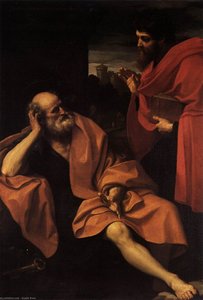
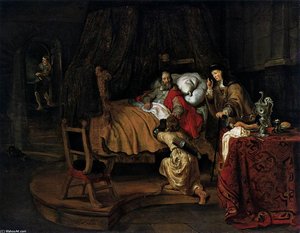
High-quality reproductions of “Isaac Blessing Jacob” are available through ArtsDot.com, offering a stunning addition to any art collection or interior space. For more information about Gioacchino Assereto and his artistic legacy, we encourage you to visit the Hermitage Museum’s website (here) and explore resources like Wikipedia (here). Delve deeper into the world of Baroque art by examining related works, such as “Jacob Meeting Rachel” by Pier Francesco Mola.
Related Artworks

Artist Biography
Early Life and Apprenticeship in Genoa
Gioacchino Assereto, born in Genoa around 1600, emerged as a pivotal figure in the city’s artistic landscape during the early Baroque period. His journey began at the tender age of twelve when he entered the workshop of Luciano Borzone, a respected painter known for his religious works and dynamic compositions. This initial apprenticeship laid the foundation for Assereto's technical skills, but it was his subsequent training with Giovanni Andrea Ansaldo, beginning around 1614, that truly shaped his artistic direction. Ansaldo’s studio provided a more rigorous environment, fostering a deeper understanding of anatomy, perspective, and the nuances of oil painting. Crucially, Assereto also benefited from attending the *Accademia del Nudo*, an institution established by Giancarlo Doria dedicated to the study of the human form through life drawing – a practice essential for mastering the realistic depiction of figures that would become a hallmark of his style. Genoa in this era was a bustling port city, a crossroads of cultures and ideas, and Assereto’s early exposure to diverse influences undoubtedly contributed to his evolving artistic sensibility. He quickly established himself as a promising talent within the Genoese art scene, absorbing the prevailing trends while simultaneously forging his own unique path.The Roman Sojourn and Embracing Caravaggism
By 1639, Assereto’s reputation had grown sufficiently to warrant a journey to Rome – a pilgrimage undertaken by many aspiring artists of the time seeking inspiration from the masters and exposure to new artistic currents. This trip proved transformative for the Genoese painter. He immersed himself in the studios of various Roman artists, encountering works that broadened his horizons and challenged his existing aesthetic principles. Notably, he connected with fellow Genoese painters already working in Rome, including Luca Saltarello, Giovanni Maria Bottalla, Giovanni Benedetto Castiglione, and Giovanni Andrea Podestà, forming a network of artistic exchange. However, the most profound impact came from his engagement with the burgeoning realism of Caravaggio’s followers. The dramatic use of *chiaroscuro* – the stark contrast between light and shadow – and the intensely naturalistic portrayal of figures captivated Assereto. He began to incorporate these elements into his own work, moving away from the more idealized forms of earlier Baroque painting towards a grittier, more emotionally resonant style. This embrace of Caravaggism wasn’t merely stylistic; it reflected a broader shift in artistic priorities, emphasizing direct observation and psychological depth over elaborate ornamentation.Mature Style and Genoese Commissions
Returning to Genoa, Assereto embarked on a period of prolific activity, securing numerous commissions that cemented his position as the city’s leading history painter. The 1640s saw him particularly engaged in fresco work, adorning churches and palazzi with large-scale compositions depicting religious narratives and historical events. His paintings from this decade demonstrate a masterful command of both *chiaroscuro* and *sfumato*, creating a sense of drama and atmosphere that drew viewers into the scene. He wasn’t simply replicating Caravaggio's techniques, however; Assereto infused his work with a distinctly Genoese sensibility – a heightened attention to detail in costumes and settings, reflecting the city’s mercantile culture and its appreciation for material wealth. His success was such that he established a busy studio, producing numerous copies of his works, often under the guidance of his son, Giuseppe Assereto. This proliferation of copies speaks not only to the demand for his paintings but also to their inherent appeal – they resonated with contemporary audiences who valued both technical skill and emotional impact.Legacy and Historical Significance
Raffaele Soprani, a prominent Genoese biographer writing during Assereto’s lifetime, lauded him as “incomparable,” a testament to the artist's widespread recognition and influence. While perhaps an exaggeration, Soprani’s praise reflects the genuine esteem in which Assereto was held by his peers and patrons. His paintings stand as compelling examples of Baroque art in Genoa, bridging the gap between earlier traditions and the more radical innovations of Caravaggism. He excelled at depicting both religious and historical subjects, but it was his portraits that often revealed a keen psychological insight into his sitters. Assereto’s contribution lies not only in his technical virtuosity – his ability to render textures, light, and shadow with remarkable precision – but also in his capacity to imbue his paintings with emotion and narrative power. He left behind a substantial body of work that continues to captivate viewers today, offering a glimpse into the artistic and cultural life of 17th-century Genoa. His influence can be seen in the works of subsequent Genoese painters, who continued to explore the dramatic possibilities of *chiaroscuro* and realism. Assereto’s paintings remain vital for understanding the development of Baroque art in Italy, showcasing a unique blend of local traditions and international influences.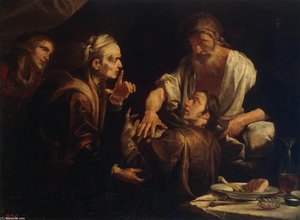
gioacchino assereto
1600 - 1649
Quick Facts
- Artistic Movement Or Style: Baroque, Caravaggism
- Artists Or Movements Influenced By This Artist: ['Giuseppe Assereto']
- Artists Who Influenced This Artist:
- Luciano Borzone
- Giovanni Andrea Ansaldo
- Date Of Birth: 1600
- Date Of Death: 1649
- Full Name: Gioacchino Assereto
- Nationality: Italian
- Notable Artworks: ['The Lamentation']
- Place Of Birth: Genoa, Italy

