 Preview
 Send
Send Share
Share
 Details

 Download
 Similars
 X-Ray
X-Ray Diaporama
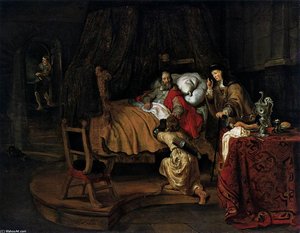
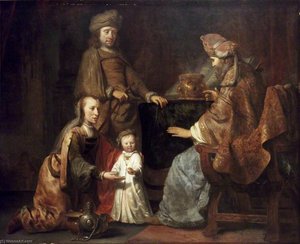
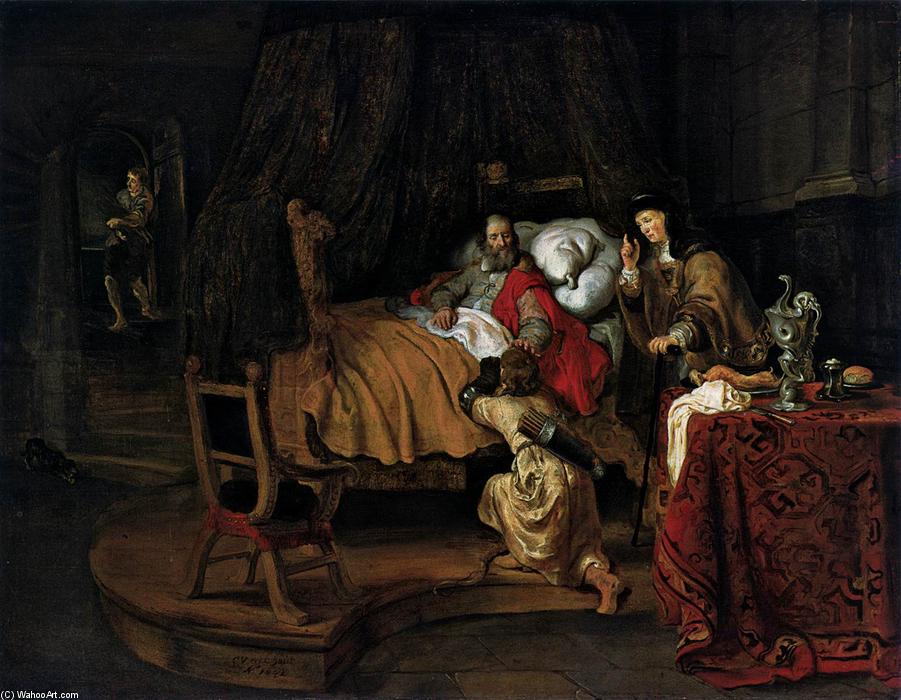
Isaac Blessing Jacob
 Oil On Canvas
- WallArt
- Dutch Golden Age
 1642
1642 101.0 x 128.0 cm
 Metropolitan Museum of Art
 Read More
Hand Made Oil Reproduction
Hand-painted oil on canvas in your size and frame, made to order by our artists. ( Buy Print Buy Image)




P118B $10

P118H $10

P118W $10

P438Z $10

P508JH $12

P508YH $12

P805H $10

P805Z $10

P919BZ $10

P919G $10

P919XJ $10

P959ZH $10

P968JZ $12

W106C $8

W218G $10

W218JH $8

W218Y $10

W307PJ $10

W316G $10

W316PJ $8

W316Y $10

W398PJ $8

W4111J $10

W500HY $15

W500JH $15

W692G $12

W849H $8

W940BG $15

W953PJ $8




Pick from our preset sizes that match the artwork's original proportions.

You may enter your own dimensions to fit a specific frame or space. If your selected size does not match the original image's proportions, we will either crop the artwork or extend the painting with additional hand-painted elements. A digital mockup will be sent for your approval before production begins.
Please note that the on-screen preview does not reflect the actual cropping or extension. Only the mockup will accurately show the final composition.
While custom sizes are available, we recommend selecting a dimension from the predefined list to preserve the original proportions.
After order, ArtsDot.com team will email client for instructions and provide a mockup preview
Worldwide Delivery () in 3/4 weeks instead of standard 5 weeks. (16 August). No compromise on quality.

Free Worldwide Express Shipping

High-Quality Linen Canvas

Full Shipping Insurance

Customs Tax Refund Guarantee

True Color Matching Guarantee

60-Day Return Policy (Defects Only)

100% Money-Back Guarantee

Bulk Discount Offer
 Glass option is only available in size under 110 CM

Isaac Blessing Jacob
Reproduction Medium
Reproduction Size
-


Total Price
$ 263
Artwork Description
A Moment of Grace: Gerbrand van den Eeckhout’s “Isaac Blessing Jacob”
Gerbrand van den Eeckhout's "Isaac Blessing Jacob," painted in 1642, is more than just a depiction of a biblical scene; it’s a meticulously crafted window into the heart of Dutch Golden Age artistry. Housed within the hallowed halls of the Metropolitan Museum of Art in New York, this oil on canvas work transcends its simple subject matter to become a profound meditation on family, faith, and the subtle power dynamics at play within a domestic setting. Eeckhout, deeply influenced by his mentor Rembrandt, masterfully employs a technique that balances observation with an almost painterly softness – a departure from Rembrandt’s dramatic contrasts, favoring instead a nuanced exploration of light and shadow that imbues the scene with a palpable sense of intimacy.
The painting captures a pivotal moment from Genesis: Isaac bestowing his blessing upon Jacob rather than his elder son, Esau. This alteration in narrative—a deliberate shift from tradition—adds an intriguing layer of complexity to the composition. Eeckhout doesn’t simply record the event; he subtly suggests a quiet tension beneath the surface of familial affection. The positioning of the figures, particularly the watchful gaze of Esau and the solemnity of Isaac, hints at a history yet unspoken, a future fraught with potential conflict.
The Language of Color and Form
Eeckhout’s skill lies not just in his ability to render detail but also in his masterful use of color. The rich reds dominating Isaac's robe immediately draw the eye, symbolizing his authority and divine connection. Jacob, clad in a more subdued brown, represents humility and receptivity, kneeling before his father’s blessing. Esau, rendered in a striking blue with a white collar – a detail that subtly elevates him – holds a sword, a visual reminder of his role as the hunter, a symbol of protection and perhaps even a foreshadowing of future challenges. The careful layering of these hues creates a dynamic interplay, guiding the viewer’s eye through the composition.
The painting's structure is equally deliberate. Isaac sits upon a bed draped with a white canopy, elevating his position and reinforcing his role as patriarch. The use of perspective—noticeably subtle yet effective—anchors the scene within a defined space, drawing us into this intimate moment. Even the background figure, a woman holding a child, contributes to the overall narrative, adding another layer of familial connection and hinting at the continuation of the lineage.
A Window into Dutch Baroque
“Isaac Blessing Jacob” stands as a quintessential example of Dutch Golden Age painting. The meticulous detail, the realistic portrayal of figures, and the emphasis on capturing fleeting moments of human interaction are hallmarks of this artistic period. Eeckhout’s work reflects the broader cultural values of 17th-century Holland – a society that valued both religious piety and worldly prosperity. The painting's commission likely stemmed from a desire to celebrate family bonds and reinforce social hierarchies, themes deeply ingrained in Dutch society at the time.
Furthermore, Eeckhout’s artistic journey is inextricably linked to Rembrandt’s legacy. He absorbed much of Rembrandt’s observational techniques and his understanding of light, but he developed a more restrained style, prioritizing atmospheric perspective and subtle emotional nuances. Studying this painting alongside works by Rembrandt offers a fascinating insight into the evolution of Dutch Baroque art – a testament to the enduring influence of one master on another.
Capturing the Essence: Reproduction and Beyond
Reproductions of “Isaac Blessing Jacob” offer an exceptional opportunity to bring this remarkable artwork into your home or office. The intricate details, vibrant colors, and profound emotional depth are faithfully preserved in high-quality prints and hand-painted reproductions. Whether you’re a seasoned art collector or simply seeking a piece that speaks to the heart, this painting remains a timeless symbol of family, faith, and the enduring power of artistic expression.
Related Artworks

Artist Biography
The Legacy of a Master's Protégé
In the vibrant, bustling heart of seventeenth-century Amsterdam, a period defined by unparalleled cultural and economic prosperity, the name Gerbrand van den Eeckhout emerged as a significant voice within the Dutch Golden Age. While history often casts him in the long, dramatic shadow of his mentor, the legendary Rembrandt van Rijn, to view Eeckhout merely as a student is to overlook the profound sensitivity and technical refinement he brought to the canvas. Born in 1621, Eeckhout was shaped by the very atmosphere of the Dutch Baroque, an era where light, texture, and human emotion were captured with a devotion that bordered on the divine. His journey was one of deep connection to the masters of his time, yet it was marked by a persistent effort to find a visual language that was uniquely his own.
The foundation of Eeckhout’s artistry was laid within the walls of Rembrandt’s studio. As an apprentice, he did not simply learn the mechanics of paint application; he absorbed a philosophy of observation. From Rembrandt, he inherited a reverence for the interplay of light and shadow, yet as his career matured, Eeckhout began to diverge from the heavy, dramatic chiaroscuro that defined his teacher's most famous works. Instead, he developed a preference for softer gradations of tone and a more delicate atmospheric perspective. This subtle shift allowed him to create scenes that felt less like theatrical confrontations and more like intimate, quiet moments captured in time, imbuing his subjects with a psychological depth that resonated with the burgeoning middle class of the Netherlands.
Mastery of Portraiture and Genre
Eeckhout’s oeuvre is a testament to his versatility, ranging from the solemnity of formal portraiture to the narrative charm of genre scenes. His portraits are celebrated for their remarkable realism, particularly in the way he rendered the tactile qualities of fabric, lace, and skin. He possessed an uncanny ability to translate the social standing and inner character of his sitters through understated visual cues. In works such as A Young Woman Reading, one can witness his mastery of mood; the light does not merely illuminate the subject but seems to wrap around her, creating a sense of contemplative solitude that draws the viewer into her private world.
Beyond the individual portrait, Eeckhout excelled in capturing the pulse of everyday life. His genre paintings often depicted biblical or historical narratives, yet he grounded these grand themes in the domestic reality of his era. This technique bridged the gap between the epic and the intimate, making the divine feel accessible and human. His ability to compose complex scenes with a sense of naturalistic flow remains one of his most significant achievements. Even when depicting larger groups, there is a rhythmic balance to his compositions that prevents chaos, guiding the eye through a carefully orchestrated landscape of light and shadow.
Historical Significance and Artistic Spirit
The historical importance of Gerbrand van den Eeckhout lies in his role as a bridge between the intense emotionalism of the early Baroque and the more refined, observational style that would characterize later Dutch art. He was an artist who understood the power of nuance. While he could evoke the grandeur of the past, his true strength lay in the subtle: the glint of light on a silver goblet, the soft fold of a linen sleeve, or the fleeting expression of a thought passing through a subject's mind.
Though his life ended in 1674, leaving behind a legacy that continues to fascinate historians and art lovers alike, Eeckhout remains a vital figure for understanding the evolution of Dutch painting. His work serves as a reminder that greatness is not always found in the loudest shadows, but often in the most delicate light. To study his paintings is to experience the soul of the Dutch Golden Age—a period where the boundaries between the mundane and the magnificent were beautifully blurred by the brush of a master.
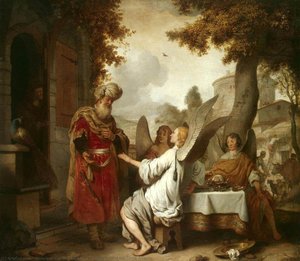
gerbrand van den eeckhout
1621 - 1674 , Netherlands
Quick Facts
- Artistic Movement Or Style: Dutch Baroque
- Artists Or Movements Influenced By This Artist: ['Dutch Portraiture']
- Artists Who Influenced This Artist: ['Rembrandt']
- Date Of Birth: 1621
- Full Name: Gerbrand van den Eeckhout
- Nationality: Dutch
- Notable Artworks:
- The Astronomer
- Portrait of a Young Man
- Place Of Birth: Amsterdam, Netherlands
Related Articles
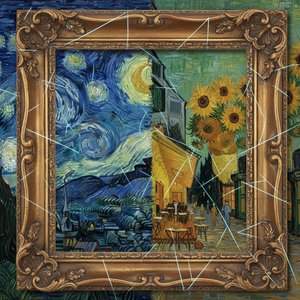
Van Gogh's Masterpieces: Explore 25 Iconic Paintings & Art for Your Home
Journey through Vincent van Gogh's 25 most iconic paintings! Explore 'Starry Night', 'Sunflowers,' and more—discover the stories, techniques & emotions behind these Post-Impressionist masterpieces. Find museum-quality art reproductions for your home at ArtsDot.com.

Rembrandt's Masterpieces: Explore 25 Iconic Paintings & Prints | ArtsDot
Journey through Rembrandt van Rijn's 25 most iconic paintings & etchings. Explore Dutch Golden Age masterpieces, dramatic chiaroscuro, and timeless portraits. Find museum-quality art reproductions to elevate your home decor on ArtsDot.com.
Early Netherlandish Masters: 10 Paintings That Revolutionized Art & Decor
Journey into the world of Early Netherlandish painting! Explore 10 masterpieces by Jan van Eyck, Rogier van der Weyden & more. Discover stunning detail, symbolism & Renaissance art for your home decor. Find museum-quality reproductions on ArtsDot.com
Early Netherlandish Masters: 10 Paintings That Revolutionized Art & Decor
Journey into the Early Netherlandish Renaissance! Explore 10 iconic paintings by Jan van Eyck, Rogier van der Weyden & more. Discover stunning detail, symbolism, and oil painting techniques. Find museum-quality art reproductions for your home at ArtsDot.com.
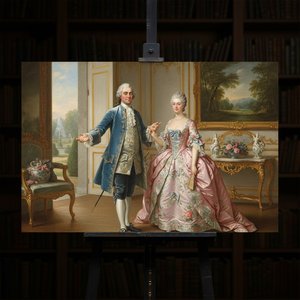
Charles-André van Loo: A Study in Rococo Portraiture & the French Court's Artistic Dynamics
Explore the elegant world of Charles-André van Loo, a master of Rococo portraiture at the French court. Discover his life, techniques, and enduring influence on 18th-century art. Hand-painted reproductions available.