 Preview
 Send
Send Share
Share
 Details

 Download
 Similars
 X-Ray
X-Ray Diaporama
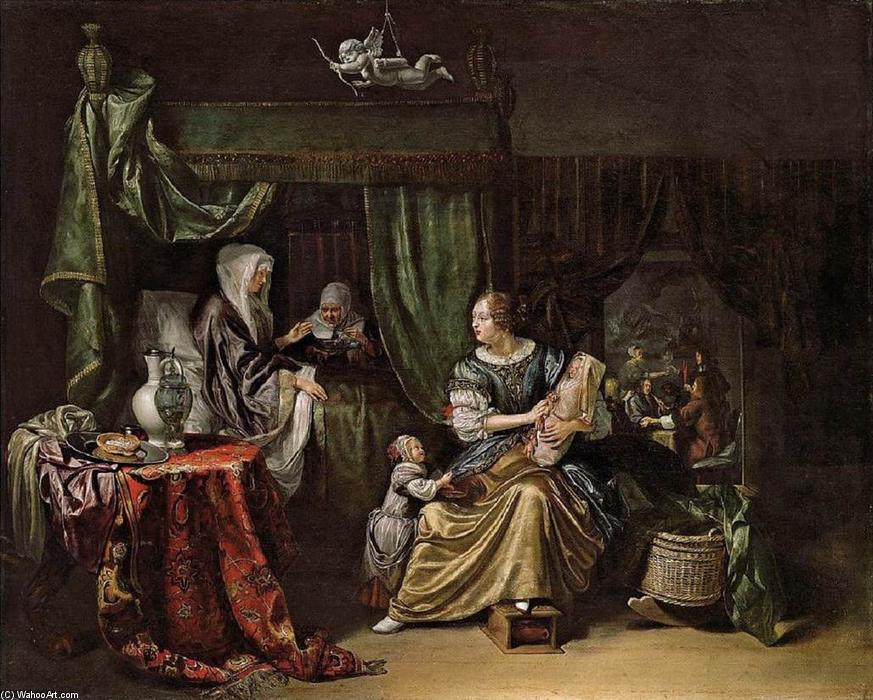
Newborn Baby
 Oil On Canvas
- WallArt
- Dutch Golden Age
 1675
1675 64.0 x 80.0 cm
 Metropolitan Museum of Art
 Read More
Hand Made Oil Reproduction
Hand-painted oil on canvas in your size and frame, made to order by our artists. ( Buy Print Buy Image)




P118B $10

P118H $10

P118W $10

P438Z $10

P508JH $12

P508YH $12

P805H $10

P805Z $10

P919BZ $10

P919G $10

P919XJ $10

P959ZH $10

P968JZ $12

W106C $8

W218G $10

W218JH $8

W218Y $10

W307PJ $10

W316G $10

W316PJ $8

W316Y $10

W398PJ $8

W4111J $10

W500HY $15

W500JH $15

W692G $12

W849H $8

W940BG $15

W953PJ $8




Pick from our preset sizes that match the artwork's original proportions.

You may enter your own dimensions to fit a specific frame or space. If your selected size does not match the original image's proportions, we will either crop the artwork or extend the painting with additional hand-painted elements. A digital mockup will be sent for your approval before production begins.
Please note that the on-screen preview does not reflect the actual cropping or extension. Only the mockup will accurately show the final composition.
While custom sizes are available, we recommend selecting a dimension from the predefined list to preserve the original proportions.
After order, ArtsDot.com team will email client for instructions and provide a mockup preview
Worldwide Delivery () in 3/4 weeks instead of standard 5 weeks. (16 August). No compromise on quality.

Free Worldwide Express Shipping

High-Quality Linen Canvas

Full Shipping Insurance

Customs Tax Refund Guarantee

True Color Matching Guarantee

60-Day Return Policy (Defects Only)

100% Money-Back Guarantee

Bulk Discount Offer
 Glass option is only available in size under 110 CM

Newborn Baby
Reproduction Medium
Reproduction Size
-


Total Price
$ 263
Artwork Description
A Moment of Tender Grace: Exploring Matthijs Naiveu’s “Newborn Baby”
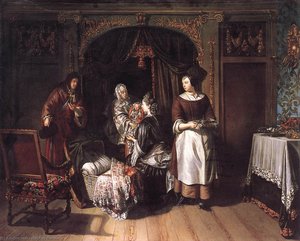
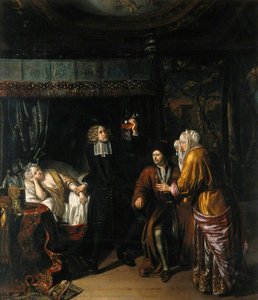
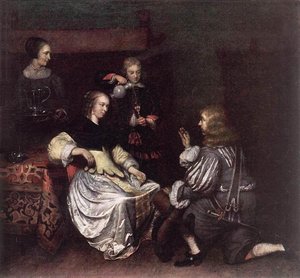
Matthijs Naiveu's "Newborn Baby," painted in 1675, isn’t merely a depiction of a new arrival; it’s a carefully constructed tableau of domestic tranquility and burgeoning family life – a window into the idealized world of a prosperous Dutch household. The painting immediately draws the eye to the central figures: a woman, radiating warmth and attentiveness, cradling her infant child. The scene unfolds within a richly appointed interior, meticulously rendered with an almost obsessive attention to detail characteristic of Naiveu’s distinctive style. This isn't a snapshot of raw emotion; it’s a deliberate composition designed to evoke feelings of security, comfort, and the promise of future generations.
Naiveu’s work firmly resides within the *fijnschilder* tradition of Leiden, a movement known for its painstaking realism and meticulous execution. He learned his craft under the tutelage of Gerrit Dou, absorbing the influence of architectural framing and a commitment to capturing subtle nuances of light and texture. Yet, Naiveu quickly developed his own unique voice, favoring intimate genre scenes – often centered around domestic rituals like tea drinking or card games – that offered a glimpse into the everyday lives of the Dutch elite. “Newborn Baby” exemplifies this approach, eschewing grand historical narratives for a quiet, deeply personal portrayal of family life.
The Language of Domesticity: Symbolism and Composition
Beyond its immediate visual appeal, “Newborn Baby” is laden with symbolic meaning. The carefully arranged objects within the room – the richly draped chair, the ornate vase overflowing with flowers, the meticulously crafted textiles – speak to the family’s wealth and status. The presence of other individuals, including a man standing nearby and two figures further back, suggests a gathering, a celebration of new life. Notice, too, the subtle gestures: the woman's gentle gaze upon her child, the man’s attentive posture. These small details contribute to the painting’s overall sense of harmony and contentment.
The composition itself is carefully balanced, drawing the eye inward towards the central figures. The use of light – diffused and warm – creates a feeling of intimacy and serenity. The artist masterfully employs chiaroscuro, contrasting areas of light and shadow to define form and create depth. This technique not only enhances the realism of the scene but also subtly emphasizes the emotional significance of the moment. The inclusion of the chair near the center is particularly noteworthy; it’s a space for contemplation, a place where memories are made and futures are envisioned.
A Window into 17th-Century Dutch Life
To understand “Newborn Baby,” it's crucial to consider the historical context in which it was created. The late 17th century marked a period of unprecedented prosperity for the Netherlands, fueled by trade and maritime dominance. Wealthy merchants and burghers commissioned artists like Naiveu to document their lives and celebrate their achievements. Paintings such as this one served not only as decorative objects but also as symbols of social status and familial lineage. The meticulous detail with which Naiveu depicts domestic interiors reflects a fascination with the material comforts and refined tastes of the era.
Furthermore, the painting offers a rare glimpse into the rituals surrounding childbirth and infancy in 17th-century Holland. The *kraamkamertje* – the room where a newborn baby was cared for after birth – held a special significance, representing a sacred space dedicated to nurturing and protection. Naiveu’s depiction of this intimate setting provides valuable insights into the social customs and beliefs surrounding new life.
Capturing Emotion Through Detail: The Artist's Technique
Naiveu’s skill lies in his ability to convey complex emotions through seemingly simple details. The softness of the baby’s skin, the gentle curve of the woman’s hand, the subtle expressions on the faces of the onlookers – all contribute to a powerful sense of tenderness and affection. The artist's meticulous rendering of fabrics, textures, and light creates a remarkably realistic and immersive experience for the viewer. It is this dedication to capturing the nuances of everyday life that makes “Newborn Baby” such a compelling and enduring work of art.
Related Artworks
Artist Biography
Matthijs Naiveu: A Life in Genre Painting
Matthijs (or Matthys) Naiveu was a Dutch Golden Age painter born in Leiden, Netherlands, in 1647 and passing away in 1726. He is remembered for his charming and detailed genre scenes depicting everyday life during the 17th and early 18th centuries.
Early Life and Training
Naiveu’s artistic journey began with drawing lessons from Abraham Toorenvliet, a glass painter and drawing instructor (and father of Jacob Toorenvliet). He then further honed his skills under the tutelage of Gerrit Dou, a prominent figure in the Leiden *fijnschilder* style – known for its meticulous detail and smooth finish. This early training profoundly shaped Naiveu’s artistic approach.
Artistic Development and Style
Initially, Naiveu's paintings were strongly influenced by Gerrit Dou, evident in their architectural framing and precise execution. A prime example of this is his work *Children Blowing Soap Bubbles* (Museum of Fine Arts, Boston). Over time, however, he developed a more generalized genre style, broadening the scope of his subject matter while retaining a commitment to detailed observation.
Key Themes and Subjects
Naiveu specialized in several recurring themes:
- Merry Company Interiors: Scenes depicting people enjoying themselves – drinking tea, playing cards, or engaging in convivial conversation.
- ‘Kraamkamertjes’: Intimate depictions of visits to newborn babies, offering a glimpse into domestic life and social customs.
- Genre Scenes: Everyday moments from Dutch society, capturing the atmosphere and details of 17th-century living.
Notable Works
While Naiveu produced a substantial body of work throughout his career, some stand out as particularly significant:
- Seven Works of Mercy – Considered by contemporaries (like Houbraken) to be his masterpiece.
- Children Blowing Soap Bubbles - Demonstrates the strong influence of Gerrit Dou.
- Numerous genre scenes depicting domestic interiors and social gatherings.
Professional Life and Guild Membership
Naiveu entered the Leiden Guild of St. Luke in 1671, signifying his recognition as a professional artist. He was remarkably productive throughout his career, consistently creating signed works from 1668 until 1721. Interestingly, he also held the position of “hop inspector” for the brewers of Amsterdam, balancing his artistic pursuits with civic duties.
Historical Significance and Legacy
Matthijs Naiveu represents a vital link in the chain of Dutch Golden Age painters. While not as widely celebrated as some of his contemporaries, his detailed genre scenes provide valuable insights into the daily lives, customs, and social interactions of 17th-century Netherlands. His work continues to be appreciated for its technical skill, charming subject matter, and historical significance.
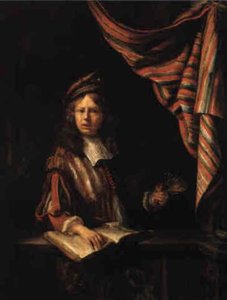
Matthijs Naiveu
1647 - 1726 , Netherlands
Quick Facts
- Birth Date: 1647
- Birth Place: Leiden, Netherlands
- Death Date: 1726
- Influenced By: Gerrit Dou, Abraham Toorenvliet
- Movement: Dutch Golden Age painting, Baroque
- Name: Matthijs Naiveu
- Nationality: Dutch
- Notable Works: Seven Works of Mercy, Children Blowing Soap Bubbles, Carnival Scene
Related Articles

Dutch Masters: 10 Golden Age Paintings That Still Inspire |
Journey into the Dutch Golden Age! Explore 10 iconic paintings by Rembrandt, Vermeer & Hals. Discover the stories behind these Baroque masterpieces and find museum-quality art reproductions to elevate your home decor on .

Golden Age Reflections: Dutch Baroque Painting & Cultural Innovation
Explore the Dutch Golden Age of painting! Discover key artists like Vermeer & ter Borch, their innovative techniques, and the rich cultural context behind these Baroque masterpieces. Learn about collecting & appreciating this iconic art period.

Illuminating Innovation: Exploring the Dutch Golden Age of Painting
Explore the Dutch Golden Age of painting with ArtsDot. Discover Rembrandt, Vermeer & other Masters. Learn about key characteristics, iconic artworks, and lasting influence. Expert insights for collectors & enthusiasts.
Illuminating Realism: Exploring the Dutch Golden Age of Painting (1600-1700)
Explore the Dutch Golden Age of painting (1600-1700) with ArtsDot. Discover Rembrandt, Vermeer & other masters. Learn about techniques, history & find museum-quality reproductions.
Charles Leickert: Capturing the Dutch Golden Age Light – A Comprehensive Study of Technique, Context, and Legacy
Explore the captivating winter landscapes of Charles Leickert, a master of Dutch Golden Age light & atmosphere. Discover his techniques, symbolism, and lasting legacy – a comprehensive study for art enthusiasts and collectors.