 Preview
 Send
Send Share
Share
 Details

 Download
 Similars
 X-Ray
X-Ray Diaporama
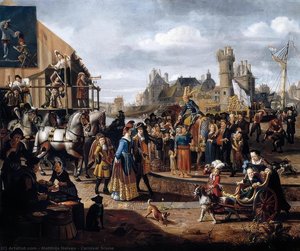
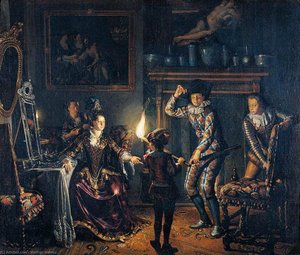
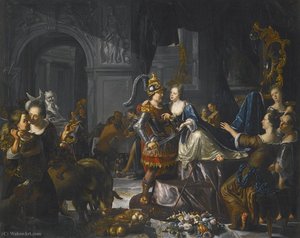
Carnival Scene
 Oil On Canvas
- WallArt
- Baroque
 Early Modern
 55.0 x 66.0 cm
 Read More
Hand Made Oil Reproduction
Hand-painted oil on canvas in your size and frame, made to order by our artists. ( Buy Print Buy Image)




P118B $10

P118H $10

P118W $10

P438Z $10

P508JH $12

P508YH $12

P805H $10

P805Z $10

P919BZ $10

P919G $10

P919XJ $10

P959ZH $10

P968JZ $12

W106C $8

W218G $10

W218JH $8

W218Y $10

W307PJ $10

W316G $10

W316PJ $8

W316Y $10

W398PJ $8

W4111J $10

W500HY $15

W500JH $15

W692G $12

W849H $8

W940BG $15

W953PJ $8




Pick from our preset sizes that match the artwork's original proportions.

You may enter your own dimensions to fit a specific frame or space. If your selected size does not match the original image's proportions, we will either crop the artwork or extend the painting with additional hand-painted elements. A digital mockup will be sent for your approval before production begins.
Please note that the on-screen preview does not reflect the actual cropping or extension. Only the mockup will accurately show the final composition.
While custom sizes are available, we recommend selecting a dimension from the predefined list to preserve the original proportions.
After order, ArtsDot.com team will email client for instructions and provide a mockup preview
Worldwide Delivery () in 3/4 weeks instead of standard 5 weeks. (16 August). No compromise on quality.

Free Worldwide Express Shipping

High-Quality Linen Canvas

Full Shipping Insurance

Customs Tax Refund Guarantee

True Color Matching Guarantee

60-Day Return Policy (Defects Only)

100% Money-Back Guarantee

Bulk Discount Offer
 Glass option is only available in size under 110 CM

Carnival Scene
Reproduction Medium
Reproduction Size
-


Total Price
$ 588
Artwork Description
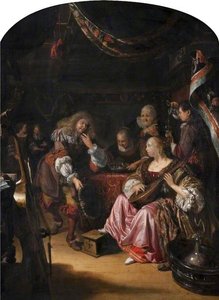
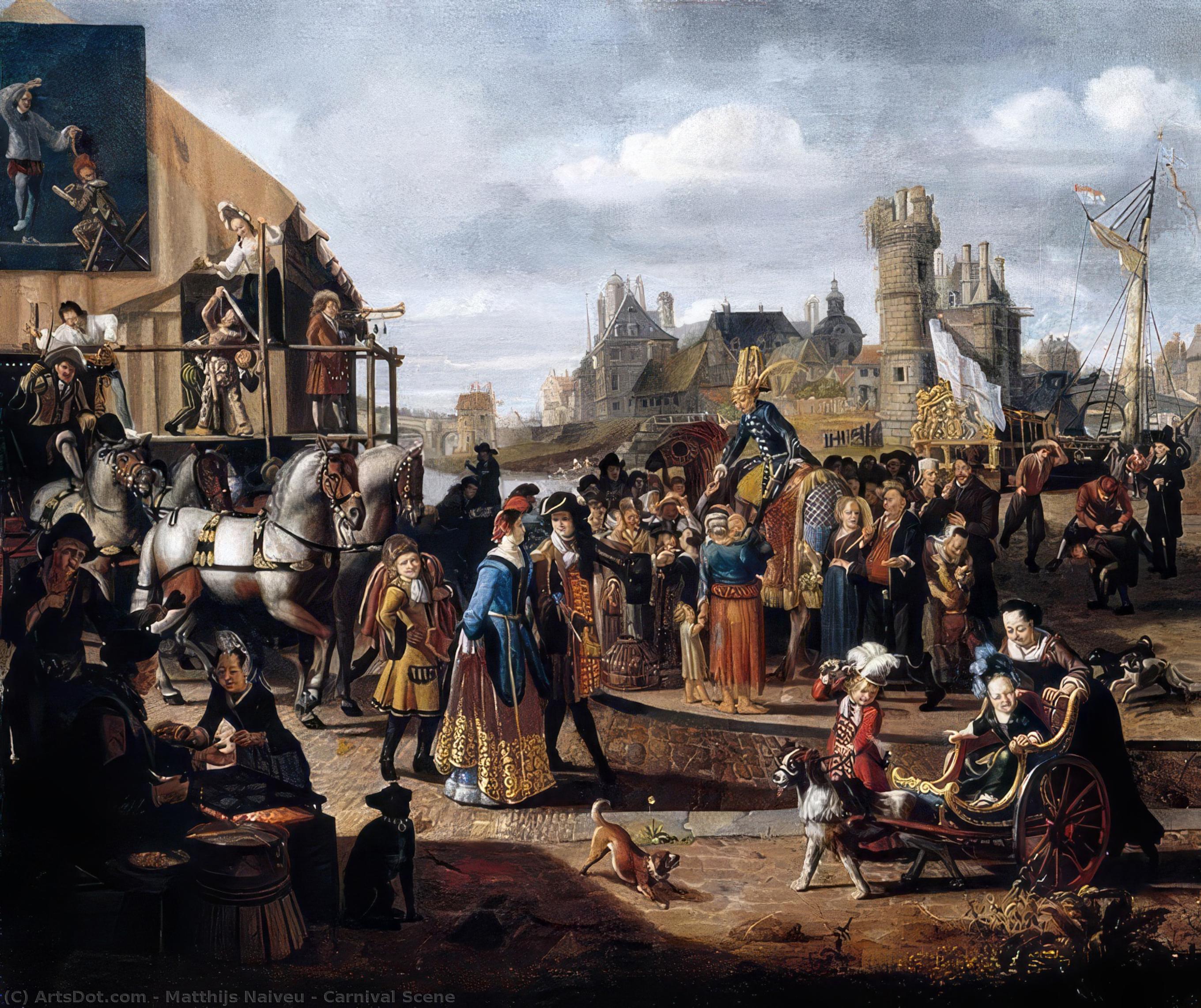
Vibrant Depiction of a Historic Carnival
Immerse yourself in a lively scene that captures the exuberance and social vitality of a bygone era. This artwork vividly portrays a bustling carnival, teeming with figures engaged in entertainment, social interaction, and celebration. Set against a backdrop of a picturesque European cityscape, the scene exudes a sense of community and festivity, inviting viewers to step into a moment frozen in time. The artist’s masterful composition and attention to detail evoke the joyful chaos and spirited atmosphere characteristic of traditional festivals.Masterful Style and Technique
Created in the style of Baroque realism, this painting exemplifies meticulous craftsmanship and a keen eye for detail. The artist employs oil painting techniques on canvas, allowing for rich layering, vibrant color application, and subtle gradations of light and shadow. The natural lighting, coming from the upper left, enhances the three-dimensionality of figures and objects, creating a convincing depth that draws viewers into the scene. The textures—ranging from the intricate embroidery of costumes to the roughness of cobblestones—are rendered with precision, showcasing technical mastery and an eye for realism.Historical Context and Symbolism
Likely originating from the 17th century, this artwork reflects the cultural and social fabric of Dutch Golden Age society. The elaborate costumes and architectural elements hint at a European setting, emphasizing themes of civic pride, social hierarchy, and communal celebration. Symbols such as the fountain, possibly representing abundance or civic pride, and the lively crowd, highlight the importance of public festivities in fostering social cohesion. The scene’s dynamic composition captures the spirit of human activity and the collective joy of a community gathered in celebration.Emotional Impact and Artistic Significance
This vibrant tableau evokes feelings of joy, nostalgia, and admiration for the artistry of the past. The lively interactions and expressive faces convey a sense of immediacy and human connection, making it a compelling centerpiece for any space. Its detailed realism and energetic composition not only celebrate historical festivities but also inspire a sense of wonder and appreciation for cultural traditions. Whether displayed in a private collection or an elegant interior, this piece offers a timeless reminder of the human love for celebration and community.Perfect for Collectors and Interior Design
Ideal for art lovers, collectors, and interior designers, this high-quality reproduction brings historical charm and artistic excellence into modern spaces. Its vibrant colors and intricate details make it a striking focal point, adding warmth and character to any room. Whether placed in a living room, gallery, or office, this artwork offers a captivating glimpse into the past, enriching your environment with its lively narrative and artistic finesse. Own a piece of history and elevate your space with this exquisite depiction of a festive European carnival.Related Artworks
Artist Biography
Matthijs Naiveu: A Life in Genre Painting
Matthijs (or Matthys) Naiveu was a Dutch Golden Age painter born in Leiden, Netherlands, in 1647 and passing away in 1726. He is remembered for his charming and detailed genre scenes depicting everyday life during the 17th and early 18th centuries.
Early Life and Training
Naiveu’s artistic journey began with drawing lessons from Abraham Toorenvliet, a glass painter and drawing instructor (and father of Jacob Toorenvliet). He then further honed his skills under the tutelage of Gerrit Dou, a prominent figure in the Leiden *fijnschilder* style – known for its meticulous detail and smooth finish. This early training profoundly shaped Naiveu’s artistic approach.
Artistic Development and Style
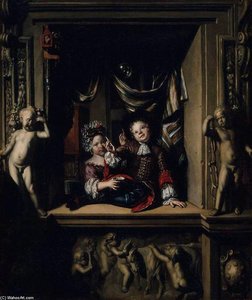
Initially, Naiveu's paintings were strongly influenced by Gerrit Dou, evident in their architectural framing and precise execution. A prime example of this is his work *Children Blowing Soap Bubbles* (Museum of Fine Arts, Boston). Over time, however, he developed a more generalized genre style, broadening the scope of his subject matter while retaining a commitment to detailed observation.
Key Themes and Subjects
Naiveu specialized in several recurring themes:
- Merry Company Interiors: Scenes depicting people enjoying themselves – drinking tea, playing cards, or engaging in convivial conversation.
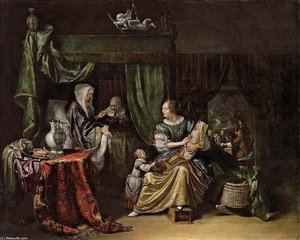
- ‘Kraamkamertjes’: Intimate depictions of visits to newborn babies, offering a glimpse into domestic life and social customs.
- Genre Scenes: Everyday moments from Dutch society, capturing the atmosphere and details of 17th-century living.
Notable Works
While Naiveu produced a substantial body of work throughout his career, some stand out as particularly significant:
- Seven Works of Mercy – Considered by contemporaries (like Houbraken) to be his masterpiece.
- Children Blowing Soap Bubbles - Demonstrates the strong influence of Gerrit Dou.
- Numerous genre scenes depicting domestic interiors and social gatherings.
Professional Life and Guild Membership
Naiveu entered the Leiden Guild of St. Luke in 1671, signifying his recognition as a professional artist. He was remarkably productive throughout his career, consistently creating signed works from 1668 until 1721. Interestingly, he also held the position of “hop inspector” for the brewers of Amsterdam, balancing his artistic pursuits with civic duties.
Historical Significance and Legacy
Matthijs Naiveu represents a vital link in the chain of Dutch Golden Age painters. While not as widely celebrated as some of his contemporaries, his detailed genre scenes provide valuable insights into the daily lives, customs, and social interactions of 17th-century Netherlands. His work continues to be appreciated for its technical skill, charming subject matter, and historical significance.
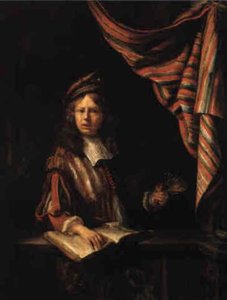
Matthijs Naiveu
1647 - 1726 , Netherlands
Quick Facts
- Birth Date: 1647
- Birth Place: Leiden, Netherlands
- Death Date: 1726
- Influenced By: Gerrit Dou, Abraham Toorenvliet
- Movement: Dutch Golden Age painting, Baroque
- Name: Matthijs Naiveu
- Nationality: Dutch
- Notable Works: Seven Works of Mercy, Children Blowing Soap Bubbles, Carnival Scene
Related Articles

Golden Age Reflections: Dutch Baroque Painting & Cultural Innovation
Explore the Dutch Golden Age of painting! Discover key artists like Vermeer & ter Borch, their innovative techniques, and the rich cultural context behind these Baroque masterpieces. Learn about collecting & appreciating this iconic art period.

Dutch Masters: 10 Golden Age Paintings That Still Inspire |
Journey into the Dutch Golden Age! Explore 10 iconic paintings by Rembrandt, Vermeer & Hals. Discover the stories behind these Baroque masterpieces and find museum-quality art reproductions to elevate your home decor on .

Dutch Baroque Masters: 10 Paintings That Shaped an Era | ArtsDot
Journey through the Golden Age with our guide to the Top 10 Dutch Baroque masterpieces! Explore iconic paintings by Rembrandt, Vermeer & Frans Hals. Find museum-quality art reproductions and elevate your home decor at ArtsDot.com.

Illuminating Innovation: Exploring the Dutch Golden Age of Painting
Explore the Dutch Golden Age of painting with ArtsDot. Discover Rembrandt, Vermeer & other Masters. Learn about key characteristics, iconic artworks, and lasting influence. Expert insights for collectors & enthusiasts.
Illuminating Realism: Exploring the Dutch Golden Age of Painting (1600-1700)
Explore the Dutch Golden Age of painting (1600-1700) with ArtsDot. Discover Rembrandt, Vermeer & other masters. Learn about techniques, history & find museum-quality reproductions.