 Preview
 Send
Send Share
Share
 Details

 Download
 Similars
 X-Ray
X-Ray Diaporama
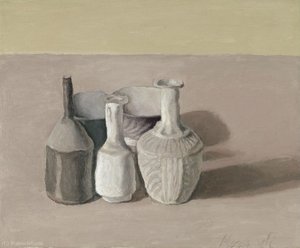
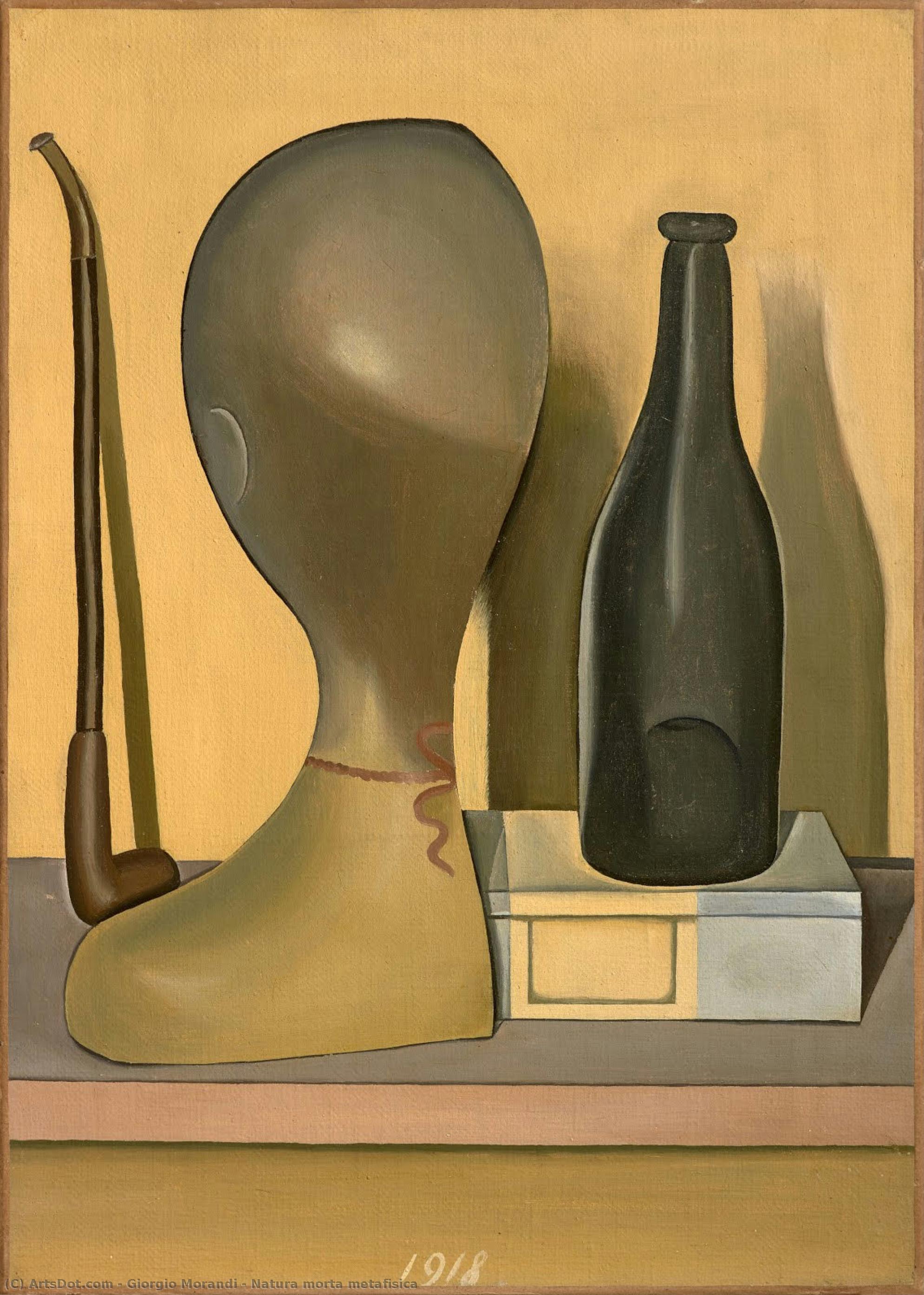
Natura morta metafisica
 Oil On Canvas
- WallArt
- MetafisicalArt
 1918
1918- Modern
 54.0 x 38.0 cm
 Fondazione Magnani-Rocca
 Read More
Giclée / Art Print
Museum-quality giclée or canvas print with fast production and flexible finish options. ( Buy Hand Made Painting Buy Image)




P118B $10

P118H $10

P118W $10

P438Z $10

P508JH $12

P508YH $12

P805H $10

P805Z $10

P919BZ $10

P919G $10

P919XJ $10

P959ZH $10

P968JZ $12

W106C $8

W218G $10

W218JH $8

W218Y $10

W307PJ $10

W316G $10

W316PJ $8

W316Y $10

W398PJ $8

W4111J $10

W500HY $15

W500JH $15

W692G $12

W849H $8

W940BG $15

W953PJ $8




Pick from our preset sizes that match the artwork's original proportions.

You may enter your own dimensions to fit a specific frame or space. If your selected size does not match the original image's proportions, we will either crop the artwork or extend the image with a mirrored or solid-fill edge. A digital mockup will be sent for your approval before production begins.
Please note that the on-screen preview does not reflect the actual cropping or extension. Only the mockup will accurately show the final composition.
While custom sizes are available, we recommend selecting a dimension from the predefined list to preserve the original proportions.
Worldwide Delivery () in 2 weeks instead of standard 4/5 weeks. (21 August)

Free Worldwide Express Shipping

High-Quality Linen Canvas

Full Shipping Insurance

Customs Tax Refund Guarantee

True Color Matching Guarantee

60-Day Return Policy (Defects Only)

100% Money-Back Guarantee

Bulk Discount Offer
 Glass option is only available in size under 110 CM

Natura morta metafisica
Giclée / Art Print
Reproduction Size
-


Total Price
$ 63
Collectible Description
A Haunting Encounter with the Metaphysical
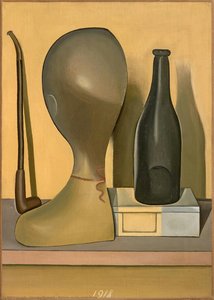
In the quiet, shadowed corners of early 20th-century modernism, few works possess the unsettling magnetism of Giorgio Morandi’s Natura morta metafisica. Painted in 1918, this masterpiece serves as a profound departure from the serene, minimalist still lifes for which Morandi later became globally renowned. Instead, we are presented with a composition that breathes with the tension of Surrealism and the fractured geometry of Cubism. At first glance, the eye is drawn to the central, stylized human head—a presence that feels both monumental and ghostly. This figure does not merely sit upon the table; it haunts it, juxtaposed against a collection of mundane objects including a pipe, a bottle, and a box. The arrangement is deliberately unbalanced, creating a psychological friction that pulls the viewer into a dreamlike state where the boundaries between reality and the subconscious begin to dissolve.
The technical execution of this piece reveals Morandi’s masterful command over atmosphere and light. Utilizing an oil on canvas technique, the artist employs a somber, restricted palette dominated by deep browns, charcoal blacks, and muted grays. These heavy tones are punctuated only by sudden, sharp whispers of red and yellow, which act as focal points within the gloom. The lighting is diffused and remarkably even, casting soft shadows that do not provide depth so much as they emphasize a haunting flatness. This flattened perspective forces the viewer to confront the objects on a single plane, stripping away the comfort of realistic space and replacing it with an angular, geometric rigidity. Every brushstroke, though subtle, contributes to a texture that feels both smooth and heavy, lending a physical weight to the ephemeral subject matter.
Symbolism and the Weight of Existence
Beyond its striking visual arrangement, Natura morta metafisica is a profound meditation on identity and mortality. The inclusion of the human head within a traditional still life—a genre typically reserved for inanimate objects—creates a jarring ontological shift. The red ribbon encircling the neck serves as a poignant symbol; it is an element of adornment that simultaneously suggests vulnerability, perhaps even a tether to the physical world. Through this unexpected combination of recognizable items presented in an unconventional, distorted manner, Morandi explores the concept of the "metaphysical"—the unseen truths that lie beneath the surface of everyday existence. The painting invites us to contemplate the fragility of life and the silent, enduring presence of memory.
For the discerning collector or interior designer, this artwork offers more than mere decoration; it provides a focal point of intellectual and emotional depth. Its moody, monochromatic elegance makes it an extraordinary addition to sophisticated spaces that value quiet contemplation and historical significance. Whether placed in a contemporary gallery setting or a classic study, the painting’s ability to evoke melancholy, mystery, and awe remains undiminished. Owning a high-quality reproduction of this work allows one to bring a piece of art history's most enigmatic era into the home, offering a window into a moment when the masters were redefining the very essence of what it means to see.
Related Artworks
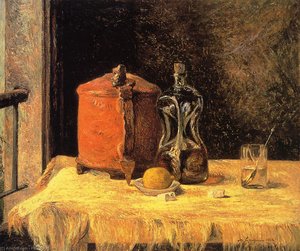
![Still Life With News Paper [nature Morte Au Journal] — Moïse Kisling, Early Cubism](/media/artworks/images-thumb/e3/c5/e3c587dd20791f92ea0970da69fea431.jpg)
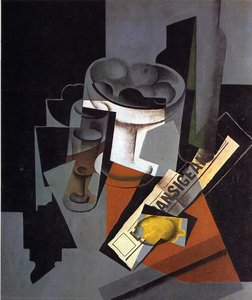
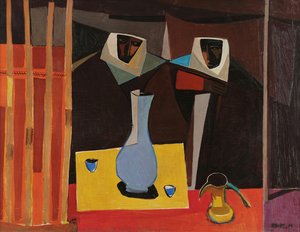
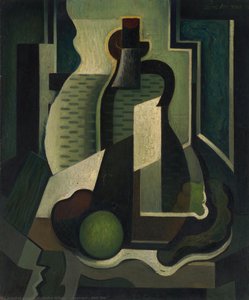
Artist Biography
A Life Submerged in Stillness
Giorgio Morandi, a name synonymous with quiet contemplation and subtle beauty, was an Italian painter and printmaker who dedicated his life to exploring the profound within the seemingly mundane. Born in Bologna in 1890, he remained deeply rooted in his native city throughout his existence, rarely venturing beyond its familiar landscapes. This geographical steadfastness mirrored a thematic consistency in his art—an unwavering focus on still life that would define his legacy. Morandi’s early life was marked by loss; the death of his father when he was young placed a significant responsibility upon him to support his mother and sisters, a circumstance that perhaps fostered an introspective nature reflected in his work. He entered the Accademia di Belle Arti di Bologna in 1907, initially excelling within its traditional framework, but soon began to diverge, seeking a more personal artistic language. His self-taught mastery of etching techniques, inspired by artists like Rembrandt, would become another crucial facet of his creative output alongside painting.From Futurism to Metaphysics and Beyond
Morandi’s artistic journey wasn't one of abrupt revolutions but rather a gradual distillation of form and feeling. A pivotal trip to Florence in 1910 exposed him to the Renaissance masters—Giotto, Masaccio, Piero della Francesca, and Paolo Uccello—whose influence can be discerned in his early compositions’ careful attention to volume and spatial relationships. He briefly flirted with Futurism in 1914, drawn to its energy and dynamism, but quickly moved beyond its tenets, finding it ultimately incompatible with his own burgeoning aesthetic sensibilities. A more significant period of experimentation occurred between 1918 and 1922 when he engaged with the Metaphysical painting movement alongside Giorgio de Chirico and Carlo Carrà. This association encouraged a deeper exploration of form, space, and the enigmatic qualities of everyday objects, laying the groundwork for his signature style. However, Morandi ultimately transcended these influences, forging a path uniquely his own—one characterized by an almost monastic dedication to simplicity and nuance.The Poetry of Ordinary Objects
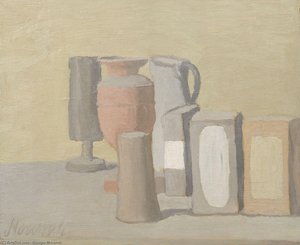
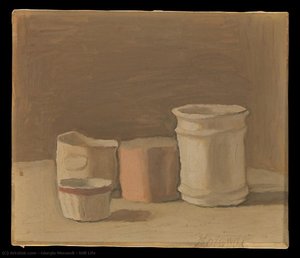
Morandi’s art is defined by its singular focus: still life. He painted vases, bottles, jars, boxes, and occasionally landscapes with relentless consistency, yet never with repetition. Each arrangement was a new exploration of form, light, and color. His mastery lay not in depicting objects as they *are*, but rather in revealing their inherent presence—their weight, texture, and the subtle interplay of shadows that define their volume. He stripped away extraneous detail, reducing forms to their essential geometry, yet imbuing them with a profound sense of atmosphere. Subtle tonal variations were his hallmark; he employed muted palettes – grays, browns, ochres, and creams – to create an almost ethereal quality, evoking a feeling of quietude and introspection. A defining characteristic of his later work was the creation of an atmospheric haze that enveloped his subjects, softening edges and unifying the composition. This wasn’t merely about depicting objects; it was about capturing the *feeling* of being in their presence—the stillness of light, the weight of silence. He sought to find the universal within the particular, elevating humble objects to a level of poetic significance.Legacy and Enduring Influence
Throughout his prolific career – encompassing over 1350 oil paintings, 133 etchings, and countless drawings and watercolors – Morandi received significant recognition, participating in prestigious exhibitions like the Venice Biennale and the Quadriennale in Rome. He was awarded first prize at the São Paulo Bienal in 1957, a testament to his growing international acclaim. However, perhaps his most lasting impact lies not in accolades but in his influence on subsequent generations of artists. His quiet, contemplative style anticipated the minimalist movement of the late 20th century, inspiring artists who sought to reduce painting to its essential elements. Morandi’s work offered a powerful counterpoint to the anxieties and upheavals of the modern world, providing viewers with a refuge—a space for contemplation and inner peace. He demonstrated that profound beauty could be found not in grand narratives or dramatic gestures, but in the subtle nuances of everyday life. His legacy continues to resonate today, reminding us of the power of stillness, simplicity, and the enduring allure of the ordinary.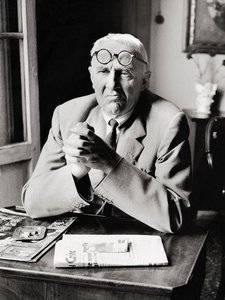
Giorgio Morandi
1890 - 1964 , Italy
Quick Facts
- Artistic Movement Or Style: Modernism, Metaphysical Painting
- Artists Or Movements Influenced By This Artist: ['Minimalism']
- Artists Who Influenced This Artist:
- Giotto
- Masaccio
- Piero della Francesca
- Rembrandt
- Cézanne
- Date Of Birth: July 20, 1890
- Date Of Death: June 18, 1964
- Full Name: Giorgio Morandi
- Nationality: Italian
- Notable Artworks:
- Still Life (1943)
- Still life (1948)
- Untitled (517)
- Place Of Birth: Bologna, Italy
Related Articles

The Enduring Legacy of Oil on Canvas: Technique, History & Aesthetic Impact
Explore the rich history & techniques of oil painting – from Renaissance masters to Impressionism. Discover pigments, layering methods, and why this timeless medium endures. Expert insights for artists & art enthusiasts.
Silent Narratives: Exploring the Enduring Appeal of Still Life Painting Across Centuries
Explore the rich history of still life painting with ArtsDot. Discover Dutch Masters, decode vanitas symbolism & learn about collecting timeless art. Expert insights and museum-quality reproductions.

Oil on Canvas: A Historical & Technical Exploration of a Timeless Artistic Medium
Explore the rich history & enduring techniques of oil painting on canvas. Discover the science behind its longevity, conservation practices, and contemporary relevance. Expert insights for art enthusiasts.

The Enduring Power of Painting: A Historical & Contemporary Exploration of Form and Emotion
Explore the rich history & enduring techniques of oil painting with ArtsDot. Discover masterpieces, learn about art collecting, and find authentic handmade reproductions crafted by skilled artists.

The Enduring Legacy of Oil on Canvas: Technique, History & Contemporary Practice
Explore the rich history & enduring techniques of oil painting on canvas. Discover the science behind its longevity, conservation practices, and contemporary relevance. Expert insights for art enthusiasts.