

 Send
Send Share
Share
 Details

 Download
 Similars
 Diaporama
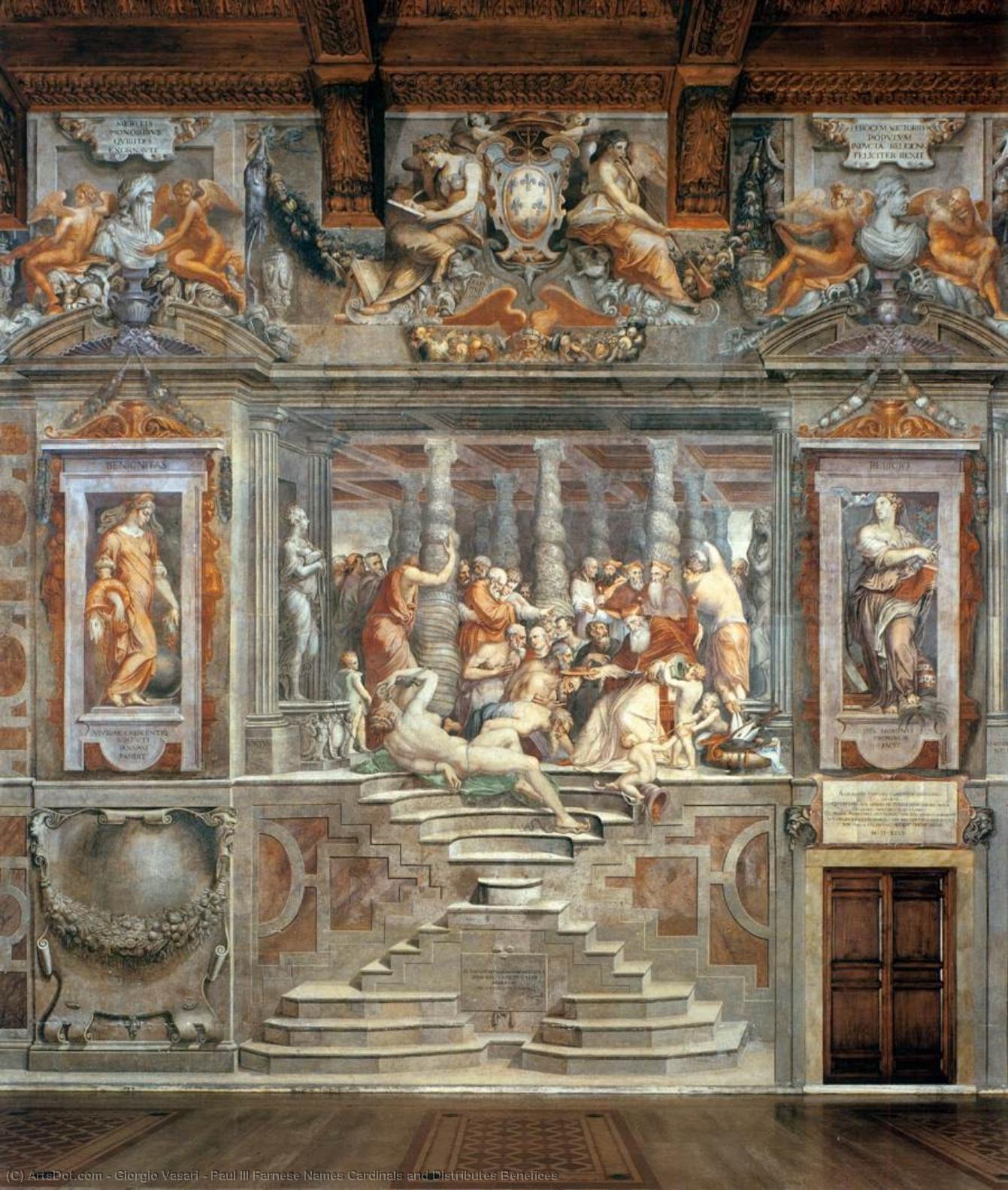
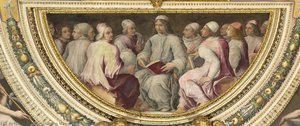
Paul III Farnese Names Cardinals and Distributes Benefices


 Read More
Purchase a high-resolution, enhanced digital image, far superior to the online preview.
Each file is meticulously prepared by our in-house specialists using advanced tools and expert manual retouching. We ensure every image has exceptional clarity, precise color accuracy, and fine detail.
The final file is delivered via email within 72 hours, optimized for immediate use in professional, editorial, and print environments. This is the same quality trusted by top-tier design studios, publishers, and galleries.
Digital Image
Download a high-resolution file for personal display, printing, and creative projects. ( Buy Print Buy Hand Made Painting)
Included in Every Digital Image Order
Expert Digital Delivery, Guaranteed
When you choose ArtsDot.com, you're not just getting an image - you're receiving a professionally enhanced digital artwork, crafted with precision and backed by a satisfaction guarantee. Here's everything that comes with your order, automatically:

Fast Email Delivery
Your high-resolution digital image file will be emailed to you within 72 hours of ordering - ready for immediate use.

AI-Enhanced Digital File
Your artwork is professionally optimized using advanced AI tools and manual editing, ensuring maximum detail, clarity, and color accuracy.

Free Lifetime Re-Delivery
Accidentally deleted or lost your file? No worries - we'll resend it to you anytime, free of charge.

No Import Fees - Ever
Enjoy your artwork instantly with zero customs, duties, or delivery fees - digital downloads are always tax-free.

Color Accuracy Guarantee
We ensure your digital image reflects the original colors as closely as possible using professional tools and color management.

60-Day Satisfaction Guarantee
If you're not satisfied with your digital image, we'll revise it or refund 100% within 60 days - no questions asked.

100% Money-Back Guarantee
Not satisfied? Get a full refund within 60 days of receiving your digital file - no questions asked.

Bulk Order Discounts
Buy 3 images, save 10% - Buy 5, save 15% - Buy 10+, save 20%. Great for creative projects, galleries, and agencies.
Collectible Description
Giorgio Vasari’s ‘Paul III Farnese Names Cardinals and Distributes Benefices’: A Renaissance Echo of Power and Virtue
The Sala dei Cento Giorni, nestled within the Palazzo della Cancelleria in Rome, stands as a testament to Giorgio Vasari's mastery—a monumental fresco that transcends mere decoration to embody the spirit of the High Renaissance. Commissioned by Cardinal Alessandro Farnese in 1546, this ambitious undertaking wasn’t simply about adorning a room; it was about proclaiming papal authority and celebrating the enduring values of Roman civilization. Vasari himself meticulously documented the project, recognizing its significance as an artistic statement reflecting the intellectual currents of his time. ### The Narrative Landscape: Mythological Allegory Meets Papal Patronage Vasari’s fresco plunges viewers into a complex narrative tapestry woven with threads of classical mythology and Christian allegory. At its core lies a central group of figures seated around a table, representing papal governance—a deliberate choice to visually communicate Farnese's lineage and the grandeur of his ambition. Surrounding this focal point are smaller vignettes depicting scenes from Greek mythology, specifically the Trojan War, symbolizing resilience and triumph over adversity – themes deeply resonant with Renaissance ideals. The artist skillfully employs perspective and layering to create a sense of depth and drama, transporting the viewer into an imagined space brimming with symbolic significance. ### Vasari’s Technique: Fresco Painting—A Legacy of Brilliance Vasari employed the venerable technique of fresco painting, applying pigments mixed with water onto freshly plastered walls. This method demanded precision and patience, resulting in a surface texture that retains its luminosity over centuries – a remarkable feat of artistic craftsmanship. The palette is dominated by earthy hues—ochre, terracotta, and muted reds—reflecting the prevailing aesthetic sensibilities of the era. Lines delineate architectural elements and drapery folds with meticulous accuracy, contributing to the overall clarity and structural integrity of the artwork. Vasari’s studio utilized a masterful blend of observation and imagination, capturing both the grandeur of Roman history and the moral virtues championed by humanist thinkers. ### Symbolism: Virtues Embodied and Divine Glory Revealed The fresco is replete with symbolic representations designed to elevate the viewer's understanding of papal power and Christian piety. Figures embodying justice, prudence, fortitude, and piety dominate the composition—each attribute carefully chosen to convey specific moral qualities deemed essential for rulers and citizens alike. The depiction of gods and goddesses—particularly Venus and Apollo—references classical mythology’s celebration of beauty and intellect – mirroring the Renaissance fascination with humanist ideals. Vasari's intention was not merely to depict events but to instill in his audience a sense of awe and reverence for divine grace, cementing the Sala dei Cento Giorni’s place as an enduring emblem of Renaissance artistic achievement. ### A Window into History: Contextualizing Vasari’s Vision Created during the reign of Pope Paul III Farnese—a pivotal figure in shaping the Catholic Reformation—the fresco reflects the anxieties and aspirations of its time. The commission itself underscored Farnese's determination to assert papal dominance amidst challenges posed by Protestantism, while simultaneously reaffirming the importance of classical virtues as a foundation for moral conduct. Vasari’s work stands alongside Michelangelo’s Sistine Chapel ceiling as one of the defining masterpieces of the High Renaissance—a testament to artistic innovation and intellectual engagement that continues to inspire admiration today.Related Artworks

Artist Biography
A Life Woven into the Renaissance Fabric
Giorgio Vasari, born in Arezzo, Tuscany, on July 30, 1511, was more than simply a painter; he was a quintessential embodiment of the Italian Renaissance spirit. His life unfolded as a vibrant tapestry woven with threads of artistic creation, architectural innovation, insightful historical writing, and an unwavering dedication to celebrating the masters who came before him. From his earliest training under Guglielmo da Marsiglia, a skilled artisan in stained glass, young Giorgio’s path was steered towards visual artistry. However, it was his move to Florence at sixteen that truly ignited his potential. Immersing himself within the dynamic circle of Andrea del Sarto and absorbing the influences of Rosso Fiorentino and Jacopo Pontormo, Vasari began a journey that would see him become one of the most influential figures of his era. His formative years were also deeply marked by the patronage and friendship of the powerful Medici family, a relationship that would shape both his career and his perspective on art’s role in society.The Artist's Hand and Eye
Vasari’s artistic style is often categorized as Mannerist, reflecting the prevailing aesthetic trends of the mid-16th century. His paintings are characterized by elongated figures, dynamic compositions, and a sophisticated use of color—qualities highly admired during his lifetime. While perhaps not achieving the same level of enduring fame as some of the artists he chronicled, Vasari’s skill was undeniable. Notable works such as The Studio of the Painter, a fresco housed in Casa Vasari in Arezzo, offer a fascinating glimpse into the artistic practices of the time. The sheer scale and ambition of his frescoes for the Palazzo Vecchio in Florence, undertaken between 1555 and 1572, demonstrate his mastery of large-scale decorative schemes. His final monumental undertaking, The Last Judgement, adorning the cupola of Florence Cathedral—completed after his death by Federico Zuccari—stands as a testament to his unwavering commitment to grand artistic visions. Beyond painting, Vasari’s architectural contributions were equally significant. He designed the elegant loggia of the Palazzo degli Uffizi, transforming it into a public piazza and creating a vital link within Florence's urban landscape. Perhaps most famously, he conceived and oversaw the construction of the Vasari Corridor, a secret passageway connecting the Uffizi Gallery with the Palazzo Pitti—a feat of engineering and architectural ingenuity that continues to captivate visitors today.A Historian Forging a Legacy
However, it is arguably as an art historian that Giorgio Vasari secured his most lasting legacy. His monumental work, Lives of the Most Excellent Painters, Sculptors, and Architects, published in 1550 (with a revised edition in 1568), revolutionized the way art was understood and appreciated. This groundbreaking text wasn’t merely a collection of biographies; it established a narrative framework for the development of Italian Renaissance art, tracing its evolution from the early masters like Cimabue and Giotto to his contemporaries Michelangelo and Raphael. Vasari's work introduced the very concept of the “Renaissance” – a rebirth of classical ideals—and laid the foundation for modern art history as a discipline. While acknowledging that Vasari’s accounts are not without their biases and inaccuracies, particularly concerning artists predating his own time, the impact of Lives remains profound. It provided a crucial historical context for artistic creation, elevating the status of artists from skilled craftsmen to intellectual figures worthy of scholarly attention.Influences and Enduring Significance
Vasari’s artistic development was profoundly shaped by his exposure to the works of Renaissance masters. His visit to Rome in 1529, where he studied the art of Raphael and other High Renaissance artists, proved pivotal. He absorbed their principles of composition, anatomical accuracy, and idealized beauty, incorporating them into his own style. Michelangelo, whom Vasari greatly admired, exerted a particularly strong influence on both his painting and architecture. The grandeur and dynamism characteristic of Michelangelo’s work are evident in many of Vasari’s projects. Beyond specific artists, the broader intellectual currents of the Renaissance—humanism, classical learning, and a renewed interest in empirical observation—also informed Vasari's approach to art and history. Giorgio Vasari died on June 27, 1574, in Florence, leaving behind a multifaceted legacy that continues to resonate today. He was not only a talented artist and architect but also a pioneering historian whose writings shaped our understanding of one of the most transformative periods in Western art history. His work remains essential for anyone seeking to explore the rich cultural heritage of the Italian Renaissance.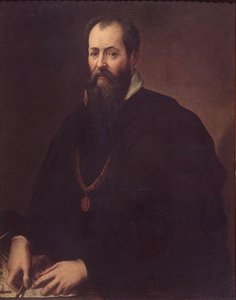
Giorgio Vasari
1511 - 1574 , Italy
Quick Facts
- Artistic Movement Or Style: Mannerism
- Artists Or Movements Influenced By This Artist: ['Renaissance art history']
- Artists Who Influenced This Artist:
- Andrea del Sarto
- Raphael
- Michelangelo
- Date Of Birth: July 30, 1511
- Date Of Death: June 27, 1574
- Full Name: Giorgio Vasari
- Nationality: Italian
- Notable Artworks:
- The Studio of the Painter
- The Last Judgement
- Adoration of the Magi
- Place Of Birth: Arezzo, Italy

