 Preview
 Send
Send Share
Share
 Details

 Download
 Similars
 X-Ray
X-Ray Diaporama
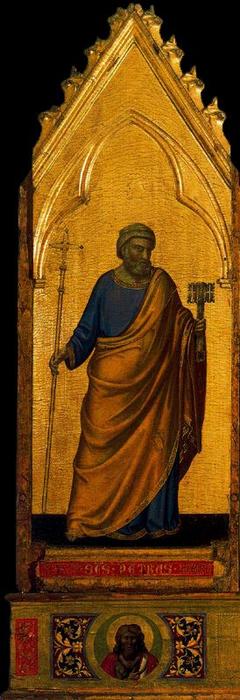
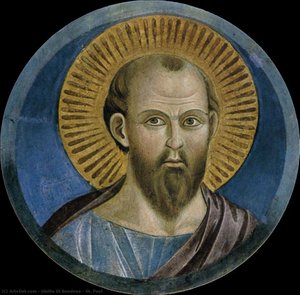
Políptico de Bolonia 3


 Read More
Hand Made Oil Reproduction
Hand-painted oil on canvas in your size and frame, made to order by our artists. ( Buy Print Buy Image)




P118B $10

P118H $10

P118W $10

P438Z $10

P508JH $12

P508YH $12

P805H $10

P805Z $10

P919BZ $10

P919G $10

P919XJ $10

P959ZH $10

P968JZ $12

W106C $8

W218G $10

W218JH $8

W218Y $10

W307PJ $10

W316G $10

W316PJ $8

W316Y $10

W398PJ $8

W4111J $10

W500HY $15

W500JH $15

W692G $12

W849H $8

W940BG $15

W953PJ $8




Pick from our preset sizes that match the artwork's original proportions.

You may enter your own dimensions to fit a specific frame or space. If your selected size does not match the original image's proportions, we will either crop the artwork or extend the painting with additional hand-painted elements. A digital mockup will be sent for your approval before production begins.
Please note that the on-screen preview does not reflect the actual cropping or extension. Only the mockup will accurately show the final composition.
While custom sizes are available, we recommend selecting a dimension from the predefined list to preserve the original proportions.
After order, ArtsDot.com team will email client for instructions and provide a mockup preview
Worldwide Delivery () in 3/4 weeks instead of standard 5 weeks. (20 August). No compromise on quality.

Free Worldwide Express Shipping

High-Quality Linen Canvas

Full Shipping Insurance

Customs Tax Refund Guarantee

True Color Matching Guarantee

60-Day Return Policy (Defects Only)

100% Money-Back Guarantee

Bulk Discount Offer
 Glass option is only available in size under 110 CM

Políptico de Bolonia 3
Reproduction Medium
Reproduction Size
-


Total Price
$ 263
Artwork Description
A Revolutionary Vision: Giotto’s Políptico de Bolonia
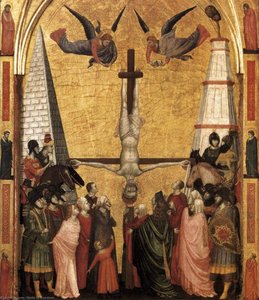
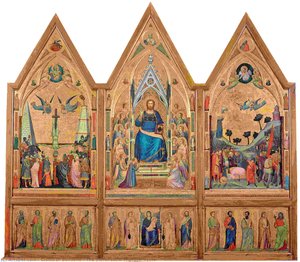
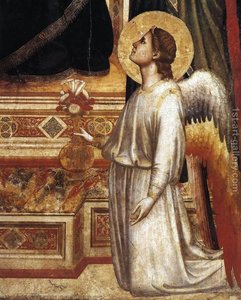
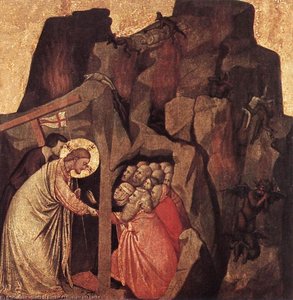
In the long, storied lineage of Western art, few names command as much reverence as Giotto di Bondone. A Florentine master whose influence reverberates through the centuries, Giotto acted as the vital bridge between the rigid, symbolic traditions of the Medieval era and the burgeoning humanism of the Renaissance. His masterpiece, the Políptico de Bolonia, completed between 1330 and 1335, stands as a profound testament to this transformative spirit. Within its panels, we witness a radical departure from the flattened, ethereal aesthetics of Byzantine art, replaced instead by a burgeoning sense of weight, volume, and human presence that would forever alter the trajectory of painting.
The narrative heart of this work is found in its poignant depiction of the Passion of Christ. Rather than presenting a distant, iconographic spectacle, Giotto invites the viewer into a moment of raw, palpable grief. The scene captures Mary Magdalene kneeling before the tomb of Jesus, flanked by the figures of Nicodemus and Joseph of Arimathea. Here, the artist moves beyond mere religious instruction to explore the depths of the human psyche. Through his brush, we do not just see biblical figures; we witness the heavy mantle of sorrow, the tenderness of compassion, and the profound vulnerability of loss. It is this psychological depth that makes the piece so enduringly resonant for the modern observer.
Mastery of Form and Light
Technically, the Políptico de Bolonia showcases Giotto’s unparalleled ability to sculpt with paint. Utilizing the traditional medium of tempera on wood panels, he achieved a luminous quality that breathes life into every texture. One of his most significant contributions visible in this work is the masterful application of chiaroscuro—the dramatic interplay between light and shadow. By manipulating these tonal shifts, Giotto grants his figures a sense of three-dimensional solidity, making them appear as tangible beings occupying real space rather than mere silhouettes against a golden void.
This naturalistic approach was a bold defiance of the era's prevailing styles. While his predecessors relied on shimmering gold backgrounds to signify spiritual transcendence, Giotto utilized light to ground his subjects in an earthly reality. The textures of the stone architecture and the heavy folds of the robes are rendered with such meticulous care that they invite a tactile connection. For the collector or interior designer, this technique offers a unique opportunity; the painting possesses a sculptural presence that brings a sense of historical gravity and sophisticated depth to any curated space.
An Enduring Legacy for the Discerning Collector
To possess a reproduction of such a monumental work is to hold a piece of the very foundation of art history. The Políptico de Bolonia is more than a religious relic; it is an exploration of what it means to be human. Its themes of mourning, devotion, and resilience are universal, transcending the centuries since its creation in Florence. For those seeking to infuse their environments with intellectual depth and emotional resonance, Giotto’s work provides an unparalleled source of inspiration.
Whether displayed in a grand gallery or as a focal point in a refined private study, this piece serves as a window into a pivotal moment of human creativity. It invites conversation, prompts reflection, and stands as a sophisticated tribute to the dawn of the Renaissance. Bringing this level of historical mastery into a contemporary setting allows for a seamless blend of classical elegance and timeless storytelling.
Related Artworks





Artist Biography
The Shepherd Boy of Florence: Giotto’s Revolutionary Vision
Born around 1267 in the rolling hills near Florence, Italy, Giotto di Bondone emerged from humble beginnings to become arguably the most pivotal figure in the transition from medieval artistic conventions toward the Renaissance. His early life is steeped in legend – a shepherd boy discovered sketching remarkably lifelike sheep on rocks, catching the discerning eye of the Florentine master Cimabue. Whether fact or folklore, this tale encapsulates the essence of Giotto’s genius: an innate ability to capture the natural world with unprecedented realism and emotional depth. Taken as an apprentice by Cimabue, Giotto quickly surpassed his teacher, absorbing technical skills but forging a path distinctly his own. The Byzantine style, dominant at the time, favored stylized figures, flattened perspectives, and lavish gold backgrounds – symbols of spiritual transcendence rather than earthly representation. Giotto, however, yearned to depict humanity not as ethereal icons, but as individuals imbued with feeling, existing within tangible space.
Breaking from Byzantium: A New Naturalism
Giotto’s artistic revolution wasn't a sudden upheaval, but a gradual evolution. His early works already hinted at the shift to come, demonstrating a growing emphasis on volume, weight, and believable anatomy. He began to observe light and shadow not merely as decorative elements, but as tools to sculpt form and create depth. This nascent naturalism is evident in his contributions to the frescoes in the Upper Basilica of Saint Francis of Assisi – though authorship remains debated, many scholars recognize Giotto’s hand in scenes that display a marked departure from prevailing Byzantine aesthetics. He wasn't simply rejecting tradition; he was building upon it, infusing established forms with a newfound sense of humanity and emotional resonance. He understood the power of narrative, crafting compositions that told stories not through rigid symbolism, but through expressive gestures, believable interactions, and carefully constructed settings.
The Scrovegni Chapel: A Masterpiece of Storytelling
Giotto’s masterpiece, and arguably one of the most important works in Western art history, is the fresco cycle adorning the Scrovegni Chapel (also known as the Arena Chapel) in Padua. Completed around 1305, this breathtaking series depicts the life of Christ and the Virgin Mary with a revolutionary level of realism and emotional intensity. Each scene unfolds like a carefully staged drama, populated by figures who are not merely representations of religious archetypes, but fully realized human beings experiencing joy, sorrow, fear, and hope. The *Last Judgment*, dominating one entire wall, is a powerful testament to Giotto’s skill in conveying both divine majesty and the raw vulnerability of humanity facing its ultimate reckoning. The use of perspective, though not mathematically precise by later Renaissance standards, creates a convincing illusion of depth, drawing the viewer into the narrative. The figures are grounded, their bodies possessing weight and volume, and their expressions convey a range of emotions that were previously unseen in religious art.
Beyond Frescoes: Architecture and Lasting Legacy
Giotto’s talents extended beyond painting; he was also a respected architect. In 1334, he was commissioned to design the Campanile – the bell tower – of Florence Cathedral, a project that showcased his innovative approach to architectural form. Though he died before its completion, his designs laid the foundation for this iconic Florentine landmark. His influence on subsequent generations of artists is immeasurable. He bridged the gap between the medieval and Renaissance worlds, paving the way for masters like Masaccio, Leonardo da Vinci, and Michelangelo. Vasari, in his seminal *Lives of the Artists*, credited Giotto with “giving to painting the great art of doing things from life,” a testament to his profound impact on the course of Western art. Giotto didn’t merely depict the world; he sought to understand it, to capture its essence, and to convey that understanding through the power of visual storytelling. His legacy continues to inspire awe and admiration centuries after his death, solidifying his place as one of history's greatest artistic innovators.
Key Achievements & Lasting Influence
- Revolutionized Painting: Moved away from Byzantine stylization towards naturalism and emotional realism.
- Pioneered Perspective: Introduced techniques to create depth and spatial awareness in paintings.
- Masterful Storytelling: Created compelling narratives through fresco cycles, like the Scrovegni Chapel.
- Architectural Contributions: Designed the Campanile of Florence Cathedral, demonstrating architectural skill.
- Foundation for Renaissance Art: His work laid the groundwork for the artistic achievements of the Renaissance period.
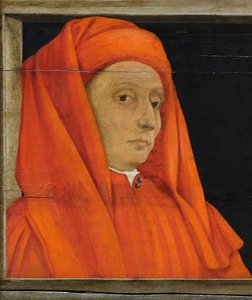
Giotto di Bondone
1267 - 1337 , Italy
Quick Facts
- Artistic Movement Or Style: Proto-Renaissance
- Artists Or Movements Influenced By This Artist:
- Masaccio
- Renaissance art
- Artists Who Influenced This Artist: ['Cimabue']
- Date Of Birth: c. 1267
- Date Of Death: 1337
- Full Name: Giotto di Bondone
- Nationality: Italian
- Notable Artworks:
- Scrovegni Chapel
- Ognissanti Madonna
- Campanile
- Place Of Birth: Florence, Italy
Related Articles

Giotto's Masterpieces: 25 Renaissance Artworks for Your Home | ArtsDot
Explore 25 breathtaking artworks by Giotto di Bondone, a Renaissance master. Discover the stories behind iconic frescoes & paintings like the Scrovegni Chapel cycle. Find museum-quality Giotto reproductions and elevate your home decor with ArtsDot.com.
Tempera's Timeless Legacy: 10 Masterpieces That Revolutionized Art | ArtsDot
Journey through 10 legendary tempera on panel masterpieces by Giotto, Duccio & Botticelli. Explore the history, symbolism & enduring beauty of these iconic artworks. Find museum-quality reproductions for your home at ArtsDot.com.
Illuminating Surfaces: A Comprehensive Exploration of Tempera on Panel Painting Techniques & Historical Significance
Explore the rich history & techniques of tempera painting! Discover Renaissance masters like Botticelli & Fra Angelico, conservation insights, and the enduring legacy of this captivating art form. Learn more now!
Proto-Renaissance Masters: 10 Artworks That Changed History | ArtsDot
Journey back to the dawn of Renaissance art! Explore 10 iconic Proto-Renaissance masterpieces by Giotto, Cimabue & Duccio. Discover their stories, techniques & lasting impact. Find museum-quality reproductions for your home at ArtsDot.com
Illuminating History: A Comprehensive Exploration of Tempera Painting Techniques & Artistic Legacy
Explore the rich history & techniques of tempera painting! Discover Renaissance masters like Botticelli & Fra Angelico, conservation insights, and the enduring legacy of this captivating art form.
![Scrovegni - [05] - Joachim's Dream](/media/artworks/images/thumbnails/32/0d/320df7d7d8ca46f99ecdcc7b4315e13f.jpg)