 Preview
 Send
Send Share
Share
 Details

 Download
 Similars
 X-Ray
X-Ray Diaporama
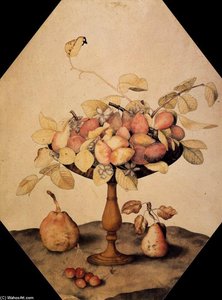
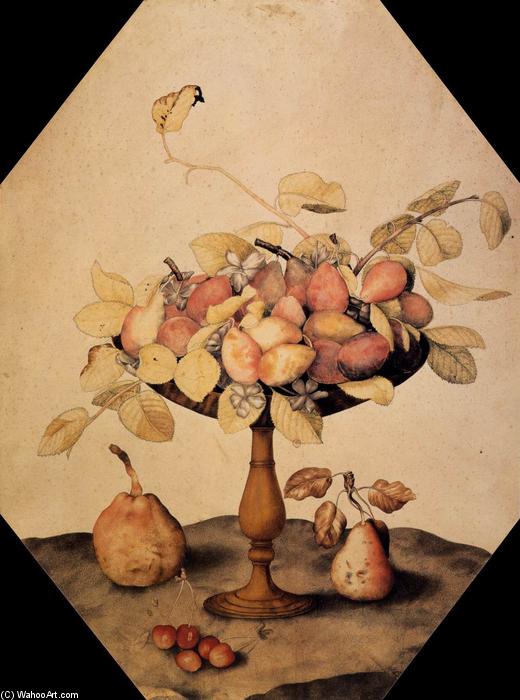
Bowl with Plums
 Oil On Canvas
- WallArt
- Baroque Period
 1625
1625 66.0 x 49.0 cm
 Galleria degli Uffizi
 Read More
Hand Made Oil Reproduction
Hand-painted oil on canvas in your size and frame, made to order by our artists. ( Buy Print Buy Image)




P118B $10

P118H $10

P118W $10

P438Z $10

P508JH $12

P508YH $12

P805H $10

P805Z $10

P919BZ $10

P919G $10

P919XJ $10

P959ZH $10

P968JZ $12

W106C $8

W218G $10

W218JH $8

W218Y $10

W307PJ $10

W316G $10

W316PJ $8

W316Y $10

W398PJ $8

W4111J $10

W500HY $15

W500JH $15

W692G $12

W849H $8

W940BG $15

W953PJ $8




Pick from our preset sizes that match the artwork's original proportions.

You may enter your own dimensions to fit a specific frame or space. If your selected size does not match the original image's proportions, we will either crop the artwork or extend the painting with additional hand-painted elements. A digital mockup will be sent for your approval before production begins.
Please note that the on-screen preview does not reflect the actual cropping or extension. Only the mockup will accurately show the final composition.
While custom sizes are available, we recommend selecting a dimension from the predefined list to preserve the original proportions.
After order, ArtsDot.com team will email client for instructions and provide a mockup preview
Worldwide Delivery () in 3/4 weeks instead of standard 5 weeks. (16 August). No compromise on quality.

Free Worldwide Express Shipping

High-Quality Linen Canvas

Full Shipping Insurance

Customs Tax Refund Guarantee

True Color Matching Guarantee

60-Day Return Policy (Defects Only)

100% Money-Back Guarantee

Bulk Discount Offer
 Glass option is only available in size under 110 CM

Bowl with Plums
Reproduction Medium
Reproduction Size
-


Total Price
$ 263
Artwork Description
Bowl with Plums by Giovanna Garzoni: A Silent Symphony of Color and Detail
Giovanna Garzoni’s “Bowl with Plums,” painted in 1625, transcends mere representation; it embodies the spirit of Baroque artistry—a meticulous exploration of observation coupled with profound artistic sensitivity. Housed within the Galleria degli Uffizi in Florence, this tempera masterpiece on parchment stands as a testament to Garzoni's pioneering role in botanical painting and her masterful command of color palettes characteristic of the era.The Painting’s Composition and Style
At first glance, the artwork presents a deceptively simple tableau: a bowl brimming with plums resting upon a dark cloth table. However, beneath this apparent stillness lies a carefully orchestrated visual narrative. Scattered around the bowl are fallen leaves—a deliberate inclusion that underscores the transient beauty of nature and echoes classical myths concerning disillusionment and unattainable desires. Two pears lie adjacent to the bowl on the tabletop surface, adding another element of textural contrast and reinforcing the painting’s connection to the natural world. Garzoni's stylistic choices align perfectly with the Baroque aesthetic – prioritizing realism while simultaneously elevating it through expressive brushstrokes and luminous color harmonies.Giovanna Garzoni: A Pioneer in Botanical Art
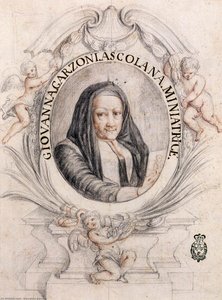
Giovanna Garzoni (1600 – February 1670) distinguished herself as an exceptional artist during her time, achieving renown primarily for her exquisitely rendered watercolor botanical studies—a genre remarkably uncommon for women artists of the seventeenth century. Her father, Giacomo Garzoni, a celebrated humanist scholar and diplomat, fostered an environment that nurtured intellectual curiosity and artistic ambition. Notably, Pietro Gaia, her uncle, also a painter, instilled in her a dedication to precision and observation – values that would become central to Garzoni’s artistic practice. She initially pursued religious and mythological subjects with considerable skill but swiftly gained prominence for her botanical watercolors, establishing herself as one of the foremost painters of her era.Technique and Material Considerations
Garzoni's technique—tempera on parchment—was particularly innovative for its time. Tempera pigments bind to a substrate like parchment using egg yolk, resulting in an exceptionally durable and luminous finish. This medium allowed Garzoni to achieve remarkable detail and tonal subtlety, capturing the nuances of light and shadow with breathtaking accuracy. The careful layering of translucent washes created depth and atmosphere, mirroring the Baroque fascination with illusionistic effects—a hallmark of artistic excellence during the period.Symbolism and Emotional Resonance
Beyond its technical prowess, “Bowl with Plums” resonates deeply with symbolic meaning. The plums themselves represent ripeness, abundance, and perhaps even indulgence – themes frequently explored in Baroque art to convey moral lessons. Simultaneously, the fallen leaves serve as poignant reminders of mortality and the ephemeral nature of earthly pleasures—a contemplative element that elevates the painting beyond mere visual delight. Garzoni’s work invites viewers to contemplate beauty alongside melancholy, reflecting the broader philosophical currents of the Baroque period.Availability: A Reproduction Worthy of Distinction
A handmade oil painting reproduction of “Bowl with Plums” is available on ArtsDot.com. Further information about the Galleria degli Uffizi can be found at ArtsDot.com. Explore Giovanna Garzoni’s legacy and immerse yourself in the captivating artistry of this Baroque icon—a timeless masterpiece deserving of admiration and preservation.Related Artworks

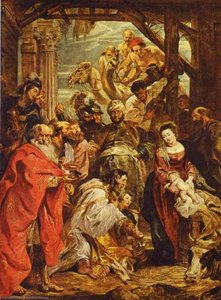
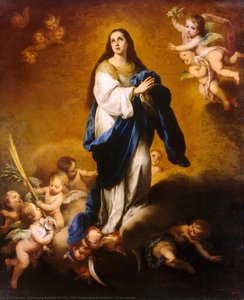
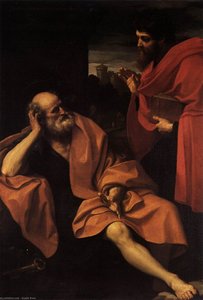
Artist Biography
The Silent Botanist of Baroque Italy
In the vibrant, often tumultuous landscape of seventeenth-century Italy, a singular voice emerged through the delicate application of watercolor and tempera. Giovanna Garzoni (1600–1670) did not command the grand, sweeping canvases of the Baroque era's most famous masters; instead, she captured the profound beauty of the minute. Born in Ascoli Piculated into a lineage of Venetian nobility and intellectual prestige, Garzoni possessed an innate curiosity that bridged the gap between fine art and scientific inquiry. While her contemporaries often focused on the dramatic tension of religious martyrdom or mythological upheaval, Garzoni turned her gaze toward the quiet, breathing world of flora, fauna, and the humble textures of everyday objects.
Her early life was steeped in an environment where art and scholarship were inextricably linked. As the daughter of a humanist scholar, her upbringing provided the intellectual foundation necessary for her later scientific precision. The influence of her uncle, the painter Pietro Gaia, likely offered her first glimpses into the technical rigors of the Venetian tradition. This early exposure to the mastery of light and form allowed her to develop a style that was both aesthetically enchanting and remarkably accurate. As she matured, Garzoni’s work began to transcend mere decoration, evolving into a sophisticated study of nature that anticipated the botanical illustrations of later centuries.
A Mastery of Precision and Medium
Garzoni’s true genius lay in her ability to manipulate delicate mediums like watercolor and tempera on surfaces such as vellum and paper. Her technique was characterized by an almost microscopic attention to detail, where the translucent skin of a citrus fruit or the intricate veins of a leaf were rendered with breathtaking clarity. This precision was not merely an artistic choice but a reflection of her engagement with the burgeoning scientific spirit of the age. She approached her subjects—citrons, shells, birds, and vegetables—with the eye of a naturalist, documenting the physical world with a fidelity that made her work invaluable to both collectors and scholars.
Her repertoire was remarkably diverse for a woman of her era. While she is most celebrated for her botanical still lifes, her talent extended into several other realms:
- Religious and Mythological Works: In her earlier career, Garzoni engaged with the grander themes of her time, demonstrating a command over narrative and allegory.
- Portraiture: She possessed the ability to capture the character and essence of her subjects, moving beyond simple likeness to convey depth.
- Experimental Surfaces: Her artistry was not confined to paper; she explored the possibilities of painting on cloth and stone, showcasing a versatile mastery over varied textures.
Legacy and Historical Significance
The historical significance of Giovanna Garzoni extends far beyond the borders of her beautiful illustrations. She stands as a pioneer for women in the arts, breaking through the gendered boundaries of the seventeenth century to claim a space within the scientific and still-life genres—fields that required a level of objective observation often deemed "unfeminine" at the time. Her travels across Italy, often accompanied by her brother, allowed her to gather a vast array of specimens, making her work a living record of the natural world as it was perceived during the Baroque period.
Today, Garzoni’s legacy is preserved in some of the world's most prestigious institutions, such as The J. Paul Getty Museum. Her ability to marry the ephemeral beauty of nature with the permanence of scientific record ensures her place in the canon of art history. She remains a testament to the power of the observant eye, reminding us that there is an entire universe of drama and complexity to be found in the smallest petal, the simplest shell, and the most quiet corner of the natural world.
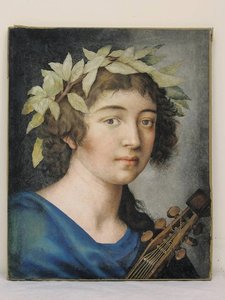
Giovanna Garzoni
1600 - 1670 , Italy
Quick Facts
- Artistic Movement Or Style: Baroque
- Artists Or Movements Influenced By This Artist: ['Ligozzi']
- Artists Who Influenced This Artist: ['Jacopo Ligozzi']
- Date Of Birth: 1600
- Date Of Death: 1670
- Full Name: Giovanna Garzoni
- Nationality: Italian
- Notable Artworks:
- China Bowl with Figs, a Bird, and Cherries
- Figs
- Bowl with Plums
- Place Of Birth: Ascoli Piceno, Italy
Related Articles
The Flourishing Canvas: A Historical & Artistic Exploration of Botanical Illustration
Explore the rich history of botanical illustration! Discover key artists like Havell & Barraband, learn about scientific accuracy & aesthetic beauty. Shop museum-quality reproductions at ArtsDot.
The Flourishing Canvas: A Historical Journey Through Botanical Illustration
Explore the captivating history of botanical illustration! Discover renowned artists like Robert Havell & Mary Walcott, learn about techniques, and find museum-quality art at ArtsDot.com.
The Flourishing Canvas: A Historical Journey Through Botanical Illustration
Explore the captivating history of botanical illustration! Discover renowned artists like Robert Havell & Mary Walcott, learn about techniques, and find museum-quality art at ArtsDot.com.
Victorian Botanical Painting: Science, Art & Aesthetic Sensibility
Explore the exquisite world of Victorian botanical art! Discover the science & artistry behind stunning floral illustrations by Gould, Muckley & more. Learn about collecting, value & investment at ArtsDot.
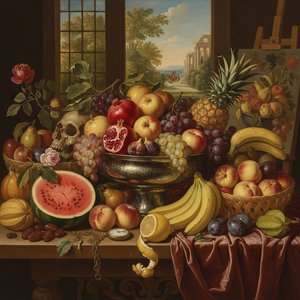
The Bountiful Still Life: Symbolism & Artistic Representation of Fruit Across Art History
Explore the rich history of still life painting & the symbolism of fruit across art movements. Discover masterpieces from Caravaggio to Cézanne with ArtsDot – expert guidance & museum-quality reproductions.