

 Preview
 Send
Send Share
Share
 Details

 Download
 Similars
 X-Ray
X-Ray Diaporama
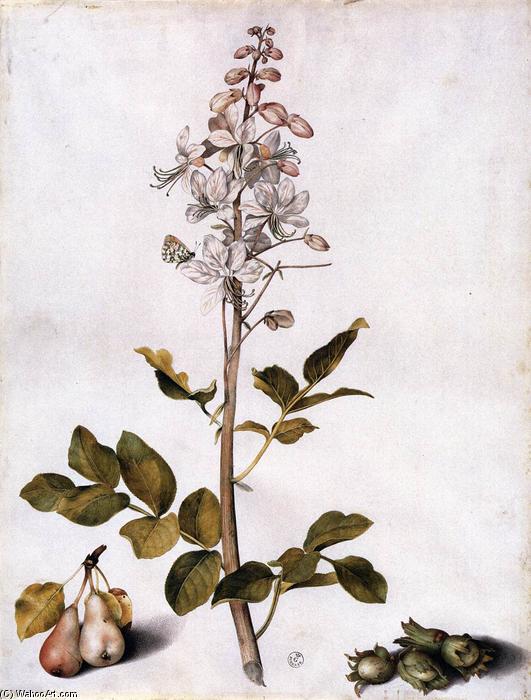
Branch of Dittany with Four Hazelnuts and Two Pears
 Oil On Canvas
- WallArt
- Baroque
 555.0 x 417.0 cm
 Galleria degli Uffizi
 Read More
Purchase a high-resolution, enhanced digital image, far superior to the online preview.
Each file is meticulously prepared by our in-house specialists using advanced tools and expert manual retouching. We ensure every image has exceptional clarity, precise color accuracy, and fine detail.
The final file is delivered via email within 72 hours, optimized for immediate use in professional, editorial, and print environments. This is the same quality trusted by top-tier design studios, publishers, and galleries.
Digital Image
Download a high-resolution file for personal display, printing, and creative projects. ( Buy Print Buy Hand Made Painting)
Included in Every Digital Image Order
Expert Digital Delivery, Guaranteed
When you choose ArtsDot.com, you're not just getting an image - you're receiving a professionally enhanced digital artwork, crafted with precision and backed by a satisfaction guarantee. Here's everything that comes with your order, automatically:

Fast Email Delivery
Your high-resolution digital image file will be emailed to you within 72 hours of ordering - ready for immediate use.

AI-Enhanced Digital File
Your artwork is professionally optimized using advanced AI tools and manual editing, ensuring maximum detail, clarity, and color accuracy.

Free Lifetime Re-Delivery
Accidentally deleted or lost your file? No worries - we'll resend it to you anytime, free of charge.

No Import Fees - Ever
Enjoy your artwork instantly with zero customs, duties, or delivery fees - digital downloads are always tax-free.

Color Accuracy Guarantee
We ensure your digital image reflects the original colors as closely as possible using professional tools and color management.

60-Day Satisfaction Guarantee
If you're not satisfied with your digital image, we'll revise it or refund 100% within 60 days - no questions asked.

100% Money-Back Guarantee
Not satisfied? Get a full refund within 60 days of receiving your digital file - no questions asked.

Bulk Order Discounts
Buy 3 images, save 10% - Buy 5, save 15% - Buy 10+, save 20%. Great for creative projects, galleries, and agencies.
Collectible Description
Giovanna Garzoni: A Pioneer of Botanical Watercolor – Exploring ‘Branch of Dittany’
Giovanna Garzoni (1600 – February 1670) stands as a singular figure in the artistic landscape of Baroque Italy, celebrated primarily for her exquisitely rendered botanical watercolors—a genre remarkably uncommon for women artists of her era. While she initially pursued religious and mythological subjects with considerable skill, Garzoni’s legacy rests firmly upon her dedication to scientific observation and artistic precision within the realm of flora, securing her place as one of the foremost painters of her time and a testament to female intellectual curiosity during the seventeenth century. Her work transcends mere depiction; it embodies an era's fascination with natural history intertwined with refined aesthetic sensibilities.A Window into Seventeenth-Century Scientific Artistry
‘Branch of Dittany with Four Hazelnuts and Two Pears,’ housed within the Uffizi Gallery in Florence, exemplifies Garzoni’s groundbreaking approach to botanical painting. Created around 1638, this piece isn't simply a record of plant life; it’s a carefully constructed visual narrative reflecting the burgeoning scientific spirit of the time—a period marked by intense exploration and categorization driven by figures like Andreas Vesalius and Francis Bacon. Unlike many artists preoccupied with grand narratives or idealized beauty, Garzoni focused intently on meticulous detail, prioritizing accurate representation over dramatic embellishment. This dedication to observation distinguishes her oeuvre from its contemporaries and underscores the importance of scientific inquiry within artistic practice.Technique and Style: The Delicate Dance of Glazes
Garzoni’s masterful technique—primarily tempera on canvas—allowed for unparalleled luminosity and subtlety. She employed a layering process known as glazing, applying thin translucent washes of pigment over previous layers to build up color gradually. This method, favored during the Dutch Golden Age, ensured that each hue blended seamlessly with its neighbors, creating an ethereal quality characteristic of Garzoni’s style. The soft lines delineating the plant's forms contribute to a sense of understated elegance and emphasize the delicate structure of the foliage—a deliberate choice reflecting the prevailing aesthetic ideals of the period. Furthermore, subtle shading enhances depth without resorting to heavy chiaroscuro, mirroring the meticulous attention to detail demanded by scientific illustration.Symbolism Beyond Representation: Hints of Renaissance Legacy
Beyond its technical brilliance, ‘Branch of Dittany’ carries symbolic resonance rooted in Renaissance botanical scholarship. Dittany herb (Spartium communis), depicted prominently in the composition, held medicinal significance—a reflection of the humanist preoccupation with understanding God's creation and harnessing its healing properties. The inclusion of hazelnuts and pears adds layers of visual richness and subtly references concepts of fertility and abundance – themes frequently explored in Renaissance art. Garzoni’s artistic choices weren’t merely decorative; they communicated a deeper intellectual engagement with prevailing cultural beliefs and values.Emotional Impact: Tranquility and Precision Converge
Despite its scientific rigor, the painting possesses an undeniable emotional impact—one achieved through careful composition and tonal harmony. The muted palette – predominantly whites and greens – evokes a sense of serenity and invites contemplation. Garzoni’s unwavering focus on observation transforms the artwork into a celebration of beauty found within the natural world, demonstrating that artistic excellence could coexist with intellectual curiosity. Viewing ‘Branch of Dittany’ offers a glimpse into a pivotal moment in art history—a testament to Giovanna Garzoni's enduring contribution as a visionary artist and scientist.- Explore Giovanna Garzoni’s ‘Branch of Dittany’ – a stunning 17th-century botanical study in oil paint. Admire its realistic detail & elegant style.
- This painting exemplifies Garzoni's dedication to botanical illustration and her masterful use of tempera technique.
Related Artworks
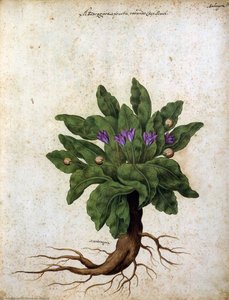

Artist Biography
The Silent Botanist of Baroque Italy
In the vibrant, often tumultuous landscape of seventeenth-century Italy, a singular voice emerged through the delicate application of watercolor and tempera. Giovanna Garzoni (1600–1670) did not command the grand, sweeping canvases of the Baroque era's most famous masters; instead, she captured the profound beauty of the minute. Born in Ascoli Piculated into a lineage of Venetian nobility and intellectual prestige, Garzoni possessed an innate curiosity that bridged the gap between fine art and scientific inquiry. While her contemporaries often focused on the dramatic tension of religious martyrdom or mythological upheaval, Garzoni turned her gaze toward the quiet, breathing world of flora, fauna, and the humble textures of everyday objects.
Her early life was steeped in an environment where art and scholarship were inextricably linked. As the daughter of a humanist scholar, her upbringing provided the intellectual foundation necessary for her later scientific precision. The influence of her uncle, the painter Pietro Gaia, likely offered her first glimpses into the technical rigors of the Venetian tradition. This early exposure to the mastery of light and form allowed her to develop a style that was both aesthetically enchanting and remarkably accurate. As she matured, Garzoni’s work began to transcend mere decoration, evolving into a sophisticated study of nature that anticipated the botanical illustrations of later centuries.
A Mastery of Precision and Medium
Garzoni’s true genius lay in her ability to manipulate delicate mediums like watercolor and tempera on surfaces such as vellum and paper. Her technique was characterized by an almost microscopic attention to detail, where the translucent skin of a citrus fruit or the intricate veins of a leaf were rendered with breathtaking clarity. This precision was not merely an artistic choice but a reflection of her engagement with the burgeoning scientific spirit of the age. She approached her subjects—citrons, shells, birds, and vegetables—with the eye of a naturalist, documenting the physical world with a fidelity that made her work invaluable to both collectors and scholars.
Her repertoire was remarkably diverse for a woman of her era. While she is most celebrated for her botanical still lifes, her talent extended into several other realms:
- Religious and Mythological Works: In her earlier career, Garzoni engaged with the grander themes of her time, demonstrating a command over narrative and allegory.
- Portraiture: She possessed the ability to capture the character and essence of her subjects, moving beyond simple likeness to convey depth.
- Experimental Surfaces: Her artistry was not confined to paper; she explored the possibilities of painting on cloth and stone, showcasing a versatile mastery over varied textures.
Legacy and Historical Significance
The historical significance of Giovanna Garzoni extends far beyond the borders of her beautiful illustrations. She stands as a pioneer for women in the arts, breaking through the gendered boundaries of the seventeenth century to claim a space within the scientific and still-life genres—fields that required a level of objective observation often deemed "unfeminine" at the time. Her travels across Italy, often accompanied by her brother, allowed her to gather a vast array of specimens, making her work a living record of the natural world as it was perceived during the Baroque period.
Today, Garzoni’s legacy is preserved in some of the world's most prestigious institutions, such as The J. Paul Getty Museum. Her ability to marry the ephemeral beauty of nature with the permanence of scientific record ensures her place in the canon of art history. She remains a testament to the power of the observant eye, reminding us that there is an entire universe of drama and complexity to be found in the smallest petal, the simplest shell, and the most quiet corner of the natural world.
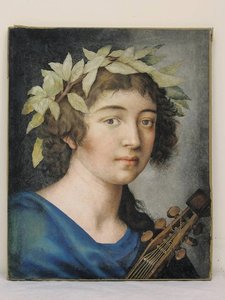
Giovanna Garzoni
1600 - 1670 , Italy
Quick Facts
- Artistic Movement Or Style: Baroque
- Artists Or Movements Influenced By This Artist: ['Ligozzi']
- Artists Who Influenced This Artist: ['Jacopo Ligozzi']
- Date Of Birth: 1600
- Date Of Death: 1670
- Full Name: Giovanna Garzoni
- Nationality: Italian
- Notable Artworks:
- China Bowl with Figs, a Bird, and Cherries
- Figs
- Bowl with Plums
- Place Of Birth: Ascoli Piceno, Italy

