

 Preview
 Send
Send Share
Share
 Details

 Download
 Similars
 X-Ray
X-Ray Diaporama
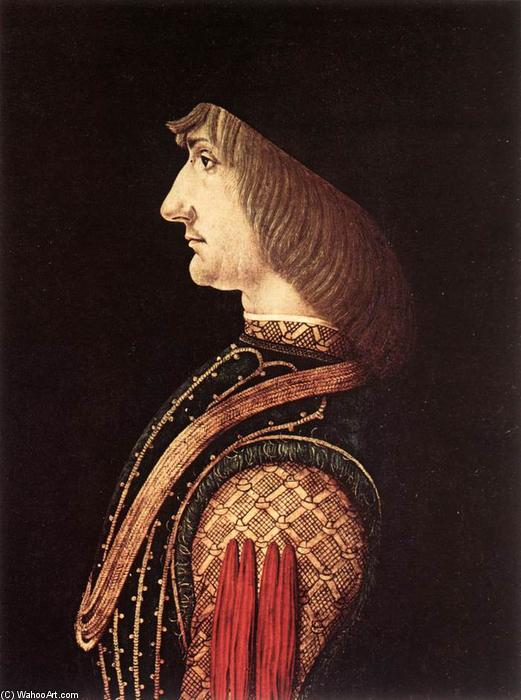
Portrait of a Man
 Oil On Canvas
- WallArt
- Renaissance
 1500
1500 60.0 x 45.0 cm
 Galleria degli Uffizi
 Read More
Purchase a high-resolution, enhanced digital image, far superior to the online preview.
Each file is meticulously prepared by our in-house specialists using advanced tools and expert manual retouching. We ensure every image has exceptional clarity, precise color accuracy, and fine detail.
The final file is delivered via email within 72 hours, optimized for immediate use in professional, editorial, and print environments. This is the same quality trusted by top-tier design studios, publishers, and galleries.
Digital Image
Download a high-resolution file for personal display, printing, and creative projects. ( Buy Print Buy Hand Made Painting)
Included in Every Digital Image Order
Expert Digital Delivery, Guaranteed
When you choose ArtsDot.com, you're not just getting an image - you're receiving a professionally enhanced digital artwork, crafted with precision and backed by a satisfaction guarantee. Here's everything that comes with your order, automatically:

Fast Email Delivery
Your high-resolution digital image file will be emailed to you within 72 hours of ordering - ready for immediate use.

AI-Enhanced Digital File
Your artwork is professionally optimized using advanced AI tools and manual editing, ensuring maximum detail, clarity, and color accuracy.

Free Lifetime Re-Delivery
Accidentally deleted or lost your file? No worries - we'll resend it to you anytime, free of charge.

No Import Fees - Ever
Enjoy your artwork instantly with zero customs, duties, or delivery fees - digital downloads are always tax-free.

Color Accuracy Guarantee
We ensure your digital image reflects the original colors as closely as possible using professional tools and color management.

60-Day Satisfaction Guarantee
If you're not satisfied with your digital image, we'll revise it or refund 100% within 60 days - no questions asked.

100% Money-Back Guarantee
Not satisfied? Get a full refund within 60 days of receiving your digital file - no questions asked.

Bulk Order Discounts
Buy 3 images, save 10% - Buy 5, save 15% - Buy 10+, save 20%. Great for creative projects, galleries, and agencies.
Collectible Description
A Window Into Renaissance Milan: Giovanni Ambrogio de Predis’ Portrait of a Man
The Portrait of a Man by Giovanni Ambrogio de Predis stands as a testament to the artistic fervor that gripped Milan during the High Renaissance—a city pulsating with ambition, patronage, and intellectual curiosity. Completed in 1500, this oil painting transcends mere representation; it embodies the humanist ideals championed by Leonardo da Vinci and Michelangelo, capturing not just an individual’s likeness but also a glimpse into his social standing and psychological complexity. Housed within the Galleria degli Uffizi, Florence, its enduring appeal lies in its masterful execution and subtle symbolic resonance.The Artist's Vision: De Predis and Milanese Artistic Tradition
Giovanni Ambrogio de Predis emerged from a lineage steeped in artistic heritage—his brothers and half-brothers were equally accomplished painters—establishing himself as a prominent figure within the vibrant Lombard art scene. Trained initially as an illuminator alongside his brother Cristoforo, he swiftly honed his skills as a portraitist, securing commissions from influential patrons like Ludovico Sforza, the Duke of Milan. This association with Sforza’s court fostered a stylistic sensibility characterized by elegance and refinement, mirroring the grandeur of the era. De Predis' approach wasn’t merely about replicating appearances; he sought to convey character—a quality evident in his meticulous attention to detail and expressive rendering of facial features.Technique and Material: Mastering Oil Paint on Canvas
The painting’s remarkable realism is achieved through a sophisticated technique utilizing oil paint on canvas – a medium favored by artists throughout Europe during this period. Unlike tempera, which dries quickly and lacks depth, oil pigment allows for gradual blending and layering, resulting in luminous colors and subtle tonal variations that imbue the artwork with palpable atmosphere. De Predis skillfully employed hatching and cross-hatching to sculpt form, creating convincing shadows and highlighting contours—techniques honed by masters like Andrea Mantegna and Leonardo da Vinci. The artist’s meticulous brushwork reveals a profound understanding of material properties, capturing the texture of skin, hair, and clothing with remarkable accuracy.Symbolism Within Form: Clothing and Status
Beyond its technical prowess, the Portrait of a Man is laden with symbolic significance reflecting the social hierarchy prevalent in Renaissance Milan. The subject’s attire—characterized by elaborate embroidery and lace at the collar—clearly denotes nobility or considerable wealth. Such ornamentation served as visual shorthand for conveying prestige and authority within a society obsessed with status. Furthermore, the hairstyle reflects prevailing fashions of the time, emphasizing formality and sophistication. These stylistic choices underscore De Predis' intention to portray not just an individual but also his place within the broader cultural landscape—a reflection of Milan’s position as a center of artistic innovation and political power.Emotional Resonance: A Portrait Beyond Appearance
The painting’s enduring impact stems from its ability to evoke contemplation and invite viewers into the subject's inner world. Despite its formal composition, De Predis manages to convey an aura of quiet dignity—a quality achieved through careful observation of facial expression and subtle gestures. The dark background serves as a foil to the luminous flesh tones, intensifying the sense of depth and highlighting the subject’s countenance. Like many Renaissance portraits, this artwork transcends mere likeness; it aspires to capture something more profound – the essence of human experience. It remains a captivating reminder of the artistic achievements of Milanese Renaissance artists and their enduring legacy in art history.Related Artworks





Artist Biography
The Master of the Milanese Court
In the vibrant, intellectually charged atmosphere of Renaissance Milan, Giovanni Ambrogio de Predis emerged as a vital figure whose brush captured the very essence of the Sforza dynasty. Born into a distinguished family of Lombard artists around 1455, his early life was steeped in the traditions of illumination and fine design. Alongside his brothers—Evangelista, Bernardino, and Cristoforo—Ambrogio helped shape the visual identity of a city on the cusp of artistic revolution. His initial forays into the world of art were marked by the delicate precision of a miniaturist, producing exquisite illuminations for Books of Hours in the 1470s. These early works, though much of them lost to time, established his reputation for a meticulousness and grace that would later define his larger-scale portraiture.
As his career matured, de Predis moved beyond the intimate scale of manuscripts to embrace the grander demands of the court of Ludovico Sforza. This period marked his ascent into the highest circles of Milanese society, where he functioned not merely as a painter, but as a versatile designer of coins, tapestries, and even theatrical scenery. His ability to navigate the diverse needs of the mint and the ducal palace speaks to an artist of immense technical range, capable of translating political power into enduring visual splendor.
A Legacy Intertwined with Leonardo
Perhaps the most captivating chapter of de Predis's life is his profound connection to the genius Leonardo da Vinci. When Leonardo arrived in Milan, it was de Predis who offered him hospitality, creating a bridge between two of the era's most significant artistic minds. This relationship transcended mere friendship, evolving into a monumental artistic collaboration that would leave an indelible mark on art history. Most famously, de Predis and his brother Evangelista are credited with executing the side panels of the Virgin of the Rock for the church of San Francesco Grande. While Leonardo breathed life into the central figures with his revolutionary sfumato technique, the De Predis brothers provided the essential structural and atmospheric framework that completed this sacred masterpiece.
Beyond the collaborative altarpieces, de Predis’s work as a portraitist allowed him to document the faces of the era's most influential figures. His skill in capturing the dignity and character of his subjects made him the preferred painter for high-stakes diplomacy. A notable instance occurred during the marriage negotiations between Emperor Maximilian I and Bianca Maria Sforza; de Predis was tasked with creating a portrait of the bride, a work that would accompany her to Innsbruck and serve as a visual ambassador of Milanese elegance.
Artistic Significance and Enduring Influence
The artistry of Giovanni Ambrogio de Predis is characterized by a unique blend of Lombard precision and the burgeoning atmospheric innovations of the High Renaissance. While much of his documented output remains subject to scholarly debate due to the collaborative nature of his workshop, his influence on the Milanese school is undeniable. His contributions can be summarized through several key pillars of his career:
- Versatility of Medium: From the microscopic detail of manuscript illumination to the large-scale demands of tapestry design and coin engraving.
- Courtly Portraiture: The ability to serve as a visual chronicler for the Sforza family, capturing both political prestige and personal likeness.
- Collaborative Excellence: Playing a crucial role in the execution of major Renaissance works alongside Leonardo da Vinci, helping to define the aesthetic of the Milanese court.
- Design Mastery: His work in the local mint and stage design showcased an artist capable of shaping the physical and sensory environment of his era.
Though he passed away in 1522, leaving behind a legacy that is often woven into the shadows of greater masters, de Predis remains a cornerstone of the Lombard Renaissance. His life serves as a testament to the interconnectedness of art, politics, and science during one of history's most luminous periods.
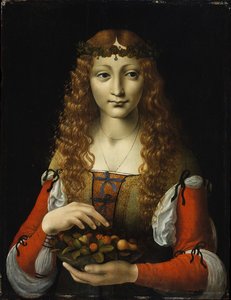
Giovanni Ambrogio de Predis
1455 - 1522 , Italy
Quick Facts
- Artistic Movement Or Style: Renaissance
- Artists Or Movements Influenced By This Artist: ['Early Renaissance']
- Artists Who Influenced This Artist: ['Leonardo da Vinci']
- Date Of Birth: Milan, Italy (c. 1455)
- Date Of Death: 1522
- Full Name: Giovanni Ambrogio de Predis
- Nationality: Italian
- Notable Artworks:
- Portrait of a Man
- Portrait of a Woman
- Girl with Cherries
- Place Of Birth: Milan

