Send
Send Share
Share
 Details

 Download
 Similars
 Diaporama
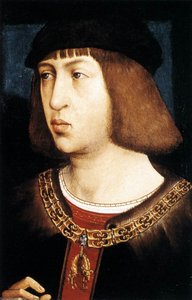
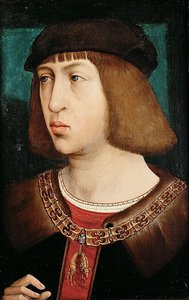
Portrait of Philip the Handsome
 Giclée Print
- Digital
- Early Netherlandish Painting
 1496
1496 36.0 x 26.0 cm
 Kunsthistorisches Museum
 Read More
Hand Made Oil Reproduction
Hand-painted oil on canvas in your size and frame, made to order by our artists. ( Buy Print Buy Image)




































Pick from our preset sizes that match the artwork's original proportions.

You may enter your own dimensions to fit a specific frame or space. If your selected size does not match the original image's proportions, we will either crop the artwork or extend the painting with additional hand-painted elements. A digital mockup will be sent for your approval before production begins.
Please note that the on-screen preview does not reflect the actual cropping or extension. Only the mockup will accurately show the final composition.
While custom sizes are available, we recommend selecting a dimension from the predefined list to preserve the original proportions.
After order, ArtsDot.com team will email client for instructions and provide a mockup preview
Worldwide Delivery () in 3/4 weeks instead of standard 5 weeks. (16 August). No compromise on quality.

Free Worldwide Express Shipping

High-Quality Linen Canvas

Full Shipping Insurance

Customs Tax Refund Guarantee

True Color Matching Guarantee

60-Day Return Policy (Defects Only)

100% Money-Back Guarantee

Bulk Discount Offer
 Glass option is only available in size under 110 CM

Portrait of Philip the Handsome
Reproduction Medium
Reproduction Size
-


Total Price
$ 263
Artwork Description
The Enigmatic King: Juan de Flandes’ Portrait of Philip the Handsome
Juan de Flandes' "Portrait of Philip the Handsome" is more than just a depiction of a young man; it’s a meticulously crafted window into the anxieties and aspirations of 15th-century Spain. Painted in 1496, during the reign of Queen Isabella I of Castile, this portrait captures not merely the likeness of Philip, but also the weight of his lineage, the promise of his future, and the subtle melancholy that would ultimately define his tragically short life. The painting’s power lies in its masterful blend of Flemish realism with a distinctly Spanish sensibility – a testament to Flandes' skill as a bridge between artistic traditions.
The subject himself, Philip I of Castile, is presented as a figure of youthful grandeur. Dressed in the rich crimson robes of royalty, he embodies the burgeoning Habsburg dynasty’s ambition and power. The deep red, symbolic of both nobility and sacrifice, contrasts dramatically with the stark black of his hat, drawing the eye to his face – a face marked by an almost unnerving composure. His gaze, directed downwards, invites contemplation, suggesting a quiet introspection beneath the veneer of regal confidence. The crown perched upon his head isn’t merely decorative; it's a potent symbol of his claim to power and the weighty responsibilities that awaited him.
Flemish Technique, Spanish Soul
Flandes’ artistic approach is deeply rooted in the traditions of Early Netherlandish painting. The meticulous detail evident in the rendering of fabrics – the intricate folds of the robe, the sheen of the velvet – speaks to a painstaking attention to texture and surface quality. He employs a technique known as *sfumato*, subtly blurring edges and creating an atmospheric depth that lends the portrait a remarkable sense of realism. However, this Flemish foundation is overlaid with a distinctly Spanish aesthetic. The lighting, for instance, is dramatically contrasted—a deep shadow falling across Philip’s face, highlighting his features while simultaneously hinting at an underlying sadness. This use of chiaroscuro, a technique borrowed from Italian Renaissance masters, adds to the painting's emotional intensity.
The composition itself is carefully balanced, reflecting the humanist ideals that were gaining traction during this period. The portrait adheres to the conventions of courtly portraiture, emphasizing the subject’s status and dignity. Yet, there’s a subtle departure from rigid formality; Philip's posture isn’t overly posed or artificial, suggesting a degree of intimacy and vulnerability. The background is deliberately simple, devoid of distracting details, further focusing attention on the central figure.
Symbolism and the Shadow of Fate
Beyond its technical brilliance, “Portrait of Philip the Handsome” is laden with symbolic meaning. The young king’s melancholic expression—a subtle downturn of his lips, a hint of sadness in his eyes— foreshadows the turbulent events that would mark his life. His early death at the age of 28, following a brief and unhappy marriage to Joanna of Castile, cast a long shadow over the Habsburg dynasty. The painting, therefore, can be interpreted as a meditation on mortality, ambition, and the fleeting nature of earthly glory.
Furthermore, the portrait’s creation coincided with a period of intense political maneuvering and dynastic rivalries within Spain. Philip's marriage to Joanna was strategically arranged to solidify alliances between Castile and Aragon, but it ultimately proved to be fraught with tension and heartbreak. The painting, commissioned on the occasion of their wedding, serves as a poignant reminder of the complexities of power, love, and legacy.
A Timeless Masterpiece – Reproduction Possibilities
ArtsDot offers high-quality reproductions of Juan de Flandes’ “Portrait of Philip the Handsome,” allowing art lovers to bring this captivating masterpiece into their homes or offices. Our giclée prints are created using archival inks on museum-grade canvas, ensuring exceptional color accuracy and longevity. Available in a range of sizes, our reproductions faithfully capture the painting's rich textures, dramatic lighting, and profound emotional depth. Explore our selection today and experience the enduring beauty of this Renaissance icon.
Related Artworks

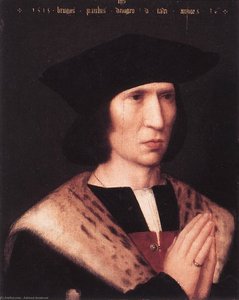
Artist Biography
The Enigmatic Master of the Spanish Court
The identity of Juan de Flandes remains one of the most captivating mysteries in the annals of Early Netherlandish painting. Shrouded in a veil of historical ambiguity, scholars have long debated whether this master was the individual known as Jan van der Straat or another unnamed virtuoso whose brushwork left an indelible mark on the Iberian Peninsula. Though his true origins are obscured by time, his artistic soul is unmistakably rooted in the vibrant traditions of Flanders. Born likely in the mid-15th century, he emerged from the prestigious artistic milieu of Ghent, a city then pulsating with the innovations of the Ghent School. It was here, amidst the shadows of masters like Joos van Wassenhove and Hugo van der Goes, that Juan refined his ability to capture the delicate interplay of light and texture, establishing a technical foundation that would later bridge the gap between Northern precision and Spanish grandeur.
His journey from the Low Countries to the heart of Spain represents a pivotal chapter in the evolution of the Spanish Renaissance. In 1496, his destiny became inextricably linked with the Spanish Crown when he secured the prestigious patronage of Queen Isabella I of Castile. This appointment was far more than a mere professional milestone; it placed him at the very epicenter of political and religious power. Serving as a court painter until Isabella’s death in 1504, Juan de Flandes became the visual chronicler of a golden age. Through his eyes, the dignity of the royal family—most notably Isabella and Ferdinand—was immortalized with a refined elegance that balanced the meticulous, microscopic detail characteristic of Flemish art with a new, solemn Spanish sensibility.
A Legacy of Devotion and Detail
The true genius of Juan de Flandes is perhaps most profoundly felt in his religious compositions, where his technical mastery meets deep spiritual devotion. His most celebrated achievement lies in the monumental series of small panels created for a magnificent polyptych altarpiece dedicated to the Virgin Mary. These works are masterpieces of narrative intimacy, inviting the viewer into sacred spaces through landscapes that feel both otherworldly and tangibly real. In these panels, one can observe a breathtaking synthesis of styles:
- Flemish Precision: The meticulous rendering of fabrics, the crystalline clarity of distant horizons, and the obsessive attention to botanical detail.
- Spanish Grandeur: A sense of monumental stillness and a dignified, somber atmosphere that reflects the religious fervor of the Spanish court.
- Atmospheric Innovation: An early mastery of light that breathes life into the landscapes, creating a sense of depth and spiritual transcendence.
Today, these dispersed treasures—housed in prestigious institutions such as the Prado Museum in Madrid and the National Gallery of Art in Washington D.C.—serve as enduring testaments to his skill. The historical significance of Juan de Flandes extends far beyond his individual portraits; he acted as a vital cultural conduit. By transplanting the sophisticated techniques of the North into the fertile soil of Spain, he helped shape the aesthetic language of a burgeoning empire. His work remains a hauntingly beautiful reminder of a period when art served as the ultimate bridge between different worlds, blending the intricate textures of Flanders with the profound, enduring spirit of the Spanish Renaissance.
Juan de Flandes
1460 - 1519 , Belgium
Quick Facts
- Artistic Movement Or Style: Early Netherlandish
- Artists Or Movements Influenced By This Artist: ['Spanish Renaissance']
- Artists Who Influenced This Artist:
- Joos van Wassenhove
- Hugo van der Goes
- Date Of Birth: c. 1460
- Date Of Death: 1519
- Full Name: Juan de Flandes
- Nationality: Dutch
- Notable Artworks:
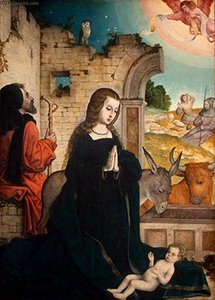
- The Nativity
- Portrait of an Infanta
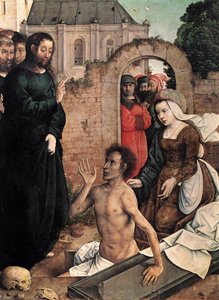
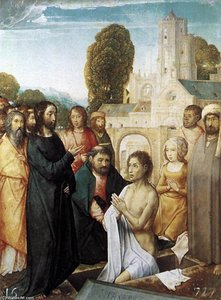
- Resurrection of Lazarus
- Place Of Birth: Flanders (Belgium)
Related Articles

Demandes Commerciales
APS ofrece reproducciones de bellas artes y encargos personalizados desde 2004. Confían en nosotros corporaciones, hoteles y coleccionistas selectos para obras de arte de calidad museística, servicio discreto y soluciones artísticas completas. ¡Póngase en contacto con nosotros para obtener un presupuesto personalizado!

Goya's Masterpieces: Explore 25 Iconic Paintings & Art Prints | ArtsDot
Delve into the world of Francisco Goya with ArtsDot. Explore 25 iconic paintings – from 'The Third of May' to his haunting Black Paintings. Discover the stories, techniques & emotions behind these Spanish masterpieces. Find museum-quality art reproductions for your home at ArtsDot.com!

A riguardo di noi
Découvrez notre histoire ! Nous apportons l'art de classe mondiale dans votre vie grâce à une sélection experte, des créations personnalisées et des aperçus gratuits. Approuvé par les particuliers et les entreprises depuis 2000.
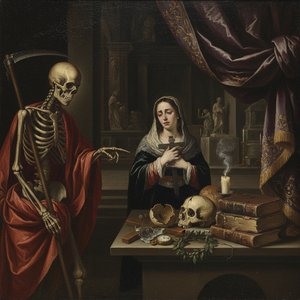
Juan de Valdés Leal: Baroque Realism, Memento Mori & Theatricality of Spanish Grief
Explore the powerful Baroque realism of Juan de Valdés Leal (1622-1690). Discover his somber masterpieces, iconic 'In Ictu Oculi', and profound explorations of mortality. Museum-quality reproductions available at ArtsDot.
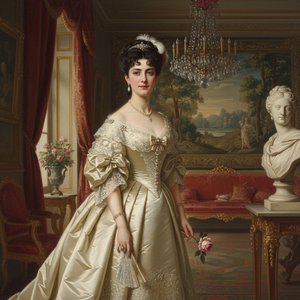
Raimundo de Madrazo: Capturing the Elegance of Spain’s Gilded Age Aristocracy
Explore the captivating world of Raimundo de Madrazo, master portraitist of Spain’s Gilded Age elite. Discover his artistic evolution, Parisian society portraits & investment potential. Expert insights for collectors.