 Preview
 Send
Send Share
Share
 Details

 Download
 Similars
 X-Ray
X-Ray Diaporama
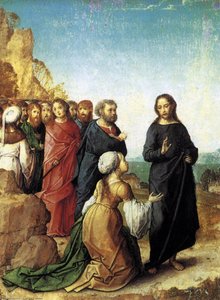
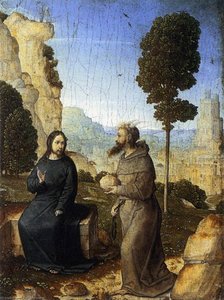
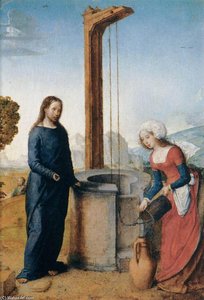
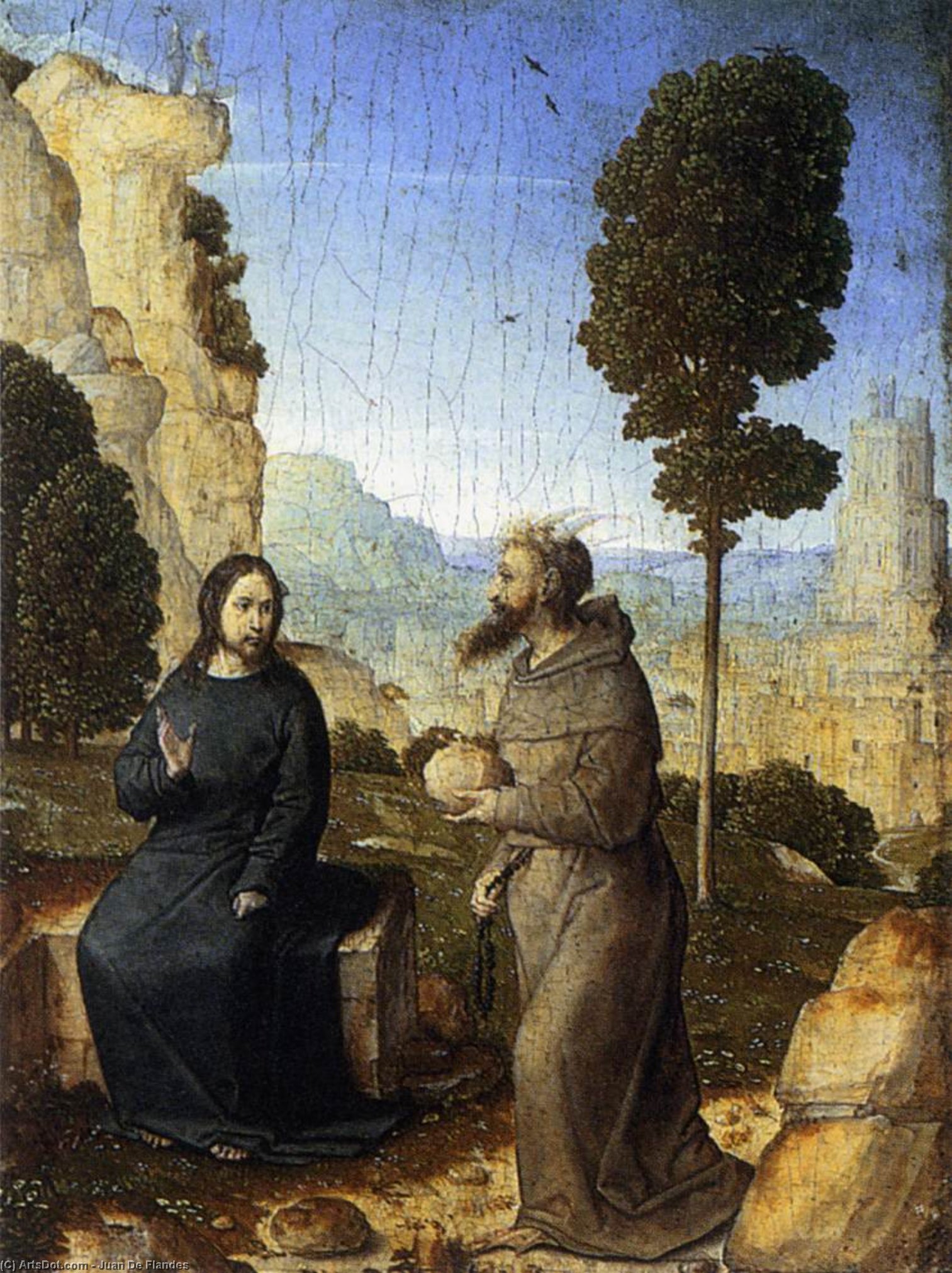
The Temptation of Christ
 Oil On Panel
- WallArt
- Early Renaissance
 1500
1500- Renaissance
 21.0 x 16.0 cm
 National Gallery of Art
 Read More
Hand Made Oil Reproduction
Hand-painted oil on canvas in your size and frame, made to order by our artists. ( Buy Print Buy Image)




P118B $10

P118H $10

P118W $10

P438Z $10

P508JH $12

P508YH $12

P805H $10

P805Z $10

P919BZ $10

P919G $10

P919XJ $10

P959ZH $10

P968JZ $12

W106C $8

W218G $10

W218JH $8

W218Y $10

W307PJ $10

W316G $10

W316PJ $8

W316Y $10

W398PJ $8

W4111J $10

W500HY $15

W500JH $15

W692G $12

W849H $8

W940BG $15

W953PJ $8




Pick from our preset sizes that match the artwork's original proportions.

You may enter your own dimensions to fit a specific frame or space. If your selected size does not match the original image's proportions, we will either crop the artwork or extend the painting with additional hand-painted elements. A digital mockup will be sent for your approval before production begins.
Please note that the on-screen preview does not reflect the actual cropping or extension. Only the mockup will accurately show the final composition.
While custom sizes are available, we recommend selecting a dimension from the predefined list to preserve the original proportions.
After order, ArtsDot.com team will email client for instructions and provide a mockup preview
Worldwide Delivery () in 3/4 weeks instead of standard 5 weeks. (31 August). No compromise on quality.

Free Worldwide Express Shipping

High-Quality Linen Canvas

Full Shipping Insurance

Customs Tax Refund Guarantee

True Color Matching Guarantee

60-Day Return Policy (Defects Only)

100% Money-Back Guarantee

Bulk Discount Offer
 Glass option is only available in size under 110 CM

The Temptation of Christ
Reproduction Medium
Reproduction Size
-


Total Price
$ 288
A Divine Encounter in the Wilderness
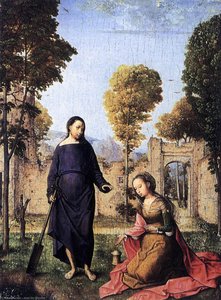
In the quiet, profound stillness of Juan de Flandes’s masterpiece, The Temptation of Christ, we are transported to a desolate yet spiritually charged landscape. Executed at the dawn of the sixteenth century, this intimate oil painting captures one of the most pivotal moments in Christian narrative: the confrontation between Jesus and the forces of darkness. The composition is masterfully balanced, drawing the eye toward the central figure of Christ, whose presence radiates a sense of solemn contemplation amidst the rugged, untamed terrain. As the viewer gazes upon this small but monumental panel, there is an immediate sense of being a silent witness to a cosmic struggle played out in the solitude of the Judaean desert.
The artist, an enigmatic master whose true identity remains one of the great mysteries of the Flemish tradition, utilizes a palette of muted blues, earthy browns, and warm ochres to evoke an atmosphere of antiquity and reverence. This somber color scheme does not merely depict a landscape; it sets a stage for spiritual endurance. The light in the painting is soft and diffused, casting gentle shadows that define the contours of the figures and the jagged edges of the earth, creating a sense of depth that, while characteristic of the Early Renaissance, feels remarkably immersive.
The Fusion of Flemish Precision and Spanish Grandeur
What makes this work particularly captivating for collectors and lovers of fine art is the seamless marriage of two distinct artistic worlds. Juan de Flandes brought with him the meticulous technical precision of the Ghent School—a legacy of his training in Flanders—and infused it with the burgeoning grandeur of the Spanish Renaissance. This duality is evident in the exquisite attention to detail; every rock, every fold of fabric, and every subtle nuance of the landscape is rendered with a clarity that invites prolonged study. The technique involves a delicate application of oil paints on wood, where the artist’s ability to manipulate texture creates a tactile quality that breathes life into the scene.
For those looking to integrate such a piece into a sophisticated interior, The Temptation of Christ offers a profound sense of historical weight and intellectual depth. The painting does not shout; rather, it whispers of ancient truths and enduring faith. Its geometric stability—built upon a foundation of triangles and balanced forms—provides a calming, structural elegance that complements both classical and contemporary decor. It is a piece that serves as an anchor for a room, commanding attention through its quiet intensity and the sheer mastery of its execution.
Symbolism and the Emotional Resonance of Faith
Beyond its technical brilliance, the painting is a rich tapestry of theological symbolism. The wilderness itself serves as more than just a setting; it represents the earthly realm, a place of testing and spiritual refinement. The interaction between Christ and the tempter is captured not through violent movement, but through a heavy, palpable tension that resonates emotionally with the viewer. There is a profound sense of loneliness in the landscape, yet it is a loneliness filled with divine purpose. This emotional duality—the vulnerability of the human condition meeting the strength of spiritual resolve—is what gives the work its timeless appeal.
Owning a high-quality reproduction of this work allows one to bring this atmosphere of devotion and peace into a modern living space. Whether placed in a private study, a library, or a curated gallery wall, the painting acts as a window into a moment of eternal significance. It invites the observer to pause, to reflect, and to find beauty in the struggle between light and shadow, making it an incomparable choice for those who seek art that nourishes both the eye and the soul.
Related Artworks
Artist Biography
The Enigmatic Master of the Spanish Court
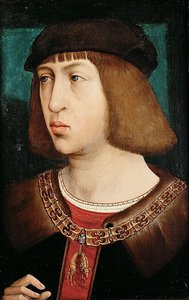
The identity of Juan de Flandes remains one of the most captivating mysteries in the annals of Early Netherlandish painting. Shrouded in a veil of historical ambiguity, scholars have long debated whether this master was the individual known as Jan van der Straat or another unnamed virtuoso whose brushwork left an indelible mark on the Iberian Peninsula. Though his true origins are obscured by time, his artistic soul is unmistakably rooted in the vibrant traditions of Flanders. Born likely in the mid-15th century, he emerged from the prestigious artistic milieu of Ghent, a city then pulsating with the innovations of the Ghent School. It was here, amidst the shadows of masters like Joos van Wassenhove and Hugo van der Goes, that Juan refined his ability to capture the delicate interplay of light and texture, establishing a technical foundation that would later bridge the gap between Northern precision and Spanish grandeur.
His journey from the Low Countries to the heart of Spain represents a pivotal chapter in the evolution of the Spanish Renaissance. In 1496, his destiny became inextricably linked with the Spanish Crown when he secured the prestigious patronage of Queen Isabella I of Castile. This appointment was far more than a mere professional milestone; it placed him at the very epicenter of political and religious power. Serving as a court painter until Isabella’s death in 1504, Juan de Flandes became the visual chronicler of a golden age. Through his eyes, the dignity of the royal family—most notably Isabella and Ferdinand—was immortalized with a refined elegance that balanced the meticulous, microscopic detail characteristic of Flemish art with a new, solemn Spanish sensibility.
A Legacy of Devotion and Detail
The true genius of Juan de Flandes is perhaps most profoundly felt in his religious compositions, where his technical mastery meets deep spiritual devotion. His most celebrated achievement lies in the monumental series of small panels created for a magnificent polyptych altarpiece dedicated to the Virgin Mary. These works are masterpieces of narrative intimacy, inviting the viewer into sacred spaces through landscapes that feel both otherworldly and tangibly real. In these panels, one can observe a breathtaking synthesis of styles:
- Flemish Precision: The meticulous rendering of fabrics, the crystalline clarity of distant horizons, and the obsessive attention to botanical detail.
- Spanish Grandeur: A sense of monumental stillness and a dignified, somber atmosphere that reflects the religious fervor of the Spanish court.
- Atmospheric Innovation: An early mastery of light that breathes life into the landscapes, creating a sense of depth and spiritual transcendence.
Today, these dispersed treasures—housed in prestigious institutions such as the Prado Museum in Madrid and the National Gallery of Art in Washington D.C.—serve as enduring testaments to his skill. The historical significance of Juan de Flandes extends far beyond his individual portraits; he acted as a vital cultural conduit. By transplanting the sophisticated techniques of the North into the fertile soil of Spain, he helped shape the aesthetic language of a burgeoning empire. His work remains a hauntingly beautiful reminder of a period when art served as the ultimate bridge between different worlds, blending the intricate textures of Flanders with the profound, enduring spirit of the Spanish Renaissance.
Juan de Flandes
1460 - 1519 , Belgium
Quick Facts
- Artistic Movement Or Style: Early Netherlandish
- Artists Or Movements Influenced By This Artist: ['Spanish Renaissance']
- Artists Who Influenced This Artist:
- Joos van Wassenhove
- Hugo van der Goes
- Date Of Birth: c. 1460
- Date Of Death: 1519
- Full Name: Juan de Flandes
- Nationality: Dutch
- Notable Artworks:
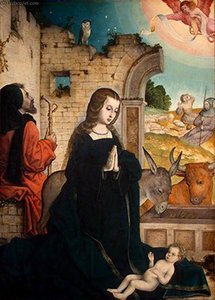
- The Nativity
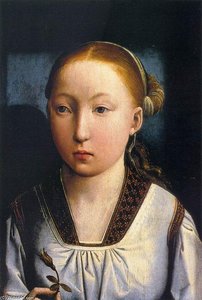
- Portrait of an Infanta
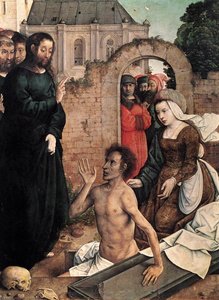
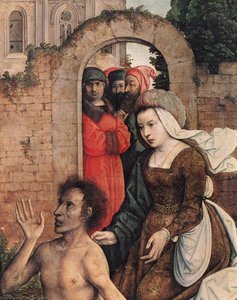
- Resurrection of Lazarus
- Place Of Birth: Flanders (Belgium)
Related Articles

Goya's Masterpieces: Explore 25 Iconic Paintings & Art Prints | ArtsDot
Delve into the world of Francisco Goya with ArtsDot. Explore 25 iconic paintings – from 'The Third of May' to his haunting Black Paintings. Discover the stories, techniques & emotions behind these Spanish masterpieces. Find museum-quality art reproductions for your home at ArtsDot.com!

About Us
Discover our story! We bring world-class art into your life through expert curation, personalized creations, and free previews. Trusted by individuals and businesses since 2000.

The Enduring Legacy of Oil on Canvas: Technique, History & Aesthetic Impact
Explore the rich history & techniques of oil painting – from Renaissance masters to Impressionism. Discover pigments, layering methods, and why this timeless medium endures. Expert insights for artists & art enthusiasts.

Oil on Canvas: A Historical & Technical Exploration of a Timeless Artistic Medium
Explore the rich history & enduring techniques of oil painting on canvas. Discover the science behind its longevity, conservation practices, and contemporary relevance. Expert insights for art enthusiasts.

The Enduring Power of Painting: A Historical & Contemporary Exploration of Form and Emotion
Explore the rich history & enduring techniques of oil painting with ArtsDot. Discover masterpieces, learn about art collecting, and find authentic handmade reproductions crafted by skilled artists.