 Preview
 Send
Send Share
Share
 Details

 Download
 Similars
 X-Ray
X-Ray Diaporama
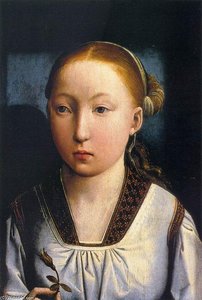
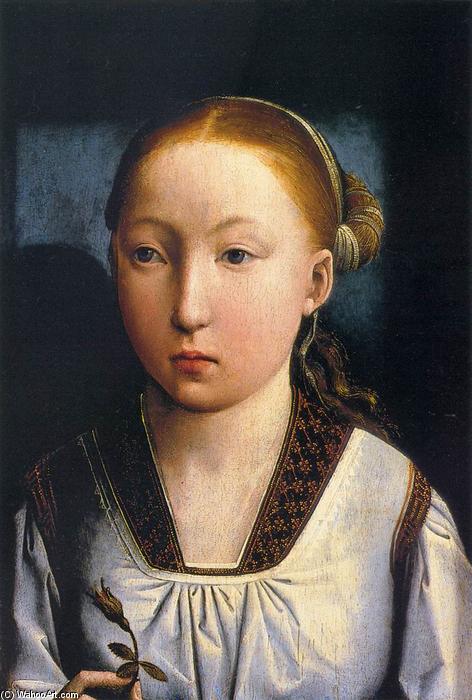
Portrait of an Infanta
 Oil On Panel
- Early Netherlandish
 1496
1496 32.0 x 22.0 cm
 Museo Thyssen-Bornemisza
 Read More
Hand Made Oil Reproduction
Hand-painted oil on canvas in your size and frame, made to order by our artists. ( Buy Print Buy Image)




P118B $10

P118H $10

P118W $10

P438Z $10

P508JH $12

P508YH $12

P805H $10

P805Z $10

P919BZ $10

P919G $10

P919XJ $10

P959ZH $10

P968JZ $12

W106C $8

W218G $10

W218JH $8

W218Y $10

W307PJ $10

W316G $10

W316PJ $8

W316Y $10

W398PJ $8

W4111J $10

W500HY $15

W500JH $15

W692G $12

W849H $8

W940BG $15

W953PJ $8




Pick from our preset sizes that match the artwork's original proportions.

You may enter your own dimensions to fit a specific frame or space. If your selected size does not match the original image's proportions, we will either crop the artwork or extend the painting with additional hand-painted elements. A digital mockup will be sent for your approval before production begins.
Please note that the on-screen preview does not reflect the actual cropping or extension. Only the mockup will accurately show the final composition.
While custom sizes are available, we recommend selecting a dimension from the predefined list to preserve the original proportions.
After order, ArtsDot.com team will email client for instructions and provide a mockup preview
Worldwide Delivery () in 3/4 weeks instead of standard 5 weeks. (31 August). No compromise on quality.

Free Worldwide Express Shipping

High-Quality Linen Canvas

Full Shipping Insurance

Customs Tax Refund Guarantee

True Color Matching Guarantee

60-Day Return Policy (Defects Only)

100% Money-Back Guarantee

Bulk Discount Offer
 Glass option is only available in size under 110 CM

Portrait of an Infanta
Reproduction Medium
Reproduction Size
-


Total Price
$ 263
A Glimpse into Spanish Royalty – The Portrait of an Infanta
The Portrait of an Infanta, a captivating oil on panel painting by the Flemish master Juan de Flandes, offers a rare and intimate window into 15th-century Spain. Completed in 1496, this work transcends mere portraiture; it’s a carefully constructed tableau of youthful grace, regal bearing, and subtle symbolism—a testament to the artistic sensibilities of the late Renaissance.
At first glance, the painting presents a young girl, likely an Infanta – a Spanish princess – posed with quiet dignity. Her fair skin and striking red hair are rendered with meticulous detail, showcasing de Flandes’ mastery of capturing texture and light. The composition is deceptively simple: she occupies the central space, framed by a dark background that dramatically emphasizes her features and the delicate folds of her white dress. Yet, within this apparent stillness lies a wealth of visual information, inviting the viewer to contemplate the layers of meaning embedded in every brushstroke.
The Renaissance Hand – Technique and Style
De Flandes’ style is deeply rooted in the traditions of Early Netherlandish painting, yet he skillfully adapted these techniques to suit the tastes of the Spanish court. The use of light and shadow—a hallmark of the period—creates a sense of depth and three-dimensionality, drawing the eye to the subject's face and hands. Notice how the artist subtly models the fabric of her dress, suggesting its luxurious texture through carefully layered brushstrokes. The precise rendering of her hair, with individual strands meticulously defined, speaks to de Flandes’ dedication to realism and his ability to capture the nuances of human form.
Furthermore, the painting's palette is restrained yet elegant—a blend of muted earth tones – ochres, browns, creams, and subtle greens – that contribute to a sense of solemnity and timelessness. The shallow perspective, typical of Renaissance portraiture, focuses attention on the subject’s immediate presence, while the dark background serves as a powerful visual anchor.
A Royal Portrait – Historical Context
Juan de Flandes' career flourished during a pivotal period in Spanish history—the reign of Queen Isabella I and King Ferdinand II. This era was marked by expansion, cultural flourishing, and the consolidation of royal power. The portrait itself likely served as a symbol of the monarchy’s strength and prosperity, commissioned to celebrate the beauty and status of its young heirs. The subject's attire – the white dress with its patterned collar—reflects the fashion trends of the time, indicative of wealth and refinement.
Interestingly, the painting is believed to depict Catherine of Aragon, daughter of King Henry VII of England and first wife of King Henry VIII. This connection adds another layer of historical intrigue, highlighting the complex web of dynastic alliances that shaped European politics during this era. The small object held in her right hand—perhaps a flower or a piece of fabric—could be interpreted as a symbol of innocence, purity, or simply a personal adornment.
Symbolism and Emotional Resonance
Beyond its technical brilliance, the Portrait of an Infanta possesses a subtle emotional resonance. The subject’s neutral expression invites contemplation, suggesting a quiet dignity and inner strength. Her direct gaze engages the viewer, creating a sense of intimacy and connection. The painting's overall atmosphere is one of understated elegance and timeless beauty—a testament to de Flandes’ skill as an artist and his ability to capture the essence of his subjects.
This remarkable work offers a captivating glimpse into the world of 15th-century Spanish royalty, inviting us to appreciate not only its artistic merit but also its historical significance. Reproductions of this iconic portrait are available through ArtsDot, allowing you to bring this timeless masterpiece into your own home or office.
Related Artworks

Artist Biography
The Enigmatic Master of the Spanish Court
The identity of Juan de Flandes remains one of the most captivating mysteries in the annals of Early Netherlandish painting. Shrouded in a veil of historical ambiguity, scholars have long debated whether this master was the individual known as Jan van der Straat or another unnamed virtuoso whose brushwork left an indelible mark on the Iberian Peninsula. Though his true origins are obscured by time, his artistic soul is unmistakably rooted in the vibrant traditions of Flanders. Born likely in the mid-15th century, he emerged from the prestigious artistic milieu of Ghent, a city then pulsating with the innovations of the Ghent School. It was here, amidst the shadows of masters like Joos van Wassenhove and Hugo van der Goes, that Juan refined his ability to capture the delicate interplay of light and texture, establishing a technical foundation that would later bridge the gap between Northern precision and Spanish grandeur.
His journey from the Low Countries to the heart of Spain represents a pivotal chapter in the evolution of the Spanish Renaissance. In 1496, his destiny became inextricably linked with the Spanish Crown when he secured the prestigious patronage of Queen Isabella I of Castile. This appointment was far more than a mere professional milestone; it placed him at the very epicenter of political and religious power. Serving as a court painter until Isabella’s death in 1504, Juan de Flandes became the visual chronicler of a golden age. Through his eyes, the dignity of the royal family—most notably Isabella and Ferdinand—was immortalized with a refined elegance that balanced the meticulous, microscopic detail characteristic of Flemish art with a new, solemn Spanish sensibility.
A Legacy of Devotion and Detail
The true genius of Juan de Flandes is perhaps most profoundly felt in his religious compositions, where his technical mastery meets deep spiritual devotion. His most celebrated achievement lies in the monumental series of small panels created for a magnificent polyptych altarpiece dedicated to the Virgin Mary. These works are masterpieces of narrative intimacy, inviting the viewer into sacred spaces through landscapes that feel both otherworldly and tangibly real. In these panels, one can observe a breathtaking synthesis of styles:
- Flemish Precision: The meticulous rendering of fabrics, the crystalline clarity of distant horizons, and the obsessive attention to botanical detail.
- Spanish Grandeur: A sense of monumental stillness and a dignified, somber atmosphere that reflects the religious fervor of the Spanish court.
- Atmospheric Innovation: An early mastery of light that breathes life into the landscapes, creating a sense of depth and spiritual transcendence.
Today, these dispersed treasures—housed in prestigious institutions such as the Prado Museum in Madrid and the National Gallery of Art in Washington D.C.—serve as enduring testaments to his skill. The historical significance of Juan de Flandes extends far beyond his individual portraits; he acted as a vital cultural conduit. By transplanting the sophisticated techniques of the North into the fertile soil of Spain, he helped shape the aesthetic language of a burgeoning empire. His work remains a hauntingly beautiful reminder of a period when art served as the ultimate bridge between different worlds, blending the intricate textures of Flanders with the profound, enduring spirit of the Spanish Renaissance.

Juan de Flandes
1460 - 1519 , Belgium
Quick Facts
- Artistic Movement Or Style: Early Netherlandish
- Artists Or Movements Influenced By This Artist: ['Spanish Renaissance']
- Artists Who Influenced This Artist:
- Joos van Wassenhove
- Hugo van der Goes
- Date Of Birth: c. 1460
- Date Of Death: 1519
- Full Name: Juan de Flandes
- Nationality: Dutch
- Notable Artworks:
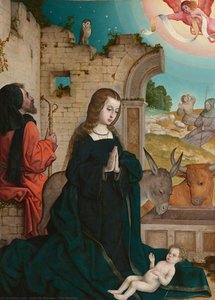
- The Nativity
- Portrait of an Infanta
- Resurrection of Lazarus
- Place Of Birth: Flanders (Belgium)
Related Articles

Goya's Masterpieces: Explore 25 Iconic Paintings & Art Prints | ArtsDot
Delve into the world of Francisco Goya with ArtsDot. Explore 25 iconic paintings – from 'The Third of May' to his haunting Black Paintings. Discover the stories, techniques & emotions behind these Spanish masterpieces. Find museum-quality art reproductions for your home at ArtsDot.com!

About Us
Discover our story! We bring world-class art into your life through expert curation, personalized creations, and free previews. Trusted by individuals and businesses since 2000.
Rafael de Penagos: A Study in Spanish Portraiture & Artistic Identity
Explore the life & art of Rafael de Penagos, a leading Spanish Art Deco illustrator. Discover his iconic 'Penagos Woman', commercial work, and lasting legacy. Learn about this pivotal figure in 20th-century Spanish art history.
Juan de Valdés Leal: Baroque Realism, Memento Mori & Theatricality of Spanish Grief
Explore the powerful Baroque realism of Juan de Valdés Leal (1622-1690). Discover his somber masterpieces, iconic 'In Ictu Oculi', and profound explorations of mortality. Museum-quality reproductions available at ArtsDot.

Águeda Ruiz de la Prada: A Study of Eclecticism & Emotional Resonance in Contemporary Spanish Painting
Discover the vibrant world of Ágatha Ruiz de la Prada, a leading figure in contemporary Spanish art. Explore her eclectic style, emotional depth & legacy – a must-read for discerning collectors.