 Preview
 Send
Send Share
Share
 Details

 Download
 Similars
 X-Ray
X-Ray Diaporama
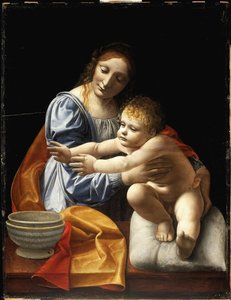
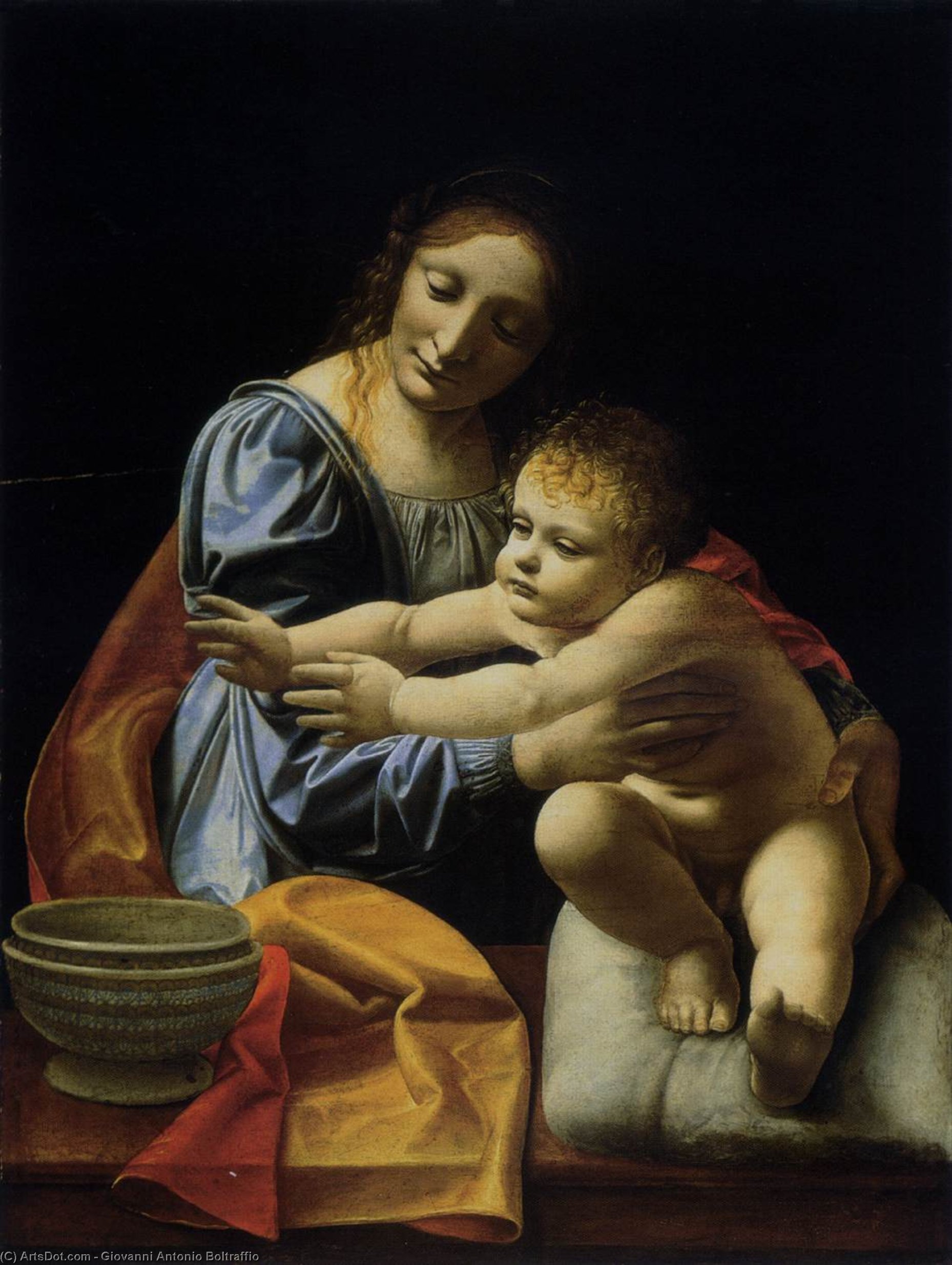
Virgin and Child
 Oil On Canvas
- WallArt
- Renaissance
 1490
1490- Renaissance
 83.0 x 63.0 cm
 Szépmûvészeti Múzeum
 Read More
Hand Made Oil Reproduction
Hand-painted oil on canvas in your size and frame, made to order by our artists. ( Buy Print Buy Image)




P118B $10

P118H $10

P118W $10

P438Z $10

P508JH $12

P508YH $12

P805H $10

P805Z $10

P919BZ $10

P919G $10

P919XJ $10

P959ZH $10

P968JZ $12

W106C $8

W218G $10

W218JH $8

W218Y $10

W307PJ $10

W316G $10

W316PJ $8

W316Y $10

W398PJ $8

W4111J $10

W500HY $15

W500JH $15

W692G $12

W849H $8

W940BG $15

W953PJ $8




Pick from our preset sizes that match the artwork's original proportions.

You may enter your own dimensions to fit a specific frame or space. If your selected size does not match the original image's proportions, we will either crop the artwork or extend the painting with additional hand-painted elements. A digital mockup will be sent for your approval before production begins.
Please note that the on-screen preview does not reflect the actual cropping or extension. Only the mockup will accurately show the final composition.
While custom sizes are available, we recommend selecting a dimension from the predefined list to preserve the original proportions.
After order, ArtsDot.com team will email client for instructions and provide a mockup preview
Worldwide Delivery () in 3/4 weeks instead of standard 5 weeks. (16 August). No compromise on quality.

Free Worldwide Express Shipping

High-Quality Linen Canvas

Full Shipping Insurance

Customs Tax Refund Guarantee

True Color Matching Guarantee

60-Day Return Policy (Defects Only)

100% Money-Back Guarantee

Bulk Discount Offer
 Glass option is only available in size under 110 CM

Virgin and Child
Reproduction Medium
Reproduction Size
-


Total Price
$ 263
Artwork Description
A Tender Embrace from the Italian Renaissance
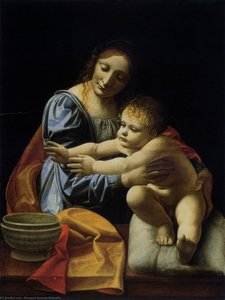
Gazing upon this depiction of the Virgin and Child, one is immediately drawn into a sphere of profound maternal tenderness. The composition captures that timeless moment of connection—the nurturing gaze meeting the gentle weight of new life. Giovanni Antonio Boltraffio, working in the vibrant crucible of the late Quattrocento, has imbued this portrait not merely with paint, but with palpable emotion. The mother holds her child close, a gesture so universal yet rendered here with the sophisticated grace characteristic of Milanese Renaissance painting. It speaks to a quiet intimacy, a sacred bond observed through the refined lens of High Renaissance artistry.
Mastery in Form and Light
Boltraffio’s technique, deeply informed by his apprenticeship under the towering genius of Leonardo da Vinci, showcases an exquisite handling of sfumato, allowing edges to dissolve into soft, atmospheric transitions. Observe how the light seems to fall naturally across the figures, highlighting the smooth contours of the mother's drapery and illuminating the baby with a divine glow. The composition is balanced yet deeply personal. Beyond the central figures, the inclusion of two visible bowls—one resting thoughtfully on the left, another nearer the center—adds an intriguing layer of domestic realism. These objects ground the sacred moment in tangible reality, suggesting not just a portrait, but perhaps a scene observed during a quiet, devotional meal.
Symbolism and Devotional Depth
The Virgin and Child motif has always been a cornerstone of Christian art, rich with layers of symbolism. Here, the tenderness is balanced by an underlying sense of destiny. The mother’s posture suggests both protection and contemplation regarding the role her child plays in divine history. The bowls themselves might evoke themes of sustenance, offering, or even the Eucharist, subtly weaving narratives of earthly provision alongside heavenly grace. For the collector or decorator, this piece offers more than mere decoration; it is a meditation on motherhood, devotion, and the enduring nature of human connection.
A Touch of Milanese Elegance for Your Space
To bring this work into your home is to invite a whisper of 15th-century Italian refinement. The dimensions, measuring approximately 83 x 63 cm, allow it to serve as a magnificent focal point in a drawing-room, a chapel niche, or an elegant dining area. Reproducing Boltraffio’s delicate brushwork allows modern admirers to connect directly with the emotional resonance and technical brilliance of this period. It is a piece that demands quiet contemplation, offering its viewer a moment suspended between earthly beauty and divine mystery.
Related Artworks
Artist Biography
Giovanni Antonio Boltraffio: A Shadow in the Studio of Leonardo
Giovanni Antonio Boltraffio, born around 1467 in the fertile artistic landscape of Lombardy, remains one of the most captivating figures of the High Renaissance. While history often casts him as a secondary figure, he was far more than a mere follower; he was a vital conduit through which the revolutionary innovations of Leonardo da Vinci were transmitted and refined. Growing up in a region steeped in tradition, Boltraftio’s early life likely benefited from an aristocratic Milanese upbringing, providing him with the foundational training necessary to enter the most prestigious workshop of his era. Around 1490, he began his profound association with Leonardo, a partnership that would span nearly four decades and define the trajectory of his creative soul.
To study Boltraffio is to witness a masterclass in artistic absorption. Within the walls of Leonardo’s studio, Boltraffio did not simply mimic; he interpreted. He breathed in the sfumato technique—that smoky, seamless transition between light and shadow—and applied it with a unique sense of clarity and structural precision. While Leonardo often pursued the ethereal and the scientifically enigmatic, Boltraffio brought a certain austerity and refined elegance to his subjects. His work possesses a crystalline quality that, while deeply indebted to his master’s atmospheric genius, maintains a distinctively Lombard character characterized by sharp detail and a serene, almost sculptural presence.
The Mastery of Portraiture and Devotional Grace
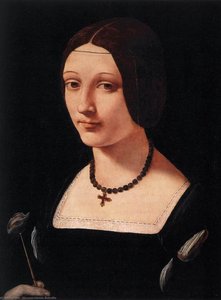
The true brilliance of Boltraffio lies in his ability to capture the quiet dignity of the human spirit. His portraits are renowned for their enigmatic beauty, often featuring subjects that seem caught in a moment of profound introspection. In works such as Portrait of a Young Woman, one can sense the lingering influence of Leonardo’s psychological depth, yet there is an unmistakable Boltraffio touch—a meticulous rendering of textures and a focused, luminous gaze that commands the viewer's attention. He had a remarkable gift for translating the nobility of his sitters into paint, creating images that feel both timeless and intimately human.
Beyond the secular realm, Boltraffio’s devotion to religious iconography allowed him to explore the heights of Renaissance symbolism. His depictions of the Madonna and Child serve as quintessential examples of his technical prowess and spiritual sensitivity. In these sacred compositions, he utilized color not merely for aesthetic beauty but as a profound theological language:
- Blue was employed to represent the purity and celestial nature of the Virgin Mary.
- Red served as a poignant symbol of the sacrifice and passion inherent in the Christ child's destiny.
Through these deliberate choices, Boltraffio transformed panels of wood into windows of divine contemplation, blending the physical reality of the Renaissance world with the spiritual aspirations of the era.
Legacy and Historical Significance
Though Boltraffio eventually moved away from the direct shadow of Leonardo to establish his own presence, his historical significance cannot be overstated. He acted as a crucial bridge between the experimental fervor of the early High Renaissance and the more structured, classical developments that followed in Northern Italy. His ability to synthesize Leonardo’s complex innovations with a more accessible, clear-eyed realism helped shape the aesthetic preferences of the Milanese school for generations.
Today, his surviving works, housed in prestigious institutions such as The Hermitage Museum and various collections in Berlin and Milan, continue to enchant art historians and enthusiasts alike. He remains a testament to the power of the collaborative studio environment—a reminder that greatness is often nurtured in the quiet, dedicated work of those who stand beside masters, refining a vision until it becomes something entirely their own.
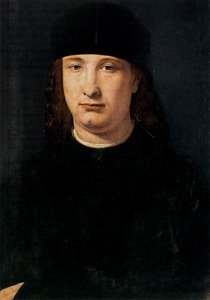
Giovanni Antonio Boltraffio
1467 - 1516 , Italy
Quick Facts
- Artistic Movement Or Style: Northern Renaissance
- Artists Or Movements Influenced By This Artist: ['Italian Renaissance']
- Artists Who Influenced This Artist: ['Leonardo da Vinci']
- Date Of Birth: May 21, 1471
- Date Of Death: April 6, 1528
- Full Name: Albrecht Dürer
- Nationality: German
- Notable Artworks:
- Melancholia I
- Praying Hands
- Knight, Death and the Devil
- Place Of Birth: Nuremberg, Germany
Related Articles
Raphael's Masterpieces: 25 Iconic Paintings & Renaissance Art for Your Home
Explore 25 breathtaking Raphael paintings! Journey through the Italian Renaissance with masterpieces like 'School of Athens' & iconic Madonnas. Find museum-quality art reproductions and elevate your home decor on ArtsDot.com.
Uffizi's 25 Masterpieces: Renaissance Art & Timeless Decor Inspiration
Journey through the Uffizi Gallery's 25 most iconic Renaissance artworks! Explore Botticelli, Leonardo da Vinci & Michelangelo’s masterpieces. Find museum-quality art reproductions and curated decor ideas to bring timeless Italian beauty into your home. Discover all masterpieces on ArtsDot.com

Fra Angelico's Masterpieces: 25 Renaissance Paintings for Your Home | ArtsDot
Explore 25 breathtaking masterpieces by Fra Angelico, a Renaissance master. Discover the stories behind his iconic frescoes, Annunciations & religious art. Find museum-quality reproductions and elevate your home decor with ArtsDot.com.
Botticelli's Masterpieces: Explore 25 Iconic Renaissance Paintings | ArtsDot
Journey through Botticelli's world with 25 iconic Renaissance paintings. Explore 'Birth of Venus,' 'Primavera,' and more—stories, techniques & timeless beauty. Find museum-quality art reproductions for your home at ArtsDot.com.
Kunsthistorisches Museum's Masterpieces: 25 Art Treasures for Your Home | ArtsDot
Journey through 25 iconic artworks at Vienna's Kunsthistorisches Museum! Explore masterpieces by Raphael, Rembrandt & Vermeer. Discover art history, techniques & find museum-quality reproductions for your home on ArtsDot.com.