

 Preview
 Send
Send Share
Share
 Details

 Download
 Similars
 X-Ray
X-Ray Diaporama
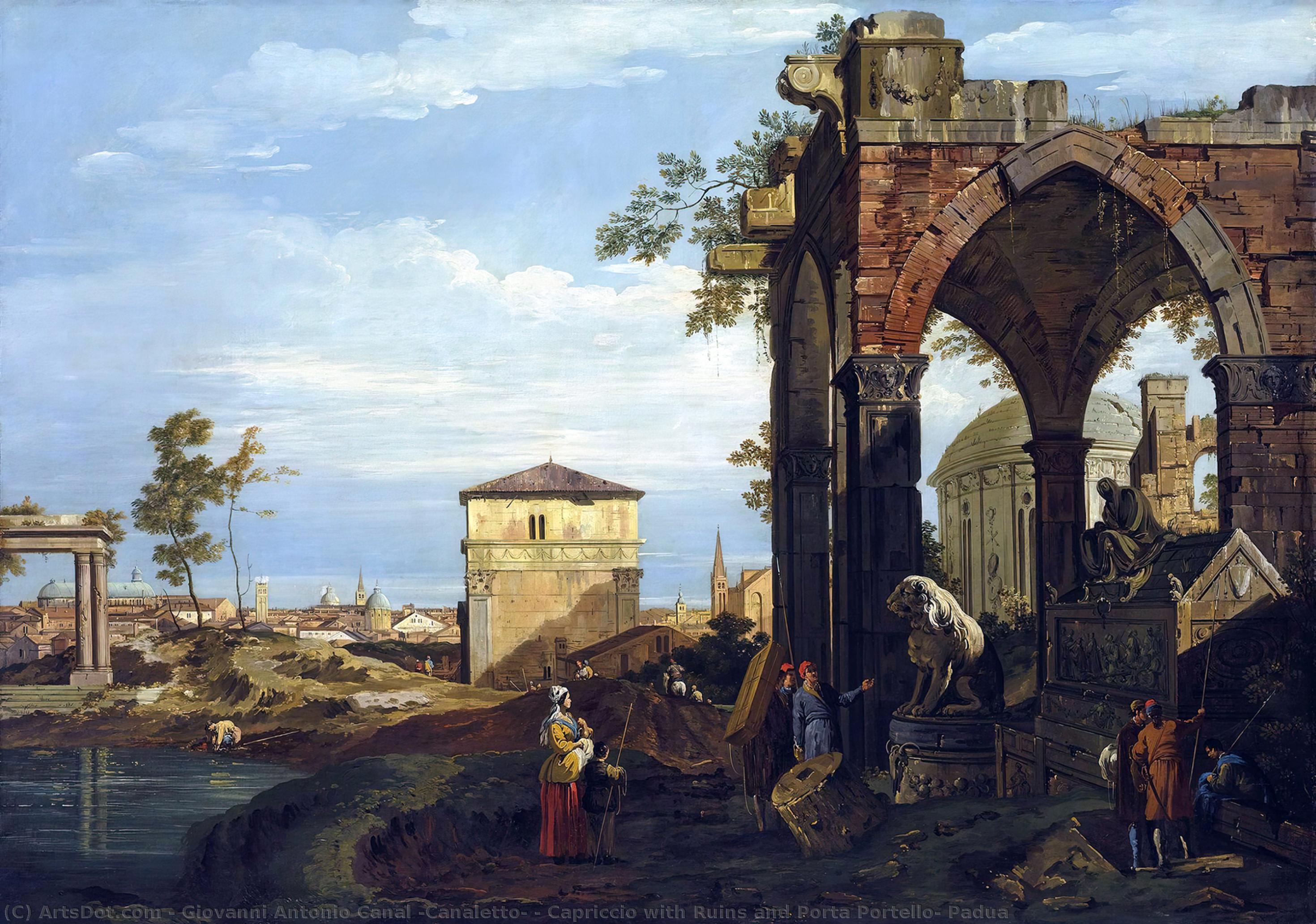
Capriccio with Ruins and Porta Portello, Padua
 Oil On Canvas
- WallArt
- Neoclassicism
 1750
1750 61.0 x 76.0 cm
 Gallerie dell'Accademia
 Read More
Purchase a high-resolution, enhanced digital image, far superior to the online preview.
Each file is meticulously prepared by our in-house specialists using advanced tools and expert manual retouching. We ensure every image has exceptional clarity, precise color accuracy, and fine detail.
The final file is delivered via email within 72 hours, optimized for immediate use in professional, editorial, and print environments. This is the same quality trusted by top-tier design studios, publishers, and galleries.
Digital Image
Download a high-resolution file for personal display, printing, and creative projects. ( Buy Print Buy Hand Made Painting)
Included in Every Digital Image Order
Expert Digital Delivery, Guaranteed
When you choose ArtsDot.com, you're not just getting an image - you're receiving a professionally enhanced digital artwork, crafted with precision and backed by a satisfaction guarantee. Here's everything that comes with your order, automatically:

Fast Email Delivery
Your high-resolution digital image file will be emailed to you within 72 hours of ordering - ready for immediate use.

AI-Enhanced Digital File
Your artwork is professionally optimized using advanced AI tools and manual editing, ensuring maximum detail, clarity, and color accuracy.

Free Lifetime Re-Delivery
Accidentally deleted or lost your file? No worries - we'll resend it to you anytime, free of charge.

No Import Fees - Ever
Enjoy your artwork instantly with zero customs, duties, or delivery fees - digital downloads are always tax-free.

Color Accuracy Guarantee
We ensure your digital image reflects the original colors as closely as possible using professional tools and color management.

60-Day Satisfaction Guarantee
If you're not satisfied with your digital image, we'll revise it or refund 100% within 60 days - no questions asked.

100% Money-Back Guarantee
Not satisfied? Get a full refund within 60 days of receiving your digital file - no questions asked.

Bulk Order Discounts
Buy 3 images, save 10% - Buy 5, save 15% - Buy 10+, save 20%. Great for creative projects, galleries, and agencies.
Collectible Description
A Venetian Reverie: Canaletto’s “Capriccio with Ruins and Porta Portello”
Giovanni Antonio Canal, universally known as Canaletto, possessed an extraordinary gift for capturing the essence of Venice – its light, its atmosphere, and its vibrant daily life. His “Capriccio with Ruins and Porta Portello,” painted in 1750, is a quintessential example of this mastery, offering not merely a depiction of a scene but a carefully constructed evocation of memory, history, and the enduring beauty of a fading grandeur. This painting isn’t simply a landscape; it's a meticulously orchestrated tableau, inviting the viewer to step into a world suspended between reality and dream.
The composition immediately draws the eye towards the central archway, framing a distant view of Padua – a city itself steeped in history. Ruins, rendered with a delicate balance of decay and grace, punctuate the foreground, hinting at lost empires and the relentless march of time. These aren’t dramatic, imposing ruins; rather, they are fragments, whispers of past glories, integrated seamlessly into the present landscape. The Porta Portello, a monumental gate that once marked the entrance to Padua, stands as a silent sentinel, its weathered stone echoing the stories of centuries.
The Art of Atmospheric Perspective and Detail
Canaletto’s technique is characterized by an astonishing level of detail combined with a masterful understanding of atmospheric perspective. He employed a method often attributed to his use of a camera obscura – a darkened room equipped with a lens that projected an image onto the wall, allowing him to trace the scene accurately before applying paint. This meticulous approach is evident in the precise rendering of each building, each column, and each figure. Yet, this precision isn’t cold or sterile; it's infused with warmth and life.
The artist skillfully manipulated color and light to create a sense of depth. Distant elements are rendered in paler hues, subtly blurring their outlines – a technique known as aerial perspective – while those closer to the viewer retain richer, more vibrant tones. The soft, diffused lighting, reminiscent of Venetian twilight, bathes the scene in a gentle glow, contributing significantly to its melancholic beauty. Notice how the shadows play across the stonework, revealing textures and adding volume to the architectural elements.
Symbolism and Emotional Resonance
Beyond its technical brilliance, “Capriccio with Ruins and Porta Portello” is rich in symbolic meaning. The ruins themselves represent the transience of human endeavor – a poignant reminder that even the most magnificent structures eventually succumb to time’s relentless passage. The distant city of Padua, bathed in hazy light, evokes a sense of nostalgia and longing for a bygone era. The small group of figures scattered throughout the scene adds a touch of humanity, suggesting the continuity of life amidst decay.
The painting's emotional impact is profoundly contemplative. It’s not a joyous celebration of beauty but rather a quiet meditation on loss, memory, and the enduring power of art to capture fleeting moments in time. The overall mood is one of serene melancholy – a feeling that resonates deeply with viewers who appreciate the subtle nuances of Canaletto’s artistry.
A Legacy of Venetian Vision
Canaletto's influence on the history of landscape painting is undeniable. His meticulous observation, his mastery of perspective, and his ability to capture the atmosphere of Venice paved the way for later artists such as J.M.W. Turner and Claude Monet. “Capriccio with Ruins and Porta Portello” stands as a testament to his genius – a timeless masterpiece that continues to captivate audiences centuries after its creation. Reproductions of this work offer a remarkable opportunity to bring a piece of Venetian history into your home, allowing you to experience the beauty and tranquility of Canaletto’s vision.
Related Artworks
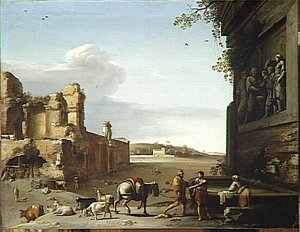
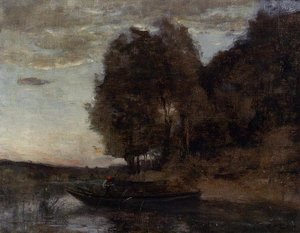
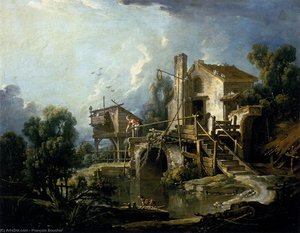
Artist Biography
early life and training
giovanni antonio canal, commonly known as canaletto, was born on october 18, 1697, in venice, italy. he was the son of bernardo canal, a painter of theatrical scene settings, and artemisia barbieri. canaletto's early training in painting began with his father, who taught him the fundamentals of art.
the making of a master
in 1718, canaletto traveled to rome, where he worked on producing scenery for two operas by alessandro scarlatti. this experience had a profound impact on his development as an artist. upon returning to venice, canaletto began painting in his signature topographical style, which would eventually make him famous.
notable works and collaborations
some of canaletto's most notable works include:
- the stonemason's yard (c. 1725), a masterpiece showcasing his early skill.
- regatta on the grand canal, a vivid depiction of venetian public ceremonies.
- eton college (1746-1756), a testament to his influence in england. collaboration with his nephew bellotto, who became an accomplished artist in his own right.
artistic style and technique
canaletto's use of precise perspective and meticulous preparatory drawings has led some experts to believe he may have employed a camera obscura for topographical accuracy. however, his primary concern remained the compositional design, ensuring his works were not merely accurate recordings but also visually stunning.
legacy and collections
canaletto's work can be found in various museums, including the national gallery, london, which showcases his influence on 18th-century art. his legacy extends to the numerous artists he inspired, cementing his place as a master of venetian landscapes.
- view canaletto's works at https://ArtsDot.com/@/giovanni-antonio-canal
- explore more about canaletto on wikipedia
- discover the beauty of venetian art at the palumbo-fossati collection (venice, italy)
key dates
- october 18, 1697: born in venice, italy
- 1718: traveled to rome
- 1725: painted the stonemason's yard
- 1746-1756: visited england, painting notable works like eton college
- april 19, 1768: passed away in venice, italy
remember to explore the world of art at https://ArtsDot.com for more biographies and artworks.
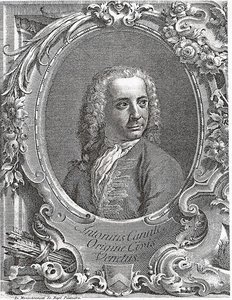
Canaletto
1697 - 1768 , Italy
Quick Facts
- Artistic Movement Or Style: Vedute Venice
- Artists Or Movements Influenced By This Artist: ['Tintoretto']
- Artists Who Influenced This Artist: ['Giovanni Paolo Pannini']
- Date Of Birth: October 18, 1697
- Date Of Death: April 19, 1768
- Full Name: Giovanni Antonio Canal
- Nationality: Italian
- Notable Artworks:
- The Stonemason's Yard
- Regatta on the Grand Canal
- Eton College
- Place Of Birth: Venice, Italy

