 Preview
 Send
Send Share
Share
 Details

 Download
 Similars
 X-Ray
X-Ray Diaporama
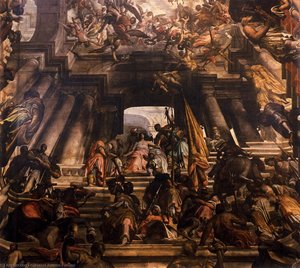
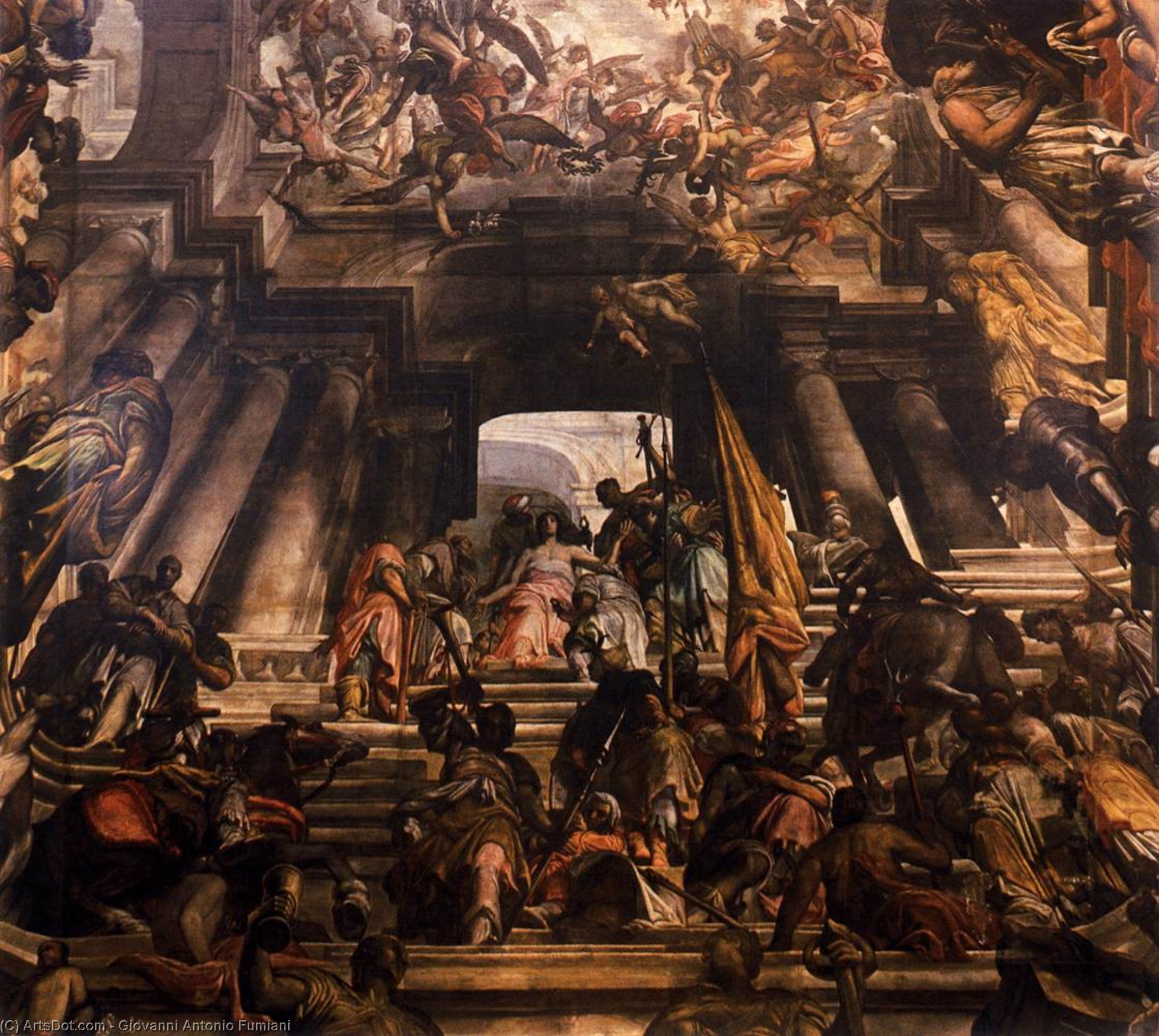
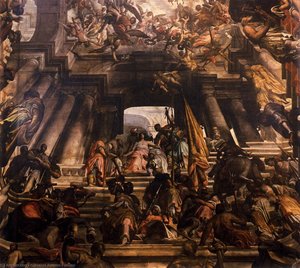
Martyrdom and Glory of St Pantaleon


 Read More
Giclée / Art Print
Museum-quality giclée or canvas print with fast production and flexible finish options. ( Buy Hand Made Painting Buy Image)




































Pick from our preset sizes that match the artwork's original proportions.

You may enter your own dimensions to fit a specific frame or space. If your selected size does not match the original image's proportions, we will either crop the artwork or extend the image with a mirrored or solid-fill edge. A digital mockup will be sent for your approval before production begins.
Please note that the on-screen preview does not reflect the actual cropping or extension. Only the mockup will accurately show the final composition.
While custom sizes are available, we recommend selecting a dimension from the predefined list to preserve the original proportions.
Worldwide Delivery () in 2 weeks instead of standard 4/5 weeks. (1 September)

Free Worldwide Express Shipping

High-Quality Linen Canvas

Full Shipping Insurance

Customs Tax Refund Guarantee

True Color Matching Guarantee

60-Day Return Policy (Defects Only)

100% Money-Back Guarantee

Bulk Discount Offer
 Glass option is only available in size under 110 CM

Martyrdom and Glory of St Pantaleon
Giclée / Art Print
Reproduction Size
-


Total Price
$ 63
Related Artworks
Artist Biography
The Architect of Illusion: The Life and Legacy of Giovanni Antonio Fumiani
In the heart of the Venetian Baroque, where light dances upon canal waters and grandeur meets the divine, the name Giovanni Antonio Fumiani resonates as a master of spatial enchantment. Born in Venice around 1645, Fumiani was far more than a mere painter; he was an architect of the unseen, a virtuoso of quadratura who possessed the rare ability to dissolve the physical boundaries of a ceiling and replace them with the infinite heavens. His journey began not in the salt-aired streets of his birthplace, but in the scholarly studios of Bologna. Under the tutelage of Domenico degli Ambrogi, a specialist in the complex mathematics of architectural perspective, Fumiani mastered the art of perspectival illusionism. This rigorous training provided him with the technical foundation to manipulate sightlines, allowing him to construct soaring, imaginary architectures that seemed to extend far beyond the reach of any mortal eye.
By 1668, Fumiani returned to his native Venice, bringing with him a sophisticated command of spatial trickery that would soon redefine the city's ecclesiastical landscapes. His artistic evolution was shaped by a brilliant synthesis of diverse influences. From the humanist traditions of Bolognese Mannerism, inherited through his exposure to Ludovico Carracci and Alessandro Tiarini, he drew a sense of structural dignity and emotional depth. Yet, it was his profound fascination with the theatrical opulence of Paolo Veronese that truly ignited his palette. This connection infused his work with a vibrant, luminous color scheme and an appreciation for the grand, sweeping compositions that characterize the Venetian spirit. As his career progressed, Fumiani’s style matured into a singular voice—one that balanced the meticulous precision of architectural detail with a breathtaking, dramatic dynamism.
The Monumental Vision of San Pantalon
The zenith of Fumiani’s career, and perhaps the most audacious feat in the history of Baroque painting, is found within the modest walls of the church of San Pantalon. Between 1684 and 1704, Fumiani undertook a project of staggering proportions: the decoration of the nave with a series of canvases that would become legendary. Unlike the traditional fresco, which binds the image to the plaster, Fumiani utilized canvas to create The Martyrdom and Apotheosis of San Pantalon. This massive undertaking, spanning forty-four individual canvases across a surface measuring twenty-five by fifty meters, remains one of the largest paintings in existence. Through the masterful application of di sotto in sù—the technique of depicting figures as if seen from below—he transformed the ceiling into a window to the divine, where saints and martyrs ascend through layers of painted clouds and illusory cornices.
This masterpiece serves as a profound testament to his skill in quadratura. To the viewer standing in the nave, the heavy architecture of the church seems to vanish, replaced by a dizzying upward surge of light and motion. This work does not merely decorate a space; it redefines it, creating an immersive experience that parallels the grandest Roman ceiling decorations of the era, such as those by Andrea Pozzo. It is a triumph of both physical endurance and artistic intellect, representing a moment where the boundaries between the earthly and the celestial are rendered entirely permeable.
A Legacy Written in Light and Stone
Beyond the colossal scale of San Pantalon, Fumiani’s contributions to Venetian art were diverse and deeply impactful. His ability to navigate different scales allowed him to move seamlessly from the monumental to the intimate. In his smaller works, such as the modelli created for the Grand Prince Ferdinand de' Medici in Florence, he revealed a delicate, decorative sensibility and a penchant for animated, sensual subjects that showcased a much more lyrical side of his talent. His influence can be traced through the lineage of Venetian masters, acting as a bridge between the late Mannerist traditions and the soaring, light-filled heights of the Rococo period later championed by Tiepolo.
The historical significance of Giovanni Antonio Fumiani lies in his role as a pioneer of the theatrical Baroque. He understood that art in the seventeenth century was a tool of persuasion and wonder, capable of moving the soul through the sheer spectacle of beauty. Whether executing the intricate mosaics for San Marco or painting the dramatic Charity of St. Roch for San Rocco, his work always sought to elevate the viewer's gaze. Though legend suggests he may have met his end following a fall from the very scaffolds used to decorate San Pantalon, his spirit remains eternally suspended in the magnificent, illusory heavens he so brilliantly created.
Giovanni Antonio Fumiani
1645 - 1710 , Italy
Quick Facts
- Artistic Movement Or Style: Baroque
- Artists Or Movements Influenced By This Artist: ['Tiepolo']
- Artists Who Influenced This Artist:
- Ludovico Carracci
- Alessandro Tiarini
- Paolo Veronese
- Date Of Birth: ca. 1645
- Date Of Death: 1710
- Full Name: Giovanni Antonio Fumiani
- Nationality: Italian
- Notable Artworks:
- Virgin Appearing to Pius V
- The Martyrdom and Apotheosis of St Pantalon
- Place Of Birth: Venice, Italy