 Preview
 Send
Send Share
Share
 Details

 Download
 Similars
 X-Ray
X-Ray Diaporama
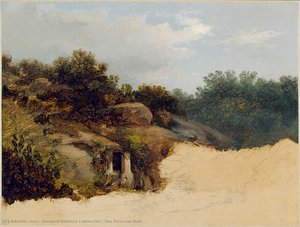
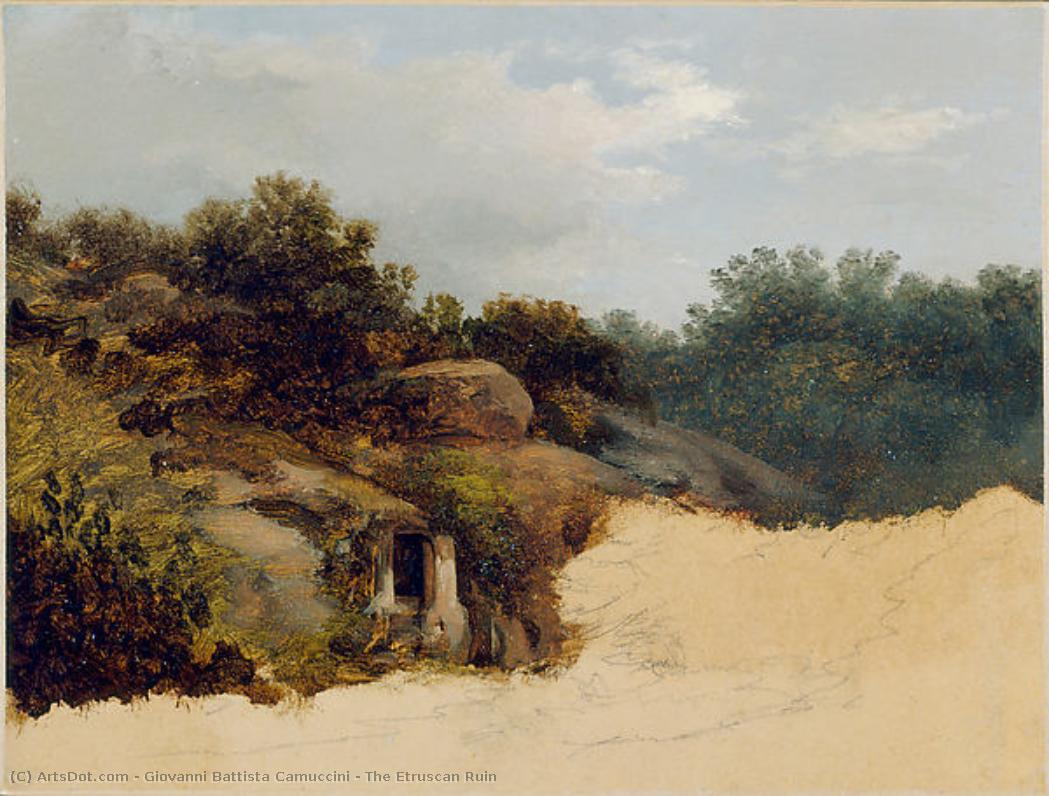
The Etruscan Ruin
 Romanticism
 1840
1840 22.0 x 30.0 cm
 Read More
Hand Made Oil Reproduction
Hand-painted oil on canvas in your size and frame, made to order by our artists. ( Buy Print Buy Image)




P118B $10

P118H $10

P118W $10

P438Z $10

P508JH $12

P508YH $12

P805H $10

P805Z $10

P919BZ $10

P919G $10

P919XJ $10

P959ZH $10

P968JZ $12

W106C $8

W218G $10

W218JH $8

W218Y $10

W307PJ $10

W316G $10

W316PJ $8

W316Y $10

W398PJ $8

W4111J $10

W500HY $15

W500JH $15

W692G $12

W849H $8

W940BG $15

W953PJ $8




Pick from our preset sizes that match the artwork's original proportions.

You may enter your own dimensions to fit a specific frame or space. If your selected size does not match the original image's proportions, we will either crop the artwork or extend the painting with additional hand-painted elements. A digital mockup will be sent for your approval before production begins.
Please note that the on-screen preview does not reflect the actual cropping or extension. Only the mockup will accurately show the final composition.
While custom sizes are available, we recommend selecting a dimension from the predefined list to preserve the original proportions.
After order, ArtsDot.com team will email client for instructions and provide a mockup preview
Worldwide Delivery () in 3/4 weeks instead of standard 5 weeks. (21 August). No compromise on quality.

Free Worldwide Express Shipping

High-Quality Linen Canvas

Full Shipping Insurance

Customs Tax Refund Guarantee

True Color Matching Guarantee

60-Day Return Policy (Defects Only)

100% Money-Back Guarantee

Bulk Discount Offer
 Glass option is only available in size under 110 CM

The Etruscan Ruin
Reproduction Medium
Reproduction Size
-


Total Price
$ 263
Related Artworks
Artist Biography
Giovanni Battista Camuccini: A Roman Visionary
Giovanni Battista Camuccini, born in Genoa in 1819 and passing away in Florence in 1886, stands as a pivotal figure in the transition from Neoclassicism to Romanticism within Italian art. His life was inextricably linked to Rome – not merely as a place of residence but as a profound source of inspiration, shaping his artistic vision and establishing him as one of the era’s most celebrated portraitists and historical painters. His lineage itself provided an early advantage; his father, Vincenzo Camuccini, was a prominent Neoclassical painter in his own right, surrounded by a network of influential artists including Pietro Benvenuti, fostering a rich environment for young Giovanni's artistic development. This familial connection, coupled with a privileged upbringing and rigorous training at the Florentine Academy of Fine Arts, laid the foundation for a career marked by technical mastery, an acute sensitivity to light and atmosphere, and a deep fascination with the grandeur and drama of Roman history and mythology.Early Influences and the Pursuit of *Plein Air*
Camuccini’s artistic journey was profoundly shaped by his encounter with the revolutionary concept of *plein air* painting – working directly from nature. Inspired by the techniques of Pierre-Henri de Valenciennes and Thomas Jones, both masters of capturing fleeting light and atmospheric effects, Camuccini embarked on a deliberate exploration of outdoor painting in the Roman countryside. This commitment to direct observation was remarkably rare for an Italian artist at the time, placing him among a select group of European painters who prioritized this method. His early works, particularly those depicting landscapes around Lake Albano, demonstrate a remarkable ability to translate the vibrant colors and dynamic light of the Italian landscape onto canvas with unprecedented realism and immediacy. These paintings weren’t merely topographical representations; they were imbued with a palpable sense of atmosphere, capturing the essence of Roman summer – the shimmering heat haze, the deep shadows, and the interplay of light on water and foliage.Rome: A Crucible of Artistic Innovation
Camuccini's relocation to Rome in 1824 proved to be a transformative period. The Eternal City, with its layers of history, mythology, and architectural splendor, became his primary subject matter. He immersed himself in the city’s artistic milieu, forging friendships with leading Neoclassical artists such as Raffaello Morghen, Antonio Canova, and Bertel Thorvaldsen. This exposure to diverse artistic styles and techniques profoundly influenced his own work, contributing to a refined and polished aesthetic characterized by meticulous detail, elegant compositions, and a subtle sense of theatricality. His Roman period witnessed the development of his signature style – portraits that captured not only physical likeness but also an underlying psychological depth, often rendered with a captivating blend of realism and idealized beauty.Portraiture and Historical Scenes
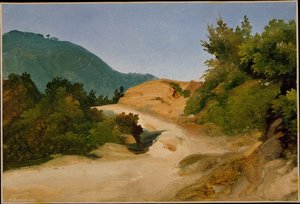
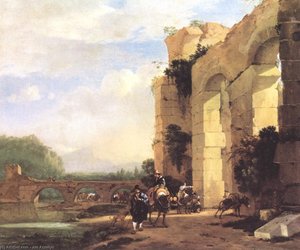
While renowned for his landscapes, Camuccini’s legacy is perhaps most firmly established through his portraiture. He possessed a rare ability to capture the character and personality of his subjects – from royalty and nobility to prominent intellectuals and artists. His portraits are distinguished by their psychological insight, capturing not just outward appearances but also subtle nuances of expression and demeanor. Beyond portraiture, Camuccini excelled in historical scenes, often drawing inspiration from Roman mythology and classical literature. Works like “The Etruscan Ruin” and “Path in the Roman Campagna” exemplify his skill in recreating dramatic landscapes and evoking a sense of timeless grandeur. These paintings demonstrate a masterful command of perspective, color, and composition, transporting the viewer to another era and immersing them in the atmosphere of ancient Rome.Legacy and Influence
Giovanni Battista Camuccini’s impact on Italian art extends far beyond his individual achievements. He played a crucial role in bridging the gap between Neoclassicism and Romanticism, introducing elements of *plein air* painting and atmospheric effects into the Italian artistic landscape. His meticulous attention to detail, combined with an intuitive understanding of light and color, influenced generations of artists who followed. His works are now celebrated in major museums worldwide – including the National Gallery in London and the Metropolitan Museum of Art in New York – testament to his enduring artistic merit and lasting contribution to the history of Italian painting. Furthermore, his son, Raffaele Cassevari, continued the family’s artistic legacy as a prominent engineer and architect, ensuring that the Camuccini name remained synonymous with both artistic talent and technical innovation.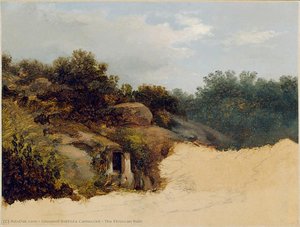
Quick Facts
- Artistic Movement Or Style: Neoclassical
- Artists Or Movements Influenced By This Artist:
- Richard Buckner
- Crispini
- Artists Who Influenced This Artist:
- Vincenzo Camuccini
- Giambattista Bassi
- Date Of Birth: 1819
- Full Name: Giovanni Battista Camuccini
- Nationality: Italian
- Notable Artworks:
- The Etruscan Ruin
- Path in the Roman Campagna
- Place Of Birth: Genoa, Italy
Related Articles
19th Century Masterpieces: 10 Paintings That Defined an Era | ArtsDot
Journey through 19th century art with ArtsDot! Explore 10 iconic paintings – from Monet & Renoir to Courbet – and discover the stories behind Romanticism, Realism & Impressionism. Find museum-quality reproductions for your home decor. Explore the full collection online!
Giovanni Battista Piranesi: Visionary of Ruins & Architect of Imagination
Explore the life & work of Giovanni Battista Piranesi, master etcher of Roman views & creator of the haunting 'Carceri d'Invenzione'. Discover his architectural vision and lasting influence on art history.
Giovanni Fattori: Realism, Identity & the Tuscan Landscape – A Macchiaioli Master
Explore the life & art of Giovanni Fattori, a leading figure of the Macchiaioli movement. Discover his revolutionary realism, captivating Tuscan landscapes, and lasting impact on Italian painting. Learn more at ArtsDot.
Bartolomeo Pinelli: Neoclassical Linearity & Roman Topography of Memory
Explore the captivating world of Bartolomeo Pinelli, a master Italian engraver renowned for his evocative Roman scenes & historical narratives. Discover his art and legacy with ArtsDot.
Giovanni Paolo Panini: Capturing Roman Grandeur – A Vedute Master's Legacy
Explore the captivating world of Giovanni Paolo Panini, master of Roman vedute painting. Discover his technique, iconic works, influence on art history & collecting advice from experts at ArtsDot.