 Preview
 Send
Send Share
Share
 Details

 Download
 Similars
 X-Ray
X-Ray Diaporama
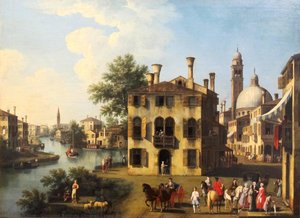
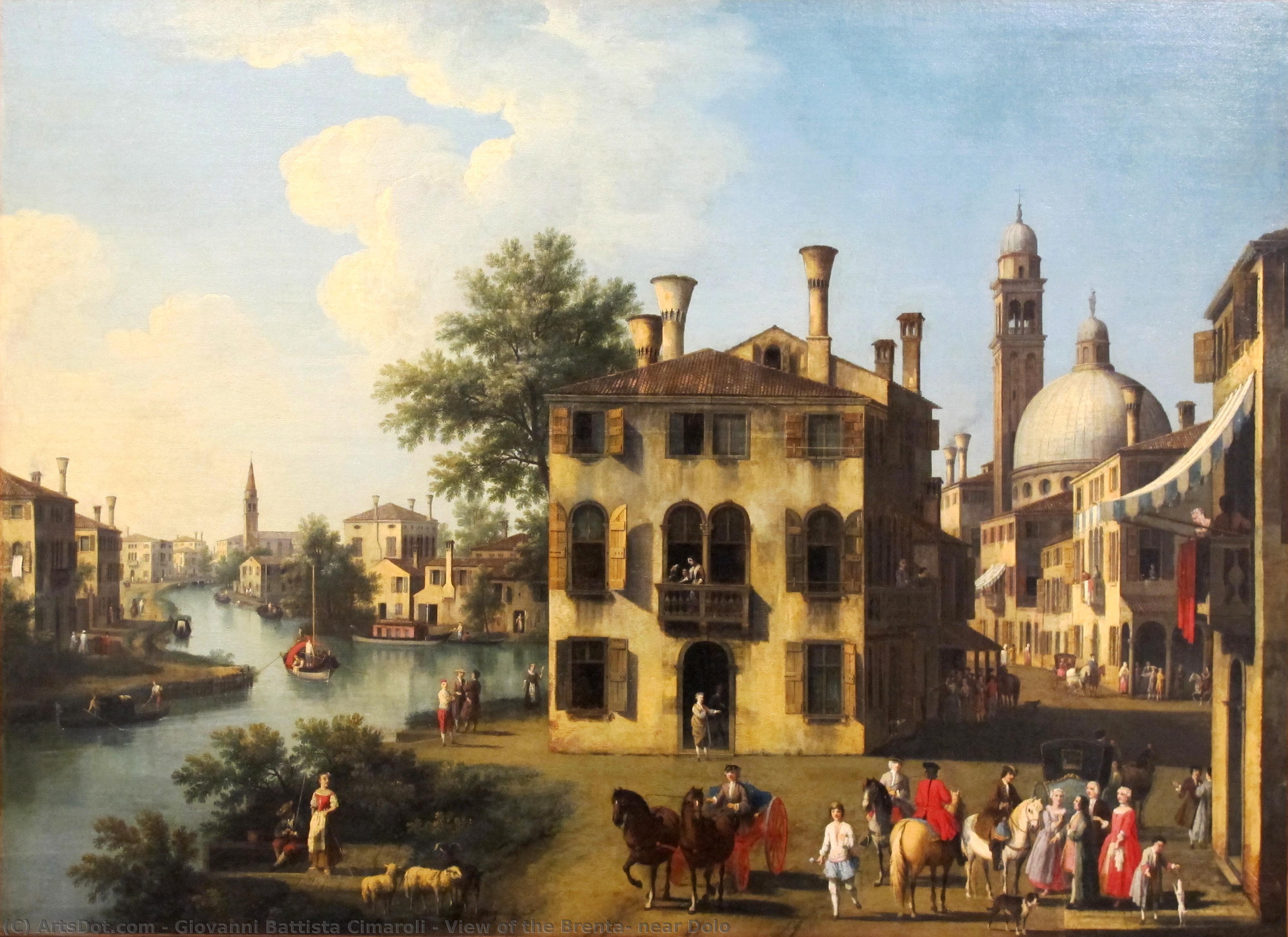
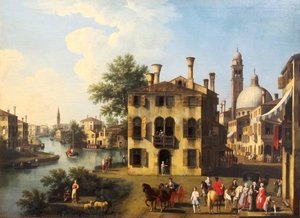
View of the Brenta, near Dolo
 Acrylic On Canvas
- WallArt
- Rococo
 701
701 82.0cm x 113.0cm
 Metropolitan Museum of Art
 Read More
Giclée / Art Print
Museum-quality giclée or canvas print with fast production and flexible finish options. ( Buy Hand Made Painting Buy Image)




P118B $10

P118H $10

P118W $10

P438Z $10

P508JH $12

P508YH $12

P805H $10

P805Z $10

P919BZ $10

P919G $10

P919XJ $10

P959ZH $10

P968JZ $12

W106C $8

W218G $10

W218JH $8

W218Y $10

W307PJ $10

W316G $10

W316PJ $8

W316Y $10

W398PJ $8

W4111J $10

W500HY $15

W500JH $15

W692G $12

W849H $8

W940BG $15

W953PJ $8




Pick from our preset sizes that match the artwork's original proportions.

You may enter your own dimensions to fit a specific frame or space. If your selected size does not match the original image's proportions, we will either crop the artwork or extend the image with a mirrored or solid-fill edge. A digital mockup will be sent for your approval before production begins.
Please note that the on-screen preview does not reflect the actual cropping or extension. Only the mockup will accurately show the final composition.
While custom sizes are available, we recommend selecting a dimension from the predefined list to preserve the original proportions.
Worldwide Delivery () in 2 weeks instead of standard 4/5 weeks. (27 August)

Free Worldwide Express Shipping

High-Quality Linen Canvas

Full Shipping Insurance

Customs Tax Refund Guarantee

True Color Matching Guarantee

60-Day Return Policy (Defects Only)

100% Money-Back Guarantee

Bulk Discount Offer
 Glass option is only available in size under 110 CM

View of the Brenta, near Dolo
Giclée / Art Print
Reproduction Size
-


Total Price
$ 63
Collectible Description
A Tranquil Vista of Venetian Life: Giovanni Battista Cimaroli’s ‘View of the Brenta, Near Dolo’
Giovanni Battista Cimaroli (1687 – 1771) remains a curiously overlooked figure in the annals of Italian Baroque art, despite producing a prolific oeuvre of landscapes that captivated aristocratic patrons and contemporaries alike. Born in Salò, Lake Garda, he emerged from a milieu steeped in artistic tradition—his father was a sculptor—and benefited from formative instruction under Antonio Aureggio and later honed his skills in Bologna with Antonio Calza, establishing himself as a Venetian artist around 1713. Cimaroli’s distinctive style – characterized by serene compositions imbued with subtle atmospheric effects – positioned him firmly within the broader artistic currents of his time, particularly influenced by Francesco Zuccarelli and Canaletto, artists who championed the Arcadian ideal of pastoral beauty.The Painting's Subject Matter: A Snapshot of Eighteenth-Century Veneto
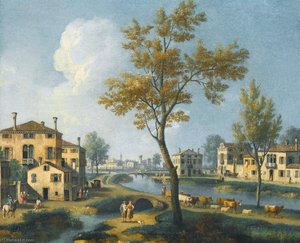
‘View of the Brenta, Near Dolo’ depicts a picturesque stretch of the Brenta River as it winds its way through the Venetian countryside. The scene captures a moment of everyday life – figures strolling along the waterfront, horses hauling carts laden with goods, and boats navigating the tranquil waters—reflecting the dynamism of the Veneto region during Cimaroli's era. Notably, the prominent house in the center of the composition was recently demolished, adding to the painting’s poignant reminder of a bygone age. This careful observation of urban and rural landscapes aligns perfectly with the artistic sensibilities of the period, mirroring the fascination for idealized representations of nature prevalent amongst Venetian artists.Style and Technique: Thick Impasto and Atmospheric Depth
Cimaroli's technique is immediately recognizable through his masterful use of thick impasto—a textural layering of paint that creates a palpable sense of physicality—particularly evident in the depiction of foliage and architectural details. This bold approach lends considerable depth to the painting, conveying not only visual accuracy but also an emotional resonance born from Cimaroli’s sensitivity to light and shadow. The artist skillfully employs atmospheric perspective, subtly blurring distant elements to heighten the illusion of space and contribute to the overall mood of tranquility and contemplation.Historical Context: Zuccarelli's Influence and the Arcadian Ideal
The painting’s attribution to Francesco Zuccarelli—though debated by scholars—highlights Cimaroli’s connection to a prominent artistic lineage. Like Zuccarelli, Cimaroli embraced the Arcadian ideal – a concept originating in Arcadia, Greece, representing pastoral serenity and moral virtue – translating it into visual form through landscapes populated with idealized figures and harmonious architectural elements. This stylistic choice underscores Cimaroli's commitment to upholding classical aesthetic principles while simultaneously reflecting the evolving tastes of Venetian society during his lifetime.Emotional Impact: A Moment Preserved in Time
Ultimately, ‘View of the Brenta, Near Dolo’ transcends mere topographical representation; it succeeds in conveying a profound sense of nostalgia for a vanished world. The painting's muted palette and carefully crafted composition invite viewers to pause and contemplate the beauty of nature alongside the rhythms of daily life—a testament to Cimaroli’s artistic vision and his ability to capture the essence of Venetian culture during its golden age. It remains an evocative glimpse into a specific historical moment, resonating with timeless qualities that continue to captivate audiences today.Related Artworks

Artist Biography
The Serene Vision of Giovanni Battista Cimaroli
In the golden age of the Venetian Republic, amidst the shimmering canals and the sprawling pastoral beauty of the Veneto, lived an artist whose brush captured the very soul of the Italian landscape. Giovanni Battista Cimaroli (1687–1771) was not merely a painter of scenery, but a chronicler of tranquility. Born in Salò, on the scenic shores of Lake Garda, Cimaroli emerged from a lineage of artistic discipline; his father was a sculptor, a fact that likely instilled in him a profound respect for form and structure. His early training under Antonio Aureggio provided a rigorous foundation in disegno, while his subsequent journey to Bologna to study with Antonio Calza refined his ability to manipulate light and perspective. By the time he established himself in Venice around 1713, Cimaroli had developed a voice that was uniquely his own—a blend of meticulous observation and an idealized, Arcadian grace.
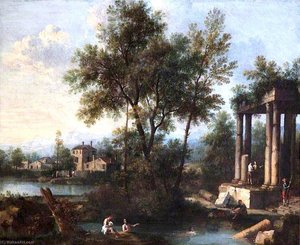
Cimaroli’s work serves as a window into an era defined by the pursuit of pastoral perfection. His compositions often feature the rustic charm of the Venetian countryside, populated by graceful figures, wandering cattle, and the weathered ruins of antiquity. He was deeply influenced by the masters of his time, most notably Francesco Zuccarelli and Canaletto. From Zuccarelli, he inherited a penchant for the Arcadian ideal—the creation of landscapes that felt both natural and poetically composed. From Canaletto, he drew an appreciation for topographical accuracy and the subtle atmospheric effects that define the Venetian sky. This synthesis allowed him to create scenes that were simultaneously grounded in reality and elevated by a sense of timelessness.
Mastery of Light and the Brenta Series
The technical brilliance of Cimaroli lies in his ability to evoke atmosphere through texture and tone. He was a master of thick impasto, using a heavy layering of paint to breathe life into the foliage of trees and the rugged surfaces of stone ruins. This tactile approach creates a palpable sense of physicality, making the lush greenery and flowing waters of his landscapes feel almost touchable. His ability to modulate light allowed him to capture the fleeting moments of a Venetian afternoon—the way sunlight filters through a canopy or reflects off the surface of a quiet canal.
One of his most significant artistic achievements was his involvement in the Brenta Landscape Series (c. 1723-1726). Created at the invitation of Canaletto, this ambitious project offered panoramic views of the Brenta River near Dolo. These works represent a pinnacle of Venetian topographical painting, showcasing Cimaroli’s ability to document the dynamism of the region—from horses hauling carts to boats navigating the river—while maintaining a sense of profound peace. Through these vistas, he captured a world of everyday life that, while vibrant, remained anchored in a serene, almost dreamlike state.
A Legacy of Venetian Tranquility
Though history has sometimes overlooked Cimaroli in favor of his more famous contemporaries, his significance within the Italian Baroque and Rococo traditions remains undeniable. His reputation for meticulous rendering earned him the patronage of influential figures such as Marshal Schulenberg and Count Tessin. Perhaps most telling of his skill was his collaboration with Canaletto on the ambitious tomb series for Owen McSwiney, a project intended to honor British statesmen through the lens of Italian mastery.
Today, Cimaroli’s oeuvre stands as a testament to the enduring allure of the Veneto landscape. His paintings are more than mere depictions of farms, villas, and ruins; they are emotional landscapes that invite the viewer to step into a world of harmony and balance. As we look upon his sweeping riverbanks and quiet pastoral scenes, we find a lasting legacy of beauty that continues to resonate with the human desire for peace and the eternal charm of the natural world.
giovanni battista cimaroli
1687 - 1771
Quick Facts
- Artistic Movement Or Style: Rustic Venetian Landscape
- Artists Or Movements Influenced By This Artist: ['Francesco Zuccarelli']
- Artists Who Influenced This Artist:
- Antonio Aureggio
- Antonio Canaletto
- Date Of Birth: 1687
- Date Of Death: 1771
- Full Name: Giovanni Battista Cimaroli
- Nationality: Italian
- Notable Artworks:
- View of the Brenta, near Dolo
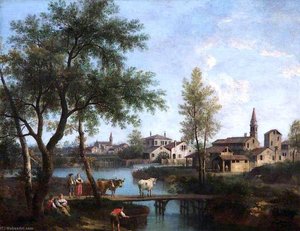
- A landscape at the outskirts of a town with a peasant driving his cattle along a river bank
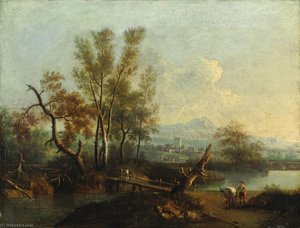
- A landscape with elegant figures on horseback, before a riverside town
- Place Of Birth: Salò, Lombardy
Related Articles

John Constable's Masterpieces: Explore 25 Iconic Landscapes for Your Home
Journey through John Constable's 25 most celebrated landscapes. Explore Romanticism, Dedham Vale & his masterful use of light in iconic paintings like 'Hay Wain'. Find museum-quality art reproductions and elevate your home decor on ArtsDot.com.

Hudson River School: 10 Masterpieces That Capture America's Wild Beauty | ArtsDot
Journey through America's breathtaking landscapes with our guide to the Top 10 Hudson River School masterpieces. Explore Thomas Cole, Frederic Church & more! Find museum-quality art reproductions and elevate your home decor at ArtsDot.com.

Romantic Landscapes: 10 Masterpieces for Your Home | ArtsDot
Journey through 10 Romantic landscape masterpieces by Friedrich, Turner & Cole. Explore emotional art, sublime nature scenes & iconic 19th-century paintings. Find museum-quality reproductions for your home at ArtsDot.com – discover the full collection online!

Evocations of Place: A Historical Journey Through Landscape Art
Explore the rich history of landscape art with ArtsDot. Discover renowned artists, movements like Impressionism & Romanticism, and expert guidance for collecting timeless pieces. Find your perfect serene escape today!
Evocations of Place: A Historical Journey Through Landscape Art
Explore the rich history of landscape art with ArtsDot. Discover renowned artists, movements like Impressionism & tonalism, and expert guidance for collecting timeless pieces. Find your perfect serene escape today!