

 Preview
 Send
Send Share
Share
 Details

 Download
 Similars
 X-Ray
X-Ray Diaporama
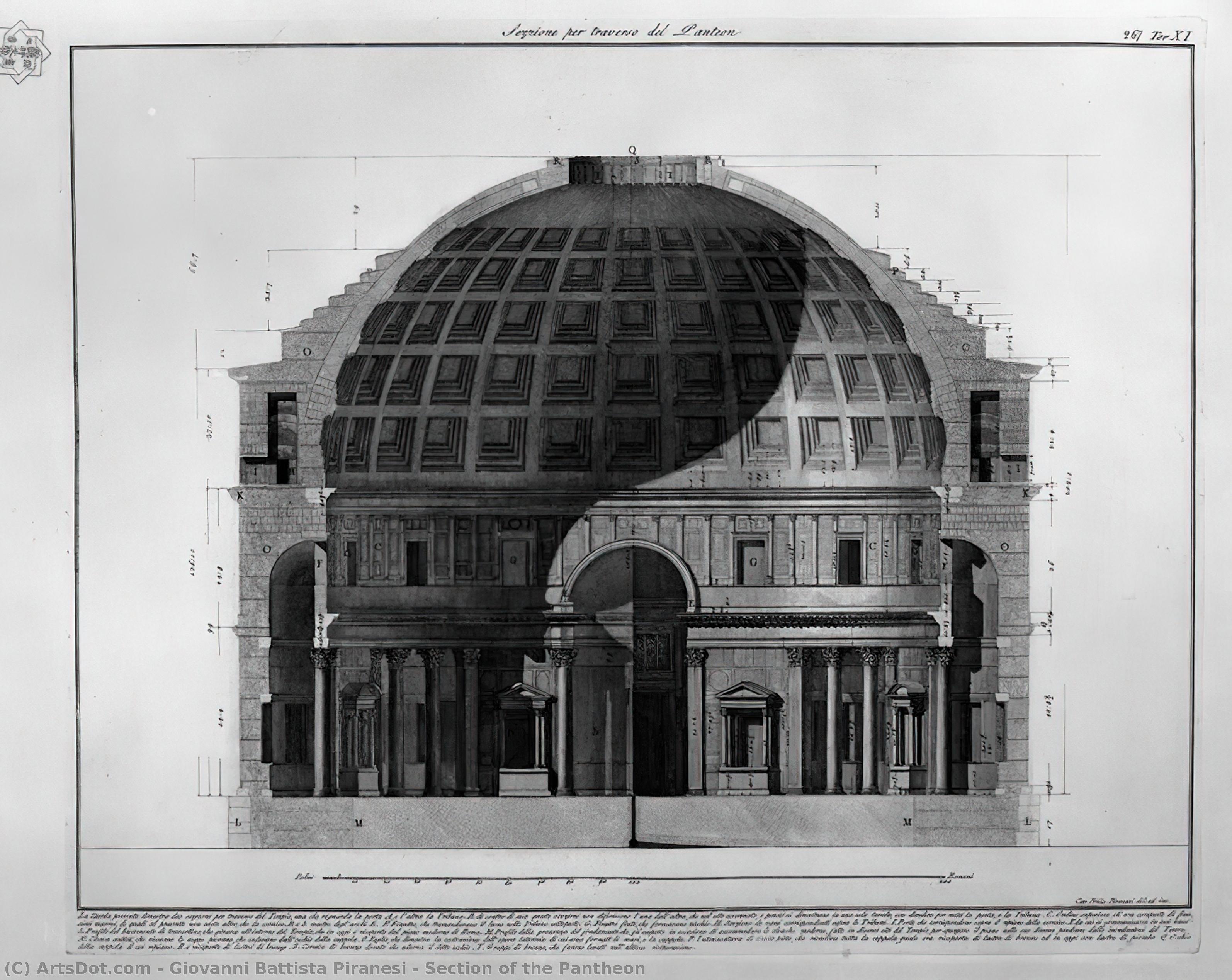
Section of the Pantheon

 Read More
Purchase a high-resolution, enhanced digital image, far superior to the online preview.
Each file is meticulously prepared by our in-house specialists using advanced tools and expert manual retouching. We ensure every image has exceptional clarity, precise color accuracy, and fine detail.
The final file is delivered via email within 72 hours, optimized for immediate use in professional, editorial, and print environments. This is the same quality trusted by top-tier design studios, publishers, and galleries.
Digital Image
Download a high-resolution file for personal display, printing, and creative projects. ( Buy Print Buy Hand Made Painting)
Included in Every Digital Image Order
Expert Digital Delivery, Guaranteed
When you choose ArtsDot.com, you're not just getting an image - you're receiving a professionally enhanced digital artwork, crafted with precision and backed by a satisfaction guarantee. Here's everything that comes with your order, automatically:

Fast Email Delivery
Your high-resolution digital image file will be emailed to you within 72 hours of ordering - ready for immediate use.

AI-Enhanced Digital File
Your artwork is professionally optimized using advanced AI tools and manual editing, ensuring maximum detail, clarity, and color accuracy.

Free Lifetime Re-Delivery
Accidentally deleted or lost your file? No worries - we'll resend it to you anytime, free of charge.

No Import Fees - Ever
Enjoy your artwork instantly with zero customs, duties, or delivery fees - digital downloads are always tax-free.

Color Accuracy Guarantee
We ensure your digital image reflects the original colors as closely as possible using professional tools and color management.

60-Day Satisfaction Guarantee
If you're not satisfied with your digital image, we'll revise it or refund 100% within 60 days - no questions asked.

100% Money-Back Guarantee
Not satisfied? Get a full refund within 60 days of receiving your digital file - no questions asked.

Bulk Order Discounts
Buy 3 images, save 10% - Buy 5, save 15% - Buy 10+, save 20%. Great for creative projects, galleries, and agencies.
Related Artworks


Artist Biography
A Visionary of Ruins: The Life and Art of Giovanni Battista Piranesi
Giovanni Battista Piranesi, born in 1720 near Venice, was an artist who didn’t simply depict the world around him; he reimagined it, conjuring spaces that resonated with both historical grandeur and a profound psychological weight. His life unfolded during a period of fervent archaeological rediscovery, as Rome shed layers of time, revealing its ancient heart to eager scholars and artists. But Piranesi wasn't content with mere documentation. He transformed the ruins into something more—evocative landscapes of the imagination, imbued with an atmosphere of mystery and awe. The son of a stonemason, he possessed an innate understanding of architectural form and material, a sensibility nurtured by early exposure to the physicality of building. This foundation was further strengthened through instruction from his uncle, Matteo Lucchesi, an architect, and later, rigorous training in engraving under Giuseppe Vasi, a leading Roman printmaker. This unique blend of design expertise and technical skill allowed Piranesi to seamlessly merge architectural precision with dramatic artistic vision. His early travels throughout Italy, particularly his extended sojourn in Rome, ignited a lifelong fascination with the city’s layered history and its crumbling magnificence. He wasn't interested solely in what *was*, but in exploring what *could be*—or perhaps, what once *had been*.
The Carceri: Labyrinths of the Mind
Piranesi is arguably most celebrated for his series of etchings known as the Carceri d'Invenzione (Imaginary Prisons), created between 1745 and 1761. These are not representations of actual prisons, but rather fantastical labyrinths—colossal staircases spiraling into darkness, towering arches framing endless vistas, shadowy vaults echoing with unseen presences. The scale is deliberately disorienting; human figures are dwarfed by the immense architecture, emphasizing a sense of isolation and powerlessness. The Carceri have been interpreted through countless lenses—as allegories for oppressive authority, reflections of Enlightenment anxieties surrounding reason and control, or even projections of Piranesi’s own subconscious fears. What remains undeniable is their enduring psychological impact. The intricate detail, combined with dramatic chiaroscuro—the stark contrast between light and shadow—creates an atmosphere of claustrophobia and unease. The series wasn't conceived as a unified narrative but rather as individual explorations of spatial ambiguity and emotional intensity. Later editions included additional plates, expanding the scope of this haunting world. The influence of these works reverberates through artistic movements from Romanticism to Surrealism, demonstrating their lasting power to unsettle and inspire. They are not merely images; they are experiences—immersive journeys into the depths of the human psyche.
Vedute: Reconstructing Roman Grandeur
Alongside his fantastical creations, Piranesi produced a vast body of work documenting the real architecture of Rome—known as vedute, or views. However, these weren’t straightforward topographical representations. They were carefully composed scenes that emphasized the monumentality and historical significance of ancient ruins. He meticulously researched and depicted Roman landmarks like the Forum, the Colosseum, and the Pantheon, often incorporating figures to provide a sense of scale and animation. But even in his vedute, Piranesi wasn't afraid to take artistic liberties. He would sometimes reconstruct damaged structures based on his understanding of ancient building techniques, effectively “completing” the ruins for the viewer. This approach reflects his belief that archaeology was not simply about uncovering the past but also about interpreting and reimagining it. His Vedute di Roma, published in 1748, became immensely popular, establishing him as a leading artist of Roman topography. These views weren’t just for scholars; they were highly sought after by Grand Tourists—wealthy young Europeans traveling through Italy to complete their education—who desired souvenirs of the classical world. Piranesi offered them not merely records of what existed, but idealized visions of Rome's former glory.
Beyond Etching: Architect, Scholar, and Innovator
While Piranesi is best known as an etcher, his talents extended far beyond printmaking. He was also a skilled architect and designer, undertaking commissions for furniture, chandeliers, and even entire interiors. In 1761, he was elected to the Accademia di San Luca in Rome—a prestigious recognition of his artistic achievements. He also engaged in scholarly pursuits, publishing works on Roman antiquities and numismatics (the study of coins). His Antichità Romane (Roman Antiquities), published between 1756 and 1764, was a monumental undertaking that showcased his meticulous research and artistic skill. This work wasn't simply a catalog of artifacts; it was an attempt to reconstruct the visual world of ancient Rome, based on archaeological evidence and historical sources. Piranesi’s approach to scholarship was innovative for its time, emphasizing the importance of visual documentation and contextual analysis. He believed that understanding the past required not only studying texts but also immersing oneself in the physical remains of antiquity. He saw archaeology as a creative act—a process of reconstruction and interpretation.
A Lasting Legacy
Giovanni Battista Piranesi died in Rome in 1778, leaving behind a body of work that continues to captivate and inspire. His influence can be seen in the art of countless artists, from J.M.W. Turner and Gustave Doré to modern-day filmmakers and architects. The Carceri, in particular, have resonated with generations of viewers, serving as a powerful metaphor for the human condition—our anxieties, our fears, and our longing for freedom.
- His ability to blend architectural precision with imaginative vision set him apart.
- He wasn't simply recording the world; he was creating worlds of his own.
- He invited viewers to explore the depths of their imagination and confront the mysteries of the past.
Piranesi’s legacy extends beyond artistry—he was a visionary who redefined how we perceive space, history, and the very nature of reality. His work remains a testament to the enduring power of art to transport us to other times and places, and to illuminate the hidden corners of the human psyche.
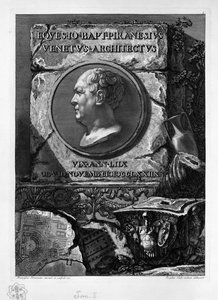
Giovanni Battista Piranesi
1720 - 1778 , Italy
Quick Facts
- Artistic Movement Or Style: Neoclassicism
- Artists Or Movements Influenced By This Artist:
- Romanticism
- Surrealism
- J.M.W. Turner
- Artists Who Influenced This Artist:
- Giuseppe Vasi
- Matteo Lucchesi
- Date Of Birth: 1720
- Date Of Death: 1778
- Full Name: Giovanni Battista Piranesi
- Nationality: Italian
- Notable Artworks:
- Carceri d'Invenzione
- Vedute di Roma
- St. Mary Magdalene
- Place Of Birth: Mogliano Veneto, Italy

