 Preview
 Send
Send Share
Share
 Details

 Download
 Similars
 X-Ray
X-Ray Diaporama
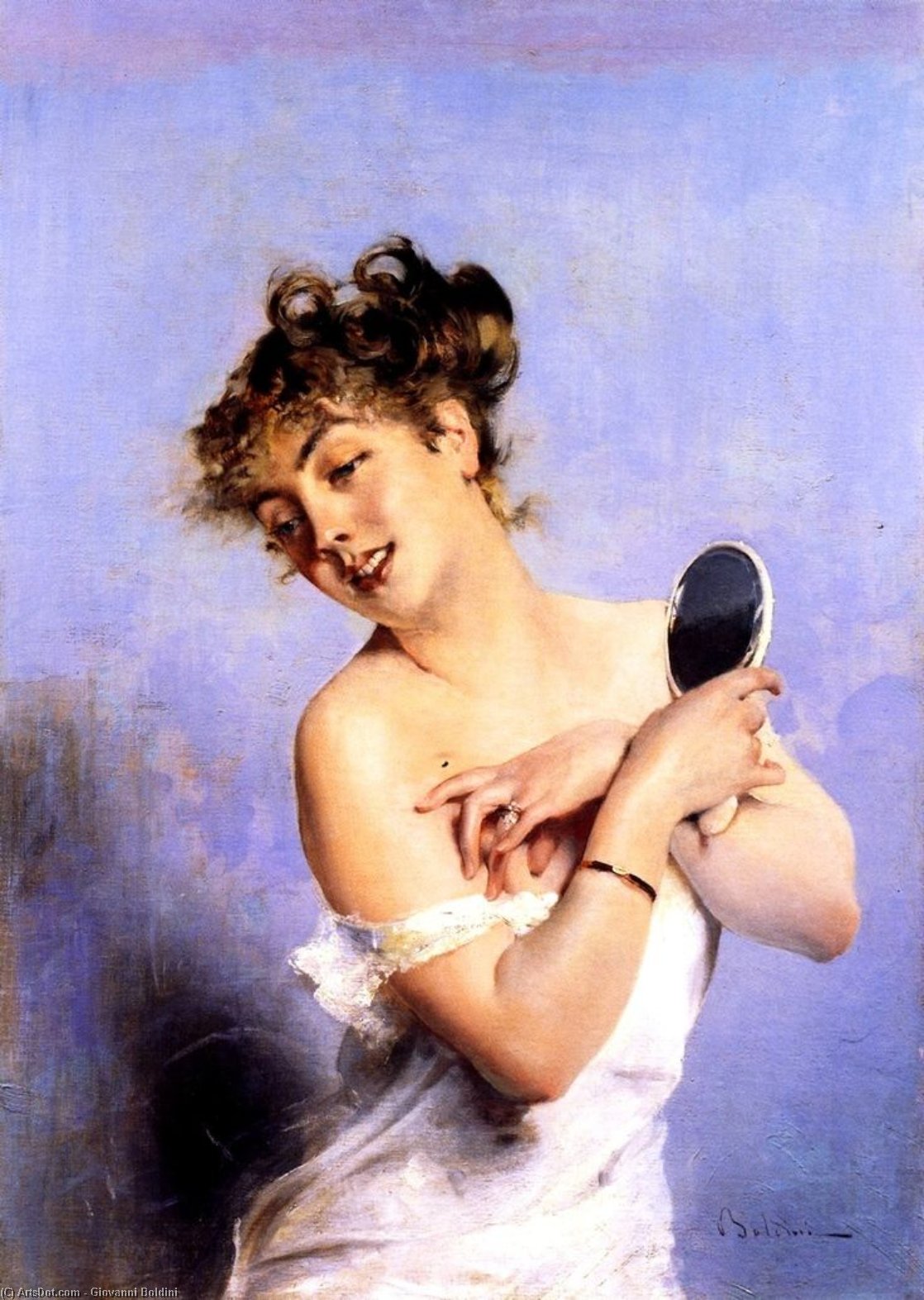
La Toilette (also known as Young Woman in Déshabillé with a Mirror)
 Oil On Canvas
- WallArt
- Impressionism
 1880
1880- 19th Century
 87.0 x 62.0 cm
 Read More
Hand Made Oil Reproduction
Hand-painted oil on canvas in your size and frame, made to order by our artists. ( Buy Print Buy Image)




P118B $10

P118H $10

P118W $10

P438Z $10

P508JH $12

P508YH $12

P805H $10

P805Z $10

P919BZ $10

P919G $10

P919XJ $10

P959ZH $10

P968JZ $12

W106C $8

W218G $10

W218JH $8

W218Y $10

W307PJ $10

W316G $10

W316PJ $8

W316Y $10

W398PJ $8

W4111J $10

W500HY $15

W500JH $15

W692G $12

W849H $8

W940BG $15

W953PJ $8




Pick from our preset sizes that match the artwork's original proportions.

You may enter your own dimensions to fit a specific frame or space. If your selected size does not match the original image's proportions, we will either crop the artwork or extend the painting with additional hand-painted elements. A digital mockup will be sent for your approval before production begins.
Please note that the on-screen preview does not reflect the actual cropping or extension. Only the mockup will accurately show the final composition.
While custom sizes are available, we recommend selecting a dimension from the predefined list to preserve the original proportions.
After order, ArtsDot.com team will email client for instructions and provide a mockup preview
Worldwide Delivery () in 3/4 weeks instead of standard 5 weeks. (30 August). No compromise on quality.

Free Worldwide Express Shipping

High-Quality Linen Canvas

Full Shipping Insurance

Customs Tax Refund Guarantee

True Color Matching Guarantee

60-Day Return Policy (Defects Only)

100% Money-Back Guarantee

Bulk Discount Offer
 Glass option is only available in size under 110 CM

La Toilette (also known as Young Woman in Déshabillé with a Mirror)
Reproduction Medium
Reproduction Size
-


Total Price
$ 263
The Intimate Gaze: Capturing Moments in "La Toilette"
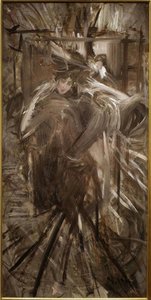
To stand before Giovanni Boldini's "La Toilette," or as it is sometimes known, "Young Woman in Déshabillé with a Mirror," is to step across the threshold into a private moment of exquisite contemplation. This 1880 masterpiece does more than merely depict a scene; it captures the very breath held between thought and action. The subject—a young woman enveloped in the soft folds of white fabric, engaged in the ritual of grooming—is rendered with an almost palpable sense of immediacy. Boldini masterfully directs our attention to the interplay between the woman, her reflection, and the simple act of brushing her hair. It is a portrait not just of beauty, but of introspection itself.
Boldini's Brushwork: A Symphony in Impressionist Light
As a leading figure within the vibrant current of Impressionism, Boldini’s technique here sings with characteristic energy. His application of oil paint is nothing short of electrifying; one can almost hear the whisper of the bristles against her hair. The colors, while possessing an underlying serenity, are executed with a vibrancy that speaks to his mastery of light. He does not merely record light; he seems to have bottled it. Notice how the subtle gradations across the white dress and in the sheen of the mirror catch the ambient glow, giving the entire composition a luminous quality. This technical brilliance ensures that even reproductions retain a sense of depth and airy movement.
Symbolism of Self-Reflection and Femininity
The inclusion of the mirror elevates this painting beyond simple genre scene into something deeply symbolic. The act of looking into one's own reflection is timeless, representing self-discovery, vanity, or perhaps a moment of profound connection with one's inner self. In the context of the Belle Époque, when such portraits flourished, "La Toilette" speaks to the delicate balance between public presentation and private reality. The woman seems caught in that liminal space—between who she is seen to be, and who she truly feels herself to be.
Bringing Parisian Elegance Home
For the discerning collector or designer seeking an anchor of sophisticated artistry for their space, this piece offers unparalleled allure. Owning a reproduction of "La Toilette" allows one to incorporate a touch of late 19th-century Parisian glamour and artistic genius into contemporary décor. The scale, measuring approximately 87 x 62 cm, makes it a commanding yet graceful focal point for a drawing-room or boudoir. It promises not just decoration, but conversation—a quiet invitation to pause, observe, and contemplate the beautiful complexity of the human spirit.
Related Artworks
Artist Biography
A Master of Swish: The Life and Art of Giovanni Boldini
Giovanni Boldini, a name synonymous with the elegance and allure of the Belle Époque, was an Italian artist who carved his niche in Parisian society as a celebrated portraitist. Born on December 31, 1842, in Ferrara, Italy, Boldini’s artistic journey began under the guidance of his father, a painter specializing in religious subjects. This early exposure instilled in him a foundational understanding of technique and composition, yet it was his move to Florence in 1862 that truly ignited his creative spirit. There, he encountered the Macchiaioli—a group of Italian realist painters who foreshadowed Impressionism with their emphasis on light, color, and spontaneous execution. This encounter proved pivotal, influencing Boldini’s landscapes with a newfound vibrancy and responsiveness to nature. However, it was in capturing the essence of his subjects through portraiture that he would ultimately achieve lasting renown.From Florence to Parisian Society
Boldini's artistic path led him first to London, where he quickly gained recognition for his portraits of prominent figures like Lady Holland and the Duchess of Westminster. This early success paved the way for his relocation to Paris in 1872—a city that would become both his home and his muse. In Paris, Boldini immersed himself in the artistic milieu, befriending Edgar Degas and navigating the complex social landscape of the French capital. He developed a distinctive style characterized by its fluidity, dynamism, and an almost theatrical flair. His brushstrokes were not merely descriptive; they seemed to capture movement, personality, and the very air surrounding his subjects. This unique approach earned him the moniker “Master of Swish” in 1933, a testament to the graceful energy that permeated his work. He became *the* portraitist for Parisian high society, immortalizing the glamorous lives of actresses, socialites, and members of the aristocracy.Technique and Influences
Boldini’s technique was as captivating as the personalities he portrayed. His canvases were often large in scale, allowing him to convey a sense of grandeur and presence. He employed a loose, expressive brushstroke, building up layers of color to create texture and depth. This approach, combined with his keen eye for detail and ability to capture fleeting expressions, resulted in portraits that were both strikingly realistic and imbued with an undeniable sense of style. While influenced by the Macchiaioli’s emphasis on light and spontaneity, Boldini also drew inspiration from artists like John Singer Sargent and Paul Helleu, whose own dynamic brushwork resonated with his artistic sensibilities. He wasn't simply replicating likenesses; he was creating impressions—evocative representations of character and social standing. His portraits weren’t just images; they were statements.Legacy and Rediscovery
Throughout his career, Boldini exhibited widely, including at the Venice Biennale in 1895, 1903, 1905, and 1912. He received the Légion d'honneur for his contributions to the arts, solidifying his position as a leading figure in the Parisian art world. However, towards the end of his life, Boldini’s popularity waned as artistic tastes shifted. He continued to paint, but his work fell somewhat into obscurity until recent decades have witnessed a remarkable resurgence of interest. The rediscovery of lost works, such as the captivating portrait of Marthe de Florian found hidden away in a Parisian apartment in 2010, has reignited appreciation for Boldini’s artistry and brought renewed attention to his significant contribution to Belle Époque art. The story surrounding this painting—a forgotten treasure unearthed after decades of seclusion—only adds to the mystique that surrounds both the artist and his subjects.A Lasting Impression
Giovanni Boldini passed away in Paris on January 11, 1931, leaving behind a legacy as one of the most fashionable and innovative portrait painters of his time. His work continues to inspire artists and art enthusiasts alike, offering a glimpse into a bygone era of elegance, sophistication, and artistic brilliance. He wasn’t merely documenting society; he was celebrating it—capturing its beauty, its energy, and its enduring allure on canvas. Boldini's portraits remain powerful testaments to his skill, his vision, and his ability to transform the act of painting into a captivating performance.- Boldini’s influence can be seen in contemporary portraiture.
- His work is featured in major museums worldwide.
- The rediscovery of lost works continues to fuel scholarly interest.
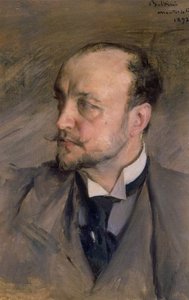
Giovanni Boldini
1842 - 1931 , Italy
Quick Facts
- Artistic Movement Or Style: Impressionism
- Artists Or Movements Influenced By This Artist: ['John Singer Sargent']
- Artists Who Influenced This Artist: ['Macchiaioli painters']
- Date Of Birth: December 31, 1842
- Date Of Death: July 11, 1931
- Full Name: Giovanni Boldini
- Nationality: Italian
- Notable Artworks:
- Countess de Rasty
- The Machine at Marly
- Place Of Birth: Ferrara, Italy
Related Articles
Giovanni Boldini: A Study in Belle Époque Portraiture & the Cult of Personality
Explore the captivating world of Giovanni Boldini, master of Belle Époque portraiture. Discover his signature style, iconic works like 'Miss Bell,' and lasting influence on art history. Expert analysis for collectors.

The Enduring Legacy of Oil on Canvas: Technique, History & Aesthetic Impact
Explore the rich history & techniques of oil painting – from Renaissance masters to Impressionism. Discover pigments, layering methods, and why this timeless medium endures. Expert insights for artists & art enthusiasts.

Oil on Canvas: A Historical & Technical Exploration of a Timeless Artistic Medium
Explore the rich history & enduring techniques of oil painting on canvas. Discover the science behind its longevity, conservation practices, and contemporary relevance. Expert insights for art enthusiasts.

The Enduring Power of Painting: A Historical & Contemporary Exploration of Form and Emotion
Explore the rich history & enduring techniques of oil painting with ArtsDot. Discover masterpieces, learn about art collecting, and find authentic handmade reproductions crafted by skilled artists.
Impressionistic Realism's Finest: 10 Masterpieces for Your Home | ArtsDot
Journey through Impressionistic Realism with 10 iconic masterpieces by Monet, Renoir & Van Gogh. Explore art history, techniques & find museum-quality reproductions for your home at ArtsDot.com. Discover all masterpieces online!