 Preview
 Send
Send Share
Share
 Details

 Download
 Similars
 X-Ray
X-Ray Diaporama
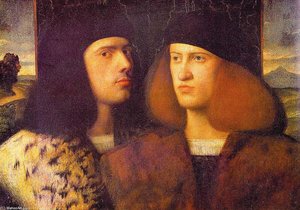
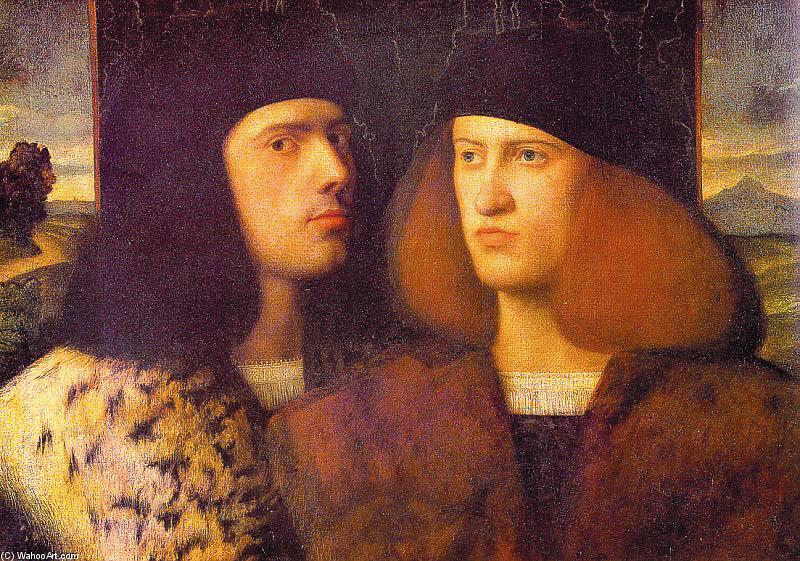
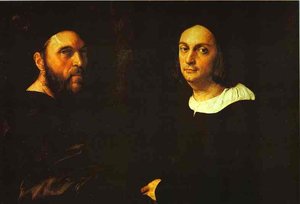
Portrait of Two Young Men
 Acrylic On Canvas
- WallArt
- High Renaissance
 45.0 x 63.0 cm
 The Louvre
 Read More
Giclée / Art Print
Museum-quality giclée or canvas print with fast production and flexible finish options. ( Buy Hand Made Painting Buy Image)




P118B $10

P118H $10

P118W $10

P438Z $10

P508JH $12

P508YH $12

P805H $10

P805Z $10

P919BZ $10

P919G $10

P919XJ $10

P959ZH $10

P968JZ $12

W106C $8

W218G $10

W218JH $8

W218Y $10

W307PJ $10

W316G $10

W316PJ $8

W316Y $10

W398PJ $8

W4111J $10

W500HY $15

W500JH $15

W692G $12

W849H $8

W940BG $15

W953PJ $8




Pick from our preset sizes that match the artwork's original proportions.

You may enter your own dimensions to fit a specific frame or space. If your selected size does not match the original image's proportions, we will either crop the artwork or extend the image with a mirrored or solid-fill edge. A digital mockup will be sent for your approval before production begins.
Please note that the on-screen preview does not reflect the actual cropping or extension. Only the mockup will accurately show the final composition.
While custom sizes are available, we recommend selecting a dimension from the predefined list to preserve the original proportions.
Worldwide Delivery () in 2 weeks instead of standard 4/5 weeks. (26 August)

Free Worldwide Express Shipping

High-Quality Linen Canvas

Full Shipping Insurance

Customs Tax Refund Guarantee

True Color Matching Guarantee

60-Day Return Policy (Defects Only)

100% Money-Back Guarantee

Bulk Discount Offer
 Glass option is only available in size under 110 CM

Portrait of Two Young Men
Giclée / Art Print
Reproduction Size
-


Total Price
$ 63
Collectible Description
A Window into Venetian Renaissance Identity
Giovanni Cariani’s “Portrait of Two Young Men,” painted circa 1520, isn't merely a depiction of two young men; it’s a carefully constructed meditation on identity, status, and the burgeoning humanist ideals of the Venetian Renaissance. The painting, currently residing within the hallowed halls of the Louvre Museum in Paris, offers a remarkably intimate glimpse into a world of aristocratic leisure and subtle social signaling. Cariani, deeply influenced by the lyrical color palettes and psychological depth of Bellini and Giorgione – masters who preceded him – masterfully captures not just appearances but also an underlying sense of quiet contemplation.
The composition itself is deceptively simple yet profoundly effective. Two figures dominate the canvas, positioned in a shallow space that draws the viewer directly into their gaze. The placement of their hands—one resting lightly on his thigh, the other gesturing subtly towards the unseen landscape – speaks volumes about their bearing and social standing. Notice the meticulous detail lavished upon each garment: the rich fur trim of one man’s coat, the intricate lace adorning the cuffs of the other, all hinting at considerable wealth and influence. These aren't simply clothes; they are badges of belonging within a complex Venetian society.
The Art of Subtle Detail – Cariani’s Technique
Cariani’s skill lies not in dramatic gestures or bold colors, but in his exquisite attention to detail and the masterful use of *sfumato*—a technique borrowed from Leonardo da Vinci—to create a hazy, atmospheric effect. The faces are rendered with remarkable sensitivity, capturing the subtle nuances of youth and emotion. The soft modeling of the skin, the delicate shading around the eyes, all contribute to an almost palpable sense of realism. He employs a limited palette – primarily muted browns, blues, and creams – which lends the painting a timeless quality, reminiscent of classical antiquity.
- Oil on Canvas: The medium itself contributes to the painting’s luminous quality, allowing for subtle gradations of tone and color.
- Sfumato Technique: The hazy outlines and softened edges create a sense of depth and atmosphere, blurring the boundaries between figure and background.
- Realistic Portrayal: Cariani's meticulous attention to detail—from the texture of the fabrics to the subtle expressions on the men’s faces—elevates the portrait beyond mere likeness.
Symbolism and the Venetian Context
To fully appreciate “Portrait of Two Young Men,” it’s crucial to understand the social context in which it was created. Venice, at the height of its power during the 16th century, was a vibrant hub of commerce, art, and diplomacy. Portraiture flourished as a means of solidifying social connections and demonstrating wealth and status. The two young men depicted likely represent members of the Venetian elite—perhaps students or aspiring merchants—engaged in quiet contemplation, reflecting on their future prospects.
The landscape glimpsed through the window behind them is not merely decorative; it’s a symbolic representation of the wider world – a world of opportunity and adventure. The muted colors and indistinct forms suggest both the allure and the uncertainty that lie ahead. Furthermore, the shared gaze directed at the viewer invites us to become participants in their private moment, fostering a sense of intimacy and connection across centuries.
A Timeless Masterpiece – Reproduction Considerations
Reproductions of “Portrait of Two Young Men” offer an exceptional opportunity to bring this captivating Renaissance masterpiece into your home or office. When selecting a reproduction, prioritize high-resolution prints on archival-quality canvas or paper to ensure that the painting’s subtle details and nuanced colors are faithfully reproduced. Consider framing options that complement the artwork's classical aesthetic – a simple wooden frame in a warm tone would be particularly effective.
This portrait is more than just an image; it’s a window into the soul of Venice, a testament to the enduring power of art to capture beauty, emotion, and the complexities of human experience. It remains a poignant reminder of the Renaissance's fascination with both individual identity and the broader world.
Related Artworks

Artist Biography
Giovanni Cariani: Venetian Lyricism and Renaissance Refinement
Giovanni Cariani (c. 1485-1547) stands as a pivotal figure in the Venetian Renaissance, celebrated for his exquisitely rendered portraits and landscapes imbued with a profound sensitivity to color and form—characteristics that firmly establish him within the artistic lineage of Bellini and Giorgione. Born in Venice around 1485, Cariani’s formative years coincided with the flourishing cultural dynamism of the Serenissima Republic, fostering an environment ripe for artistic innovation. While biographical details remain somewhat sparse, scholarly research suggests he honed his craft under the tutelage of Andrea Mantegna, absorbing stylistic precepts that would profoundly shape his oeuvre.- Early Career & Patronage: Cariani’s initial commissions primarily served noble families and ecclesiastical institutions, securing him a reputation for meticulous realism and artistic elegance. His involvement with prominent Venetian patrons like Cardinal Pietro Bembo cemented his position as a respected artist of his time.
- Style & Technique: Cariani's distinctive style is characterized by a masterful manipulation of light and shadow—a technique directly inherited from Giorgione—creating atmospheric depth and conveying nuanced emotional states within his subjects. He employed glazing techniques, layering translucent pigments to achieve luminous surfaces and subtle tonal gradations, mirroring the stylistic innovations championed by Bellini.
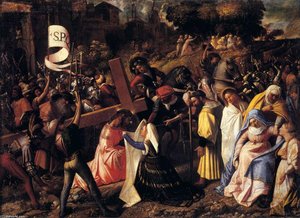
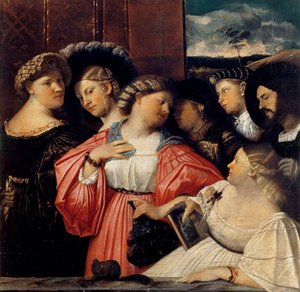
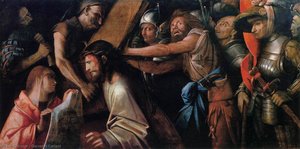
- Notable Paintings: Cariani’s artistic legacy rests upon a collection of paintings that exemplify Venetian lyricism. Among his most celebrated works are “Four Courtesans,” a captivating depiction of female beauty rendered with remarkable detail and psychological insight; “Three Gentlemen,” showcasing idealized male figures embodying aristocratic virtues; and "The Way to Calvary," a poignant religious scene demonstrating Cariani’s ability to infuse spiritual contemplation into visual art.
Influences & Artistic Connections
Cariani's artistic vision was undeniably shaped by the prevailing aesthetic currents of his era, particularly the influence of Bellini and Giorgione—artists who championed a humanist approach to painting, prioritizing expressive color palettes and atmospheric perspective. Furthermore, Cariani engaged in collaborations with fellow masters like Francesco Albani and Andrea Mantegna, fostering intellectual exchange and stylistic convergence. His correspondence reveals an interest in exploring innovative compositional strategies and delving into the complexities of human emotion—a testament to his engagement with the broader artistic discourse of the Renaissance.- Bellini & Giorgione: Cariani’s embrace of Bellini's luminous glazing technique and Giorgione’s atmospheric perspective reflects a shared commitment to capturing the essence of Venetian life and emotion.
- Collaboration with Albani: Cariani worked alongside Francesco Albani on several projects, exchanging ideas and refining their artistic sensibilities—a partnership that exemplifies the collaborative spirit characteristic of Venetian art circles.
Major Achievements & Legacy
Giovanni Cariani’s contribution to Venetian painting is undeniable, securing him a place among the foremost artists of his generation. His paintings continue to captivate audiences with their beauty and psychological depth—serving as enduring emblems of Renaissance refinement and humanist idealism. The Kunsthistorisches Museum in Vienna houses “A Concert,” widely regarded as Cariani's masterpiece—a testament to his artistic prowess and stylistic innovation. Cariani’s influence extended beyond Venice, inspiring subsequent generations of painters who sought to emulate his luminous palette and expressive technique. His legacy persists today as a beacon of Venetian lyricism and Renaissance artistry.Historical Significance
Cariani's work embodies the humanist spirit of the High Renaissance, reflecting an interest in portraying human experience with sensitivity and nuance—a departure from earlier artistic conventions that prioritized idealized representations over realistic depictions. His paintings offer invaluable insights into Venetian society during the sixteenth century, capturing the elegance and sophistication of aristocratic patronage while simultaneously exploring themes of faith and morality. Cariani’s enduring fame testifies to his ability to transcend stylistic boundaries and communicate universal human emotions through visual art—solidifying his position as a cornerstone of Venetian artistic heritage.
Giovanni Cariani
1485 - 1547 , Italy
Quick Facts
- Artistic Movement Or Style: High Renaissance
- Artists Or Movements Influenced By This Artist: ['Dürer']
- Artists Who Influenced This Artist:
- Bellini
- Giorgione
- Date Of Birth: Venice, Italy (1485)
- Date Of Death: 1547
- Full Name: Giovanni Cariani
- Nationality: Italian
- Notable Artworks:
- San Giovanni Fuorcivitas
- Campo di Santi Giovanni e Paolo
- A Concert by Cariani
- Place Of Birth: Venice
Related Articles
Albrecht Dürer's Masterpieces: 25 Iconic Artworks for Your Home | ArtsDot
Explore 25 iconic artworks by Albrecht Dürer, a master of the German Renaissance. Discover the stories behind Melencolia I, Knight Death and Devil & more. Find museum-quality art reproductions for your home at ArtsDot.com.
Carlo Crivelli: Mysticism & Materiality in Renaissance Venice
Explore the captivating world of Carlo Crivelli, a Renaissance master blending Gothic detail with profound symbolism. Discover his unique style & lasting influence on Venetian art history.

Etching Masters: 10 Legendary Prints That Revolutionized Art | ArtsDot
Journey through 10 legendary etching masterpieces by Rembrandt, Dürer & Goya. Explore the history of printmaking and discover timeless art for your home. Find museum-quality reproductions at ArtsDot.com.
Leonardo da Vinci's Masterpieces: Explore 25 Iconic Artworks for Your Home | ArtsDot
Journey through Leonardo da Vinci's genius with our curated selection of 25 iconic artworks. Explore the stories behind Mona Lisa, The Last Supper & more Renaissance masterpieces. Find museum-quality art reproductions for your home at ArtsDot.com.
Giovanni Antonio Canal (Canaletto): A Venetian Master of Light, Space & Societal Observation
Explore the life & art of Giovanni Antonio Canal (Canaletto), a Venetian master renowned for his breathtaking cityscapes. Discover his techniques, legacy, and captivating depictions of 18th-century Venice & London.