 Preview
 Send
Send Share
Share
 Details

 Download
 Similars
 X-Ray
X-Ray Diaporama
Senza titolo
 Acrylic On Canvas
- WallArt
- Contemporary Realism
 Late Medieval
 40.0 x 30.0 cm
 MAXXI National Museum of XXI Century Arts
 Read More
Hand Made Oil Reproduction
Hand-painted oil on canvas in your size and frame, made to order by our artists. ( Buy Print Buy Image)




P118B $10

P118H $10

P118W $10

P438Z $10

P508JH $12

P508YH $12

P805H $10

P805Z $10

P919BZ $10

P919G $10

P919XJ $10

P959ZH $10

P968JZ $12

W106C $8

W218G $10

W218JH $8

W218Y $10

W307PJ $10

W316G $10

W316PJ $8

W316Y $10

W398PJ $8

W4111J $10

W500HY $15

W500JH $15

W692G $12

W849H $8

W940BG $15

W953PJ $8




Pick from our preset sizes that match the artwork's original proportions.

You may enter your own dimensions to fit a specific frame or space. If your selected size does not match the original image's proportions, we will either crop the artwork or extend the painting with additional hand-painted elements. A digital mockup will be sent for your approval before production begins.
Please note that the on-screen preview does not reflect the actual cropping or extension. Only the mockup will accurately show the final composition.
While custom sizes are available, we recommend selecting a dimension from the predefined list to preserve the original proportions.
After order, ArtsDot.com team will email client for instructions and provide a mockup preview
Worldwide Delivery () in 3/4 weeks instead of standard 5 weeks. (18 August). No compromise on quality.

Free Worldwide Express Shipping

High-Quality Linen Canvas

Full Shipping Insurance

Customs Tax Refund Guarantee

True Color Matching Guarantee

60-Day Return Policy (Defects Only)

100% Money-Back Guarantee

Bulk Discount Offer
 Glass option is only available in size under 110 CM

Senza titolo
Reproduction Medium
Reproduction Size
-


Total Price
$ 263
Artwork Description
A Silent Dialogue with Light: Giovanni Chiaramonte’s “Senza Titolo”
Giovanni Chiaramonte's "Senza Titolo" – literally, "Without Title" – is not merely a photograph; it’s an invitation to contemplate the profound relationship between humanity and landscape. Born in Varese in 1948 and tragically passing away in 2023, Chiaramonte dedicated his life to capturing the essence of place through a deeply considered and intensely personal lens. This particular work, executed in 1973, exemplifies his signature style: a quiet observation that speaks volumes about the soul of Italy’s southern regions – a region he intimately understood through his Sicilian heritage.
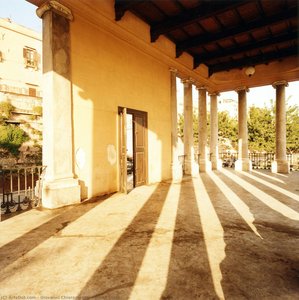
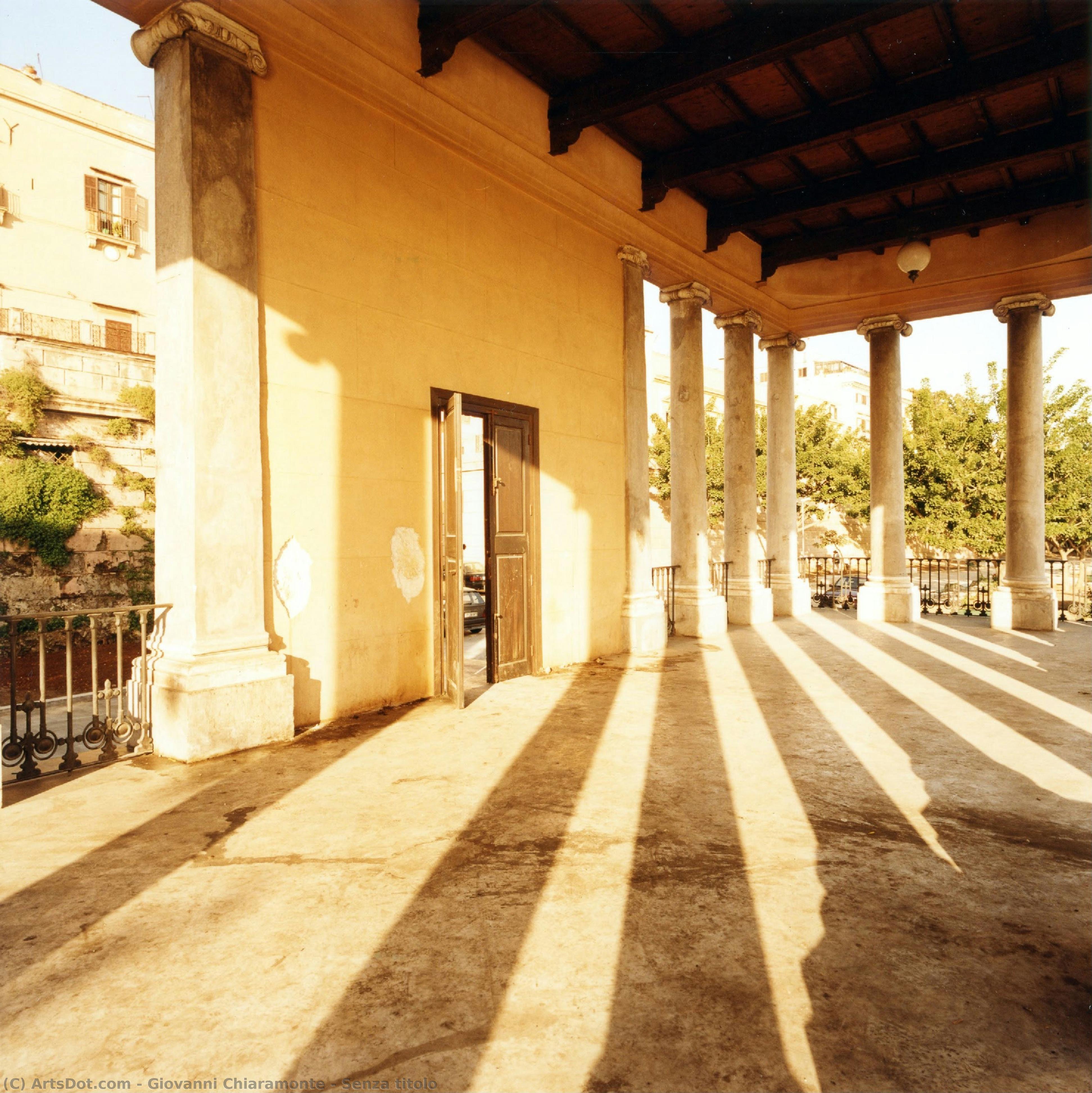
The image itself is deceptively simple. A weathered building, its columns and arches rendered in stark black and white, dominates the frame. Sunlight, diffused yet powerful, casts long shadows that stretch across the scene, creating an atmosphere of both serenity and melancholy. Figures are present – indistinct forms glimpsed within the background – suggesting a community existing alongside this architectural monument, their lives subtly interwoven with its history. Yet, the photograph isn’t about depicting individuals; it's about capturing a mood, a feeling, a sense of timelessness.
The Philosophy of Place: Chiaramonte’s Theoretical Framework
Chiaramonte wasn’t simply a photographer; he was a theorist deeply influenced by philosophy and theology. He approached his work with a rigorous intellectual framework, believing that photography could be a tool for both meditation and knowledge. His early collaborations with Luigi Ghirri, a pioneer of Italian conceptual photography, solidified this approach. He sought to bridge the gap between the external world – the landscape – and the internal world – the human experience. This is evident in “Senza Titolo,” where the building isn’t just a structure; it becomes a symbol of resilience, history, and perhaps even spiritual contemplation.
His work often drew inspiration from thinkers like Hans Urs von Balthasar and Romano Guardini, exploring themes of light, shadow, and the interconnectedness of all things. Chiaramonte saw light not just as illumination but as a metaphor for divine presence – a subtle yet pervasive force shaping our perception of reality. The careful manipulation of light in “Senza Titolo” is therefore crucial to understanding its emotional impact.
Technique and Composition: A Masterclass in Minimalism
The photograph’s power lies largely in its masterful use of minimalist technique. Chiaramonte employed a C-print, allowing for rich tonal gradations and subtle nuances in the black and white image. The composition is deliberately restrained – the building occupies the central space, drawing the viewer's eye immediately. The deliberate absence of color intensifies the sense of atmosphere and allows the textures of the stone and the play of light to take center stage.
Notice the careful placement of the shadows; they aren’t random but strategically positioned to create a dynamic interplay between light and darkness, adding depth and drama to the scene. The use of natural light, captured without artificial manipulation, lends an authenticity and immediacy that is profoundly affecting. The photographer's eye for detail is remarkable – from the subtle variations in the stone surface to the way the sunlight catches on the columns, every element contributes to the overall sense of quiet contemplation.
Symbolism and Emotional Resonance: A Window into the Soul
"Senza Titolo" transcends a simple depiction of architecture; it’s a meditation on memory, time, and the enduring spirit of place. The building itself could represent countless structures throughout Italy – a testament to generations past, a silent witness to human dramas. The figures in the background, though indistinct, suggest a community rooted in this landscape, their lives inextricably linked to its history.
Ultimately, the photograph evokes a feeling of melancholy and nostalgia—a poignant reminder of the passage of time and the beauty of impermanence. It’s a work that invites viewers to slow down, to observe, and to contemplate the profound connections between humanity and the natural world. “Senza Titolo” is not just a photograph; it's an experience – a silent dialogue with light and memory.
Related Artworks
Artist Biography
The Philosopher of Light: The Life and Legacy of Giovanni Chiaramonte
Giovanni Chiaramonte was far more than a mere observer behind a lens; he was a profound thinker who utilized the medium of photography to bridge the gap between the tangible world and the spiritual interior. Born in 1948 in Varese, Italy, his identity was deeply rooted in a dual heritage, shaped by parents who had migrated from Gela, Sicily. This connection to the sun-drenched landscapes of the south would later inform much of his visual vocabulary. His intellectual journey began not with a camera, but with the rigorous study of philosophy at the Università Cattolica del Sacro Cuore in Milan. This academic foundation became the bedrock of his artistic practice, allowing him to approach photography as a tool for both meditation and the pursuit of knowledge, transforming simple captures of light into complex theological and ethical inquiries.A Visionary Approach to Image and Narrative
As Chiaramonte transitioned from student to practitioner in the late 1960s, his work began to evolve into a unique dialogue between landscape and human experience. He did not seek to merely document reality but to uncover its essence through a meticulous observation of light and shadow. His early exhibitions, beginning in 1974, showcased a burgeoning mastery of composition that prioritized conceptual depth over mere spectacle. Influenced by the profound theological insights of thinkers such as Hans Urs von Balthasar and Romano Guardini, Chiaramonte viewed the photographic frame as a meeting point where the exteriority of the world meets the interiority of the soul. In his work, a weathered building or a play of shadows across a courtyard becomes a symbol of resilience and timelessness, inviting the viewer into a state of quiet contemplation.Pioneering the Photographic Discourse
One of Chiaramente's most enduring contributions to the art world was his role as a catalyst for photographic culture in Italy. In 1977, alongside the renowned Luigi Ghirri, he co-founded Punto e Virgola, the first Italian publishing house dedicated entirely to the medium of photography. This endeavor was revolutionary, providing a platform for innovative visual narratives and fostering a new era of conceptual rigor within the field. Through this venture, Chiaramonte helped shape the way photography was disseminated and understood, moving it away from purely documentary traditions toward a more sophisticated, art-centric discourse. His commitment to nurturing the medium extended into his academic career, where he served as a professor of History and Theory of Photography at both IULM University in Milan and the University of Palermo, inspiring generations of artists to look beyond the surface of the image.An Enduring Artistic Significance
The passing of Giovanni Chiaramonte on October 18, 2023, marked the end of a prolific era, yet his influence remains woven into the fabric of contemporary Italian photography. His ability to conflate ethics, aesthetics, and theology through the medium of light created a legacy that transcends simple imagery. To look at a Chiaramonte photograph is to engage in a silent dialogue with history and presence. His life's work stands as a testament to the power of the gaze—not just to see, but to understand; not just to capture, but to reveal the profound interconnectedness of all things.- Core Identity: Italian photographer, art theorist, curator, and academic.
- Key Achievement: Co-founder of the pioneering publishing house Punto e Virgola.
- Philosophical Pillars: The intersection of light, landscape, and spiritual meditation.
- Academic Legacy: Professor of Photography Theory at IULM and University of Palermo.
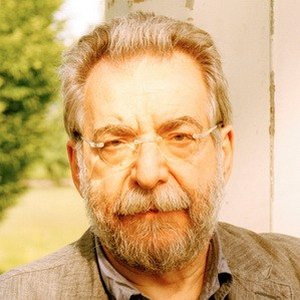
Giovanni Chiaramonte
1948 - 2023 , Italy
Quick Facts
- Artistic Movement Or Style: Photography
- Artists Or Movements Influenced By This Artist:
- Kandinsky
- Carla Accardi
- Artists Who Influenced This Artist:
- Hans Urs von Balthasar
- Romano Guardini
- Date Of Birth: 1948
- Date Of Death: 2023
- Full Name: Giovanni Chiaramonte
- Nationality: Italian
- Notable Artworks:
- Giardini e paesaggi
- Terra del ritorno
- Place Of Birth: Varese, Italy
Related Articles

Monochrome Visions: Exploring the Aesthetic & Historical Significance of Black & White Photography
Explore the rich history & artistic power of black and white photography. From early techniques to iconic masters like Ansel Adams, discover why monochrome continues to captivate art lovers today. Expert insights for collectors.

White on Canvas: 10 Masterpieces & Timeless Elegance for Your Home Decor
Explore 10 iconic white paintings by Monet, Whistler & Rothko! Discover the stories behind these serene masterpieces and their impact on art history. Find museum-quality reproductions for your home decor at .
Beyond the Lens: Photography's Enduring Influence on Modern & Contemporary Art
Explore photography's pivotal role in shaping modern & contemporary art. Discover key movements, influential artists like Stieglitz, and expert collecting advice from ArtsDot.

Dark Masterpieces: 10 Iconic Paintings Dominated by Black Tones |
Explore 10 iconic paintings dominated by black tones, from Rembrandt’s chiaroscuro to Goya's dark expressions. Discover the stories behind these masterpieces & find museum-quality art reproductions for your home at .

Pictorialism: A Search for Artistic Photography's Soul – Aesthetics, Techniques & Legacy
Explore the captivating world of Pictorialism – a pivotal movement that transformed photography into fine art. Discover key artists like Stieglitz & Käsebier, techniques, and collecting tips from experts.