

 Preview
 Send
Send Share
Share
 Details

 Download
 Similars
 X-Ray
X-Ray Diaporama
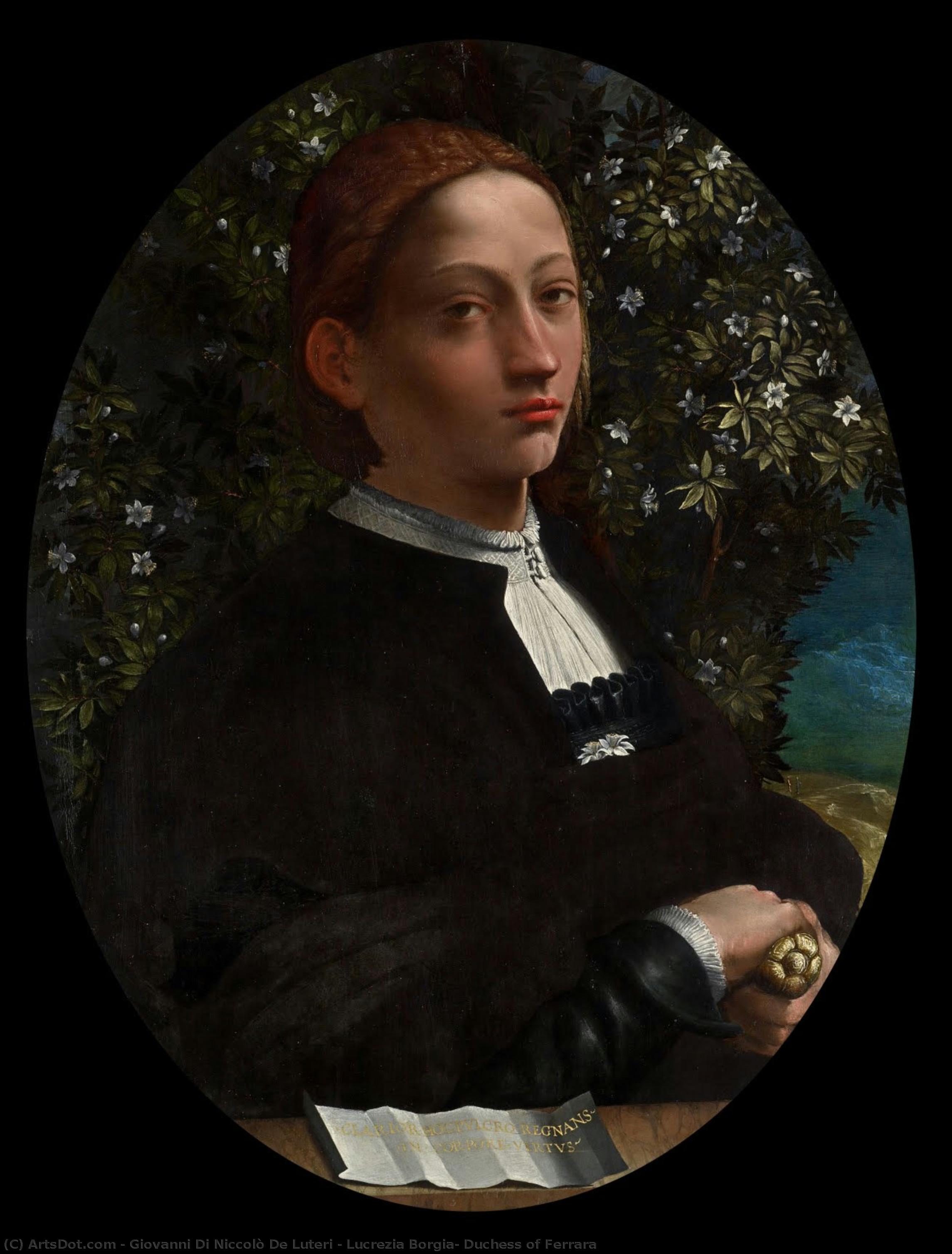
Lucrezia Borgia, Duchess of Ferrara
 1530
1530 74.0 x 57.0 cm
 National Gallery of Victoria
 Read More
Purchase a high-resolution, enhanced digital image, far superior to the online preview.
Each file is meticulously prepared by our in-house specialists using advanced tools and expert manual retouching. We ensure every image has exceptional clarity, precise color accuracy, and fine detail.
The final file is delivered via email within 72 hours, optimized for immediate use in professional, editorial, and print environments. This is the same quality trusted by top-tier design studios, publishers, and galleries.
Digital Image
Download a high-resolution file for personal display, printing, and creative projects. ( Buy Print Buy Hand Made Painting)
Included in Every Digital Image Order
Expert Digital Delivery, Guaranteed
When you choose ArtsDot.com, you're not just getting an image - you're receiving a professionally enhanced digital artwork, crafted with precision and backed by a satisfaction guarantee. Here's everything that comes with your order, automatically:

Fast Email Delivery
Your high-resolution digital image file will be emailed to you within 72 hours of ordering - ready for immediate use.

AI-Enhanced Digital File
Your artwork is professionally optimized using advanced AI tools and manual editing, ensuring maximum detail, clarity, and color accuracy.

Free Lifetime Re-Delivery
Accidentally deleted or lost your file? No worries - we'll resend it to you anytime, free of charge.

No Import Fees - Ever
Enjoy your artwork instantly with zero customs, duties, or delivery fees - digital downloads are always tax-free.

Color Accuracy Guarantee
We ensure your digital image reflects the original colors as closely as possible using professional tools and color management.

60-Day Satisfaction Guarantee
If you're not satisfied with your digital image, we'll revise it or refund 100% within 60 days - no questions asked.

100% Money-Back Guarantee
Not satisfied? Get a full refund within 60 days of receiving your digital file - no questions asked.

Bulk Order Discounts
Buy 3 images, save 10% - Buy 5, save 15% - Buy 10+, save 20%. Great for creative projects, galleries, and agencies.
Related Artworks




Artist Biography
Giovanni di Niccolò de Luteri (Dosso Dossi): A Venetian Dreamer at Ferrara’s Court
Giovanni di Niccolò de Luteri, universally known as Dosso Dossi, stands as a singular figure within the vibrant tapestry of the Italian Renaissance. Born around 1489 in Tramacchio, Italy—a location shrouded in historical obscurity—he ascended to prominence during his lifetime as a court artist for the Este dukes of Ferrara and Modena, leaving behind an oeuvre characterized by unsettling beauty and profound psychological insight. His artistic legacy continues to fascinate scholars and collectors alike, cementing his place among the most influential painters of his era.Early Life and Training
Information regarding Dosso Dossi’s formative years remains scarce. He apprenticed under Lorenzo Costa in Ferrara, absorbing the stylistic precepts of Venetian painting—particularly those championed by Giorgione and Titian—a connection that would profoundly shape his artistic vision. Crucially, he collaborated closely with his younger brother Battista Dossi, who had also trained under Raphael, fostering a creative partnership that yielded remarkable results. This shared training instilled in both brothers a meticulous attention to detail and an understanding of humanist ideals prevalent during the Renaissance.Style and Technique: Venetian Echoes and Distorted Reality
Dosso Dossi’s distinctive style is undeniably rooted in Venetian painting, yet he transcends mere imitation. He skillfully blended Venetian luminosity with Ferrara’s artistic traditions, creating canvases imbued with a dreamlike atmosphere—a hallmark of Giorgione's work—where colors bleed into one another and spatial perspective is deliberately manipulated. His technique involved painstaking layering of oil paint, achieving astonishing textural richness and capturing subtle nuances of emotion. Perhaps most notably, Dosso Dossi employed **cryptic allegorical conceits**, embedding hidden meanings within seemingly simple compositions. Furthermore, he frequently distorted proportions—a characteristic that departed from the conventions of academic art—introducing unsettling visual surprises that challenged viewers’ perceptions of reality.Notable Works and Collaborations
Dosso Dossi's artistic output produced several masterpieces that continue to captivate audiences today. Among these are “Aeneas in the Elysian Fields,” housed at the National Gallery of Canada, Ottawa; “The Virgin Appearing to Sts John the Baptist and John the Evangelist,” residing in the Uffizi Gallery, Florence; and “Jupiter Painting Butterflies, Mercury and the Virtue,” displayed prominently at Wawel Castle, Kraków. These paintings exemplify Dosso Dossi’s ability to evoke profound psychological states through evocative imagery and masterful color palettes. His collaborations with Battista Dossi further enriched his artistic output, resulting in a cohesive stylistic vision that distinguishes him from many of his contemporaries.Legacy and Influence
Dosso Dossi's influence extended beyond his immediate circle of pupils—including Gabriele Capellini and Jacopo Panicciati—who adopted his distinctive style and techniques. He stands as a testament to the transformative power of artistic innovation, demonstrating how artists can push boundaries while simultaneously honoring established traditions. His preoccupation with unsettling distortions of proportion and luminous color palettes anticipated developments in later art movements, establishing him as a precursor to Mannerism and influencing generations of painters who followed. Dosso Dossi’s enduring fascination stems from his ability to capture the elusive realm of human emotion—a feat achieved through meticulous observation and an uncompromising commitment to artistic experimentation.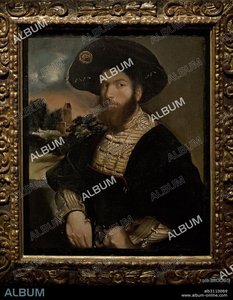
giovanni di niccolò de luteri
1542 , Italy
Quick Facts
- Artistic Movement Or Style: Ferrara School
- Artists Or Movements Influenced By This Artist: ['Gabriele Capellini']
- Artists Who Influenced This Artist:
- Giorgio Giorgione
- Titian
- Date Of Birth: c. 1489
- Date Of Death: 1542
- Full Name: Giovanni di Niccolò de Luteri
- Nationality: Italian
- Notable Artworks:
- Aeneas in the Elysian Fields
- Virgin appearing to sts John the Baptist and John the Evangelist
- Jupiter painting butterflies, Mercury and the Virtue
- Place Of Birth: Tramacchio, Italy

