 Preview
 Send
Send Share
Share
 Details

 Download
 Similars
 X-Ray
X-Ray Diaporama
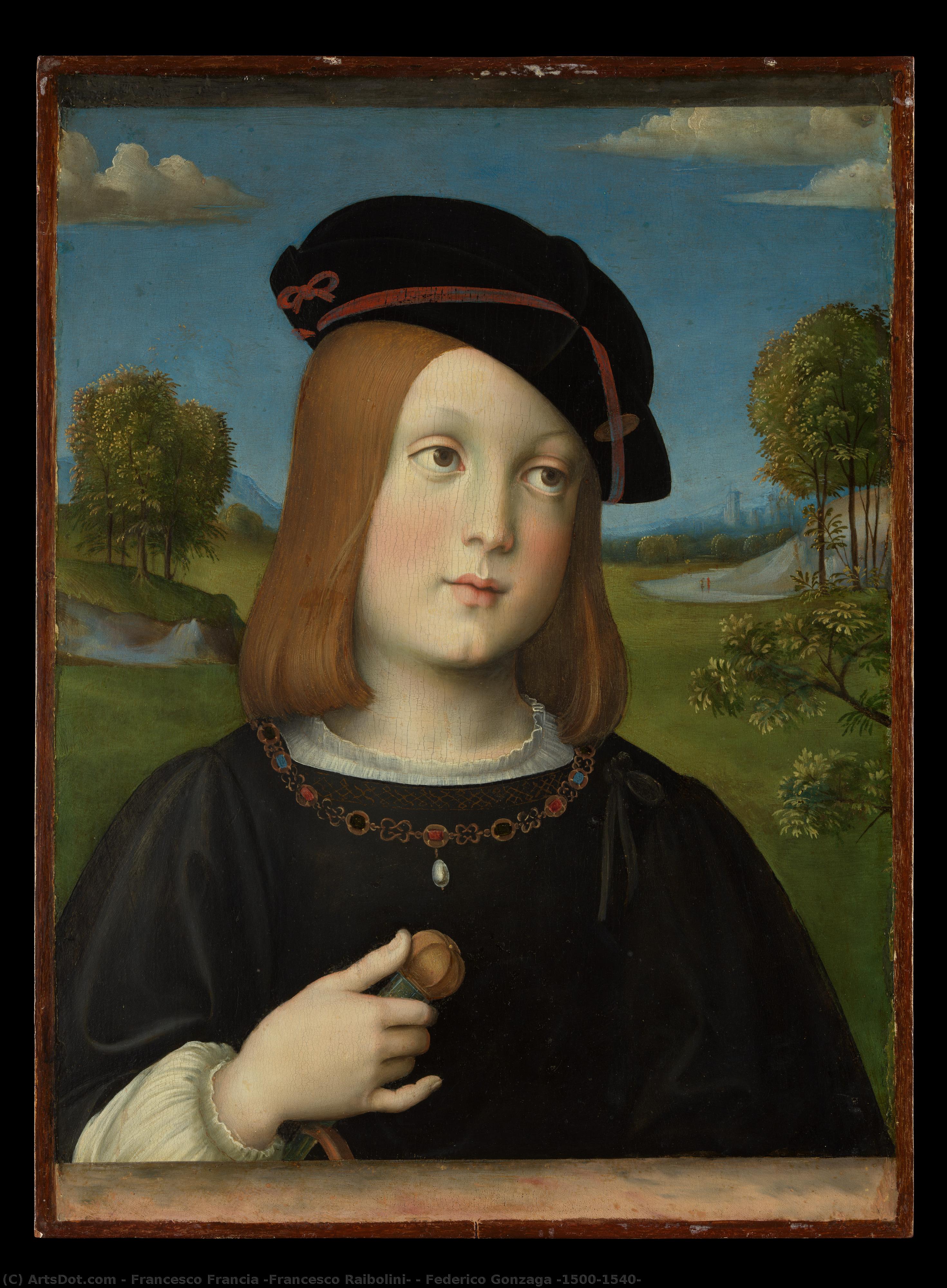
Federico Gonzaga (1500–1540)
 Oil
Oil- WallArt
- Renaissance
 1510
1510- Renaissance
 48.0 x 36.0 cm
 Metropolitan Museum of Art
 Read More
Hand Made Oil Reproduction
Hand-painted oil on canvas in your size and frame, made to order by our artists. ( Buy Print Buy Image)




































Pick from our preset sizes that match the artwork's original proportions.

You may enter your own dimensions to fit a specific frame or space. If your selected size does not match the original image's proportions, we will either crop the artwork or extend the painting with additional hand-painted elements. A digital mockup will be sent for your approval before production begins.
Please note that the on-screen preview does not reflect the actual cropping or extension. Only the mockup will accurately show the final composition.
While custom sizes are available, we recommend selecting a dimension from the predefined list to preserve the original proportions.
After order, ArtsDot.com team will email client for instructions and provide a mockup preview
Worldwide Delivery () in 3/4 weeks instead of standard 5 weeks. (26 August). No compromise on quality.

Free Worldwide Express Shipping

High-Quality Linen Canvas

Full Shipping Insurance

Customs Tax Refund Guarantee

True Color Matching Guarantee

60-Day Return Policy (Defects Only)

100% Money-Back Guarantee

Bulk Discount Offer
 Glass option is only available in size under 110 CM

Federico Gonzaga (1500–1540)
Reproduction Medium
Reproduction Size
-


Total Price
$ 263
Artwork Description
A Portrait of Innocence Amidst Political Turmoil
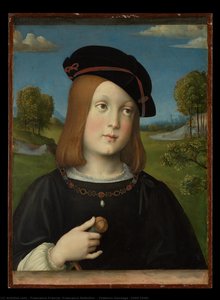
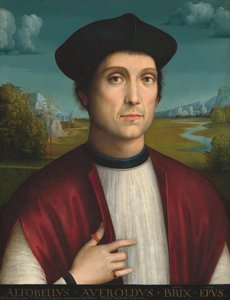
In the delicate brushstrokes of Francesco Francia’s Federico Gonzaga, we encounter more than just a portrait of a young heir; we witness a poignant moment of historical vulnerability captured through the lens of Renaissance mastery. Painted in 1510, this intimate work serves as a tender memorial commissioned by the formidable Isabella d’Este, Marchioness of Mantua. The occasion was one of profound maternal anxiety, as her son Federico was being escorted to the papal court in Rome to serve as a political hostage. Francia, working with incredible speed, completed this piece in a mere twelve days, translating the fleeting sketches he made of the ten-year-old boy during his journey through Bologna into a lasting icon of purity and grace.
The painting radiates a soft, luminous quality that is characteristic of the Bolognese school. The young Federico is presented with a gentle gaze and rosy, youthful cheeks that evoke an immediate emotional connection with the viewer. There is a palpable sweetness in his expression, a deliberate artistic choice intended to convey the innocence of a child caught in the gears of high-stakes diplomacy. Even the subtle details of the composition, such as the way the light catches his features, suggest a sense of divine protection and serenity amidst the uncertainty of his fate.
Mastery of Technique and the Artist's Touch
Francesco Francia, often celebrated for his ability to blend the structural discipline of Andrea Mantegna with a softer, more lyrical Venetian influence, demonstrates his technical prowess through the meticulous rendering of texture and light. The artist’s command over chiaroscuro allows the subject to emerge from the background with a lifelike presence. Interestingly, the history of this specific work reveals a fascinating glimpse into the exacting standards of Renaissance patronage. Historical letters suggest that Isabella d’Este, ever the perfectionist, found the original hair color too blonde and insisted that Francia darken it to better reflect the true likeness of her son.
This interplay between artist and patron highlights the collaborative nature of Renaissance portraiture. For collectors and enthusiasts of classical art, this piece represents a pinnacle of the Quattrocento transition into the High Renaissance, where the focus shifted from rigid iconography to a more humanistic, emotive representation. The subtle use of color—from the warmth of the skin tones to the rich, dark accents—creates a balanced composition that is both visually soothing and intellectually stimulating.
An Elegant Addition to Refined Interiors
For the discerning interior designer or art collector, a reproduction of Federico Gonzaga offers an unparalleled opportunity to introduce a sense of historical depth and quiet elegance into a living space. The painting’s intimate scale and soft color palette make it an ideal centerpiece for a study, a library, or a sophisticated gallery wall. It possesses the rare ability to anchor a room with its classical gravity while maintaining an air of lightness and grace.
Integrating such a masterpiece into a modern or traditional decor allows for a dialogue between the past and the present. Whether placed in a setting filled with ornate period furniture or used as a focal point in a minimalist contemporary room, the portrait’s themes of legacy, family, and resilience remain timeless. Owning a high-quality hand-painted reproduction of this work is not merely about acquiring an image; it is about preserving a fragment of the Renaissance spirit—a tribute to the enduring beauty of human innocence captured by one of Italy's most skilled hands.
Related Artworks
Artist Biography
Francesco Francia (Raibolini): A Master of Siena Painting Style
Francesco Francia, often referred to as Raibolini – a nickname derived from his birthplace – stands as one of the most prominent figures in Italian Renaissance art, particularly celebrated for his exquisite depictions of religious subjects and serene family portraits. Born in Bologna around 1450, Francia’s artistic journey unfolded primarily within the Gonzaga court of Rimini, where he established himself as a prolific painter and profoundly shaped the visual landscape of the region.- Early Life & Training: Little is known definitively about Francia's formative years. He apprenticed under Andrea Mantegna in Mantua, absorbing the stylistic innovations of the Venetian Renaissance – specifically Mantegna’s masterful use of perspective and chiaroscuro – which would become hallmarks of his own oeuvre.
- Rimini & Gonzaga Patronage: Francia’s artistic career gained considerable momentum through his association with Federico I Gonzaga, Duke of Rimini. Recognizing Francia's talent, Gonzaga commissioned numerous paintings for Rimini Cathedral and Palazzo Ducale, securing Francia’s reputation as a court artist and cementing Rimini’s position as an epicenter of Renaissance art.
- Style & Technique: Francia’s distinctive style is characterized by a meticulous attention to detail and a masterful command of Siena painting technique. He employed a subtle glazing method—a layering of thin translucent pigments over underlayers—creating luminous surfaces that convey remarkable depth and realism. His compositions are often balanced and harmonious, reflecting the humanist ideals prevalent during his time.
- Notable Works: Francia’s artistic legacy includes iconic paintings such as “The Virgin Annunciation,” “Saint Jerome in Prayer,” and “Madonna with Child,” all housed in Rimini Cathedral. These works exemplify his ability to capture spiritual contemplation and convey profound emotion through idealized figures and serene landscapes.
- Influence & Legacy: Francia’s influence extended beyond Rimini, impacting artists across Italy. His meticulous technique and stylistic refinements contributed significantly to the development of Renaissance painting, particularly in Siena and Umbria. He is remembered as a pivotal figure in establishing the Gonzaga court's artistic prestige and securing his place among the foremost masters of the Early Renaissance.
Religious Iconography & Artistic Innovation
Francesco Francia’s religious paintings stand apart for their profound psychological insight and masterful execution. Unlike many contemporaries who prioritized dramatic narratives, Francia focused on conveying spiritual serenity and contemplation—a deliberate choice reflecting the humanist sensibilities of his era. His depictions of saints and biblical figures are imbued with an understated grace, achieved through careful observation of human anatomy and subtle tonal gradations. Francia’s innovative use of perspective and chiaroscuro – techniques pioneered by Mantegna – elevated his paintings to a level of realism previously unattainable.The Gonzaga Court & Artistic Collaboration
Francesco Francia's relationship with Federico I Gonzaga was transformative, establishing him as the Duke’s favored artist and fostering an environment conducive to artistic experimentation. The Gonzaga court actively encouraged Francia’s creativity, commissioning ambitious projects that showcased his skill and cemented Rimini’s reputation as a cultural powerhouse. Francia collaborated closely with other artists of his time, exchanging ideas and refining techniques—a testament to the vibrant intellectual atmosphere of Renaissance Italy.A Lasting Impression: Rimini Cathedral & Artistic Patrimony
Francesco Francia's contribution to Rimini Cathedral remains unparalleled. His monumental “The Virgin Annunciation” dominates the cathedral’s altar, serving as a focal point for devotion and embodying Francia’s artistic prowess. The painting exemplifies his mastery of Siena painting style—characterized by luminous surfaces and meticulous detail—and underscores Rimini’s enduring legacy as a cradle of Renaissance art. Francia's works continue to inspire admiration and scholarly study, ensuring that his artistic vision persists throughout the centuries.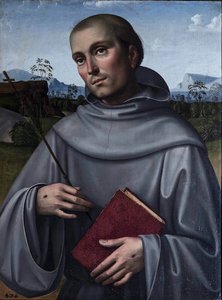
francesco francia (francesco raibolini)
1450 - 1517 , Italy
Quick Facts
- Artistic Movement Or Style: Siena painting style
- Artists Or Movements Influenced By This Artist: ['Renaissance']
- Artists Who Influenced This Artist:
- Andrea Mantegna
- Giovanni Battista Pontormo
- Date Of Birth: 1450
- Date Of Death: 1517
- Full Name: Francesco Francia
- Nationality: Italian
- Notable Artworks:
- Madonna della Scala
- Saint Jerome
- Place Of Birth: Bologna, Italy
Related Articles
Cecco del Caravaggio: Rediscovering the Shadowy Genius of Francesco Buoneri
Explore the captivating world of Cecco del Caravaggio (Francesco Buoneri), a pivotal Baroque artist. Discover his dramatic realism, mysterious life, and lasting legacy with ArtsDot's expert analysis.
Federico Zandomeneghi: Bridging Venetian Tradition & Parisian Impressionism
Discover Federico Zandomeneghi (1841-1917), a captivating Italian Impressionist bridging Venetian tradition and Parisian modernity. Explore his intimate scenes, unique style & legacy with ArtsDot.
Mario Sironi: A Poetic of Modern Italian Identity Through Symbolism & Social Commentary
Explore the profound works of Mario Sironi, a key figure in Italian Modernism. Discover his evolution from Futurism to Metaphysical painting and his powerful social commentary. Learn about his legacy at ArtsDot.
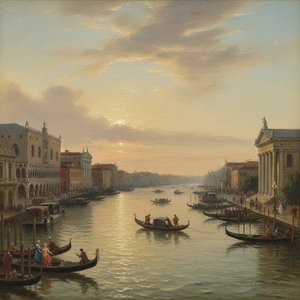
Francesco Guardi: Venetian Light, Atmospheric Perspective & the Rococo to Neoclassical Transition
Explore the captivating world of Francesco Guardi, master of Venetian light and atmosphere. Discover his transition from Rococo to Neoclassicism, influence on Impressionism & investment potential with ArtsDot.
Civic Virtue and Artistic Rivalry: Patronage and Innovation in the Italian Renaissance Republics, 1400–1600
Explore the Italian Renaissance! Discover how competitive patronage & humanist ideals fueled artistic innovation in republics like Florence & Venice. Expert insights for art lovers and collectors.