 Preview
 Send
Send Share
Share
 Details

 Download
 Similars
 X-Ray
X-Ray Diaporama
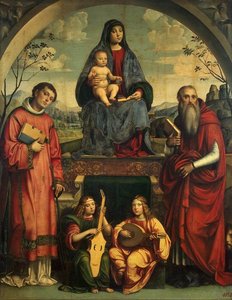
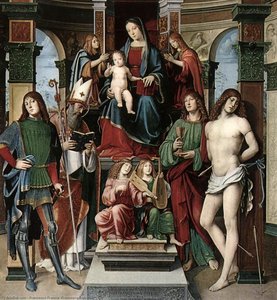
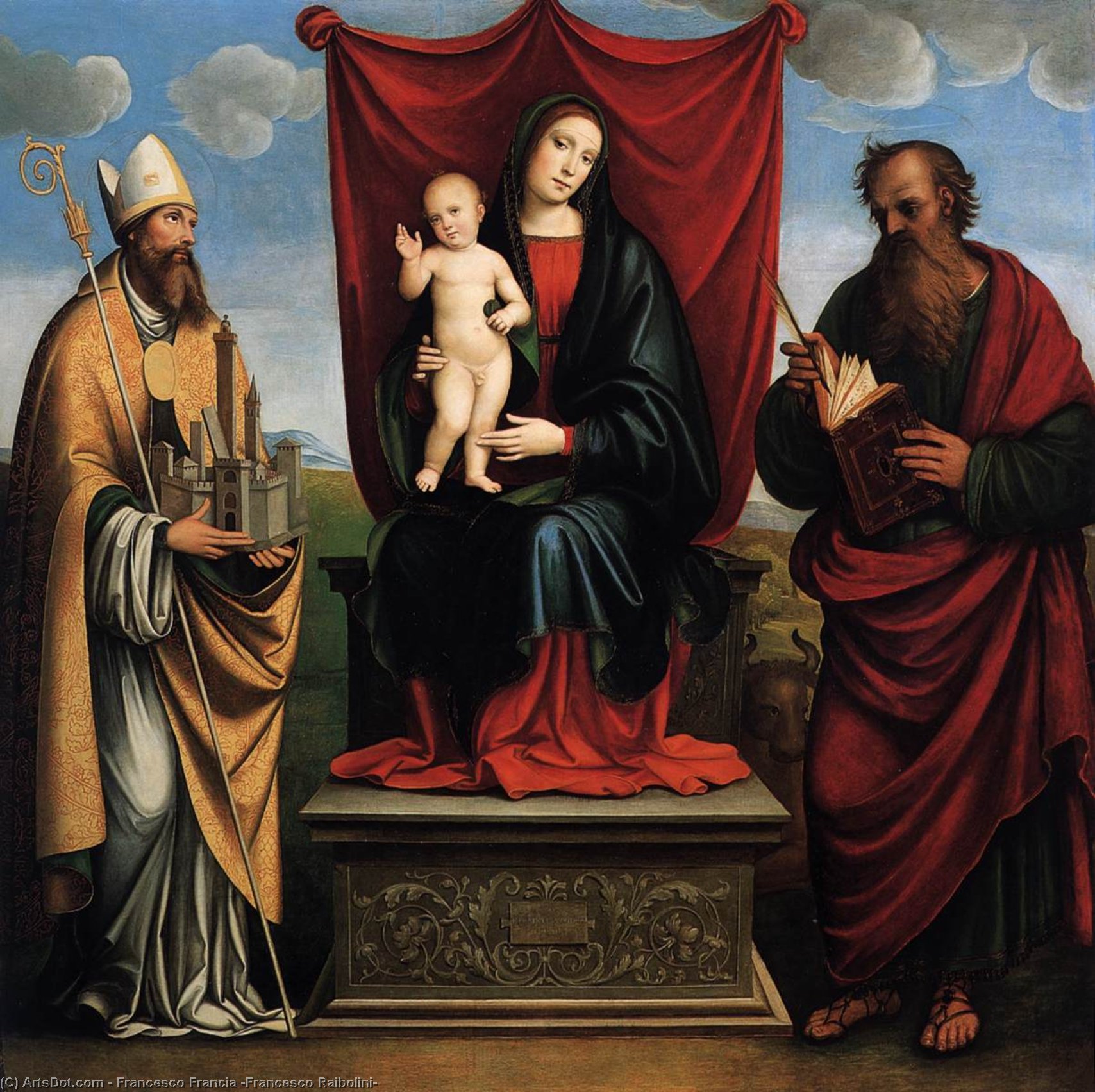
Sacra Conversazione
 Oil On Canvas
- WallArt
- Early Renaissance Painting
 1513
1513- Renaissance
 173.0 x 171.0 cm
 Academy of Fine Arts Vienna
 Read More
Hand Made Oil Reproduction
Hand-painted oil on canvas in your size and frame, made to order by our artists. ( Buy Print Buy Image)




P118B $10

P118H $10

P118W $10

P438Z $10

P508JH $12

P508YH $12

P805H $10

P805Z $10

P919BZ $10

P919G $10

P919XJ $10

P959ZH $10

P968JZ $12

W106C $8

W218G $10

W218JH $8

W218Y $10

W307PJ $10

W316G $10

W316PJ $8

W316Y $10

W398PJ $8

W4111J $10

W500HY $15

W500JH $15

W692G $12

W849H $8

W940BG $15

W953PJ $8




Pick from our preset sizes that match the artwork's original proportions.

You may enter your own dimensions to fit a specific frame or space. If your selected size does not match the original image's proportions, we will either crop the artwork or extend the painting with additional hand-painted elements. A digital mockup will be sent for your approval before production begins.
Please note that the on-screen preview does not reflect the actual cropping or extension. Only the mockup will accurately show the final composition.
While custom sizes are available, we recommend selecting a dimension from the predefined list to preserve the original proportions.
After order, ArtsDot.com team will email client for instructions and provide a mockup preview
Worldwide Delivery () in 3/4 weeks instead of standard 5 weeks. (17 August). No compromise on quality.

Free Worldwide Express Shipping

High-Quality Linen Canvas

Full Shipping Insurance

Customs Tax Refund Guarantee

True Color Matching Guarantee

60-Day Return Policy (Defects Only)

100% Money-Back Guarantee

Bulk Discount Offer
 Glass option is only available in size under 110 CM

Sacra Conversazione
Reproduction Medium
Reproduction Size
-


Total Price
$ 263
Artwork Description
Sacra Conversazione by Francesco Francia: A Moment of Divine Grace
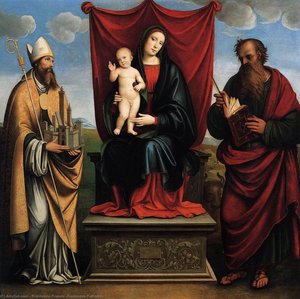
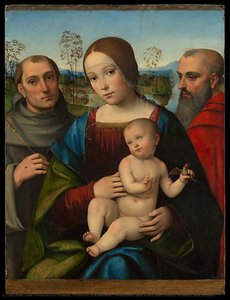
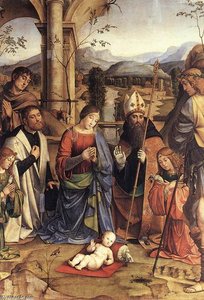
This exquisite rendition of the “Sacra Conversazione,” painted in 1513 by Francesco Francia, offers a profound meditation on faith, family, and the serene beauty of the Renaissance. Measuring 173 x 171 cm, this artwork transcends mere representation; it’s an immersive experience rooted in the artistic sensibilities of its time and imbued with the spiritual depth characteristic of Francia's masterful work. The scene depicts Mary cradling the infant Jesus – a motif deeply resonant within Christian iconography – yet Francia elevates this familiar subject through his meticulous attention to detail, nuanced emotional portrayal, and skillful manipulation of light and shadow.
The Master’s Hand: Style and Technique
Francesco Francia, often referred to as Raibolini due to his origins in the town of Faenza (later Bologna), was a pivotal figure in the development of the Siena painting style. His work is defined by a remarkable ability to capture psychological realism within a formally structured composition. Influenced heavily by Andrea Mantegna, particularly evident in Francia’s use of perspective and *chiaroscuro* – the dramatic contrast between light and dark – this “Sacra Conversazione” exemplifies these techniques brilliantly. Note the subtle modeling of Mary's drapery, creating a sense of volume and texture that draws the viewer into the scene. The delicate rendering of Jesus’s youthful features, combined with the careful attention to the folds of his garment, speaks to Francia’s dedication to anatomical accuracy and expressive realism. The muted color palette – dominated by earth tones punctuated by the vibrant red of Mary's robe – contributes significantly to the painting’s overall atmosphere of solemn contemplation.
Historical Context and Symbolism
Painted in 1513, this work reflects the artistic climate of the early Italian Renaissance. The Gonzaga family of Rimini, for whom Francia primarily worked, were significant patrons of the arts, fostering a vibrant cultural environment that encouraged innovation and experimentation. The inclusion of three figures – Mary, Jesus, and two attendants – is typical of the “Sacra Conversazione” genre, which aimed to depict the Virgin Mary in conversation with Christ. The book present in the scene likely symbolizes knowledge, divine wisdom, or religious texts, further emphasizing the spiritual significance of the moment. The landscape background, rendered with a degree of atmospheric perspective, suggests a connection between the earthly realm and the divine, reinforcing the painting’s theological message.
Emotional Resonance and Legacy
“Sacra Conversazione” is more than just a beautiful image; it's an emotionally resonant portrayal of maternal love and spiritual devotion. Francia masterfully captures the tenderness between Mary and Jesus, inviting viewers to contemplate their own relationship with faith and family. This painting represents a pinnacle of Francesco Francia’s artistic achievement, showcasing his profound understanding of human emotion and his ability to translate complex theological ideas into visually compelling art. Its enduring appeal lies in its timeless beauty, technical brilliance, and the powerful message it conveys – a testament to the grace and serenity of the divine.
Related Artworks
Artist Biography
Francesco Francia (Raibolini): A Master of Siena Painting Style
Francesco Francia, often referred to as Raibolini – a nickname derived from his birthplace – stands as one of the most prominent figures in Italian Renaissance art, particularly celebrated for his exquisite depictions of religious subjects and serene family portraits. Born in Bologna around 1450, Francia’s artistic journey unfolded primarily within the Gonzaga court of Rimini, where he established himself as a prolific painter and profoundly shaped the visual landscape of the region.- Early Life & Training: Little is known definitively about Francia's formative years. He apprenticed under Andrea Mantegna in Mantua, absorbing the stylistic innovations of the Venetian Renaissance – specifically Mantegna’s masterful use of perspective and chiaroscuro – which would become hallmarks of his own oeuvre.
- Rimini & Gonzaga Patronage: Francia’s artistic career gained considerable momentum through his association with Federico I Gonzaga, Duke of Rimini. Recognizing Francia's talent, Gonzaga commissioned numerous paintings for Rimini Cathedral and Palazzo Ducale, securing Francia’s reputation as a court artist and cementing Rimini’s position as an epicenter of Renaissance art.
- Style & Technique: Francia’s distinctive style is characterized by a meticulous attention to detail and a masterful command of Siena painting technique. He employed a subtle glazing method—a layering of thin translucent pigments over underlayers—creating luminous surfaces that convey remarkable depth and realism. His compositions are often balanced and harmonious, reflecting the humanist ideals prevalent during his time.
- Notable Works: Francia’s artistic legacy includes iconic paintings such as “The Virgin Annunciation,” “Saint Jerome in Prayer,” and “Madonna with Child,” all housed in Rimini Cathedral. These works exemplify his ability to capture spiritual contemplation and convey profound emotion through idealized figures and serene landscapes.
- Influence & Legacy: Francia’s influence extended beyond Rimini, impacting artists across Italy. His meticulous technique and stylistic refinements contributed significantly to the development of Renaissance painting, particularly in Siena and Umbria. He is remembered as a pivotal figure in establishing the Gonzaga court's artistic prestige and securing his place among the foremost masters of the Early Renaissance.
Religious Iconography & Artistic Innovation
Francesco Francia’s religious paintings stand apart for their profound psychological insight and masterful execution. Unlike many contemporaries who prioritized dramatic narratives, Francia focused on conveying spiritual serenity and contemplation—a deliberate choice reflecting the humanist sensibilities of his era. His depictions of saints and biblical figures are imbued with an understated grace, achieved through careful observation of human anatomy and subtle tonal gradations. Francia’s innovative use of perspective and chiaroscuro – techniques pioneered by Mantegna – elevated his paintings to a level of realism previously unattainable.The Gonzaga Court & Artistic Collaboration
Francesco Francia's relationship with Federico I Gonzaga was transformative, establishing him as the Duke’s favored artist and fostering an environment conducive to artistic experimentation. The Gonzaga court actively encouraged Francia’s creativity, commissioning ambitious projects that showcased his skill and cemented Rimini’s reputation as a cultural powerhouse. Francia collaborated closely with other artists of his time, exchanging ideas and refining techniques—a testament to the vibrant intellectual atmosphere of Renaissance Italy.A Lasting Impression: Rimini Cathedral & Artistic Patrimony
Francesco Francia's contribution to Rimini Cathedral remains unparalleled. His monumental “The Virgin Annunciation” dominates the cathedral’s altar, serving as a focal point for devotion and embodying Francia’s artistic prowess. The painting exemplifies his mastery of Siena painting style—characterized by luminous surfaces and meticulous detail—and underscores Rimini’s enduring legacy as a cradle of Renaissance art. Francia's works continue to inspire admiration and scholarly study, ensuring that his artistic vision persists throughout the centuries.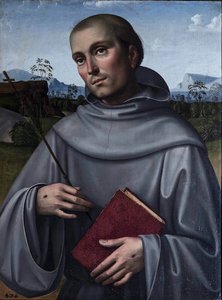
francesco francia (francesco raibolini)
1450 - 1517 , Italy
Quick Facts
- Artistic Movement Or Style: Siena painting style
- Artists Or Movements Influenced By This Artist: ['Renaissance']
- Artists Who Influenced This Artist:
- Andrea Mantegna
- Giovanni Battista Pontormo
- Date Of Birth: 1450
- Date Of Death: 1517
- Full Name: Francesco Francia
- Nationality: Italian
- Notable Artworks:
- Madonna della Scala
- Saint Jerome
- Place Of Birth: Bologna, Italy
Related Articles

Giclée Prints: Archival Quality & Aesthetic Nuances for the Discerning Collector
Explore the world of giclée prints with ArtsDot. Learn about archival quality, aesthetic nuances & investment potential. Expert guidance for discerning art collectors seeking museum-quality reproductions and lasting value.

The Enduring Legacy of Fine Art Prints: Technique, History & Aesthetic Impact
Explore the rich history & techniques of fine art prints. Discover investment potential, assess authenticity, and learn how to preserve your collection with expert guidance. Trusted insights for discerning collectors.

Echoes of Time: Exploring the Enduring Appeal & Historical Context of Vintage Art Prints
Explore the captivating world of vintage art prints! Discover their history, collecting tips & enduring appeal. Expert insights on chromolithography and building a legacy collection with ArtsDot.
The Enduring Legacy of Printmaking: Techniques, Themes & Artistic Innovation Across Centuries
Explore the rich history of printmaking with ArtsDot. Discover techniques from intaglio to lithography, learn about collecting valuable prints & find museum-quality reproductions. Expert insights for art enthusiasts and collectors.
The Enduring Legacy of Woodblock Printmaking: Technique, History & Artistic Expression
Explore the rich history of woodblock printmaking – from ancient techniques to Ukiyo-e masterpieces. Discover expert insights on collecting, preserving & appreciating this enduring art form.