

 Preview
 Send
Send Share
Share
 Details

 Download
 Similars
 X-Ray
X-Ray Diaporama
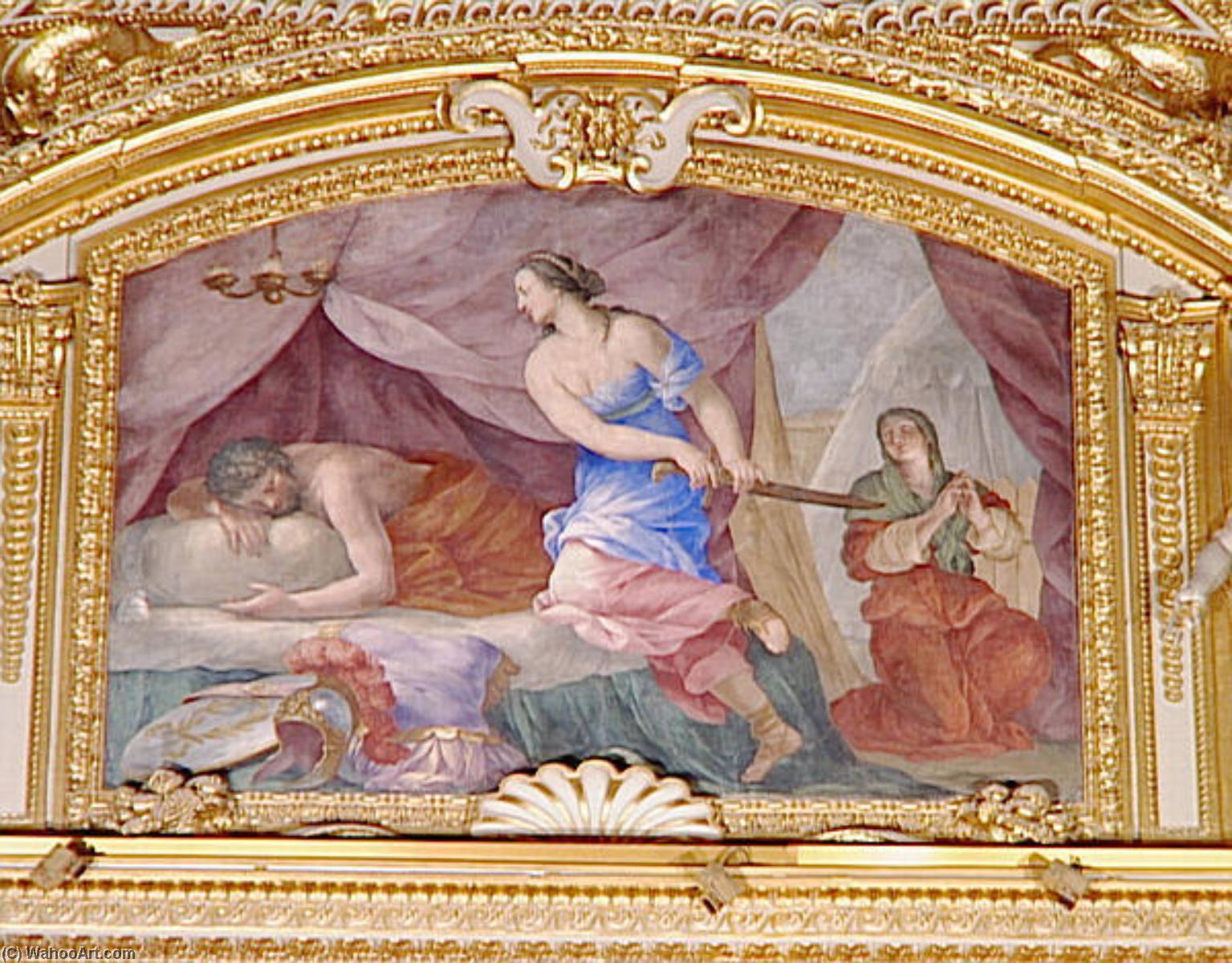
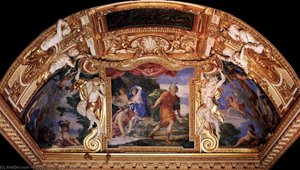
LA RELIGION ET LES VERTUS THEOLOGALES ESTHER ET ASSUERUS LA PRUDENCE, DEUX AMOURS TENANT L'UN UN COMPAS, L'AUTRE UN SABLIER LA CONTINENCE DEUX AMOURS DONT L'UN VERSE DE L'EAU DANS UN RECIPIENT JUDITH ET HOLOPHERNE LA TEMPERANCE ET LA PAIX DEUX AMOURS....


 Read More
Purchase a high-resolution, enhanced digital image, far superior to the online preview.
Each file is meticulously prepared by our in-house specialists using advanced tools and expert manual retouching. We ensure every image has exceptional clarity, precise color accuracy, and fine detail.
The final file is delivered via email within 72 hours, optimized for immediate use in professional, editorial, and print environments. This is the same quality trusted by top-tier design studios, publishers, and galleries.
Digital Image
Download a high-resolution file for personal display, printing, and creative projects. ( Buy Print Buy Hand Made Painting)
Included in Every Digital Image Order
Expert Digital Delivery, Guaranteed
When you choose ArtsDot.com, you're not just getting an image - you're receiving a professionally enhanced digital artwork, crafted with precision and backed by a satisfaction guarantee. Here's everything that comes with your order, automatically:

Fast Email Delivery
Your high-resolution digital image file will be emailed to you within 72 hours of ordering - ready for immediate use.

AI-Enhanced Digital File
Your artwork is professionally optimized using advanced AI tools and manual editing, ensuring maximum detail, clarity, and color accuracy.

Free Lifetime Re-Delivery
Accidentally deleted or lost your file? No worries - we'll resend it to you anytime, free of charge.

No Import Fees - Ever
Enjoy your artwork instantly with zero customs, duties, or delivery fees - digital downloads are always tax-free.

Color Accuracy Guarantee
We ensure your digital image reflects the original colors as closely as possible using professional tools and color management.

60-Day Satisfaction Guarantee
If you're not satisfied with your digital image, we'll revise it or refund 100% within 60 days - no questions asked.

100% Money-Back Guarantee
Not satisfied? Get a full refund within 60 days of receiving your digital file - no questions asked.

Bulk Order Discounts
Buy 3 images, save 10% - Buy 5, save 15% - Buy 10+, save 20%. Great for creative projects, galleries, and agencies.
A Tapestry of Virtue: Romanelli’s “La Religion et les Vertus Théologales”
Giovanni Francesco Romanelli's "La Religion et les Vertus Théologales," housed within the hallowed halls of the Louvre Museum in Paris, is more than just a painting; it’s an immersive allegory, a meticulously crafted visual sermon rendered in the vibrant hues and dramatic chiaroscuro characteristic of the Baroque period. Completed around 1650, this monumental work transcends mere representation, plunging the viewer into a complex narrative of faith, reason, and moral fortitude – a testament to Romanelli's skill as both an artist and a communicator of profound ideas.
The painting depicts a sprawling scene teeming with figures representing various virtues, each meticulously rendered in a style that blends classical idealism with a palpable sense of contemporary life. At the heart of the composition stands Esther and Assuerus, embodying prudence – their gestures suggest a careful balance between deliberation and action, symbolized by the compass and hourglass they hold. These aren’t static objects; they represent the delicate dance between reason and time, a crucial element in navigating the complexities of human existence. Nearby, we encounter La Continence, two figures pouring water into a vessel, a potent symbol of self-control and moderation – a vital component of spiritual discipline. The scene is further enriched by Judith and Holopherne, not merely as warriors but as embodiments of temperance and peace, their hands clasped around laurel wreaths, signifying victory and honor achieved through restraint.
The Baroque Masterpiece: Technique and Style
Romanelli’s mastery lies in his ability to seamlessly integrate diverse artistic influences. Trained under Pietro da Cortona, a leading figure of the Roman Baroque, he inherited a tradition of theatrical lighting and dynamic composition. “La Religion et les Vertus Théologales” exemplifies this perfectly; the use of *tenebrism*, a technique popularized by Caravaggio, creates dramatic contrasts between light and shadow, drawing the viewer’s eye to key figures and emphasizing their emotional weight. The color palette is rich and opulent – deep reds, blues, and golds dominate, reflecting the grandeur of the subject matter and evoking a sense of spiritual intensity. The meticulous detail evident in each figure's clothing, jewelry, and expression speaks volumes about Romanelli’s dedication to realism and his ability to capture the nuances of human character.
A Historical Context: Patronage and Purpose
This painting was commissioned for the ceiling of the Salle des Antonins within the Louvre Palace during the reign of Louis XIV. Such grand allegorical works were not merely decorative; they served as powerful tools for conveying moral and religious values to the king and his court. The choice of subject matter – virtues, faith, and divine order – aligned perfectly with the aims of the French monarchy, which sought to establish a strong sense of national identity rooted in Christian principles. The painting’s creation coincided with a period of intense artistic patronage, where artists were employed to glorify the crown and reinforce its authority through spectacular displays of skill and artistry.
Symbolism Unveiled: A Language of Faith
Beyond the immediate depiction of figures, “La Religion et les Vertus Théologales” is laden with symbolic meaning. The presence of characters from biblical stories – Esther, Judith, Holopherne – underscores the importance of faith and moral conduct in shaping human destiny. The inclusion of elements like scales (representing justice), a sword (symbolizing courage and righteousness), and various instruments of time (the compass and hourglass) further reinforces the painting’s complex theological message. The overall composition can be interpreted as an invitation to contemplate the virtues necessary for achieving spiritual enlightenment – prudence, temperance, fortitude, charity, and humility. It's a visual meditation on the path towards salvation, rendered with breathtaking artistry and profound symbolic depth.
A Legacy of Beauty: Reproduction Possibilities
Today, “La Religion et les Vertus Théologales” remains one of the Louvre’s most celebrated masterpieces. For those seeking to experience its beauty and contemplate its profound message, high-quality reproductions offer a remarkable opportunity to bring this iconic artwork into your home or office. ArtsDot offers meticulously crafted hand-painted reproductions that faithfully capture the original's vibrant colors, dramatic lighting, and intricate details – allowing you to appreciate Romanelli’s genius for generations to come.
Related Artworks

Artist Biography
Michelangelo Merisi da Caravaggio: A Revolutionary of Light and Shadow
Michelangelo Merisi, more famously known as Caravaggio, remains one of the most intensely debated and profoundly influential figures in art history. Born in Milan in 1571, his life was a whirlwind of dramatic events – marked by both extraordinary artistic talent and a volatile temperament that ultimately led to exile and premature death in 1610. His brief but explosive career irrevocably altered the course of painting, establishing a new visual language characterized by intense realism, dramatic lighting, and an unprecedented engagement with contemporary life. Caravaggio’s legacy continues to resonate today, inspiring artists and captivating audiences alike.Early Years and Artistic Training
Caravaggio's early life remains somewhat shrouded in mystery. He was born into a family of modest means in Milan, the son of Rosso Merisi, a court painter for Vincenzo I Gonzaga, Duke of Marsica. This provided him with an initial introduction to the world of art, though he received no formal training. He spent his youth in various Italian cities – Cremona, Bologna, and Venice – honing his skills as a draughtsman and preparing himself for a career in painting. It was in 1592 that he moved to Rome, the vibrant heart of the artistic world, seeking opportunities and hoping to establish himself. Initially struggling to find commissions, he began by specializing in still lifes—scenes of fruits and flowers – a common practice at the time, selling his works on the streets to make ends meet. This early work, though modest, demonstrated an innate ability to capture the textures and colors of natural objects with remarkable accuracy.The Breakthrough: Dramatic Realism and Theatrical Lighting
Caravaggio’s breakthrough came in 1596 with a commission from Cardinal Francesco Maria del Monte, a prominent patron known for his discerning eye and support of emerging artists. Through the cardinal's connections, Caravaggio secured his first major public commissions – the *Calling of Saint Matthew* and *The Martyrdom of Saint Matthew*, paintings that would cement his reputation almost overnight. These works were revolutionary in their approach to religious painting. Rather than depicting saints as idealized figures removed from earthly concerns, Caravaggio presented them as ordinary people caught in dramatic moments. He employed a technique known as “tenebrism,” characterized by stark contrasts between light and shadow – plunging figures into darkness while highlighting key elements with intense illumination. This created a powerful sense of immediacy and drama, drawing the viewer directly into the scene. As Keith Christiansen notes in *Caravaggio (Michelangelo Merisi) (1571–1610) and His Followers*, Caravaggio “pushed the figures up against the picture plane and used light to enhance the dramatic impact and give the figures a quality of immediacy.”Controversy, Violence, and Exile
Caravaggio’s innovative style was not without its detractors. His depictions of ordinary people, often with unflattering features and dressed in contemporary clothing, challenged traditional artistic conventions. He was also known for his volatile temper and a penchant for brawling – incidents that included slashing the cloak of an adversary, throwing a plate of artichokes at a waiter, and engaging in violent altercations with police officers. In 1606, his life took a tragic turn when he became embroiled in a dispute with a young man, resulting in a fatal stabbing. Rather than face justice, Caravaggio fled Rome, seeking refuge in Naples, Malta, and Sicily. His travels were punctuated by further incidents of violence and legal troubles, culminating in his expulsion from Malta after another brawl.Later Years and Legacy
Despite his turbulent life, Caravaggio continued to paint throughout his exile, producing a series of works that demonstrate the evolution of his style. In Naples, he experimented with color and composition, while in Sicily, he focused on dramatic scenes of martyrdom and sacrifice. His final years were marked by a severe disfigurement resulting from a bar fight – an injury that ultimately contributed to his declining health. Caravaggio died in Porto Ercole, Italy, in 1610 at the age of 39. Despite his short life, Caravaggio’s impact on art was immense. His innovations in lighting, composition, and subject matter profoundly influenced generations of painters who followed, including Rembrandt, Velázquez, and Gentileschi. His use of tenebrism continues to be studied and emulated today, and his paintings remain among the most celebrated and emotionally resonant works in Western art history. As The National Gallery notes, “Caravaggio’s paintings were controversial, popular, and hugely influential on succeeding generations of painters all over Europe.” His legacy endures as a testament to the power of artistic vision and the enduring fascination with the dramatic interplay between light and shadow.
giovanni francesco romanelli
1610 - 1662 , Italy
Quick Facts
- Artistic Movement Or Style: Caravaggism
- Artists Or Movements Influenced By This Artist: ['Baroque']
- Artists Who Influenced This Artist:
- Leonardo da Vinci
- Michelangelo
- Date Of Birth: 1571
- Date Of Death: 1610
- Full Name: Michelangelo Merisi da Caravaggio
- Nationality: Italian
- Notable Artworks:
- The Calling of Saint Matthew
- Supper at Emmaus
- David and Goliath
- Death of the Virgin
- Place Of Birth: Milan, Lombardy

