

 Preview
 Send
Send Share
Share
 Details

 Download
 Similars
 X-Ray
X-Ray Diaporama
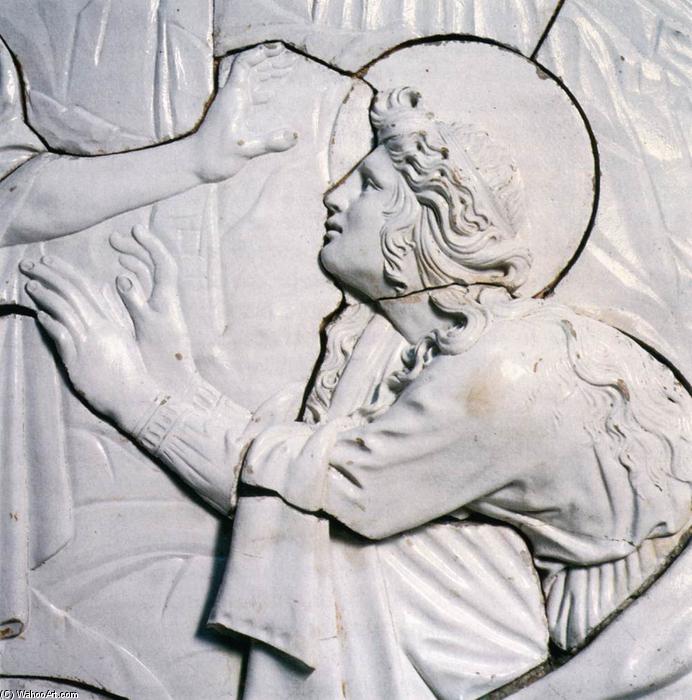
Noli me tangere (detail)


 Read More
Purchase a high-resolution, enhanced digital image, far superior to the online preview.
Each file is meticulously prepared by our in-house specialists using advanced tools and expert manual retouching. We ensure every image has exceptional clarity, precise color accuracy, and fine detail.
The final file is delivered via email within 72 hours, optimized for immediate use in professional, editorial, and print environments. This is the same quality trusted by top-tier design studios, publishers, and galleries.
Digital Image
Download a high-resolution file for personal display, printing, and creative projects. ( Buy Print Buy Hand Made Painting)
Included in Every Digital Image Order
Expert Digital Delivery, Guaranteed
When you choose ArtsDot.com, you're not just getting an image - you're receiving a professionally enhanced digital artwork, crafted with precision and backed by a satisfaction guarantee. Here's everything that comes with your order, automatically:

Fast Email Delivery
Your high-resolution digital image file will be emailed to you within 72 hours of ordering - ready for immediate use.

AI-Enhanced Digital File
Your artwork is professionally optimized using advanced AI tools and manual editing, ensuring maximum detail, clarity, and color accuracy.

Free Lifetime Re-Delivery
Accidentally deleted or lost your file? No worries - we'll resend it to you anytime, free of charge.

No Import Fees - Ever
Enjoy your artwork instantly with zero customs, duties, or delivery fees - digital downloads are always tax-free.

Color Accuracy Guarantee
We ensure your digital image reflects the original colors as closely as possible using professional tools and color management.

60-Day Satisfaction Guarantee
If you're not satisfied with your digital image, we'll revise it or refund 100% within 60 days - no questions asked.

100% Money-Back Guarantee
Not satisfied? Get a full refund within 60 days of receiving your digital file - no questions asked.

Bulk Order Discounts
Buy 3 images, save 10% - Buy 5, save 15% - Buy 10+, save 20%. Great for creative projects, galleries, and agencies.
A Moment of Contemplation: Examining Giovanni Francesco Rustici’s “Noli me tangere”
Giovanni Francesco Rustici's "Noli me tangere," housed in the Museo Nazionale del Bargello in Florence, Italy, stands as a testament to the enduring power of classical ideals within the burgeoning Renaissance. Executed in terracotta around 1520, this sculpture transcends mere representation; it embodies a profound exploration of faith and sorrow—a contemplation that continues to resonate with viewers centuries later. The artist’s meticulous attention to detail captures not just physical form but also an emotional depth characteristic of humanist art.The Sculpture's Composition and Style
Rustici skillfully employs the principles of classical sculpture, mirroring the idealized figures prevalent in Greek and Roman art. The central figure—a woman draped elegantly—represents Mary Magdalene, a poignant portrayal reflecting the biblical narrative of Christ’s ascension into heaven after his crucifixion. Her posture exudes quiet dignity, her gaze downward conveying introspection and sorrow – emotions powerfully conveyed through Rustici's masterful manipulation of terracotta clay. The drapery is rendered with remarkable realism, showcasing subtle folds and creases that imbue the sculpture with a palpable sense of movement and texture. This stylistic choice underscores Rustici’s commitment to achieving anatomical accuracy while simultaneously communicating spiritual significance.Technique and Material Considerations
Rustici's technique involved sculpting from terracotta—a readily available material in Florence during his time—allowing for considerable artistic freedom. The sculptor skillfully utilized the plasticity of terracotta to sculpt a figure that appears to be caught in a moment of profound emotion. Careful carving and polishing brought out the surface sheen, enhancing the sculpture’s visual impact. Furthermore, Rustici applied a glaze – a thin layer of vitreous material – to create a luminous effect, mimicking the appearance of marble, which was considered the pinnacle of sculptural artistry. This technique demonstrates Rustici's ambition to elevate terracotta beyond its utilitarian function into an expressive medium capable of conveying complex psychological states.Historical Context and Symbolism
“Noli me tangere” emerged during a period marked by significant intellectual and artistic upheaval—the High Renaissance. The sculpture reflects the humanist preoccupation with human emotion and experience, aligning with the broader philosophical currents of the era. Mary Magdalene’s sorrowful gaze symbolizes repentance and spiritual renewal – themes central to Christian theology at the time. Rustici's depiction aligns perfectly with the prevailing artistic sensibilities of Florence during Michelangelo Buonarroti’s reign, demonstrating a shared dedication to portraying human dignity and conveying profound emotional truths. The sculpture serves as an emblem of faith and compassion, encapsulating the humanist ideal of striving for moral excellence.Emotional Impact and Legacy
The enduring appeal of “Noli me tangere” lies in its ability to evoke empathy and contemplation. Rustici’s portrayal captures a moment of vulnerability—a woman grappling with grief—yet simultaneously radiating inner strength. The sculpture invites viewers to consider themes of faith, sorrow, and redemption. Its meticulous craftsmanship and expressive gesture continue to inspire admiration and discussion among art historians and collectors alike. Giovanni Francesco Rustici's masterpiece remains an unforgettable illustration of Renaissance artistic achievement, cementing its place as a cornerstone of Florentine cultural heritage.Related Artworks
Artist Biography
Michelangelo Buonarroti: A Titan of the Renaissance
Michelangelo, born Michelangelo di Lodovico Buonarroti Simoni on March 6, 1475, in Caprese, Italy, remains one of the most iconic and profoundly influential figures in Western art history. His life spanned nearly nine decades, a period marked by unparalleled artistic achievement across sculpture, painting, architecture, and poetry. While often associated primarily with his monumental works for the Papal States, Michelangelo’s journey was shaped by a complex interplay of ambition, patronage, personal struggles, and an unwavering dedication to mastering the human form – a pursuit that defined his entire career. His legacy continues to inspire awe and debate centuries after his death on February 18, 1564, in Rome.Early Life and Training
The details of Michelangelo’s early life are surprisingly sparse, shrouded in the mists of historical record. Born into a family of Florentine bankers, he was not initially destined for a career in art. His father, Lodovico Buonarroti Simoni, hoped he would follow in his footsteps and become an accountant. However, at the age of 13, Michelangelo entered the workshop of Domenico Ghirlandaio, a prominent Florentine painter, where he began his apprenticeship. This experience provided him with foundational skills in fresco painting and drawing, but it was his innate talent and relentless drive that truly set him apart. Crucially, he also studied sculpture under Bertoldo di Giovanni, a sculptor working for the Medici court, exposing him to classical ideals and techniques. It’s believed he spent time in Rome as well, absorbing the influence of ancient Roman art and architecture – a formative period that would profoundly shape his artistic vision.Sculptural Masterpieces: Embodiment of Human Potential
Michelangelo's genius truly blossomed through sculpture. His early works, such as *Battle of the Centaurs* (1492-93), demonstrated a raw power and dynamism that hinted at his future greatness. However, it was *David* (1501-04) – commissioned for Florence Cathedral – that cemented his reputation as a sculptor of unparalleled skill. This colossal marble statue, depicting the biblical hero David before his battle with Goliath, is a testament to Michelangelo’s mastery of anatomy, proportion, and psychological intensity. The figure's muscularity, youthful energy, and contemplative gaze captured the essence of human potential and courage. Following the tumultuous events of the Florentine Republic, he was commissioned by Pope Julius II to create the *Pieta* (1498-99), a deeply moving marble sculpture depicting Mary cradling the body of Christ. The Pieta’s exquisite detail and emotional resonance are considered among the greatest achievements in Western art. Later, under the patronage of Pope Leo X, he undertook the monumental task of creating the *Statue of Moses* for St. Peter's Basilica, further showcasing his ability to convey profound emotion and spiritual depth through stone.Painting: Frescoes and Panels
While primarily celebrated as a sculptor, Michelangelo was also a gifted painter. His most significant painting commissions came from the Popes, beginning with the *Sistine Chapel Ceiling* (1508-1512). This vast fresco cycle, commissioned by Pope Julius II, is arguably his greatest artistic achievement. The ceiling depicts scenes from Genesis, including the Creation of Adam – an image instantly recognizable and endlessly reproduced – as well as episodes from the Flood and the Deluge. The sheer scale and complexity of the project, combined with Michelangelo’s innovative use of color and dynamic composition, were revolutionary for the time. He also painted *The Last Judgment* (1536-1541) on the altar wall of the Sistine Chapel, a dramatic and emotionally charged depiction of Christ's return. Beyond the Sistine Chapel, he created several panel paintings, including *Doni Tondo* (1504), which showcases his mastery of composition and color.Architectural Contributions and Legacy
Michelangelo’s influence extended beyond sculpture and painting into the realm of architecture. He served as architect for St. Peter's Basilica in Rome, contributing significantly to its design and overseeing many of its construction projects. His designs included the iconic dome, a marvel of engineering and artistic vision. He also designed the Laurentian Library in Florence, a complex and innovative structure that reflects his sculptural sensibilities. Michelangelo’s legacy is immense and multifaceted. He profoundly influenced generations of artists with his emphasis on anatomical accuracy, dramatic composition, and emotional intensity. His works continue to be studied and admired for their technical brilliance, expressive power, and enduring beauty. He remains a symbol of the Renaissance ideal – a man of boundless talent, unwavering ambition, and profound artistic vision.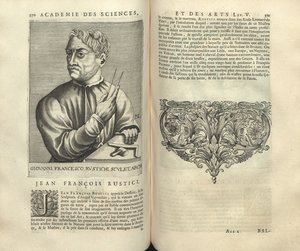
giovanni francesco rustici
1474 - 1554 , Italy
Quick Facts
- Artistic Movement Or Style: High Renaissance
- Artists Or Movements Influenced By This Artist:
- Raphael
- Caravaggio
- Artists Who Influenced This Artist:
- Donatello
- Leonardo da Vinci
- Date Of Birth: March 6, 1475
- Date Of Death: February 18, 1564
- Full Name: Michelangelo di Lodovico Buonarroti Simoni
- Nationality: Italian
- Notable Artworks:
- Pietà
- David
- Giotto's Tomb
- Place Of Birth: Florence, Italy

