 Preview
 Send
Send Share
Share
 Details

 Download
 Similars
 X-Ray
X-Ray Diaporama
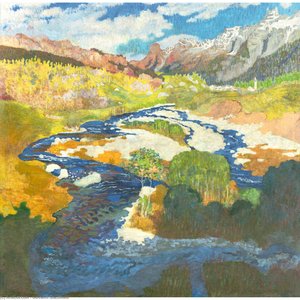
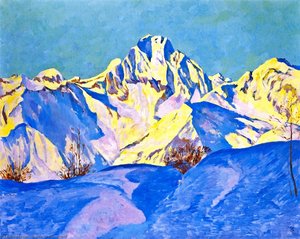
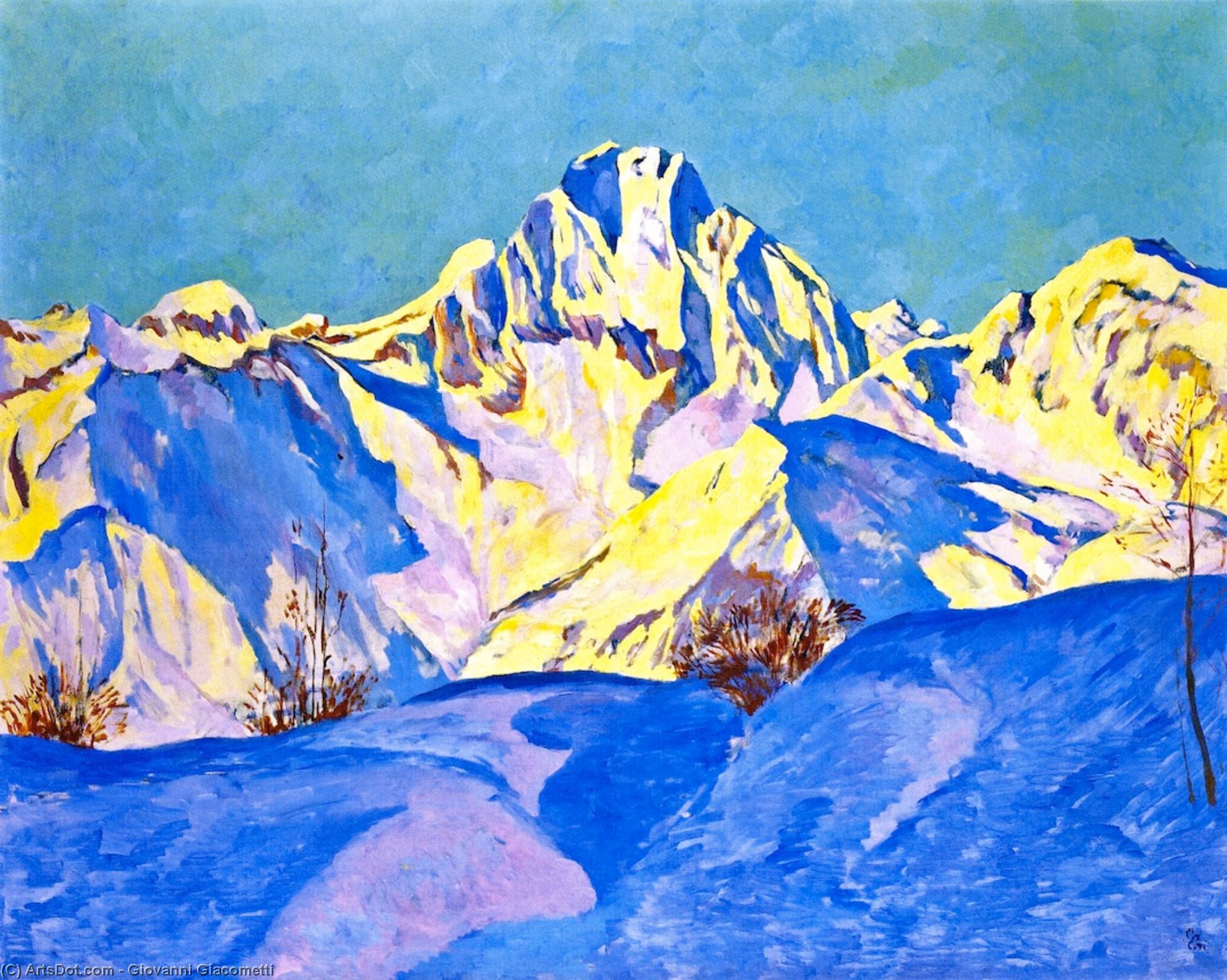
Snow Mountains
 Oil On Canvas
- WallArt
- Impressionism
 1914
1914- Modern
 100.0 x 125.0 cm
 Read More
Hand Made Oil Reproduction
Hand-painted oil on canvas in your size and frame, made to order by our artists. ( Buy Print Buy Image)




P118B $10

P118H $10

P118W $10

P438Z $10

P508JH $12

P508YH $12

P805H $10

P805Z $10

P919BZ $10

P919G $10

P919XJ $10

P959ZH $10

P968JZ $12

W106C $8

W218G $10

W218JH $8

W218Y $10

W307PJ $10

W316G $10

W316PJ $8

W316Y $10

W398PJ $8

W4111J $10

W500HY $15

W500JH $15

W692G $12

W849H $8

W940BG $15

W953PJ $8




Pick from our preset sizes that match the artwork's original proportions.

You may enter your own dimensions to fit a specific frame or space. If your selected size does not match the original image's proportions, we will either crop the artwork or extend the painting with additional hand-painted elements. A digital mockup will be sent for your approval before production begins.
Please note that the on-screen preview does not reflect the actual cropping or extension. Only the mockup will accurately show the final composition.
While custom sizes are available, we recommend selecting a dimension from the predefined list to preserve the original proportions.
After order, ArtsDot.com team will email client for instructions and provide a mockup preview
Worldwide Delivery () in 3/4 weeks instead of standard 5 weeks. (16 August). No compromise on quality.

Free Worldwide Express Shipping

High-Quality Linen Canvas

Full Shipping Insurance

Customs Tax Refund Guarantee

True Color Matching Guarantee

60-Day Return Policy (Defects Only)

100% Money-Back Guarantee

Bulk Discount Offer
 Glass option is only available in size under 110 CM

Snow Mountains
Reproduction Medium
Reproduction Size
-


Total Price
$ 263
Artwork Description
A Majestic Encounter with the Alpine Sublime
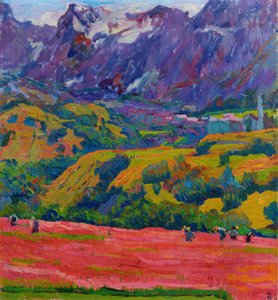
In the quietude of 1914, Giovanni Giacometti captured a moment of profound stillness in his masterpiece, 'Snow Mountains.' This breathtaking oil on canvas serves as more than just a landscape; it is an invitation into a world where the earth meets the heavens in a silent, frozen embrace. The composition is dominated by a monumental mountain range, its jagged peaks draped in heavy, pristine snow that seems to glow against the crisp clarity of the Swiss sky. As the eye wanders across the canvas, one discovers smaller, intricate peaks that emerge from the larger mass, providing a sense of immense depth and geological complexity. This rhythmic layering of stone and ice creates a visual symphony of scale, making the viewer feel both humbled by the grandeur of nature and intimately connected to its serene rhythm.
The artist’s technical mastery is evident in the way he utilizes the rich textures of oil paint to breathe life into the inanimate. Giacometti employs a delicate balance of light and shadow to define the rugged contours of the mountains, allowing the brilliant whites of the snow to contrast sharply with the deep, cool shadows tucked within the crevices. Scattered throughout this wintry expanse are resilient trees, their dark silhouettes acting as vital anchors within the composition. These botanical elements do more than provide scale; they offer a poignant contrast between the ephemeral life of the forest and the eternal, unchanging presence of the mountains. The interplay between the vibrant blue sky and the stark white landscape creates a harmonious color palette that is both invigorating and soothing to the soul.
Historical Resonance and Artistic Legacy
To understand 'Snow Mountains' is to understand the lineage of Swiss artistic excellence. Giovanni Giacometti, a painter whose life was deeply rooted in the dramatic landscapes of his homeland, brought a unique sensitivity to the depiction of nature. While he moved through various stylistic evolutions—from the structured training in Munich to the vibrant influences of Paris—his heart remained tether of the Alps. This painting stands as a testament to that enduring connection. It is also a piece steeped in familial legacy, as Giovanni was the patriarch of an extraordinary artistic dynasty, most notably the father of the world-renowned sculptor Alberto Giacometti. In this work, we see the precursor to a modern sensibility: a focus on form, atmosphere, and the raw emotional power of the environment.
For the discerning collector or interior designer, 'Snow Mountains' offers an unparalleled opportunity to introduce a sense of tranquility and prestige into a living space. The painting’s ability to evoke feelings of awe and peace makes it a versatile centerpiece, capable of anchoring a room with its commanding presence while simultaneously providing a window of escapism. Whether placed in a contemporary gallery-style setting or a classic, traditional study, this reproduction captures the timeless essence of the natural world. It is not merely a depiction of scenery, but an emotional experience—a frozen moment of perfection that continues to inspire wonder more than a century after its creation.
Related Artworks
Artist Biography
A Life Immersed in the Swiss Landscape
Giovanni Giacometti, born on March 7, 1868, in Borgonovo, Switzerland, was a painter whose life and work became deeply intertwined with the dramatic beauty of his native land. Coming from a large family—one of eight children—with a father who balanced baking and café ownership, young Giovanni’s artistic inclinations were nurtured early on by his cousin, Augusto Giacometti, also a painter. This familial connection sparked an initial interest that would blossom into a lifelong dedication to art. His formal training began at the Kunstgewerbeschule in Munich in 1886, but he soon found its rigid structure unsuitable for his burgeoning artistic vision. A pivotal move to Paris followed with Cuno Amiet, where he studied under William Adolphe Bouguereau and Joseph Nicolas Robert-Fleury at the Académie Julian until financial constraints forced a return to Switzerland in 1891. These early experiences laid the foundation for a style that would eventually bridge traditional techniques with the emerging currents of modern art.The Influence of Segantini and the Embrace of Divisionism
A period of wandering and artistic searching followed Giacometti’s return to Switzerland, but a crucial encounter in 1894 proved transformative. Meeting Giovanni Segantini, a master of capturing light and atmosphere in mountainous landscapes, became a defining moment in his development. Segantini wasn't merely an acquaintance; he was a mentor who opened Giacometti’s eyes to the sublime beauty of the Swiss Alps and introduced him to the principles of Divisionism—a technique that involved applying small dots or strokes of color to create a vibrant, luminous effect. This influence is readily apparent in Giacometti’s early landscapes, which began to reflect Segantini's sensitivity to light and his ability to convey the grandeur of nature. The Bergell region, with its towering peaks and dramatic vistas, became a constant source of inspiration, shaping not only his artistic style but also his emotional connection to the land.Evolving Styles and Artistic Exploration
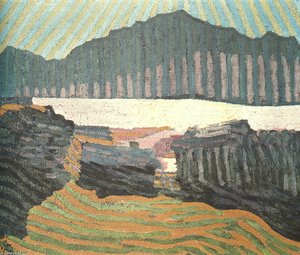
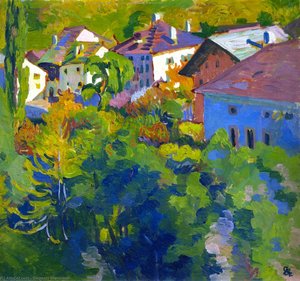
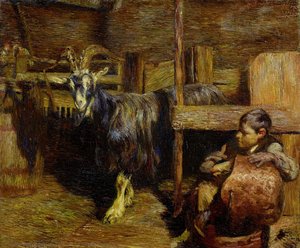
Giacometti’s artistic journey wasn't confined to Divisionism. While deeply influenced by Segantini, he continuously explored different styles and techniques throughout his career. Over time, his work evolved towards Post-Impressionism and even hints of Expressionism, demonstrating a willingness to experiment and push the boundaries of traditional painting. He also incorporated elements of Symbolism and Art Nouveau, adding layers of meaning and decorative flair to his compositions. This stylistic fluidity reflects an artist constantly seeking new ways to express his vision and capture the essence of his surroundings. His subject matter remained largely focused on landscape and portraiture, but within these genres, he demonstrated a remarkable versatility, ranging from intimate depictions of family members to sweeping panoramas of the Swiss Alps. Notable works like “In the Goat Barn”, “Capolago in Winter” and “Morning sun on the lake Sils” exemplify his mastery of light, color, and composition.A Family Legacy and Lasting Significance
Beyond his own artistic achievements, Giovanni Giacometti’s legacy is inextricably linked to that of his sons: Alberto, Diego, and Bruno. In 1900, he married Annetta Stampa, and together they raised a family within a creative environment that fostered the talents of their children. While perhaps overshadowed by the international fame of Alberto and Diego, Giovanni was a respected artist in his own right during his lifetime. He achieved early recognition with an exhibition at the Kunsthaus Zürich in 1898 alongside Cuno Amiet and Ferdinand Hodler, and continued to participate in significant exhibitions throughout his career, including showings with Die Brücke in 1908 and the Berlin Secession in 1911. His first solo exhibition was held at the Kunsthaus Zürich in 1912, followed by a retrospective in 1920. He also served on the Eidgenössische Kunstkommission (Swiss Federal Art Commission) from 1918-1921 and again from 1931-1932, demonstrating his commitment to supporting the arts within Switzerland. Giovanni Giacometti passed away in 1933, leaving behind a body of work that reflects a pivotal moment in Swiss art history—a transition from traditional techniques to more modern approaches, and a lasting contribution to the artistic landscape of the early 20th century. He played an important role in bridging artistic movements in Switzerland during the late 19th and early 20th centuries. His legacy extends beyond his own artistic output, as he fostered a creative environment that nurtured the talents of his children, who would become leading figures in modern art.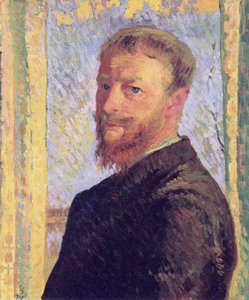
Giovanni Giacometti
1868 - 1933 , Switzerland
Quick Facts
- Artistic Movement Or Style: Post-Impressionism, Expressionism
- Artists Or Movements Influenced By This Artist:
- Alberto Giacometti
- Diego Giacometti
- Artists Who Influenced This Artist: ['Giovanni Segantini']
- Date Of Birth: March 7, 1868
- Date Of Death: June 25, 1933
- Full Name: Giovanni Ulrico Giacometti
- Nationality: Swiss
- Notable Artworks:
- In the Goat Barn
- Capolago in Winter
- Morning sun on lake Sils
- Portrait of Ottilia Giacometti
- Place Of Birth: Borgonovo, Switzerland
Related Articles
Slate Blue Masterpieces: 10 Iconic Paintings & Timeless Home Decor Ideas
Immerse yourself in the captivating world of slate blue! Explore 10 iconic paintings by Monet, Van Gogh & Renoir. Discover their stories, techniques & find museum-quality art reproductions for your home at .

Beyond the Horizon: 10 Landscape Masterpieces for Your Home Decor
Journey through 10 breathtaking landscape paintings by Monet, Van Gogh & more! Explore iconic artworks, artistic techniques & find inspiration for your home decor. Museum-quality reproductions at ArtsDot.com. Discover all masterpieces on ArtsDot.com

Romantic Landscapes: 10 Masterpieces for Your Home | ArtsDot
Journey through 10 Romantic landscape masterpieces by Friedrich, Turner & Cole. Explore emotional art, sublime nature scenes & iconic 19th-century paintings. Find museum-quality reproductions for your home at ArtsDot.com – discover the full collection online!

John Constable's Masterpieces: Explore 25 Iconic Landscapes for Your Home
Journey through John Constable's 25 most celebrated landscapes. Explore Romanticism, Dedham Vale & his masterful use of light in iconic paintings like 'Hay Wain'. Find museum-quality art reproductions and elevate your home decor on ArtsDot.com.

Evocations of Place: A Historical Journey Through Landscape Art
Explore the rich history of landscape art with ArtsDot. Discover renowned artists, movements like Impressionism & Romanticism, and expert guidance for collecting timeless pieces. Find your perfect serene escape today!