 Preview
 Send
Send Share
Share
 Details

 Download
 Similars
 X-Ray
X-Ray Diaporama
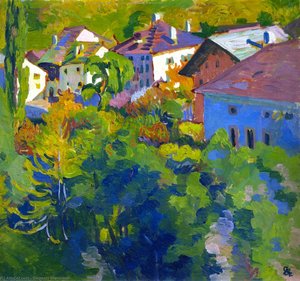
View of Capolago


 Read More
Hand Made Oil Reproduction
Hand-painted oil on canvas in your size and frame, made to order by our artists. ( Buy Print Buy Image)




P118B $10

P118H $10

P118W $10

P438Z $10

P508JH $12

P508YH $12

P805H $10

P805Z $10

P919BZ $10

P919G $10

P919XJ $10

P959ZH $10

P968JZ $12

W106C $8

W218G $10

W218JH $8

W218Y $10

W307PJ $10

W316G $10

W316PJ $8

W316Y $10

W398PJ $8

W4111J $10

W500HY $15

W500JH $15

W692G $12

W849H $8

W940BG $15

W953PJ $8




Pick from our preset sizes that match the artwork's original proportions.

You may enter your own dimensions to fit a specific frame or space. If your selected size does not match the original image's proportions, we will either crop the artwork or extend the painting with additional hand-painted elements. A digital mockup will be sent for your approval before production begins.
Please note that the on-screen preview does not reflect the actual cropping or extension. Only the mockup will accurately show the final composition.
While custom sizes are available, we recommend selecting a dimension from the predefined list to preserve the original proportions.
After order, ArtsDot.com team will email client for instructions and provide a mockup preview
Worldwide Delivery () in 3/4 weeks instead of standard 5 weeks. (17 August). No compromise on quality.

Free Worldwide Express Shipping

High-Quality Linen Canvas

Full Shipping Insurance

Customs Tax Refund Guarantee

True Color Matching Guarantee

60-Day Return Policy (Defects Only)

100% Money-Back Guarantee

Bulk Discount Offer
 Glass option is only available in size under 110 CM

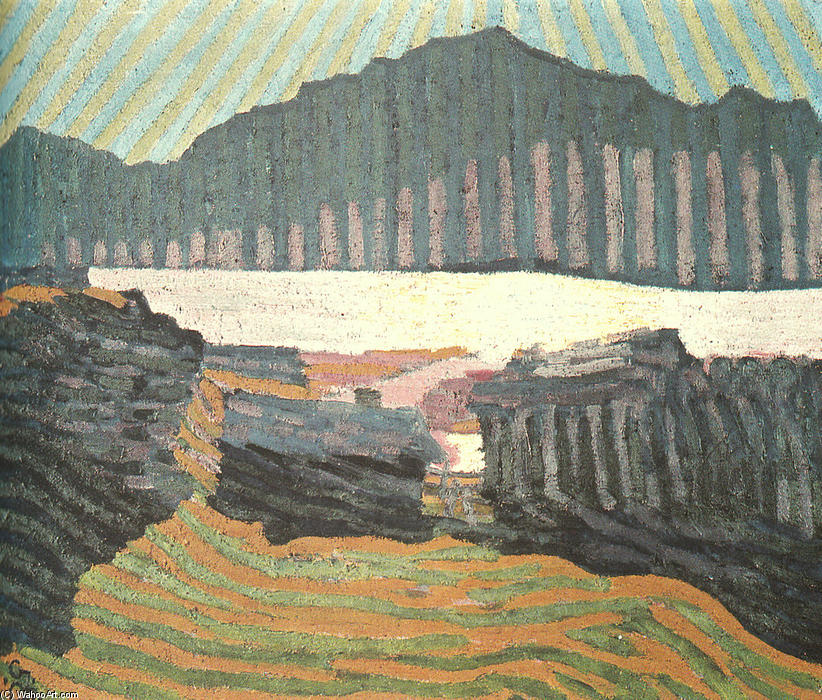
View of Capolago
Reproduction Medium
Reproduction Size
-


Total Price
$ 263
Artwork Description
A Mountain’s Embrace: Giovanni Giacometti's "View of Capolago"
Giovanni Giacometti’s “View of Capolago,” painted in 1907, isn’t merely a landscape; it’s an immersion into the heart of the Swiss Alps and a testament to the artist’s evolving artistic vision. Nestled amidst the dramatic peaks of Ticino, Capolago is a village that became a crucial subject for Giacometti, offering him a sanctuary where he could translate the raw beauty of his native land onto canvas. This particular work captures a moment of serene intensity – a sun-drenched lake reflecting the vibrant hues of its surrounding mountains and houses, creating an almost dreamlike quality.
The painting’s style represents a fascinating transitional phase in Giacometti's career. Initially influenced by the meticulous realism of his mentor, Giovanni Segantini, who taught him the techniques of Divisionism – a method emphasizing small brushstrokes to build up color and texture – Giacometti gradually moved away from this approach. He sought a more expressive language, drawing inspiration from the Impressionists and, crucially, Vincent van Gogh. The long, sweeping strokes of color, particularly the intense blues and purples that dominate the lake’s reflection, directly echo Van Gogh's dynamic brushwork and his masterful use of light and shadow. This shift signals a move towards a more subjective and emotionally charged representation of nature.
The Language of Light and Color
Giacometti’s technique in “View of Capolago” is characterized by a bold, almost audacious palette. He abandons the delicate, fragmented brushwork of Segantini in favor of broader, more confident strokes. The color itself is not merely descriptive; it's expressive – a deliberate attempt to capture the *feeling* of the landscape. Notice how he utilizes contrasting colors: the cool blues and purples of the lake are juxtaposed with the warm yellows and oranges reflecting off the houses, creating a dynamic tension within the composition. The artist’s use of hatching—short, parallel lines—adds texture and depth to the scene, subtly suggesting the ruggedness of the mountains and the shimmering surface of the water.
Interestingly, Giacometti's choice of framing – an original white wooden frame reminiscent of those favored by his mentor – further emphasizes this connection to tradition while simultaneously highlighting his own artistic departure. It’s a subtle yet significant detail that speaks volumes about his relationship with the past and his willingness to forge his own path.
A Reflection of Existentialism
Beyond its purely aesthetic qualities, “View of Capolago” offers a glimpse into Giacometti's broader artistic concerns. As explored in scholarly articles like "Giovanni Giacometti: Sculpting Existentialism – A Study of Form, Space, and the Human Condition," his work during this period began to grapple with themes of isolation, solitude, and the relationship between humanity and nature. The painting’s lack of a clear focal point or narrative element contributes to this sense of unease and contemplation. There are no figures actively engaging with the landscape; instead, we are presented with an objective observation – a moment frozen in time.
Furthermore, Giacometti's deliberate simplification of forms—reducing the mountains and houses to their essential shapes—can be interpreted as a reflection of his growing interest in existentialist philosophy. By stripping away extraneous details, he forces the viewer to confront the fundamental elements of existence: light, color, space, and form.
A Timeless Masterpiece – Perfect for Reproduction
ArtsDot offers meticulously crafted hand-painted reproductions of “View of Capolago,” allowing you to bring this captivating landscape into your home or office. Our skilled artists faithfully recreate Giacometti’s distinctive style, capturing the painting's vibrant colors and evocative atmosphere with exceptional detail. Whether you are an art enthusiast, a collector seeking a unique addition to your collection, or simply someone who appreciates beautiful artwork, our reproduction provides an authentic and stunning representation of this remarkable piece. Experience the serenity and emotional depth of “View of Capolago” – a timeless masterpiece brought to life.
Related Artworks
Artist Biography
A Life Immersed in the Swiss Landscape
Giovanni Giacometti, born on March 7, 1868, in Borgonovo, Switzerland, was a painter whose life and work became deeply intertwined with the dramatic beauty of his native land. Coming from a large family—one of eight children—with a father who balanced baking and café ownership, young Giovanni’s artistic inclinations were nurtured early on by his cousin, Augusto Giacometti, also a painter. This familial connection sparked an initial interest that would blossom into a lifelong dedication to art. His formal training began at the Kunstgewerbeschule in Munich in 1886, but he soon found its rigid structure unsuitable for his burgeoning artistic vision. A pivotal move to Paris followed with Cuno Amiet, where he studied under William Adolphe Bouguereau and Joseph Nicolas Robert-Fleury at the Académie Julian until financial constraints forced a return to Switzerland in 1891. These early experiences laid the foundation for a style that would eventually bridge traditional techniques with the emerging currents of modern art.The Influence of Segantini and the Embrace of Divisionism
A period of wandering and artistic searching followed Giacometti’s return to Switzerland, but a crucial encounter in 1894 proved transformative. Meeting Giovanni Segantini, a master of capturing light and atmosphere in mountainous landscapes, became a defining moment in his development. Segantini wasn't merely an acquaintance; he was a mentor who opened Giacometti’s eyes to the sublime beauty of the Swiss Alps and introduced him to the principles of Divisionism—a technique that involved applying small dots or strokes of color to create a vibrant, luminous effect. This influence is readily apparent in Giacometti’s early landscapes, which began to reflect Segantini's sensitivity to light and his ability to convey the grandeur of nature. The Bergell region, with its towering peaks and dramatic vistas, became a constant source of inspiration, shaping not only his artistic style but also his emotional connection to the land.Evolving Styles and Artistic Exploration
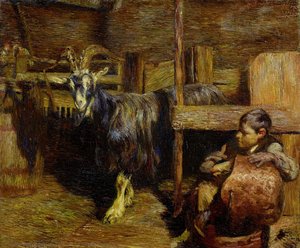
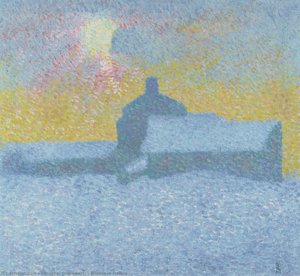
Giacometti’s artistic journey wasn't confined to Divisionism. While deeply influenced by Segantini, he continuously explored different styles and techniques throughout his career. Over time, his work evolved towards Post-Impressionism and even hints of Expressionism, demonstrating a willingness to experiment and push the boundaries of traditional painting. He also incorporated elements of Symbolism and Art Nouveau, adding layers of meaning and decorative flair to his compositions. This stylistic fluidity reflects an artist constantly seeking new ways to express his vision and capture the essence of his surroundings. His subject matter remained largely focused on landscape and portraiture, but within these genres, he demonstrated a remarkable versatility, ranging from intimate depictions of family members to sweeping panoramas of the Swiss Alps. Notable works like “In the Goat Barn”, “Capolago in Winter” and “Morning sun on the lake Sils” exemplify his mastery of light, color, and composition.A Family Legacy and Lasting Significance
Beyond his own artistic achievements, Giovanni Giacometti’s legacy is inextricably linked to that of his sons: Alberto, Diego, and Bruno. In 1900, he married Annetta Stampa, and together they raised a family within a creative environment that fostered the talents of their children. While perhaps overshadowed by the international fame of Alberto and Diego, Giovanni was a respected artist in his own right during his lifetime. He achieved early recognition with an exhibition at the Kunsthaus Zürich in 1898 alongside Cuno Amiet and Ferdinand Hodler, and continued to participate in significant exhibitions throughout his career, including showings with Die Brücke in 1908 and the Berlin Secession in 1911. His first solo exhibition was held at the Kunsthaus Zürich in 1912, followed by a retrospective in 1920. He also served on the Eidgenössische Kunstkommission (Swiss Federal Art Commission) from 1918-1921 and again from 1931-1932, demonstrating his commitment to supporting the arts within Switzerland. Giovanni Giacometti passed away in 1933, leaving behind a body of work that reflects a pivotal moment in Swiss art history—a transition from traditional techniques to more modern approaches, and a lasting contribution to the artistic landscape of the early 20th century. He played an important role in bridging artistic movements in Switzerland during the late 19th and early 20th centuries. His legacy extends beyond his own artistic output, as he fostered a creative environment that nurtured the talents of his children, who would become leading figures in modern art.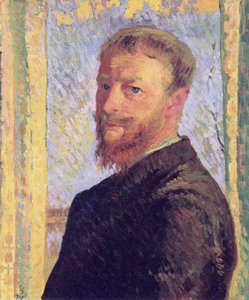
Giovanni Giacometti
1868 - 1933 , Switzerland
Quick Facts
- Artistic Movement Or Style: Post-Impressionism, Expressionism
- Artists Or Movements Influenced By This Artist:
- Alberto Giacometti
- Diego Giacometti
- Artists Who Influenced This Artist: ['Giovanni Segantini']
- Date Of Birth: March 7, 1868
- Date Of Death: June 25, 1933
- Full Name: Giovanni Ulrico Giacometti
- Nationality: Swiss
- Notable Artworks:
- In the Goat Barn
- Capolago in Winter
- Morning sun on lake Sils
- Portrait of Ottilia Giacometti
- Place Of Birth: Borgonovo, Switzerland
Related Articles

Beyond the Horizon: 10 Landscape Masterpieces for Your Home Decor
Journey through 10 breathtaking landscape paintings by Monet, Van Gogh & more! Explore iconic artworks, artistic techniques & find inspiration for your home decor. Museum-quality reproductions at ArtsDot.com. Discover all masterpieces on ArtsDot.com

Evocations of Place: A Historical Journey Through Landscape Art
Explore the rich history of landscape art with ArtsDot. Discover renowned artists, movements like Impressionism & Romanticism, and expert guidance for collecting timeless pieces. Find your perfect serene escape today!
Impressionistic Landscapes: 10 Masterpieces That Changed Art & Decor
Journey into the heart of Impressionism! Explore 10 masterpieces by Monet, Renoir & Degas that revolutionized landscape art. Discover their stories, techniques & find museum-quality reproductions to elevate your home decor on ArtsDot.com.
Evocations of Place: A Historical Journey Through Landscape Art
Explore the rich history of landscape art with ArtsDot. Discover renowned artists, movements like Impressionism & tonalism, and expert guidance for collecting timeless pieces. Find your perfect serene escape today!

Cézanne's Masterpieces: 25 Iconic Artworks to Transform Your Space
Journey through 25 iconic artworks by Paul Cézanne – a master of Impressionism and Post-Impressionism. Explore his landscapes, still lifes, and the stories behind these timeless masterpieces. Discover museum-quality reproductions & curated decor at ArtsDot.com.