 Preview
 Send
Send Share
Share
 Details

 Download
 Similars
 X-Ray
X-Ray Diaporama
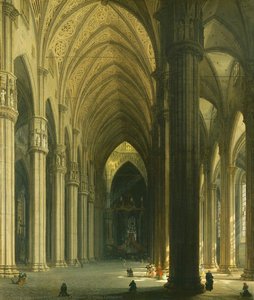
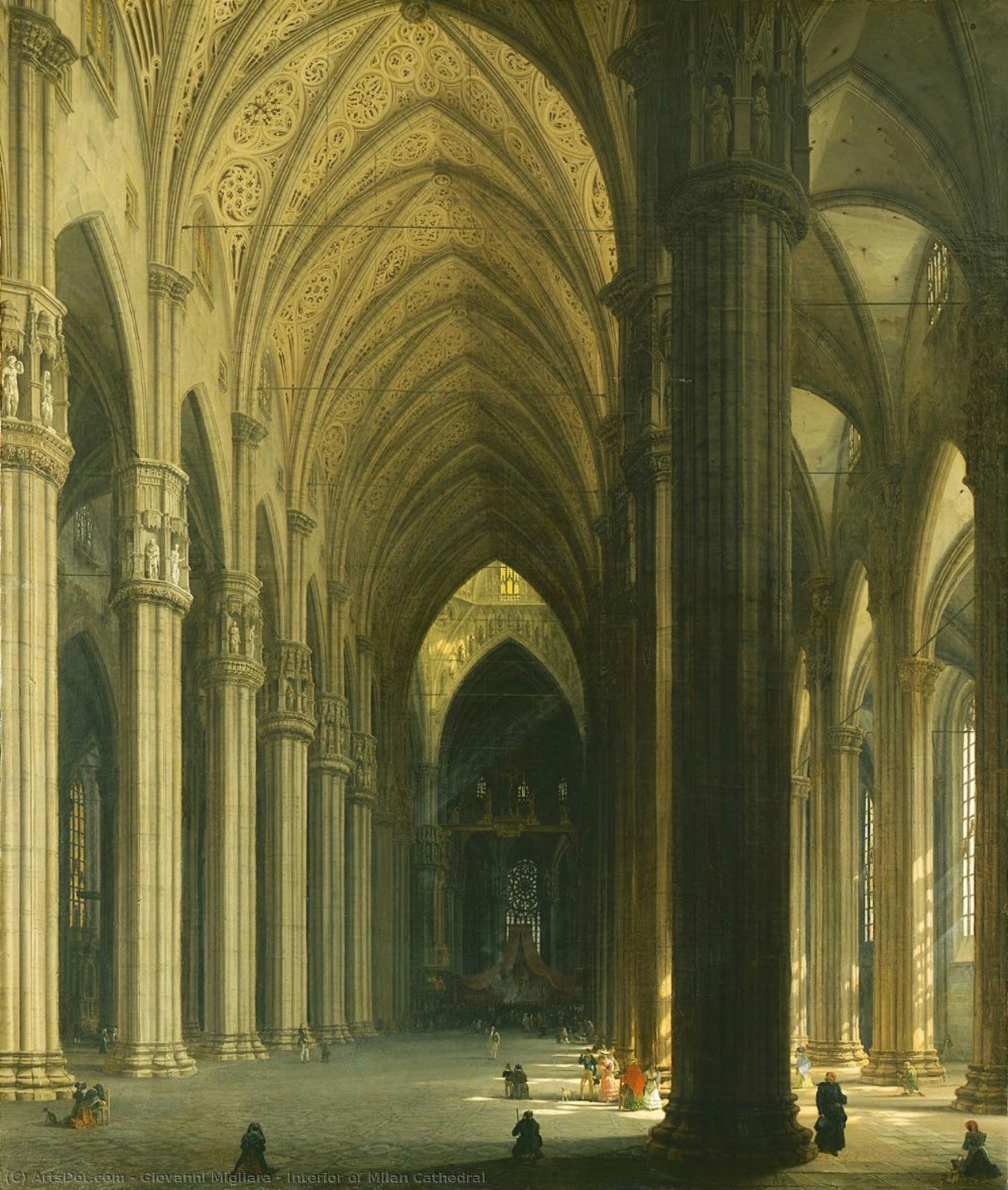
Interior of Milan Cathedral
 Neoclassicism
 19th Century
 112.0 x 132.0 cm
 Fondazione Cariplo
 Read More
Hand Made Oil Reproduction
Hand-painted oil on canvas in your size and frame, made to order by our artists. ( Buy Print Buy Image)




P118B $10

P118H $10

P118W $10

P438Z $10

P508JH $12

P508YH $12

P805H $10

P805Z $10

P919BZ $10

P919G $10

P919XJ $10

P959ZH $10

P968JZ $12

W106C $8

W218G $10

W218JH $8

W218Y $10

W307PJ $10

W316G $10

W316PJ $8

W316Y $10

W398PJ $8

W4111J $10

W500HY $15

W500JH $15

W692G $12

W849H $8

W940BG $15

W953PJ $8




Pick from our preset sizes that match the artwork's original proportions.

You may enter your own dimensions to fit a specific frame or space. If your selected size does not match the original image's proportions, we will either crop the artwork or extend the painting with additional hand-painted elements. A digital mockup will be sent for your approval before production begins.
Please note that the on-screen preview does not reflect the actual cropping or extension. Only the mockup will accurately show the final composition.
While custom sizes are available, we recommend selecting a dimension from the predefined list to preserve the original proportions.
After order, ArtsDot.com team will email client for instructions and provide a mockup preview
Worldwide Delivery () in 3/4 weeks instead of standard 5 weeks. (24 August). No compromise on quality.

Free Worldwide Express Shipping

High-Quality Linen Canvas

Full Shipping Insurance

Customs Tax Refund Guarantee

True Color Matching Guarantee

60-Day Return Policy (Defects Only)

100% Money-Back Guarantee

Bulk Discount Offer
 Glass option is only available in size under 110 CM

Interior of Milan Cathedral
Reproduction Medium
Reproduction Size
-


Total Price
$ 263
Artwork Description
The Grand Illusion of Milan Cathedral
To stand before this depiction of the interior of Milan Cathedral is to step across a threshold into a moment suspended in time—a breathtaking confluence of divine architecture and vibrant human life. Giovanni Migliara’s vision captures not merely a building, but an experience; an overwhelming sense of scale, light, and historical resonance. The composition immediately draws the eye deep into the nave, inviting the viewer to wander alongside the pillars as if they too were entering through the main doorway. It is a masterful exercise in perspective, transforming the flat surface of the canvas into a seemingly infinite corridor of stone and vaulted majesty.
Mastery of Light and Perspective
What elevates this work beyond mere architectural rendering is Migliara’s unparalleled handling of light. The technique employed is nothing short of illusionistic. One can almost feel the cool, diffused shafts of sunlight piercing the gloom from unseen windows on the right, catching the texture of the pillars and illuminating the polished stone floor. This calibrated play of light contrasts dramatically with the deep shadows clinging to the vaulted ceiling, creating a palpable sense of depth. The high altar in the background serves as a focal point of radiant energy, festively adorned and bathed in the glow of countless candles—a virtuoso display of luminosity that speaks to both earthly celebration and spiritual transcendence.
A Tapestry of Social Life
Yet, this grand setting is animated by humanity. Migliara was renowned for his ability to capture not just monumental structures, but the fleeting dramas played out within them. The figures scattered throughout the scene—the elegantly dressed young woman turning her head in search of a distant gaze, the assembled groups near the pillars, even the inclusion of a horse adding an unexpected touch of life—transform the cathedral into a vibrant social stage. These portraits of contemporary Milanese society imbue the piece with remarkable realism and narrative depth. It suggests that within the solemnity of sacred space, the rituals of human connection continue unabated.
Historical Echoes for the Modern Collector
Acquiring a reproduction of this work is to bring home a piece of art history itself. Commissioned during a period when Milanese society was at its zenith of cultural patronage, this painting reflects the tastes and aspirations of the aristocracy and the burgeoning upper classes who sought art that spoke to both grandeur and intimate detail. For the collector or designer, it offers an unparalleled decorative statement. Imagine this vision anchoring a grand hall or library; the black and white quality of the reproduction lends it a timeless gravitas, allowing its narrative power—the interplay between eternal stone and ephemeral human joy—to speak across centuries.
Related Artworks
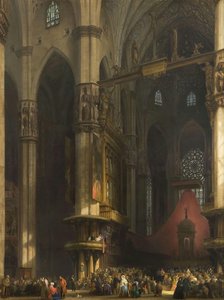

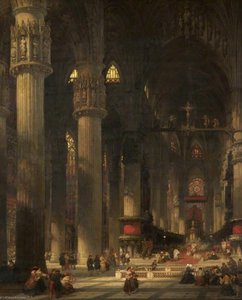
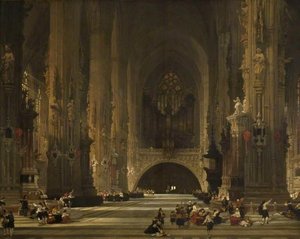
Artist Biography
Giovanni Migliara: A Milanese Visionary
Giovanni Migliara (October 15, 1785 – April 18, 1837) was a nobleman and Italian painter born in Alexandria, Italy. Despite his humble beginnings—his parents were artisans with limited means—Migliara’s prodigious talent propelled him to prominence within the burgeoning artistic landscape of early 19th century Milanese society. His life's journey is marked by dedication to art, punctuated by illness and rewarded with recognition as a celebrated artist and educator.Early Training and Artistic Beginnings
Migliara’s formative years were shaped by an apprenticeship under Giuseppe Maria Bonzanigo, a respected sculptor who instilled in him foundational artistic principles. Further enriching his education was enrollment at the Brera Academy, where he studied alongside Giocondo Albertolli, absorbing influential stylistic trends of the time. Notably, he collaborated on the opulent decoration of La Scala opera house (1805-1809) with Alessandro Sanquirico, a pivotal experience that honed his skills in theatrical design and cemented his connection to Milanese artistic circles. However, a debilitating lung ailment tragically curtailed his active career for several years, forcing him to confront personal hardship alongside professional setbacks.Return to Painting and Watercolor Miniatures
Following his recovery, Migliara reinvigorated his artistic pursuits, specializing in watercolor miniatures and oil paintings on diverse mediums – canvas, silk, and ivory – demonstrating remarkable versatility. His return to the easel was heralded by an exhibition showcasing four panoramic cityscapes at the Brera Academy in 1812, garnering considerable acclaim from Milanese aristocracy. This event solidified his reputation as a skilled observer of urban life and established him as a leading voice within the Romantic movement.Notable Works: Capturing Milanese Beauty
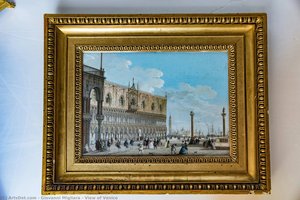
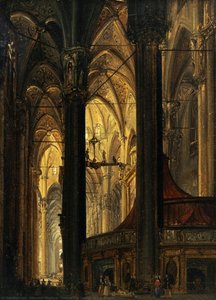
Migliara’s artistic output is characterized by meticulous detail and an unwavering commitment to portraying the grandeur of Milanese architecture and landscapes. Among his most celebrated paintings are “Landscape with Horses,” which captures the serene beauty of the Italian countryside, imbued with Romantic idealism; “Veduta of Venice,” a breathtaking depiction of the city's iconic landmarks—St Mark’s Square and Doge’s Palace—executed with masterful perspective and atmospheric effects; "Interior View of Milan Cathedral," an intricate rendering of the cathedral’s interior space, showcasing architectural grandeur and spiritual reverence; and “View of the Cloister at Saint Anthony of Padua,” a tranquil portrayal reflecting the contemplative atmosphere of this historic basilica. These works exemplify Migliara's ability to convey emotion through precise observation and artistic technique.Recognition and Legacy
Migliara’s unwavering dedication to his craft earned him considerable esteem within the artistic community. He was appointed Professor at the Brera Academy in 1822, furthering his influence as an educator and fostering the development of future generations of artists. Furthermore, he received the prestigious Civil Order of Savoy Award in recognition of his contributions to Italian culture. His paintings continue to be exhibited on ArtsDot.com, allowing enthusiasts worldwide to appreciate Migliara’s artistic legacy—a testament to talent nurtured by circumstance and rewarded with enduring renown.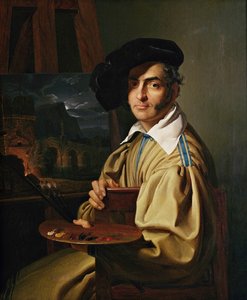
Giovanni Migliara
1785 - 1837 , Italy
Quick Facts
- Artistic Movement Or Style: Romanticism
- Artists Who Influenced This Artist: ['Alessandro Sanquirico']
- Date Of Birth: October 15, 1785
- Date Of Death: April 18, 1837
- Full Name: Giovanni Migliara
- Nationality: Italian
- Notable Artworks:
- Landscape with horses
- Veduta of Venice
- Interior view of Milan Cathedral
- View of the cloister at Saint Anthony
- Place Of Birth: Alexandria, Italy
Related Articles

Romantic Realism's Finest: 10 Masterpieces for Your Home | ArtsDot
Explore 10 defining masterpieces of Romantic Realism! Discover Courbet, Millet & Daumier's powerful paintings—capturing emotion and social realities. Find museum-quality reproductions for your home at ArtsDot.com.
The Evocative Embrace of Reality: Exploring Romantic Realism in 19th-Century Painting
Explore the captivating world of Romantic Realism! Discover key artists like Courbet & Millet, masterpieces, and the social context behind this influential art movement. Expert insights for collectors at ArtsDot.

The Poetic Truth of Observation: Exploring 19th-Century Realism in Painting
Explore the captivating world of 19th-century Realism! Discover key artists like Courbet & Millet, masterpieces, and the powerful social commentary behind this influential art movement. Expert insights at ArtsDot.

19th Century Masterpieces: 10 Paintings That Defined an Era | ArtsDot
Journey through 19th century art with ArtsDot! Explore 10 iconic paintings – from Monet & Renoir to Courbet – and discover the stories behind Romanticism, Realism & Impressionism. Find museum-quality reproductions for your home decor. Explore the full collection online!

Academic Realism's Finest: 10 Masterpieces for Art Lovers & Home Decor
Explore 10 defining Academic Realism masterpieces by Bouguereau, Gérôme & Cabanel. Discover the stories behind these iconic paintings and bring timeless art into your home with museum-quality reproductions from ArtsDot.com. Explore the full collection online!