 Preview
 Send
Send Share
Share
 Details

 Download
 Similars
 X-Ray
X-Ray Diaporama
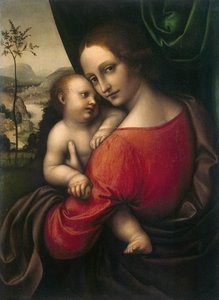
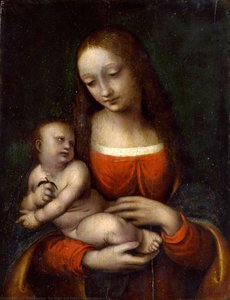
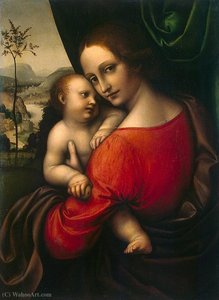
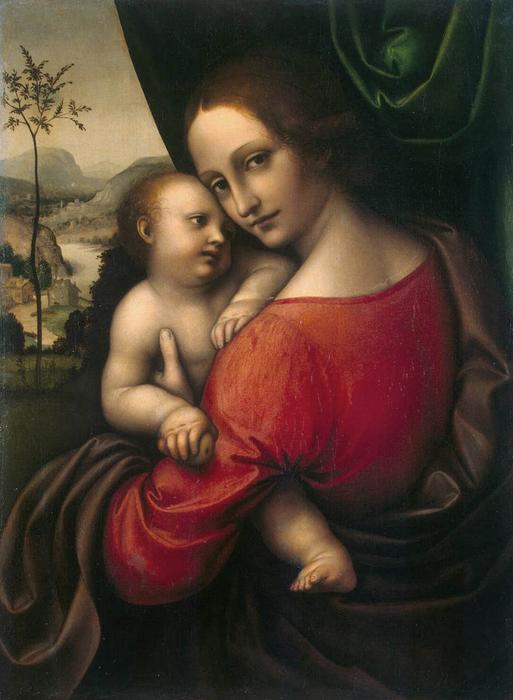
Madonna with Child
 Oil On Canvas
- WallArt
- Italian Renaissance
 1520
1520 58.0 x 49.0 cm
 Hermitage Museum
 Read More
Hand Made Oil Reproduction
Hand-painted oil on canvas in your size and frame, made to order by our artists. ( Buy Print Buy Image)




P118B $10

P118H $10

P118W $10

P438Z $10

P508JH $12

P508YH $12

P805H $10

P805Z $10

P919BZ $10

P919G $10

P919XJ $10

P959ZH $10

P968JZ $12

W106C $8

W218G $10

W218JH $8

W218Y $10

W307PJ $10

W316G $10

W316PJ $8

W316Y $10

W398PJ $8

W4111J $10

W500HY $15

W500JH $15

W692G $12

W849H $8

W940BG $15

W953PJ $8




Pick from our preset sizes that match the artwork's original proportions.

You may enter your own dimensions to fit a specific frame or space. If your selected size does not match the original image's proportions, we will either crop the artwork or extend the painting with additional hand-painted elements. A digital mockup will be sent for your approval before production begins.
Please note that the on-screen preview does not reflect the actual cropping or extension. Only the mockup will accurately show the final composition.
While custom sizes are available, we recommend selecting a dimension from the predefined list to preserve the original proportions.
After order, ArtsDot.com team will email client for instructions and provide a mockup preview
Worldwide Delivery () in 3/4 weeks instead of standard 5 weeks. (23 August). No compromise on quality.

Free Worldwide Express Shipping

High-Quality Linen Canvas

Full Shipping Insurance

Customs Tax Refund Guarantee

True Color Matching Guarantee

60-Day Return Policy (Defects Only)

100% Money-Back Guarantee

Bulk Discount Offer
 Glass option is only available in size under 110 CM

Madonna with Child
Reproduction Medium
Reproduction Size
-


Total Price
$ 263
Artwork Description
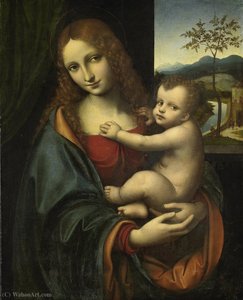
The Serene Majesty of “Madonna with Child” by Giampietrino
Within the hushed halls of the Hermitage Museum in St. Petersburg resides a painting that transcends mere representation, offering instead a profound glimpse into the heart of Renaissance faith and artistic mastery: “Madonna with Child” by Giampietrino. Completed around 1520, this oil-on-canvas masterpiece isn’t simply a depiction of Mary cradling her infant son; it's an embodiment of tenderness, divine grace, and the enduring power of maternal love – a sentiment that continues to resonate deeply across centuries.
Giampietrino, a skilled painter working within Leonardo da Vinci’s influential circle in Milan, possessed a remarkable talent for emulating the master’s signature style. He wasn't merely copying; he was absorbing and refining Da Vinci’s techniques, resulting in works that retain a delicate balance between observation and artistic interpretation. “Madonna with Child” exemplifies this perfectly – it showcases Giampietrino’s ability to capture subtle expressions, create an atmosphere of quiet reverence, and imbue his subjects with a palpable sense of humanity.
A Symphony of Light and Color
The painting immediately captivates the viewer with its masterful use of light. A soft, golden luminescence washes over the scene, emanating from an unseen source and bathing Mary and Jesus in a halo of warmth. This isn’t harsh illumination; it's diffused and gentle, creating a sense of serenity and intimacy. Giampietrino skillfully employs chiaroscuro – the dramatic contrast between light and shadow – to sculpt the figures, highlighting their forms and adding depth to the composition. The rich hues of Mary’s crimson robe stand out against the verdant green curtain behind her, drawing the eye and emphasizing the central figures.
Technically, Giampietrino demonstrates a remarkable command of oil painting. The brushstrokes are smooth and blended, creating an almost velvety texture to the drapery and flesh tones. He meticulously renders details – the delicate folds of Mary’s garment, the tiny fingers clutching Jesus’s hand, the subtle expression of love in her eyes – revealing a deep understanding of anatomy and material quality. The landscape glimpsed through the window behind them is painted with atmospheric perspective, subtly receding into the distance to create a sense of space and depth.
Symbolism and Spiritual Resonance
Beyond its technical brilliance, “Madonna with Child” is rich in symbolism. The pose itself – Mary holding Jesus close to her breast – is a classic representation of the *Mater Dolorosa* (Sorrowful Mother), evoking empathy and compassion. The inclusion of the curtain behind them isn’t merely decorative; it represents the sacred space, a sanctuary where divine grace resides. The lilies adorning Mary's robes are symbols of purity and innocence, further reinforcing her role as the mother of God.
Furthermore, the painting speaks to the broader Christian narrative of sacrifice and redemption. Jesus, as the Son of God, represents humanity’s salvation, while Mary embodies humility, faith, and unwavering devotion. The scene is a powerful reminder of the profound love at the heart of Christianity – a love that transcends earthly boundaries and offers hope for eternal life.
A Timeless Masterpiece: Reproduction and Legacy
Originally housed in the prestigious Hermitage Museum, “Madonna with Child” has inspired countless artists throughout history. Its influence can be seen in works by Botticelli, Raphael, and many others. Today, high-quality reproductions of this iconic painting are available through platforms like ArtsDot.com, allowing art lovers to experience its beauty and serenity firsthand. A meticulously crafted reproduction captures not only the visual details but also the emotional essence of the original – a testament to Giampietrino’s enduring legacy.
Whether you're an art historian, a collector seeking a piece of Renaissance history, or simply someone who appreciates exquisite beauty, “Madonna with Child” remains a timeless masterpiece—a poignant reminder of faith, love, and the power of artistic expression.
Related Artworks
Artist Biography
The Shadow of the Master: The Life and Legacy of Giampietrino
In the vibrant, transformative atmosphere of the Italian Renaissance, few artists captured the lingering essence of a legend as effectively as Giampietrino. Known to history by his more formal name, Giovanni Pietro Rizzoli, this North Italian painter emerged from the Lombard school during a period when the stylistic innovations of Leonardo da Vinci were sweeping through the peninsula. While much of his early life remains shrouded in the mists of time, his presence is indelibly etched into the annals of art history through his profound connection to Leonardo's circle. For decades, the artist was a phantom, known only by the moniker "Giampietrino" found in studio records, until scholars eventually linked this talented hand to the documented life of Rizzoli.
To study Giampietrino is to witness a masterful dialogue with greatness. He was often described by art historians as an "exploiter of Leonardo's repertory," a phrase that suggests not merely a follower, but a sophisticated interpreter of the High Renaissance style. His work serves as a vital bridge, helping to disseminate the subtle complexities of Leonardo’s late techniques—such as sfumato and the delicate interplay of light and shadow—to a wider audience across Lombardy and beyond. He did not simply mimic his predecessor; rather, he absorbed the master's vocabulary to create a body of work that felt both familiar in its grace and distinct in its execution.
A Tapestry of Devotion and Myth
The breadth of Giampietrino’s oeuvre is as impressive as it is varied, ranging from monumental altarpieances to intimate, evocative portraits. He possessed a remarkable ability to navigate between the sacred and the profane, moving seamlessly from the tender, maternal warmth of his Madonnas to the dramatic, tragic allure of mythological figures. His religious compositions, such as the Madonna with Child, are celebrated for their serene beauty and an exquisite attention to detail that captures a sense of timeless grace. In these works, one finds a profound emotional depth, where the soft rendering of flesh and the gentle gaze of the Virgin evoke a deep sense of piety and peace.
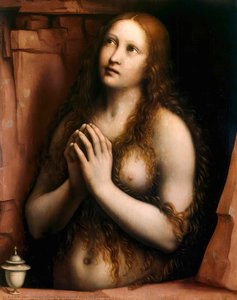
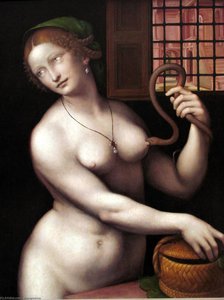
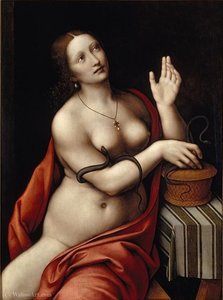
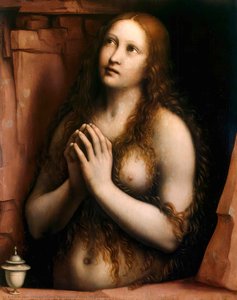
Beyond the altar, Giampietrino’s imagination flourished in the realm of classical legend. He was particularly adept at depicting powerful, singular women, imbuing them with a psychological complexity that foreshadowed later Renaissance developments. His explorations of figures such as Cleopatra and Mary Magdalene allow viewers to experience the fusion of Greek and Egyptian aesthetics through a Lombard lens. In his depiction of The Death of Cleopatra, for instance, the artist captures a tragic, cinematic quality, utilizing rich textures and a dramatic palette to tell a story of fallen royalty and enduring sorrow.
Artistic Evolution and Historical Significance
As Giampietrino’s career progressed through his active years between 1495 and 1549, his personal style began to assert itself more clearly against the heavy influence of his mentors. While he remained a faithful student of Leonardo's forms, contemporary observers noted a characteristic use of paler skin tones, a stylistic choice that lent his figures a luminous, almost ethereal quality. This subtle departure from the more robust shadows of the Leonardeschi allowed his work to possess a unique, delicate brilliance that became a hallmark of his mature period.
The historical significance of Giampietrino lies in his role as a cultural conduit. Through his prolific output—often producing multiple versions of the same subject—he ensured that the aesthetic revolution of the late 15th century reached every corner of the Italian landscape. His legacy is found not only in the surviving masterpieces housed in prestigious institutions like The Hermitage and the Uffizi Gallery but also in the way he helped define the visual language of the Lombard school. He remains a testament to the power of artistic continuity, proving that even those working in the shadow of giants can leave an indelible mark upon the light of history.
giampietrino
1495 - 1549 , Italy
Quick Facts
- Artistic Movement Or Style: Lombard school, Renaissance
- Artists Or Movements Influenced By This Artist:
- Bernardino Luini
- Giulio Cesare Procaccini
- Artists Who Influenced This Artist: ['Leonardo da Vinci']
- Date Of Birth: 1495
- Date Of Death: 1549
- Full Name: Giovanni Pietro Rizzoli
- Nationality: Italian
- Notable Artworks:
- Madonna with Child
- Repentant Mary Magdalene
- The Death of Cleopatra
- Place Of Birth: Italy
Related Articles

Raphael's Masterpieces: 25 Iconic Paintings & Renaissance Art for Your Home
Explore 25 breathtaking Raphael paintings! Journey through the Italian Renaissance with masterpieces like 'School of Athens' & iconic Madonnas. Find museum-quality art reproductions and elevate your home decor on ArtsDot.com.

Uffizi's 25 Masterpieces: Renaissance Art & Timeless Decor Inspiration
Journey through the Uffizi Gallery's 25 most iconic Renaissance artworks! Explore Botticelli, Leonardo da Vinci & Michelangelo’s masterpieces. Find museum-quality art reproductions and curated decor ideas to bring timeless Italian beauty into your home. Discover all masterpieces on ArtsDot.com
Fra Angelico's Masterpieces: 25 Renaissance Paintings for Your Home | ArtsDot
Explore 25 breathtaking masterpieces by Fra Angelico, a Renaissance master. Discover the stories behind his iconic frescoes, Annunciations & religious art. Find museum-quality reproductions and elevate your home decor with ArtsDot.com.

Jacob Henricus Maris: A Master of Dutch Atmospheric Realism & the Intimate Landscape
Explore the captivating world of Jacob Henricus Maris, a leading figure of the Dutch Hague School. Discover his atmospheric landscapes, signature brushstrokes & lasting influence on 19th-century art. Learn more at ArtsDot.

Giotto's Masterpieces: 25 Renaissance Artworks for Your Home | ArtsDot
Explore 25 breathtaking artworks by Giotto di Bondone, a Renaissance master. Discover the stories behind iconic frescoes & paintings like the Scrovegni Chapel cycle. Find museum-quality Giotto reproductions and elevate your home decor with ArtsDot.com.