 Preview
 Send
Send Share
Share
 Details

 Download
 Similars
 X-Ray
X-Ray Diaporama
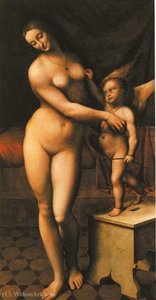
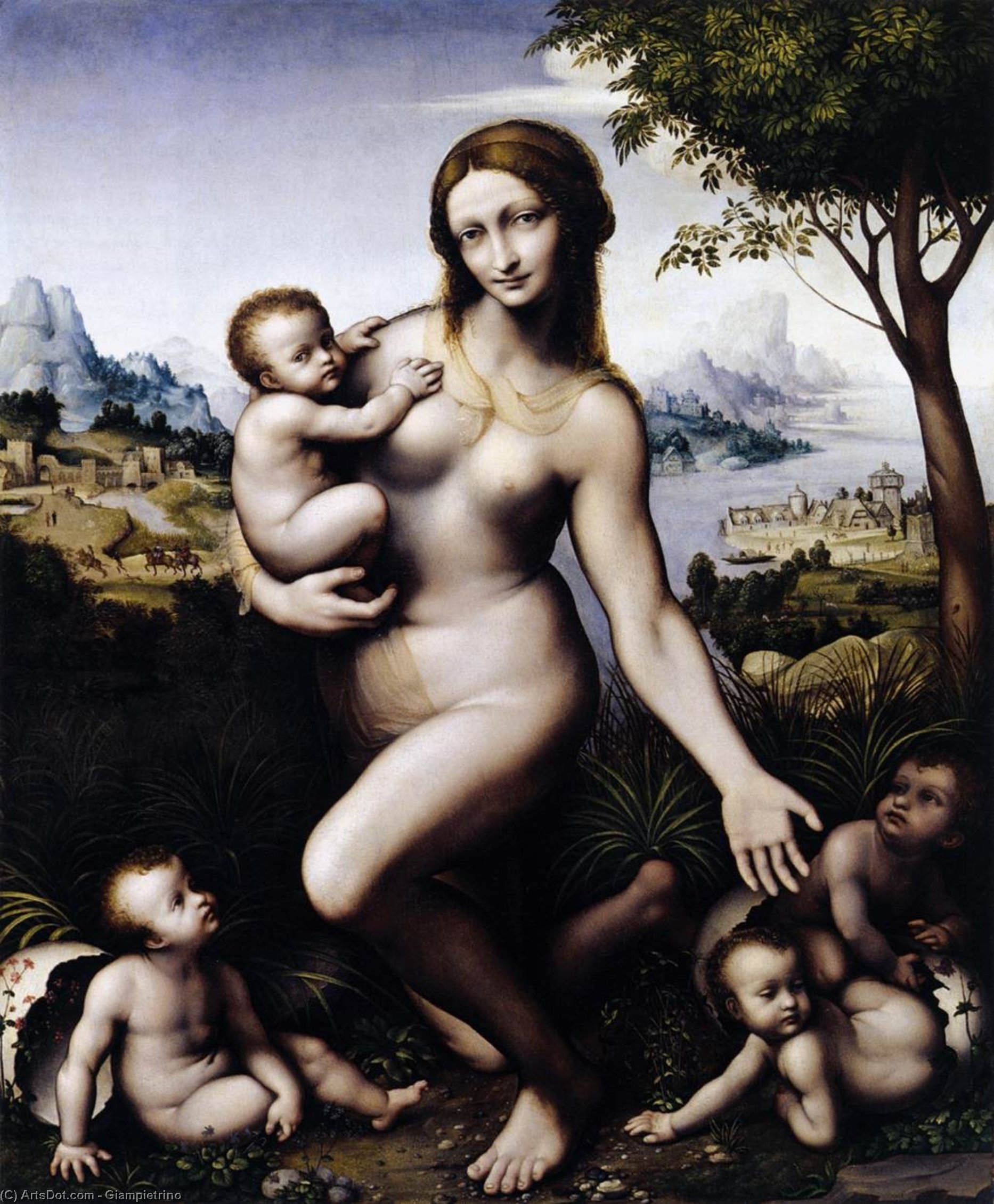
Leda and her Children
 Oil On Canvas
- WallArt
- High Renaissance
 1520
1520- Renaissance
 128.0 x 106.0 cm
 Staatliche Museen
 Read More
Hand Made Oil Reproduction
Hand-painted oil on canvas in your size and frame, made to order by our artists. ( Buy Print Buy Image)




P118B $10

P118H $10

P118W $10

P438Z $10

P508JH $12

P508YH $12

P805H $10

P805Z $10

P919BZ $10

P919G $10

P919XJ $10

P959ZH $10

P968JZ $12

W106C $8

W218G $10

W218JH $8

W218Y $10

W307PJ $10

W316G $10

W316PJ $8

W316Y $10

W398PJ $8

W4111J $10

W500HY $15

W500JH $15

W692G $12

W849H $8

W940BG $15

W953PJ $8




Pick from our preset sizes that match the artwork's original proportions.

You may enter your own dimensions to fit a specific frame or space. If your selected size does not match the original image's proportions, we will either crop the artwork or extend the painting with additional hand-painted elements. A digital mockup will be sent for your approval before production begins.
Please note that the on-screen preview does not reflect the actual cropping or extension. Only the mockup will accurately show the final composition.
While custom sizes are available, we recommend selecting a dimension from the predefined list to preserve the original proportions.
After order, ArtsDot.com team will email client for instructions and provide a mockup preview
Worldwide Delivery () in 3/4 weeks instead of standard 5 weeks. (17 August). No compromise on quality.

Free Worldwide Express Shipping

High-Quality Linen Canvas

Full Shipping Insurance

Customs Tax Refund Guarantee

True Color Matching Guarantee

60-Day Return Policy (Defects Only)

100% Money-Back Guarantee

Bulk Discount Offer
 Glass option is only available in size under 110 CM

Leda and her Children
Reproduction Medium
Reproduction Size
-


Total Price
$ 338
Artwork Description
A Mythological Symphony in Oil
In the soft, luminous glow of the High Renaissance, Giampietrino captures a moment of profound serenity and classical beauty in his masterpiece, Leda and her Children. This evocative oil on canvas invites viewers into a world where Greek mythology breathes through the delicate textures of skin and landscape. The scene centers upon Leda, a figure of grace and maternal strength, cradling one infant while others rest at her feet. There is an undeniable tenderness in the composition, as the artist utilizes a pyramidal structure to anchor the viewer's gaze, drawing us into the intimate circle of motherhood. The painting does more than merely depict a myth; it captures the very essence of life’s continuity and the quiet dignity found within the natural world.
The technical mastery displayed in this work reflects the profound influence of Leonardo da Vinci’s circle. Giampietrino, an accomplished painter of the Lombard school, employs a sophisticated sfumato effect, where soft, flowing lines define the contours of Leda’s form, erasing harsh edges to create a sense of lifelike breathing. Through the meticulous use of glazing techniques, the artist achieves subtle gradations of light and shadow, allowing the skin tones to radiate with a pearlescent warmth against the muted earth tones of the surroundings. This delicate interplay of light creates a diffused, natural atmosphere that feels both timeless and deeply intimate, making the piece a captivating focal point for any sophisticated collection.
Atmosphere, Depth, and Eternal Beauty
Beyond the central figures, the painting unfolds into a breathtakingly detailed landscape that provides both context and a sense of infinite scale. Using the principles of linear and aerial perspective, Giampietrino guides the eye through layers of lush greenery, distant mountain peaks, and tranquil water bodies. The background, rendered in cooler blues and greens, recedes into a soft haze, creating an atmospheric depth that pulls the observer into the far reaches of this mythological realm. This contrast between the organic, warm shapes of the human figures and the structured, geometric elements of the distant architecture creates a balanced, harmonious composition that is as intellectually stimulating as it is visually pleasing.
For the discerning collector or interior designer, Leda and her Children offers much more than mere decoration; it serves as an emotional anchor for a space. The painting evokes themes of fertility, vulnerability, and the enduring power of nature. Its palette of creams, pinks, and soft earth tones allows it to integrate seamlessly into classical or contemporary settings, providing a sense of historical weight and cultured elegance. To possess a reproduction of such a work is to bring a piece of the Renaissance spirit into the modern home—a silent, beautiful reminder of the grace and complexity of the human story.
Related Artworks









Artist Biography
The Shadow of the Master: The Life and Legacy of Giampietrino
In the vibrant, transformative atmosphere of the Italian Renaissance, few artists captured the lingering essence of a legend as effectively as Giampietrino. Known to history by his more formal name, Giovanni Pietro Rizzoli, this North Italian painter emerged from the Lombard school during a period when the stylistic innovations of Leonardo da Vinci were sweeping through the peninsula. While much of his early life remains shrouded in the mists of time, his presence is indelibly etched into the annals of art history through his profound connection to Leonardo's circle. For decades, the artist was a phantom, known only by the moniker "Giampietrino" found in studio records, until scholars eventually linked this talented hand to the documented life of Rizzoli.
To study Giampietrino is to witness a masterful dialogue with greatness. He was often described by art historians as an "exploiter of Leonardo's repertory," a phrase that suggests not merely a follower, but a sophisticated interpreter of the High Renaissance style. His work serves as a vital bridge, helping to disseminate the subtle complexities of Leonardo’s late techniques—such as sfumato and the delicate interplay of light and shadow—to a wider audience across Lombardy and beyond. He did not simply mimic his predecessor; rather, he absorbed the master's vocabulary to create a body of work that felt both familiar in its grace and distinct in its execution.
A Tapestry of Devotion and Myth
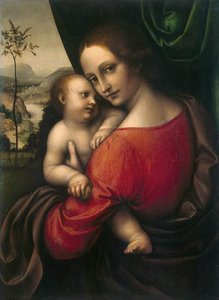
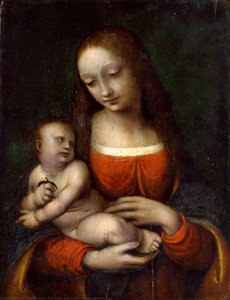
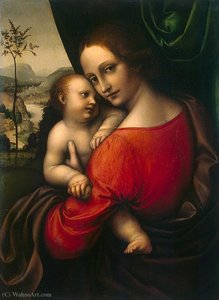
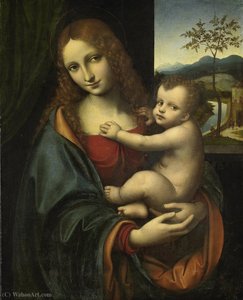
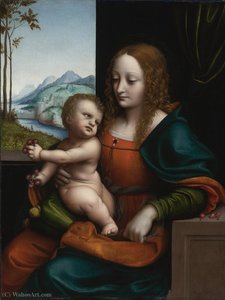
The breadth of Giampietrino’s oeuvre is as impressive as it is varied, ranging from monumental altarpieances to intimate, evocative portraits. He possessed a remarkable ability to navigate between the sacred and the profane, moving seamlessly from the tender, maternal warmth of his Madonnas to the dramatic, tragic allure of mythological figures. His religious compositions, such as the Madonna with Child, are celebrated for their serene beauty and an exquisite attention to detail that captures a sense of timeless grace. In these works, one finds a profound emotional depth, where the soft rendering of flesh and the gentle gaze of the Virgin evoke a deep sense of piety and peace.
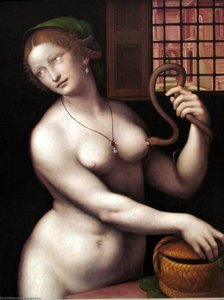
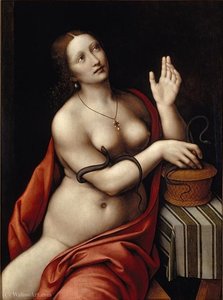
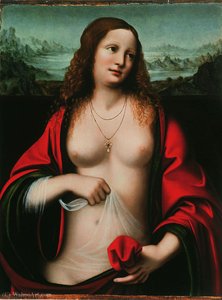
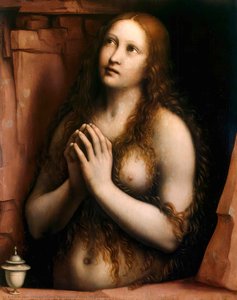
Beyond the altar, Giampietrino’s imagination flourished in the realm of classical legend. He was particularly adept at depicting powerful, singular women, imbuing them with a psychological complexity that foreshadowed later Renaissance developments. His explorations of figures such as Cleopatra and Mary Magdalene allow viewers to experience the fusion of Greek and Egyptian aesthetics through a Lombard lens. In his depiction of The Death of Cleopatra, for instance, the artist captures a tragic, cinematic quality, utilizing rich textures and a dramatic palette to tell a story of fallen royalty and enduring sorrow.
Artistic Evolution and Historical Significance
As Giampietrino’s career progressed through his active years between 1495 and 1549, his personal style began to assert itself more clearly against the heavy influence of his mentors. While he remained a faithful student of Leonardo's forms, contemporary observers noted a characteristic use of paler skin tones, a stylistic choice that lent his figures a luminous, almost ethereal quality. This subtle departure from the more robust shadows of the Leonardeschi allowed his work to possess a unique, delicate brilliance that became a hallmark of his mature period.
The historical significance of Giampietrino lies in his role as a cultural conduit. Through his prolific output—often producing multiple versions of the same subject—he ensured that the aesthetic revolution of the late 15th century reached every corner of the Italian landscape. His legacy is found not only in the surviving masterpieces housed in prestigious institutions like The Hermitage and the Uffizi Gallery but also in the way he helped define the visual language of the Lombard school. He remains a testament to the power of artistic continuity, proving that even those working in the shadow of giants can leave an indelible mark upon the light of history.
giampietrino
1495 - 1549 , Italy
Quick Facts
- Artistic Movement Or Style: Lombard school, Renaissance
- Artists Or Movements Influenced By This Artist:
- Bernardino Luini
- Giulio Cesare Procaccini
- Artists Who Influenced This Artist: ['Leonardo da Vinci']
- Date Of Birth: 1495
- Date Of Death: 1549
- Full Name: Giovanni Pietro Rizzoli
- Nationality: Italian
- Notable Artworks:
- Madonna with Child
- Repentant Mary Magdalene
- The Death of Cleopatra
- Place Of Birth: Italy
Related Articles
The Enduring Allure of the Nude: A Historical & Artistic Exploration of the Human Form
Explore the captivating history of nude art! Discover iconic paintings & artists from classical to modern eras. Uncover symbolism, techniques & find museum-quality reproductions at ArtsDot.

Echoes of Olympus: Mythological Narratives in Western Art Through the Ages
Explore the captivating history of mythological narratives in Western art! From ancient Greece to modern masterpieces, discover iconic artworks & symbolism. Expert analysis and high-quality reproductions at ArtsDot.

The Eloquent Form: A Historical & Aesthetic Exploration of the Nude in Art
Explore the captivating history of the nude in art! From ancient Greece to modern masters, discover its evolving symbolism, techniques & enduring beauty. Expert insights for collectors and enthusiasts.
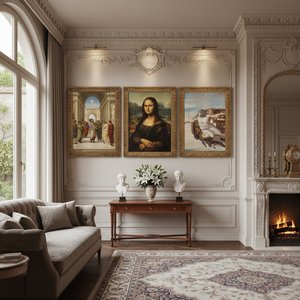
High Renaissance Masterpieces: Iconic Art for Your Home |
Journey through the High Renaissance! Explore 10 iconic masterpieces by Leonardo da Vinci, Michelangelo & Raphael. Discover art history, techniques & find museum-quality reproductions to elevate your home decor on .

High Medieval Art: 10 Masterpieces That Shaped an Era | ArtsDot
Journey through High Medieval Art! Explore 10 iconic masterpieces – from Giotto's frescoes to stunning Gothic cathedrals. Discover the stories behind these timeless paintings, sculptures & illuminated manuscripts. Find museum-quality art reproductions at ArtsDot.com.