 Preview
 Send
Send Share
Share
 Details

 Download
 Similars
 X-Ray
X-Ray Diaporama
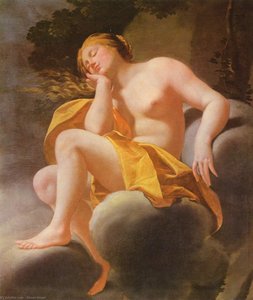
Sleeping Venus
 Oil On Canvas
- WallArt
- Mannerist Painting
 1523
1523 130.0 x 213.0 cm
 Galleria Borghese
 Read More
Hand Made Oil Reproduction
Hand-painted oil on canvas in your size and frame, made to order by our artists. ( Buy Print Buy Image)




P118B $10

P118H $10

P118W $10

P438Z $10

P508JH $12

P508YH $12

P805H $10

P805Z $10

P919BZ $10

P919G $10

P919XJ $10

P959ZH $10

P968JZ $12

W106C $8

W218G $10

W218JH $8

W218Y $10

W307PJ $10

W316G $10

W316PJ $8

W316Y $10

W398PJ $8

W4111J $10

W500HY $15

W500JH $15

W692G $12

W849H $8

W940BG $15

W953PJ $8




Pick from our preset sizes that match the artwork's original proportions.

You may enter your own dimensions to fit a specific frame or space. If your selected size does not match the original image's proportions, we will either crop the artwork or extend the painting with additional hand-painted elements. A digital mockup will be sent for your approval before production begins.
Please note that the on-screen preview does not reflect the actual cropping or extension. Only the mockup will accurately show the final composition.
While custom sizes are available, we recommend selecting a dimension from the predefined list to preserve the original proportions.
After order, ArtsDot.com team will email client for instructions and provide a mockup preview
Worldwide Delivery () in 3/4 weeks instead of standard 5 weeks. (17 August). No compromise on quality.

Free Worldwide Express Shipping

High-Quality Linen Canvas

Full Shipping Insurance

Customs Tax Refund Guarantee

True Color Matching Guarantee

60-Day Return Policy (Defects Only)

100% Money-Back Guarantee

Bulk Discount Offer
 Glass option is only available in size under 110 CM

Sleeping Venus
Reproduction Medium
Reproduction Size
-


Total Price
$ 263
Artwork Description
The Slumbering Muse: Girolamo da Treviso’s “Sleeping Venus”
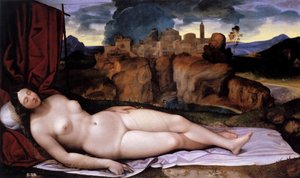
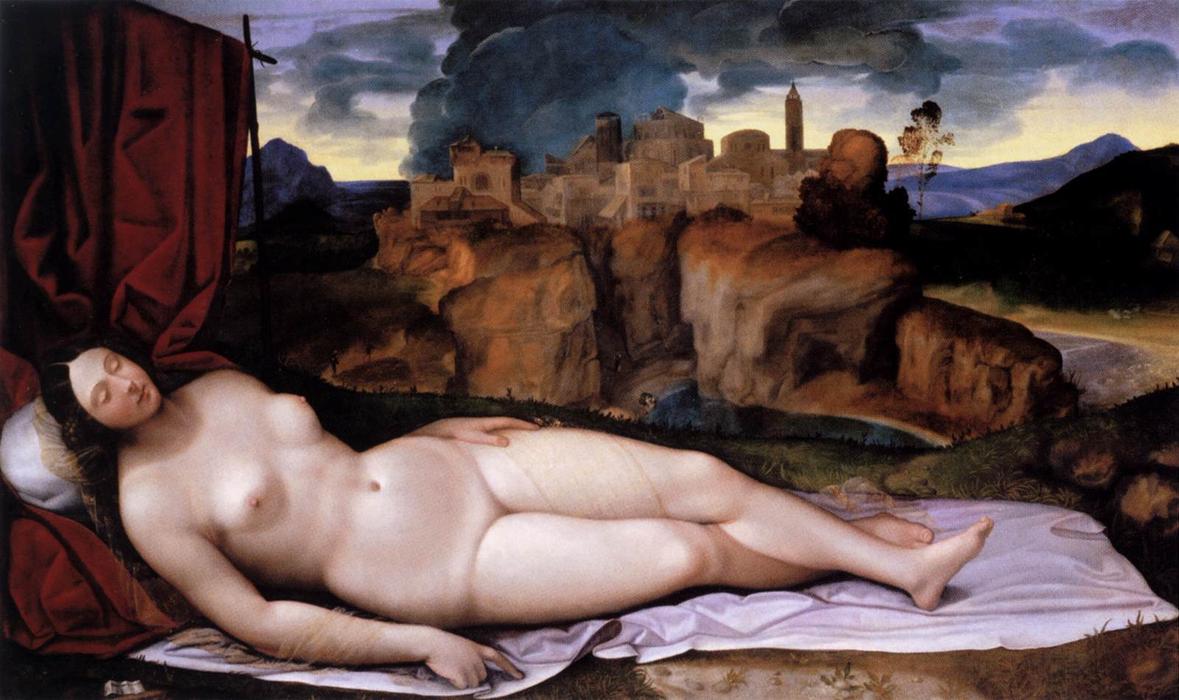
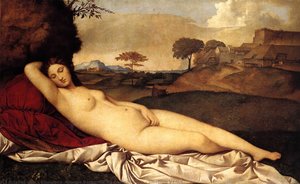
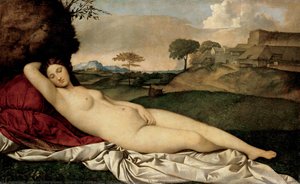
Girolamo da Treviso's "Sleeping Venus," painted circa 1523, isn’t merely a depiction of a reclining nude; it’s a profound meditation on beauty, repose, and the very essence of Renaissance ideals. Housed within the hallowed halls of the Galleria Borghese in Rome, this oil-on-canvas masterpiece transcends its physical dimensions to become an embodiment of serene grace and timeless allure. The painting immediately draws the viewer into a world of quiet contemplation, inviting us to share in the woman’s peaceful slumber—a state both alluring and subtly melancholic.
At first glance, the composition echoes the iconic “Sleeping Venus” by Giorgione, a precedent that Girolamo skillfully embraced while imbuing it with his own distinctive artistic voice. The central figure lies gracefully on her side, her body draped in luxurious fabrics of deep crimson and gold. Her pose is remarkably relaxed, suggesting an effortless surrender to sleep—a deliberate contrast to the often-strained formality of Renaissance portraiture. The artist’s mastery of anatomy is evident in the delicate rendering of her form, capturing the subtle curves and contours with remarkable precision. However, it's not simply anatomical accuracy that defines this work; Girolamo imbues the figure with a palpable sense of vulnerability and quiet dignity.
A Landscape Woven into Dreams
What truly elevates “Sleeping Venus” is its meticulously crafted background—a landscape that feels less like a mere backdrop and more like an integral part of the scene. Rolling hills, punctuated by distant towers and a dramatic sky ablaze with clouds, create a sense of depth and perspective. The muted earth tones – ochres, browns, and deep blues – harmonize beautifully with the warm hues of the woman’s garments, establishing a visual unity that is both captivating and profoundly calming. Notice how Girolamo subtly incorporates elements reminiscent of Titian's work, particularly in the atmospheric rendering of the sky—a technique that would later become central to Titian’s own artistic practice.
The inclusion of a partially draped red curtain in the foreground adds an intriguing layer of symbolism. Traditionally associated with theatricality and drama, its presence suggests a staged scene, perhaps hinting at the Venus as a muse—a source of inspiration for artists and poets. It’s a subtle nod to the Renaissance fascination with classical mythology and allegory, transforming the painting into a visual poem.
The Mannerist Touch: Elongation and Emotion
“Sleeping Venus” firmly resides within the Mannerist period, a style characterized by elongated figures, dramatic poses, and an emphasis on emotional intensity. Girolamo skillfully employs these stylistic conventions to heighten the painting’s expressive power. The woman's limbs are subtly elongated, creating a sense of ethereal beauty—a characteristic feature of Mannerist art. Furthermore, the artist masterfully manipulates light and shadow to sculpt the figure’s form, drawing attention to her delicate features and conveying a profound sense of vulnerability.
The painting’s historical context is equally significant. Created during a period of intense artistic experimentation and innovation, “Sleeping Venus” reflects the evolving sensibilities of the Renaissance. It represents a departure from the idealized beauty of earlier art, embracing a more nuanced and psychologically complex portrayal of the female nude. It's a testament to Girolamo’s ability to synthesize classical influences with his own unique artistic vision.
A Legacy of Beauty: Reproductions and Inspiration
Today, “Sleeping Venus” continues to captivate viewers with its timeless beauty and profound emotional resonance. High-quality reproductions offer art lovers the opportunity to experience this masterpiece firsthand, bringing its serene grace into their homes or studios. ArtsDot.com offers meticulously crafted reproductions that faithfully capture the painting’s rich colors, intricate details, and evocative atmosphere—allowing you to own a piece of Renaissance history.
Beyond its aesthetic appeal, “Sleeping Venus” serves as a powerful reminder of the enduring fascination with beauty, repose, and the mysteries of the human spirit. It's an invitation to slow down, reflect, and appreciate the quiet moments of grace that can be found in even the most seemingly simple scenes.
Related Artworks
Artist Biography
Girolamo da Treviso the Younger: Life and Legacy
Early Life and Origins
Girolamo da Treviso (1508 – September 10, 1544), also known as Girolamo di Tommaso da Treviso the Younger and Girolamo Trevigi, was an Italian Renaissance painter who found significant employment in the court of Henry VIII in England. Born in Treviso, Italy, his lineage is somewhat unclear; the identity of Girolamo da Treviso the Elder remains a subject of debate among art historians.
Artistic Development and Influences
Initially, it was believed that Girolamo was a pupil of Pier Maria Pennacchi, but this has been largely dismissed by modern scholarship. His stylistic development demonstrates a strong association with Giorgionismo – the continuation of the style pioneered by Giorgione. While working in Bologna during the 1520s, he also absorbed influences from Raphael’s work, particularly evident in his compositions and use of light. He later showed hints of Parmigianino's mannerism.
Career and Works Across Italy
Girolamo da Treviso wasn’t confined to a single city during his career. Besides Bologna, where he contributed sculptural decoration on the portal of San Petronio and grisaille paintings within, he worked in Genoa, Faenza, Trent, and at the Palazzo del Te in Mantua. His Italian works demonstrate versatility and an evolving artistic voice.
Service to Henry VIII
Giorgio Vasari, in his *Lives of the Most Excellent Painters, Sculptors, and Architects*, recounts Girolamo’s journey to England. He was employed by Henry VIII not only as a painter but also as a military engineer. His most striking work from this period is a unique “Protestant Allegory” within the Royal Collection. This painting boldly depicts the Pope being pelted with stones by various figures, reflecting the religious and political tensions of the time.
Major Achievements and Notable Works
- Sleeping Venus: A beautiful example of his Giorgionesque style.
- Isaac blessing Jacob: Currently housed in the Musée des Beaux-Arts de Rouen, showcasing his compositional skills.
- A Protestant Allegory: A politically charged and visually arresting work created for Henry VIII.
- Frescoes in the Church of the Commenda, Faenza: Demonstrating his skill in large-scale decorative painting.
Tragic End and Historical Significance
Sadly, Girolamo da Treviso’s life was cut short. He was killed by a cannon shot during the siege of Boulogne-sur-Mer in 1544 while serving as an engineer for Henry VIII. Though his career was relatively brief, he left behind a body of work that reflects the artistic currents of the Italian Renaissance and provides a fascinating glimpse into the cultural exchange between Italy and England during the Tudor period.
Legacy
Girolamo da Treviso remains a notable figure in Renaissance art, appreciated for his stylistic versatility, his unique contribution to Henry VIII’s court, and his ability to blend Italian artistic traditions with the demands of a foreign patron. His work continues to be studied and admired by scholars and art enthusiasts alike.

girolamo da treviso the younger
1508 - 1544 , Italy
Quick Facts
- Birth Date: 1508
- Birth Place: Treviso, Italy
- Death Date: September 10, 1544
- Influenced By:
- Giorgione
- Raphael
- Movement: Renaissance, Giorgionismo
- Name: Girolamo da Treviso the Younger
- Nationality: Italian
- Notable Works:
- Sleeping Venus
- Isaac blessing Jacob
- A Protestant Allegory
Related Articles
Leonardo da Vinci's Masterpieces: Explore 25 Iconic Artworks for Your Home | ArtsDot
Journey through Leonardo da Vinci's genius with our curated selection of 25 iconic artworks. Explore the stories behind Mona Lisa, The Last Supper & more Renaissance masterpieces. Find museum-quality art reproductions for your home at ArtsDot.com.

The Enduring Legacy of Oil on Canvas: Technique, History & Aesthetic Impact
Explore the rich history & techniques of oil painting – from Renaissance masters to Impressionism. Discover pigments, layering methods, and why this timeless medium endures. Expert insights for artists & art enthusiasts.

Leonardo da Vinci: A Renaissance Master’s Synthesis of Art, Science & Human Observation – Reinterpreted for the Collector
Explore Leonardo da Vinci’s timeless masterpieces with ArtsDot. Discover insights into his art, science, and legacy – trusted expertise for discerning collectors seeking authentic reproductions & investment opportunities.

Oil on Canvas: A Historical & Technical Exploration of a Timeless Artistic Medium
Explore the rich history & enduring techniques of oil painting on canvas. Discover the science behind its longevity, conservation practices, and contemporary relevance. Expert insights for art enthusiasts.
The Enduring Legacy of Oil Paint: Technique, History & Emotional Resonance in Western Art
Explore the rich history & techniques of oil painting! Discover Renaissance masters, scientific principles behind color, and emotional resonance in art. Learn about glazing, layering, and atmospheric perspective – a guide for enthusiasts & collectors.