 Preview
 Send
Send Share
Share
 Details

 Download
 Similars
 X-Ray
X-Ray Diaporama
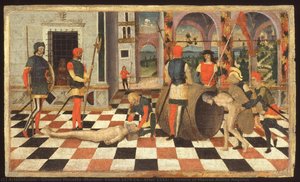
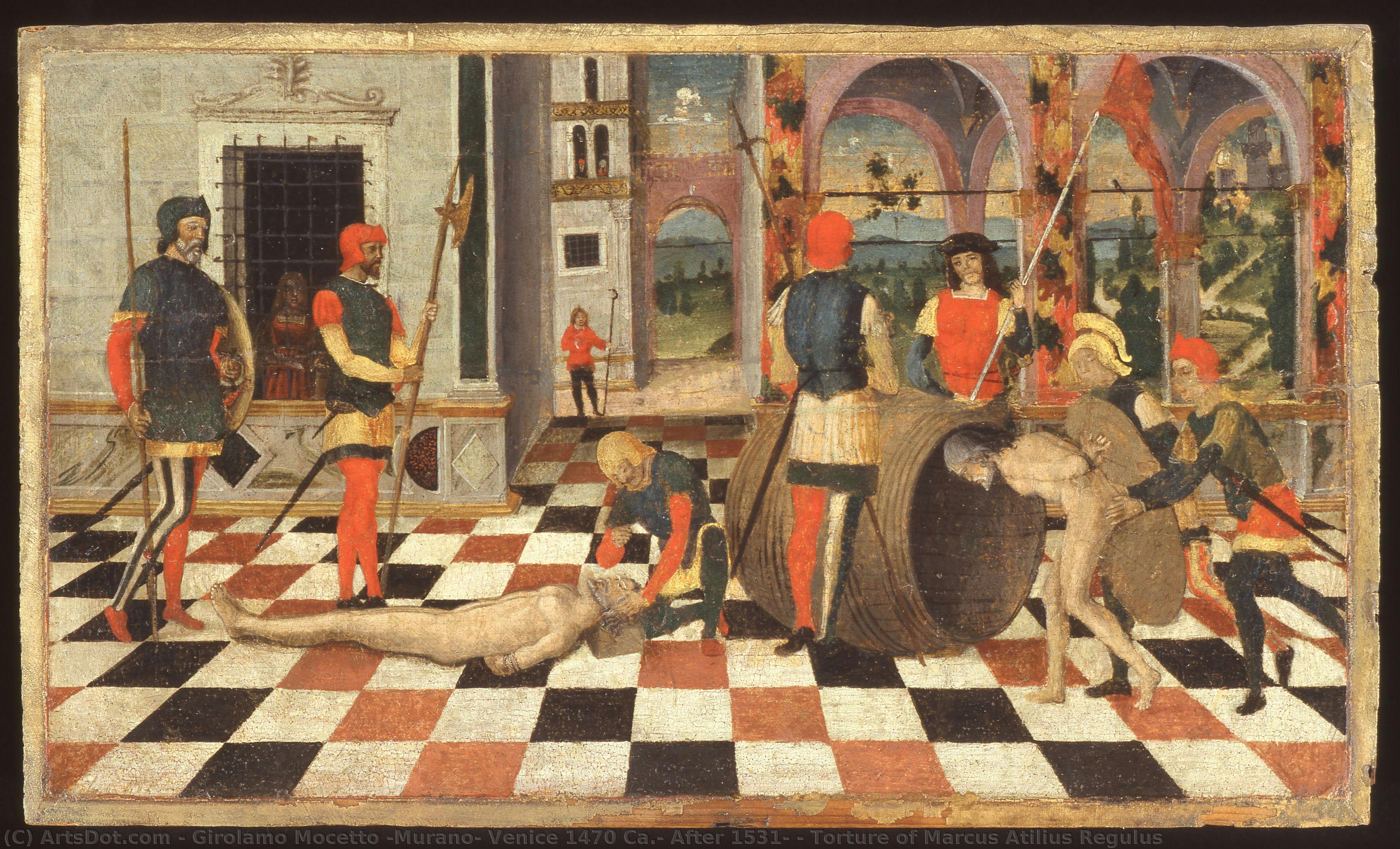
Torture of Marcus Atilius Regulus


 Read More
Hand Made Oil Reproduction
Hand-painted oil on canvas in your size and frame, made to order by our artists. ( Buy Print Buy Image)




P118B $10

P118H $10

P118W $10

P438Z $10

P508JH $12

P508YH $12

P805H $10

P805Z $10

P919BZ $10

P919G $10

P919XJ $10

P959ZH $10

P968JZ $12

W106C $8

W218G $10

W218JH $8

W218Y $10

W307PJ $10

W316G $10

W316PJ $8

W316Y $10

W398PJ $8

W4111J $10

W500HY $15

W500JH $15

W692G $12

W849H $8

W940BG $15

W953PJ $8




Pick from our preset sizes that match the artwork's original proportions.

You may enter your own dimensions to fit a specific frame or space. If your selected size does not match the original image's proportions, we will either crop the artwork or extend the painting with additional hand-painted elements. A digital mockup will be sent for your approval before production begins.
Please note that the on-screen preview does not reflect the actual cropping or extension. Only the mockup will accurately show the final composition.
While custom sizes are available, we recommend selecting a dimension from the predefined list to preserve the original proportions.
After order, ArtsDot.com team will email client for instructions and provide a mockup preview
Worldwide Delivery () in 3/4 weeks instead of standard 5 weeks. (31 August). No compromise on quality.

Free Worldwide Express Shipping

High-Quality Linen Canvas

Full Shipping Insurance

Customs Tax Refund Guarantee

True Color Matching Guarantee

60-Day Return Policy (Defects Only)

100% Money-Back Guarantee

Bulk Discount Offer
 Glass option is only available in size under 110 CM

Torture of Marcus Atilius Regulus
Reproduction Medium
Reproduction Size
-


Total Price
$ 263
A Drama of Duty and Despair
In the hauntingly evocative panel titled Torture of Marcus Atilius Regulus, we are transported back to the brutal landscape of the First Punic War. This piece, attributed to the Venetian master Girolamo Mocetto, captures a pivotal moment of moral crisis and physical agony. The narrative centers on the Roman general Regulus, a man caught between the sacred oath of his word and the survival of his people. As he stands amidst the chaos of conflict, the painting breathes life into the ancient legend of a hero who returned to Carthage to face certain death rather than betray his city's peace. The scene is thick with tension, as figures gather in various states of movement—some kneeling in supplication, others poised with weapons, creating a rhythmic yet unsettling composition that draws the viewer into the heart of the struggle.
The atmosphere of the work is one of profound intensity, achieved through a masterful command of light and shadow. The presence of horses, positioned strategically within the frame, adds a sense of raw, untamed energy to the human drama unfolding around them. Through the careful arrangement of soldiers with shields and spears, Mocetto creates a sense of enclosure, as if the weight of history itself is pressing down upon the central figures. For the discerning collector or interior designer, this piece offers more than mere decoration; it provides a window into the classical virtues of sacrifice and integrity, making it a powerful focal point for any space dedicated to contemplation and historical depth.
The Venetian Hand and Renaissance Mastery
While the attribution of this specific panel remains a subject of scholarly debate due to its weathered condition, the stylistic hallmarks point toward the skilled hand of Girolamo Mocetto. Emerging from the vibrant glass-making tradition of Murano, Mocetto brought a meticulous precision to his work that mirrored the fine detail found in Venetian engravings. The technique displayed here reflects the influence of great masters like Andrea Mantegna, particularly in the way the anatomical tension and the weight of the armor are rendered. Even through the veil of time and imperfect preservation, the original pictorial values remain strikingly apparent, showcasing a sophisticated understanding of form and narrative pacing.
The composition serves as a masterclass in Renaissance storytelling, where every gesture—a hand gripping a sword, a bowed head, or a watchful eye—contributes to the unfolding tragedy. This is not merely a depiction of violence, but a study of human emotion under extreme duress. For those seeking to adorn a sophisticated interior with art that possesses a soul, a high-quality reproduction of this work offers the opportunity to possess a fragment of the Renaissance spirit. It brings an air of academic prestige and timeless elegance to a room, inviting guests to linger over its complex layers of history and classical symbolism.
Related Artworks
Artist Biography
Girolamo Mocetto: A Murano Master of Venetian Engraving
Girolamo Mocetto, born in the vibrant glass-making center of Murano, Venice around 1470 and tragically lost after 1531, remains a captivating figure within the history of Italian Renaissance art. More than just a painter, he was a remarkably skilled engraver, whose meticulous reproductions of celebrated works—particularly those by Andrea Mantegna—established him as a significant voice in the dissemination of artistic ideas during his time. His legacy isn’t one of groundbreaking originality, but rather of faithful execution and an astute understanding of the masters who shaped Venetian art. Mocetto's story is intertwined with the bustling workshops of Venice, where he honed his craft amidst the creative energy of renowned artists like Giovanni Bellini and the innovative spirit of the Doge’s Palace itself.Early Life and Training: A Murano Legacy
The precise details of Mocetto's early life are shrouded in a degree of mystery, reflecting a common challenge for artists working within the complex patronage system of Renaissance Venice. It is believed he began his artistic journey within the familiar environment of Murano, a place steeped in tradition and renowned for its glassmaking expertise. Given his family’s profession, it's plausible that Mocetto initially contributed to the creation of decorative glass objects before transitioning to painting and engraving. While direct documentation remains scarce, evidence suggests he was involved in the ambitious fresco project decorating the Council Hall of the Doge’s Palace in 1507, working under the guidance of Giovanni Bellini – a pivotal experience that undoubtedly influenced his artistic development. This association with such a prominent figure speaks volumes about Mocetto's early promise and access to a prestigious workshop.Style and Influences: Echoes of Mantegna and Beyond
Mocetto’s style is characterized by an impressive level of detail, reflecting the meticulous standards prevalent in Venetian art during his era. He was deeply influenced by several key artists, most notably Andrea Mantegna, whose compositions he frequently reproduced with remarkable accuracy. The engravings of *Judith with the Head of Holofernes*, arguably Mocetto’s most celebrated work, exemplifies this influence—a faithful yet subtly refined interpretation of Mantegna's original design. Beyond Mantegna, Mocetto also drew inspiration from Domenico Morone, Giovanni Bellini, and Cima da Conegliano, absorbing their techniques and stylistic approaches to create a distinctive, albeit somewhat restrained, artistic voice. His work is often described as “derivative in form” but possesses a remarkable technical proficiency, demonstrating his ability to capture the essence of his sources with impressive precision.Notable Works: Engravings and Beyond
Mocetto’s most enduring legacy lies in his engravings. These meticulously crafted prints served as vital conduits for disseminating artistic ideas throughout Italy. His repertoire includes a series of faithful reproductions of Mantegna's compositions, alongside original designs that showcase his own skill and understanding of perspective and anatomy. A particularly striking example is the engraving *Frieze with Neptune and Tritons*, which demonstrates his ability to render complex scenes with remarkable clarity and detail. Beyond engravings, Mocetto also produced paintings, including a notable facade painting for a house in Verona around 1517, further illustrating his versatility as an artist. His stained glass panels, created circa 1515 for the Basilica di San Giovanni e Paolo, represent another significant achievement, showcasing his mastery of color and design within a different medium.Historical Significance: A Preserver of Renaissance Visions
Girolamo Mocetto’s significance isn't rooted in revolutionary innovation but rather in his role as a skilled preserver and disseminator of Renaissance artistic visions. His engravings, meticulously reproducing the works of masters like Mantegna, played a crucial part in ensuring that these influential paintings were accessible to a wider audience. In an era where original artworks were largely confined to wealthy patrons’ collections, Mocetto's prints democratized access to some of the most important images of the period. He essentially acted as a visual translator, bringing the artistic ideas and techniques of the great masters to a broader public sphere. While his own individual style may have been understated, his contribution to the preservation and circulation of Renaissance art is undeniable, cementing his place as a significant figure in Venetian engraving history.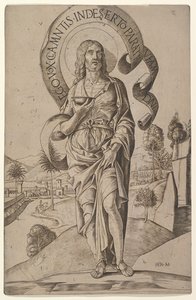
girolamo mocetto (murano, venice 1470 ca.- after 1531)
1470 - , Italy
Quick Facts
- Artistic Movement Or Style: Renaissance
- Artists Or Movements Influenced By This Artist: ['Mantegna style']
- Artists Who Influenced This Artist:
- Domenico Morone
- Giovanni Bellini
- Bartolomeo Montagna
- Cima da Conegliano
- Andrea Mantegna
- Date Of Birth: c. 1470
- Date Of Death: after 1531
- Full Name: Girolamo Mocetto
- Nationality: Italian
- Notable Artworks:
- Judith with Head Holofernes
- Frieze Neptune Tritons
- Place Of Birth: Murano, Venice
Related Articles
Engraving's Golden Age: 10 Masterpieces That Redefined Art | ArtsDot
Journey through art history with our Top 10 Legendary Engravings! Explore masterpieces by Dürer, Rembrandt & Goya. Discover the stories behind these iconic prints and find museum-quality reproductions for your home at ArtsDot.com.
Engraving: A Historical Survey of Technique, Artistic Expression & Enduring Legacy
Explore the rich history of engraving with ArtsDot. Discover techniques, iconic artists like Dürer & Callot, collecting tips, and expert guidance for preserving your art investment. Learn about intaglio printing & more!

The Intricate World of Engraving: A Historical Survey of Technique, Artistic Expression & Enduring Legacy
Explore the rich history of engraving with ArtsDot. Discover techniques, iconic artists like Dürer & Callot, collecting tips, and expert guidance for preserving your art investment. Learn about intaglio printing & more!
Bartolomeo Pinelli: Neoclassical Linearity & Roman Topography of Memory
Explore the captivating world of Bartolomeo Pinelli, a master Italian engraver renowned for his evocative Roman scenes & historical narratives. Discover his art and legacy with ArtsDot.

Jacopo Tintoretto's Masterpieces: 25 Paintings That Define Venetian Drama | ArtsDot
Explore 25 breathtaking masterpieces by Jacopo Tintoretto, the Venetian master of drama and light. Discover the stories behind iconic Renaissance paintings & find museum-quality art reproductions to elevate your home decor on ArtsDot.com.