 Preview
 Send
Send Share
Share
 Details

 Download
 Similars
 X-Ray
X-Ray Diaporama
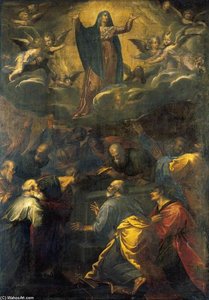
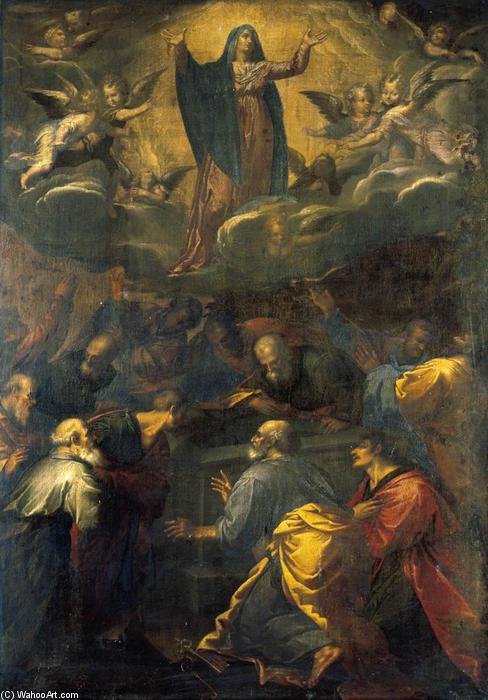
Assumption of the Virgin
 1581
1581 154.0 x 108.0 cm
 Read More
Hand Made Oil Reproduction
Hand-painted oil on canvas in your size and frame, made to order by our artists. ( Buy Print Buy Image)




































Pick from our preset sizes that match the artwork's original proportions.

You may enter your own dimensions to fit a specific frame or space. If your selected size does not match the original image's proportions, we will either crop the artwork or extend the painting with additional hand-painted elements. A digital mockup will be sent for your approval before production begins.
Please note that the on-screen preview does not reflect the actual cropping or extension. Only the mockup will accurately show the final composition.
While custom sizes are available, we recommend selecting a dimension from the predefined list to preserve the original proportions.
After order, ArtsDot.com team will email client for instructions and provide a mockup preview
Worldwide Delivery () in 3/4 weeks instead of standard 5 weeks. (24 August). No compromise on quality.

Free Worldwide Express Shipping

High-Quality Linen Canvas

Full Shipping Insurance

Customs Tax Refund Guarantee

True Color Matching Guarantee

60-Day Return Policy (Defects Only)

100% Money-Back Guarantee

Bulk Discount Offer
 Glass option is only available in size under 110 CM

Assumption of the Virgin
Reproduction Medium
Reproduction Size
-


Total Price
$ 263
Related Artworks
Artist Biography
Albrecht Dürer: The Architect of the Renaissance Eye
Albrecht Dürer, born in 1471 in the vibrant imperial city of Nuremberg, Germany, stands as a towering figure in the history of art – not merely a painter or printmaker, but an architect of the Renaissance eye. His relentless pursuit of knowledge, combined with unparalleled technical skill and a profound understanding of humanism, propelled him to create works that continue to captivate and challenge viewers centuries later. Dürer’s legacy isn't simply in the beauty of his creations, but in his systematic approach to art, bridging the gap between observation, theory, and execution – a model for generations of artists to follow.
Dürer’s early life was steeped in the traditions of goldsmithing and craftsmanship. His father, Albrecht Dürer the Elder, a skilled jeweler, instilled in him a meticulous attention to detail and an appreciation for the value of precision. This foundation proved invaluable as he transitioned from the workshop to his own artistic endeavors. He began his formal training under Michael Wolgemut, a prominent painter and woodcut designer whose studio served as a crucible for young artists seeking to hone their skills. Wolgemut’s influence was significant, exposing Dürer to the techniques of book illustration – particularly woodcuts – which would become a cornerstone of his artistic development.
The Dawn of Printmaking
While painting remained central to Dürer's output, it was in printmaking that he truly revolutionized the medium. Prior to Dürer, woodcuts were often considered a craft-based technique, primarily used for illustrations in books and broadsides. Dürer elevated printmaking to an art form of equal standing to painting, demonstrating its capacity for complex composition, tonal subtlety, and psychological depth. He meticulously planned his prints, creating detailed drawings that served as the basis for multiple states – variations produced through careful adjustments to the block, allowing for nuanced changes in color and line.
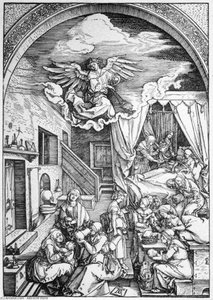
His series of woodcuts, such as *The Apocalypse* (1498) and *The Life of the Virgin*, are prime examples of this transformation. These works demonstrate a mastery of perspective, shading, and dramatic storytelling previously unseen in printmaking. Dürer’s engravings, particularly *Adam and Eve* (1504), further showcased his technical prowess, achieving an astonishing level of detail and realism that pushed the boundaries of the medium. He wasn't simply reproducing images; he was imbuing them with intellectual and emotional weight.
A Renaissance Scholar
Dürer’s artistic vision was inextricably linked to his deep engagement with Renaissance scholarship. He traveled extensively, most notably visiting Italy twice – in 1494-95 and again in 1505-07 – immersing himself in the art and ideas of the Italian Renaissance. The influence of Venetian color palettes and the classical heritage of Florence profoundly impacted his work. He became particularly fascinated with human proportion, a subject he explored exhaustively in *Four Books on Human Proportions* (published posthumously in 1528), a groundbreaking treatise that combined mathematical principles with artistic observation.
Beyond anatomy, Dürer was deeply interested in perspective and geometry. His meticulous study of these subjects led to the creation of *Underweysung der Messung*, a manual on geometric theory that outlined his understanding of linear perspective – a revolutionary concept at the time. His famous engraving *Melencolia I* (1514) encapsulates this intellectual curiosity, depicting an artist overwhelmed by melancholy while surrounded by symbols of knowledge and measurement.
Portraits and Self-Reflection
Dürer’s portraits are considered among the most psychologically astute in Renaissance art. He wasn't simply capturing likenesses; he was attempting to reveal the inner character of his subjects. His self-portraits, beginning with the remarkably mature depiction at age 13, offer a fascinating glimpse into the artist’s evolving self-awareness and artistic ambitions. These works are not merely representations of a face but explorations of identity, reflecting Dürer's own intellectual and emotional journey.
His portraits of prominent figures – including emperors, princes, and wealthy merchants – demonstrate his ability to capture both external appearance and inner dignity. He skillfully employed techniques such as sfumato (a subtle blurring of lines) and chiaroscuro (the use of light and shadow) to create a sense of depth and realism, while simultaneously conveying the subject’s personality and status.
A Lasting Legacy
Albrecht Dürer died in 1528, leaving behind an extraordinary body of work that continues to inspire awe and admiration. His meticulous attention to detail, his innovative approach to printmaking, and his profound engagement with Renaissance ideas cemented his place as one of the greatest artists of all time. Dürer’s influence extends far beyond the realm of art; his systematic approach to observation, theory, and execution has served as a model for countless artists and scholars across centuries, ensuring that the architect of the Renaissance eye remains a vital force in our understanding of beauty, knowledge, and the human condition.
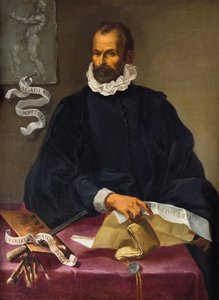
girolamo muziano
1528 - 1592 , Italy
Quick Facts
- Artistic Movement Or Style: Renaissance, German Renaissance
- Artists Or Movements Influenced By This Artist:
- Venetian color
- Classical heritage
- Artists Who Influenced This Artist:
- Michael Wolgemut
- Martin Schongauer
- Date Of Birth: May 21, 1471
- Date Of Death: April 6, 1528
- Full Name: Albrecht Dürer
- Nationality: German
- Notable Artworks:
- Apocalypse
- Adam and Eve
- Melencolia I
- Knight, Death & Devil
- Place Of Birth: Nürnberg, Germany