 Preview
 Send
Send Share
Share
 Details

 Download
 Similars
 X-Ray
X-Ray Diaporama
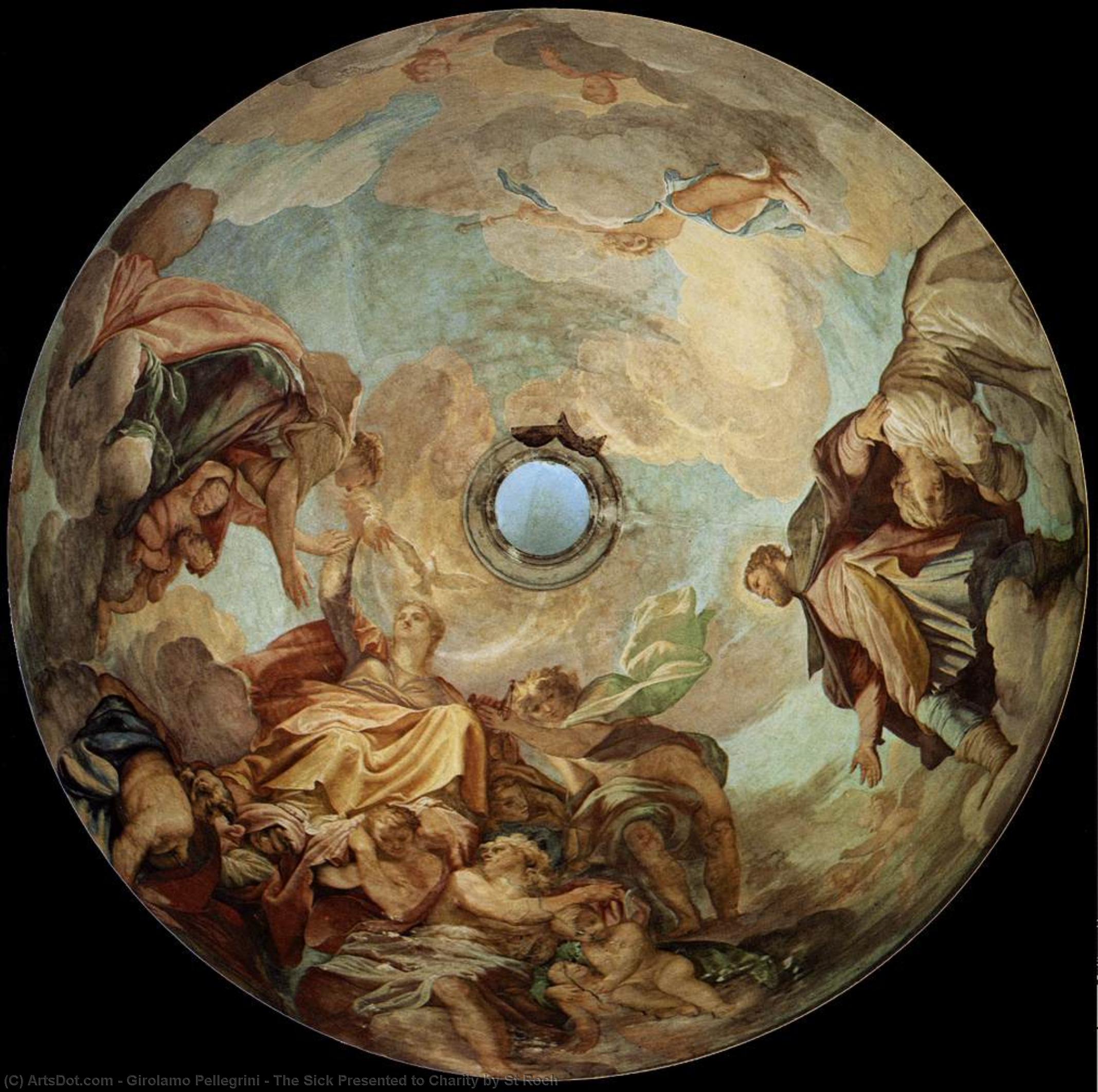
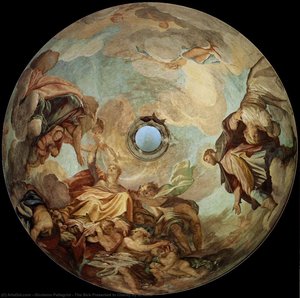
The Sick Presented to Charity by St Roch
 Oil
Oil- WallArt
- Baroque
 1690
1690- Early Modern
 512.0 x 512.0 cm
 Scuola Grande di San Rocco
 Read More
Hand Made Oil Reproduction
Hand-painted oil on canvas in your size and frame, made to order by our artists. ( Buy Print Buy Image)




P118B $10

P118H $10

P118W $10

P438Z $10

P508JH $12

P508YH $12

P805H $10

P805Z $10

P919BZ $10

P919G $10

P919XJ $10

P959ZH $10

P968JZ $12

W106C $8

W218G $10

W218JH $8

W218Y $10

W307PJ $10

W316G $10

W316PJ $8

W316Y $10

W398PJ $8

W4111J $10

W500HY $15

W500JH $15

W692G $12

W849H $8

W940BG $15

W953PJ $8




Pick from our preset sizes that match the artwork's original proportions.

You may enter your own dimensions to fit a specific frame or space. If your selected size does not match the original image's proportions, we will either crop the artwork or extend the painting with additional hand-painted elements. A digital mockup will be sent for your approval before production begins.
Please note that the on-screen preview does not reflect the actual cropping or extension. Only the mockup will accurately show the final composition.
While custom sizes are available, we recommend selecting a dimension from the predefined list to preserve the original proportions.
After order, ArtsDot.com team will email client for instructions and provide a mockup preview
Worldwide Delivery () in 3/4 weeks instead of standard 5 weeks. (28 August). No compromise on quality.

Free Worldwide Express Shipping

High-Quality Linen Canvas

Full Shipping Insurance

Customs Tax Refund Guarantee

True Color Matching Guarantee

60-Day Return Policy (Defects Only)

100% Money-Back Guarantee

Bulk Discount Offer
 Glass option is only available in size under 110 CM

The Sick Presented to Charity by St Roch
Reproduction Medium
Reproduction Size
-


Total Price
$ 263
A Vision of Compassion: The Divine Encounter in Pellegrini’s Masterpiece
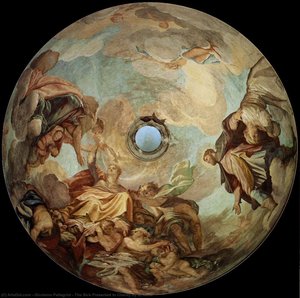
In the grand tradition of the Venetian Baroque, Girolamo Pellegrini captures a moment of profound spiritual and earthly intersection in his evocative work, The Sick Presented to Charity by St Roch. Created around 1690, this painting serves as more than just a religious tableau; it is a sweeping narrative of empathy and divine intervention. The composition draws the viewer into a circular, almost celestial arena where the boundaries between the suffering of humanity and the grace of the saints blur. At the heart of the work, a central void or aperture acts as a focal point, surrounded by a gathering of figures whose faces reflect the raw, unvarnished reality of human vulnerability. Pellegrini utilizes this intricate arrangement to guide the eye through a labyrinth of emotion, where every gesture and gaze contributes to a larger story of communal care and sanctity.
The technique employed by Pellegrini is a testament to his mastery of light and texture, hallmarks of the late 17th-century Italian school. Through a luminous color palette, he breathes life into the flesh tones of the afflicted and the heavy, draped fabrics of the charitable figures. The artist’s ability to manipulate light creates a sense of depth that makes the scene feel almost sculptural, as if the figures are emerging from the canvas into our own space. Subtle details, such as the delicate presence of birds—one soaring near the upper periphery and another nestled toward the bottom—add layers of symbolic life to the composition, perhaps representing the fleeting nature of existence or the watchful eyes of providence over the downtroathing. This meticulous attention to detail ensures that even when viewed as a reproduction, the painting retains its breathtaking complexity and atmospheric weight.
Symbolism and the Baroque Soul
To behold this work is to engage with the deep-seated religious fervor of the Venetian era. St. Roch, traditionally invoked as a protector against plague and disease, stands as a beacon of hope amidst the surrounding shadows of illness. The painting functions as a visual sermon on the virtue of charity, illustrating the sacred duty to care for the most marginalized members of society. The interplay between the figures—some standing at the periphery in quiet contemplation and others clustered near the center in moments of intense interaction—creates a rhythmic movement that mirrors the pulse of a living community. For the collector or interior designer, this piece offers a profound sense of gravitas; it is an artwork that commands attention not through mere scale, but through its ability to evoke a contemplative, soulful atmosphere.
Integrating such a masterpiece into a curated space allows for a dialogue between history and modernity. Whether placed in a grand hall or a more intimate study, the painting’s dramatic chiaroscuro and rich, warm tones provide a sophisticated anchor for classical or contemporary decor. It invites onlookers to pause and reflect on themes of resilience and mercy, making it an ideal acquisition for those who seek art that transcends decoration to become a source of emotional and intellectual inspiration. Through Pellegrini's brush, the suffering of the past is transformed into a timeless celebration of the human spirit's capacity for kindness.
Related Artworks

Artist Biography
The Luminous Legacy of Girolamo Pellegrini
In the grand, sweeping tapestry of the Venetian Baroque, few threads shimmer with as much spiritual intensity and technical grace as those woven by Girolamo Pellegrini. Born in Italy around 1624, Pellegrini emerged during a period when Venice was still breathing the heavy, golden air of its artistic zenith. While history often reserves its most glittering accolades for titans like Titian or Tintoretto, Pellegrini carved out a profound niche within the seventeenth-century landscape. His work serves as a bridge between the dramatic tension of the late Mannerist tradition and the emotive, light-drenched splendor of the Baroque era. To encounter a Pellegrini canvas is to step into a world where the boundaries between the earthly and the divine are perpetually blurred by a masterful command of light.
The early life of the artist remains shrouded in the soft mists of time, as precise biographical records from this era are often as elusive as the shadows in a chiaroscical painting. However, it is widely understood that by 1650, Pellegrini had firmly established himself within the vibrant Venetian artistic milieu. His formative years were likely shaped by the profound influence of the great masters of the previous century, absorbing the illusionistic techniques and grand compositions that defined the region. There is much scholarly speculation regarding his training, with some suggesting he may have been influenced by or even studied under figures like Andrea Pozzo or the legendary Giovanni Battista Tiepolo, whose mastery of celestial perspectives would later become a hallmark of the Venetian school.
A Workshop of Devotion and Detail
Pellegrini’s artistic identity was inextricably linked to his prolific workshop, a collaborative engine of creativity that allowed him to undertake vast religious commissions across Italy. This was not merely a matter of production, but a shared pursuit of a specific aesthetic language characterized by meticulous detail and psychological depth. Within this studio environment, Pellegrini orchestrated a style that blended the monumental with the intimate. His oeuvre is a testament to the power of collective mastery, encompassing grand altarpieces, narrative canvases of biblical significance, and delicate decorative panels that all share a consistent, luminous soul.
The hallmark of his technique lies in his sophisticated use of glazing—a method of applying thin, transparent layers of pigment to create an ethereal, inner glow. This approach allowed him to render flesh tones that seem to pulse with life and fabrics that possess a heavy, sculptural presence. His ability to manipulate light was not merely a technical feat but a narrative tool; he used it to guide the viewer’s eye through complex compositions, much like a conductor directing an orchestra. In his most celebrated works, such as his depictions of St. Roch, one finds a breathtaking fusion of realism and idealized beauty, where the grit of human suffering is elevated by a divine, atmospheric light.
Symbolism and the Baroque Soul
Beyond the technical brilliance, Pellegrini’s work is deeply rooted in the religious fervor of his age. His paintings often function as windows into the spiritual psyche of the seventeenth century, capturing moments of profound empathy and divine intervention. A quintessential example can be found in his evocative treatment of The Sick Presented to Charity by St Roch. In this masterpiece, created around 1690, Pellegrini constructs a celestial arena where the suffering of the marginalized meets the grace of the saints. The composition is a labyrinth of emotion, where every gesture—a reaching hand, a bowed head, or a searching gaze—contributes to a larger story of communal care and sanctity.
The artist frequently utilized subtle symbolic elements to deepen the narrative weight of his scenes. Small, seemingly incidental details, such as the presence of birds soaring through the periphery of a composition, serve as poignant reminders of the fleeting nature of existence or the watchful eye of providence. Through these nuances, Pellegrini achieved a level of psychological realism that moved beyond mere iconography. He did not simply paint saints and martyrs; he painted the weight of thought and the flicker of sentiment, ensuring that his religious subjects remained eternally relevant through their profound humanity. His legacy remains a vital chapter in the history of Italian art, reminding us of an era when painting was a powerful medium for exploring the very depths of the human soul.
girolamo pellegrini
1624 - 1700 , Italy
Quick Facts
- Artistic Movement Or Style: Baroque
- Artists Or Movements Influenced By This Artist: ['']
- Artists Who Influenced This Artist: ['']
- Date Of Death: 1700
- Full Name: Girolamo Pellegrini
- Nationality: Italian
- Notable Artworks: ['St Roch Reliefs']
- Place Of Birth: Italy
Related Articles

Jacopo Tintoretto's Masterpieces: 25 Paintings That Define Venetian Drama | ArtsDot
Explore 25 breathtaking masterpieces by Jacopo Tintoretto, the Venetian master of drama and light. Discover the stories behind iconic Renaissance paintings & find museum-quality art reproductions to elevate your home decor on ArtsDot.com.

The Dramatic Flourish: Exploring the Baroque Movement's Enduring Legacy in Art History
Explore the dramatic world of Baroque art! Discover iconic artists like Caravaggio & Rubens, defining techniques, and its lasting impact on art history. Expert insights for collectors & enthusiasts at ArtsDot.
The Dramatic Flourish: Exploring Themes of Power, Faith & Emotion in Baroque Artworks
Explore the dramatic world of Baroque art! Discover masters like Zurbarán & the powerful influence of religious zeal on painting techniques. Expert insights for collectors and enthusiasts.

Theatricality & Triumph: Baroque Drama in Painting & Sculpture
Explore the dramatic world of Baroque art! Discover its history, defining characteristics, & lasting influence on painting & sculpture. Expert insights into Caravaggio, Zurbarán, and Bernini – plus high-quality reproductions at ArtsDot.

Baroque Masterpieces: 10 Paintings That Defined an Era |
Journey through the drama & grandeur of Baroque art! Explore 10 masterpieces by Caravaggio, Rembrandt, Rubens & more. Discover stunning oil paintings, rich colors & timeless stories. Find museum-quality reproductions at .