 Preview
 Send
Send Share
Share
 Details

 Download
 Similars
 X-Ray
X-Ray Diaporama
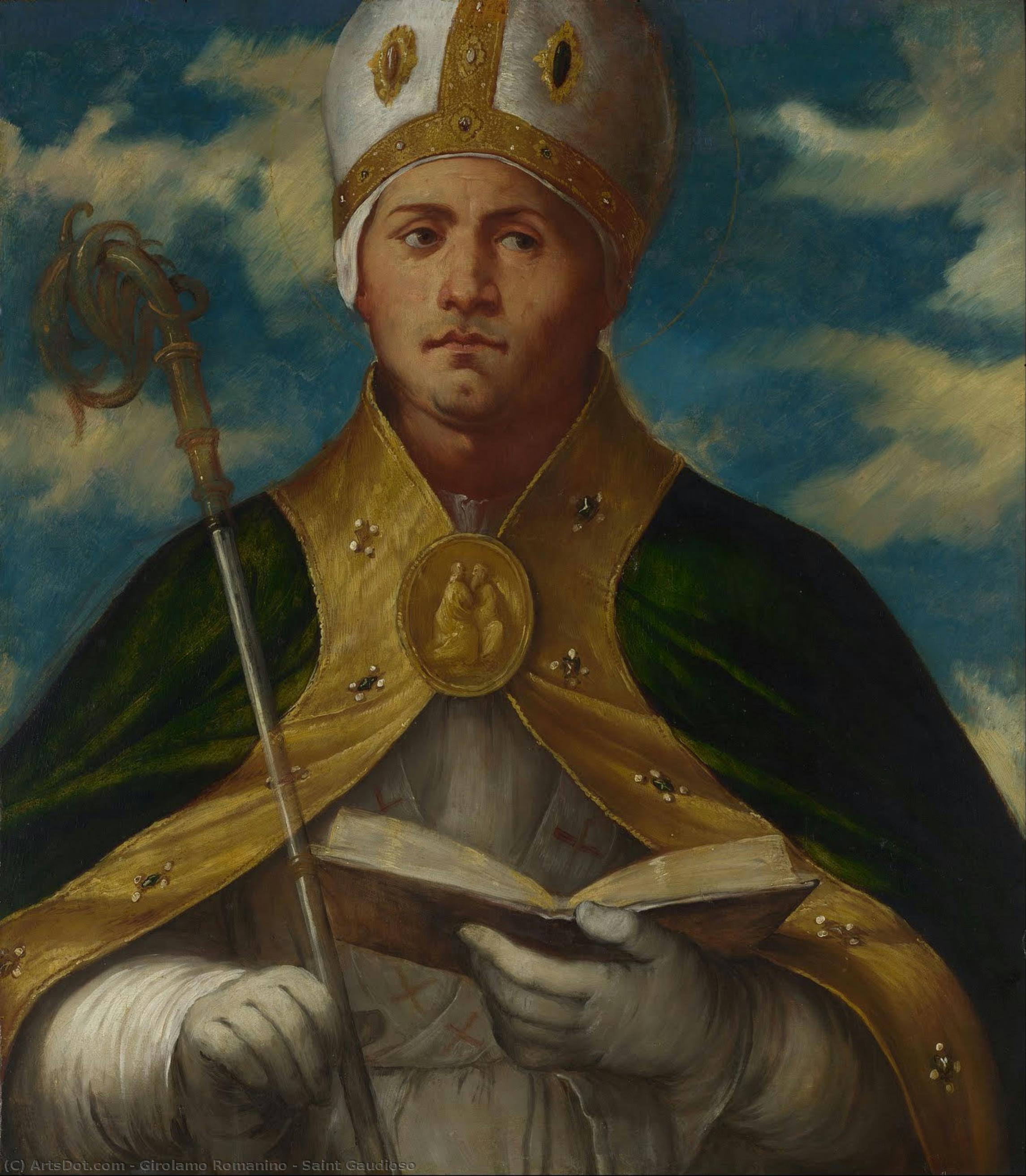
Saint Gaudioso
 Acrylic On Canvas
- WallArt
- Renaissance Revival
 1524
1524 74.0 x 65.0 cm
 National Gallery
 Read More
Hand Made Oil Reproduction
Hand-painted oil on canvas in your size and frame, made to order by our artists. ( Buy Print Buy Image)




P118B $10

P118H $10

P118W $10

P438Z $10

P508JH $12

P508YH $12

P805H $10

P805Z $10

P919BZ $10

P919G $10

P919XJ $10

P959ZH $10

P968JZ $12

W106C $8

W218G $10

W218JH $8

W218Y $10

W307PJ $10

W316G $10

W316PJ $8

W316Y $10

W398PJ $8

W4111J $10

W500HY $15

W500JH $15

W692G $12

W849H $8

W940BG $15

W953PJ $8




Pick from our preset sizes that match the artwork's original proportions.

You may enter your own dimensions to fit a specific frame or space. If your selected size does not match the original image's proportions, we will either crop the artwork or extend the painting with additional hand-painted elements. A digital mockup will be sent for your approval before production begins.
Please note that the on-screen preview does not reflect the actual cropping or extension. Only the mockup will accurately show the final composition.
While custom sizes are available, we recommend selecting a dimension from the predefined list to preserve the original proportions.
After order, ArtsDot.com team will email client for instructions and provide a mockup preview
Worldwide Delivery () in 3/4 weeks instead of standard 5 weeks. (17 August). No compromise on quality.

Free Worldwide Express Shipping

High-Quality Linen Canvas

Full Shipping Insurance

Customs Tax Refund Guarantee

True Color Matching Guarantee

60-Day Return Policy (Defects Only)

100% Money-Back Guarantee

Bulk Discount Offer
 Glass option is only available in size under 110 CM

Saint Gaudioso
Reproduction Medium
Reproduction Size
-


Total Price
$ 263
Artwork Description
Saint Gaudioso: A Venetian Masterpiece Reflecting Spiritual Depth
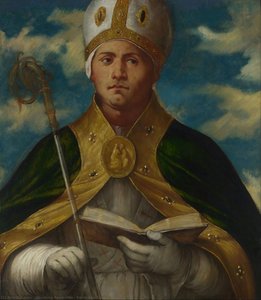
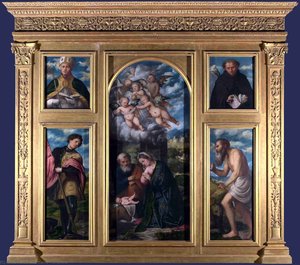
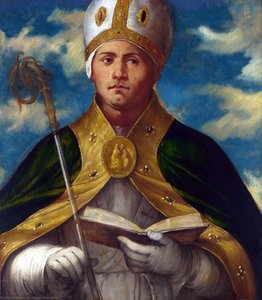
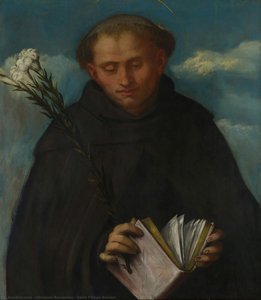
Girolamo Romanino’s “Saint Gaudioso,” completed in 1524, stands as a testament to the artistic fervor of the High Renaissance and embodies the distinctive stylistic qualities of Venetian painting. This portrait transcends mere representation; it delves into profound spiritual contemplation, capturing the solemn gaze of Saint Gaudiosus—a bishop revered for his piety and devotion—against a backdrop that speaks volumes about the era’s fascination with classical ideals blended with humanist sensibilities. The painting's style is characterized by Romanino’s masterful use of linear perspective and chiaroscuro – techniques honed during his formative years assisting Andrea Sabbatini in Naples – resulting in an image imbued with dramatic lighting and sculptural modeling. Unlike the polished surfaces favored by Florentine artists, Romanino opted for a textured surface achieved through meticulous stucco application, mirroring the prevailing artistic trends of Brescia and reflecting the influence of Giorgione and Titian. The artist skillfully employs a muted palette dominated by earthy tones—ochre, umber, and Sienna—creating an atmosphere of solemnity and conveying a sense of inner peace. The composition itself is deliberately restrained, focusing on Saint Gaudiosus’s figure as he holds a book in one hand and a staff in the other. This gesture symbolizes his role as shepherd of souls and embodies the Christian virtues of intellect and fortitude. The subtle downward gaze of the saint reinforces this contemplative posture, inviting viewers to engage in introspection alongside him. Romanino's meticulous attention to detail—particularly in rendering the folds of Saint Gaudiosus’ robe—demonstrates a dedication to anatomical accuracy informed by classical observation. Beyond its technical brilliance, “Saint Gaudioso” resonates with symbolic significance rooted in Christian iconography. The book represents divine knowledge and spiritual enlightenment, while the staff symbolizes authority and protection. These elements converge to portray Saint Gaudiosus as an exemplar of piety and moral integrity—a figure embodying the humanist aspiration for virtue and contemplation that defined the Renaissance spirit. The painting’s enduring appeal lies not only in its aesthetic beauty but also in its ability to evoke a feeling of serenity and reverence. It serves as a poignant reminder of the importance of faith, intellect, and inner reflection – qualities valued throughout history and powerfully conveyed by Romanino's masterful execution. Its placement within the Catacombs of Saint Gaudiosus underscores its connection to sacred space and reinforces its role as an emblem of spiritual devotion.- Artist: Girolamo Romanino
- Year: 1524
- Medium: Stucco
- Location: Catacombs of Saint Gaudiosus
Related Artworks
Artist Biography
Giovanni da Udine: A Pioneer of Stucco and Neoclassical Grace
Giovanni da Udine, born in Udine in 1487 and passing away in Rome in 1561 or 1564, stands as a pivotal figure in the artistic landscape of the High Renaissance. More than simply a painter, he was a master craftsman who profoundly influenced the revival of classical techniques, particularly in the realm of stucco decoration and architectural ornamentation. His legacy is inextricably linked to the burgeoning interest in antiquity that swept across Europe during this period, fueled by archaeological discoveries and a renewed desire to emulate the grandeur of ancient Rome.
Udine’s early life remains somewhat shrouded in mystery, though he was undoubtedly trained within the artistic circles of his native city. He began his career as an assistant to Andrea Sabbatini, a prominent Neapolitan painter, gaining invaluable experience in the techniques of fresco and tempera. This formative period laid the groundwork for his later success, particularly when he entered the service of Raphael in Rome around 1508. It was during this time that Udine’s distinctive style began to emerge – a delicate balance between naturalism and stylized elegance, informed by a deep understanding of classical proportions and a masterful command of light and shadow.
The Vatican Loggie: A Showcase of Innovation
Udine's most enduring contribution lies in his work on the Vatican Loggie, a series of vaulted spaces decorated with intricate stucco panels between 1517 and 1519. These magnificent decorations represent a watershed moment in European art history. He spearheaded the revival of antique techniques – specifically, the creation of *grotesques* – complex, fantastical designs inspired by Roman ruins and mosaics. These weren’t merely decorative flourishes; they were meticulously researched imitations, demonstrating a remarkable dedication to accuracy and a profound appreciation for the past.
The Loggie panels are characterized by their lightness, grace, and an almost ethereal quality. Udine employed a subtle palette of colors – primarily creams, ochres, and pale blues – to create a sense of depth and atmosphere. His figures, though stylized, possess a remarkable degree of naturalism, conveying emotion and movement with exquisite detail. The influence of this work spread rapidly throughout Europe, shaping the aesthetic sensibilities of Neoclassical designers and influencing generations of artists.
A Return to Udine and Continued Influence
Following his time in Rome, Udine returned to his hometown of Udine in 1522, where he spent the majority of his career. However, he continued to travel extensively, undertaking commissions in Florence and Venice, further solidifying his reputation as a versatile and highly sought-after artist. Despite these travels, Udine remained deeply rooted in his native region, contributing significantly to the artistic development of Friuli.
Udine’s work demonstrates a remarkable adaptability, seamlessly blending classical influences with regional traditions. He was not simply replicating ancient forms; he was interpreting them through his own unique vision, imbuing them with a distinctly Italian sensibility. His legacy extends beyond individual works to encompass the broader revival of classical aesthetics and the establishment of stucco decoration as a vital element of Renaissance architecture.
Historical Significance and Lasting Legacy
Giovanni da Udine’s impact on European art is undeniable. He played a crucial role in shaping the visual language of the Neoclassical period, providing a foundation for subsequent generations of artists and architects. His meticulous attention to detail, his mastery of technique, and his profound understanding of classical antiquity ensured that he would be remembered as one of the most important figures in Renaissance art. His work on the Vatican Loggie remains a testament to his genius – a breathtaking display of skill, innovation, and a deep reverence for the glories of the past. His influence can still be seen today in countless buildings and decorative arts across Europe, a lasting reminder of the artist who brought the spirit of antiquity back to life.
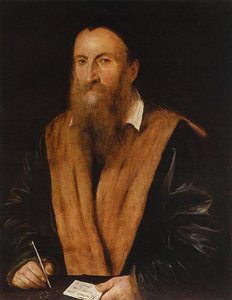
girolamo romanino
1487 - 1566 , Italy
Quick Facts
- Artistic Movement Or Style: Neoclassicism, Stucco
- Artists Or Movements Influenced By This Artist: ['European Neoclassical designers']
- Artists Who Influenced This Artist: ['Raphael']
- Date Of Birth: Oct 27, 1487
- Date Of Death: 1561/64
- Full Name: Giovanni da Udine
- Nationality: Italian
- Notable Artworks: ['Vatican Loggie']
- Place Of Birth: Udine, Italy
Related Articles

Jacopo Tintoretto's Masterpieces: 25 Paintings That Define Venetian Drama | ArtsDot
Explore 25 breathtaking masterpieces by Jacopo Tintoretto, the Venetian master of drama and light. Discover the stories behind iconic Renaissance paintings & find museum-quality art reproductions to elevate your home decor on ArtsDot.com.
The Golden Light of Innovation: Exploring the Venetian Renaissance Art Movement (1430–1580)
Explore the Golden Age of Venetian art (1430–1580). Discover Giorgione, Titian & Tintoretto's techniques, the 'colorito' revolution, and lasting influence. Expert insights for collectors & enthusiasts.
Giorgione: Enigma and Innovation in Early Venetian Renaissance Painting
Explore the enigmatic world of Giorgione, a pivotal figure in the Venetian Renaissance. Discover his innovative techniques, iconic paintings like 'The Tempest', and lasting influence on art history. Learn more at ArtsDot.
Pietro Longhi's Venetian Scenes: A Study of Rococo Society & Domestic Life
Explore the captivating world of Pietro Longhi's Venetian scenes! Discover insightful analysis of his Rococo masterpieces & social commentary on 18th-century life. Learn about this 'Venetian Hogarth' and his lasting artistic legacy.
High Renaissance Masterpieces: Iconic Art for Your Home |
Journey through the High Renaissance! Explore 10 iconic masterpieces by Leonardo da Vinci, Michelangelo & Raphael. Discover art history, techniques & find museum-quality reproductions to elevate your home decor on .