 Preview
 Send
Send Share
Share
 Details

 Download
 Similars
 X-Ray
X-Ray Diaporama
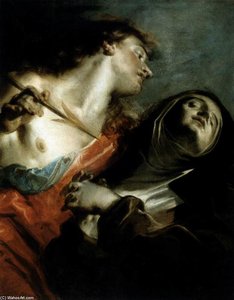
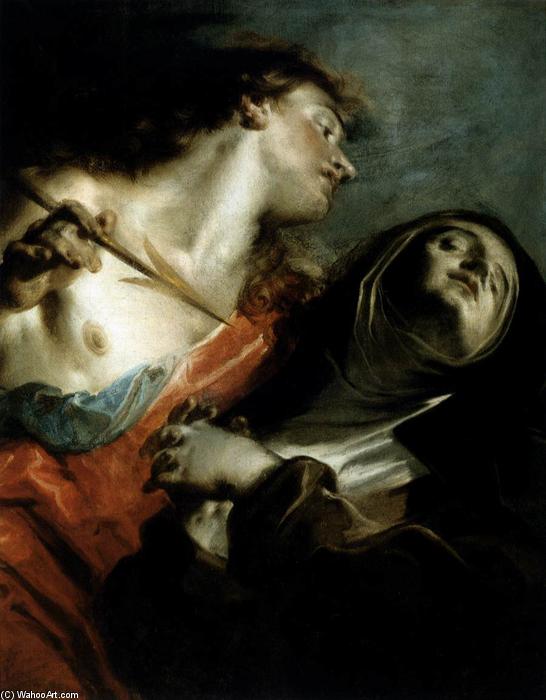
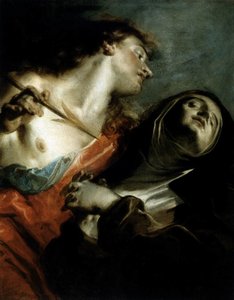
The Ecstasy of St Therese
 Oil
Oil- WallArt
- Baroque Rococo
 1745
1745- Early Modern
 76.0 x 60.0 cm
 Szépmûvészeti Múzeum
 Read More
Hand Made Oil Reproduction
Hand-painted oil on canvas in your size and frame, made to order by our artists. ( Buy Print Buy Image)




P118B $10

P118H $10

P118W $10

P438Z $10

P508JH $12

P508YH $12

P805H $10

P805Z $10

P919BZ $10

P919G $10

P919XJ $10

P959ZH $10

P968JZ $12

W106C $8

W218G $10

W218JH $8

W218Y $10

W307PJ $10

W316G $10

W316PJ $8

W316Y $10

W398PJ $8

W4111J $10

W500HY $15

W500JH $15

W692G $12

W849H $8

W940BG $15

W953PJ $8




Pick from our preset sizes that match the artwork's original proportions.

You may enter your own dimensions to fit a specific frame or space. If your selected size does not match the original image's proportions, we will either crop the artwork or extend the painting with additional hand-painted elements. A digital mockup will be sent for your approval before production begins.
Please note that the on-screen preview does not reflect the actual cropping or extension. Only the mockup will accurately show the final composition.
While custom sizes are available, we recommend selecting a dimension from the predefined list to preserve the original proportions.
After order, ArtsDot.com team will email client for instructions and provide a mockup preview
Worldwide Delivery () in 3/4 weeks instead of standard 5 weeks. (17 August). No compromise on quality.

Free Worldwide Express Shipping

High-Quality Linen Canvas

Full Shipping Insurance

Customs Tax Refund Guarantee

True Color Matching Guarantee

60-Day Return Policy (Defects Only)

100% Money-Back Guarantee

Bulk Discount Offer
 Glass option is only available in size under 110 CM

The Ecstasy of St Therese
Reproduction Medium
Reproduction Size
-


Total Price
$ 263
Artwork Description
Giuseppe Bazzani’s “The Ecstasy of St Therese”: A Symphony of Light and Emotion
Giuseppe Bazzani’s “The Ecstasy of St Therese,” completed in 1745, stands as a cornerstone of Rococo art within Mantua’s ducal court—a testament to the era's fascination with opulent ornamentation and idealized beauty intertwined with profound spiritual contemplation. More than just a depiction of Saint Teresa’s visionary experience, it embodies the artistic spirit of its time, reflecting Bazzani’s masterful command of technique and his ability to convey complex emotions through subtle visual cues.
- Subject Matter: The painting portrays St Therese of Ávila, revered for her unwavering devotion and mystical communion with God. Her serene posture exudes tranquility, while the surrounding figures—a man and woman—represent earthly concerns juxtaposed against divine grace.
- Style & Technique: Bazzani’s Rococo style is characterized by delicate brushstrokes, pastel hues, and an emphasis on curvilinear forms—elements that contribute to the painting's ethereal atmosphere. The artist skillfully employs chiaroscuro, manipulating light and shadow to sculpt the figures and heighten emotional intensity.
- Historical Context: Created during the Baroque’s waning influence, “The Ecstasy” marks a decisive shift toward Rococo’s aesthetic sensibilities. It reflects the broader cultural preoccupation with aristocratic ideals of piety and refined sensibility—a response to the Reformation's moral imperatives.
- Symbolism: The knife held by the man symbolizes earthly anxieties and worldly desires, contrasting sharply with St Therese’s gaze upward toward heaven. This visual dichotomy underscores the central theme of spiritual transcendence—the aspiration for divine union amidst the challenges of human existence.
- Emotional Impact: Bazzani's masterful rendering captures a moment of intense emotional vulnerability—a palpable expression of faith and yearning. The painting invites viewers to contemplate themes of humility, devotion, and the transformative power of prayer.
The artwork’s luminous palette—dominated by soft blues and golds—further enhances its spiritual resonance. Notice how Bazzani uses light to illuminate St Therese's face, conveying her inner radiance and highlighting her connection with divine illumination. The meticulous detailing of the drapery adds textural richness and contributes to the painting’s immersive quality.
“The Ecstasy of St Therese” resides in the Szépmûvészeti Múzeum of Budapest, where it continues to inspire admiration for its artistic excellence and profound spiritual depth. Its enduring appeal stems from Bazzani's ability to distill complex theological concepts into a visually arresting composition—a masterpiece that encapsulates the essence of Rococo art’s expressive power.
Further research into Giuseppe Bazzani reveals his formative influence from Giovanni Canti, who instilled in him an appreciation for classical ideals blended with Rococo’s decorative exuberance. Collaboration with Francesco Maria Raineri broadened Bazzani's artistic horizons and fostered intellectual exchange within Mantua’s artistic milieu.
A detailed examination of “The Ecstasy” reveals its connection to Bernini’s sculpture of St Therese in Santa Maria della Vittoria—a parallel exploration of religious ecstasy through sculptural form. The painting exemplifies Bazzani's synthesis of Baroque, Lombardy and international styles, cementing his legacy as a pivotal figure in European art history.
The Web Gallery of Art provides invaluable resources for studying “The Ecstasy,” offering high-resolution images and scholarly commentary on Bazzani’s artistic oeuvre. Explore the painting's dimensions (76 x 60 cm) and date (1745) to gain a deeper understanding of its historical context.
Finally, consider the artwork’s presence on Wikimedia Commons—where it is freely accessible for educational purposes and contributes to a collaborative effort to preserve cultural heritage. The file “Giuseppe Bazzani - The Ecstasy of St Therese - WGA01527.jpg” showcases Bazzani's artistic vision in stunning detail.
Related Artworks
![Legend Of St Francis - [23] - St Francis Mourned By St Clare — Giotto Di Bondone, Gothic](/media/artworks/images/thumbnails/d9/a8/d9a8803f4ecd4b049507cc14e2371b42.jpg)
![Legend Of St Francis - [12] - Ecstasy Of St Francis — Giotto Di Bondone, Proto-renaissance](/media/artworks/images/thumbnails/92/1a/921aeab5b4d04d3883fd7e7a25bff6de.jpg)

Artist Biography
The Soul of Mantua: The Life and Legacy of Giuseppe Bazzani
In the heart of eighteenth-century Italy, amidst the gilded splendor of Mantua, the brush of Giuseppe Bazzani moved with a singular, restless energy that defied the polite constraints of his era. Born in 1690 into a family of skilled goldsmiths, Bazzani’s early immersion in the meticulous world of precious metals and fine craftsmanship provided him with an innate understanding of texture and light. This foundational intimacy with material beauty would later manifest in his paintings as a profound ability to manipulate pigment, creating surfaces that seem to vibrate with an almost tactile intensity. His formal training under Giovanni Canti served as the gateway to the classical traditions of Parma, yet even in these formative years, one can detect the seeds of a much more turbulent and expressive spirit waiting to bloom.
Bazzani’s artistic journey was never a simple adherence to the prevailing winds of fashion; rather, it was a complex dialogue between the fading grandeur of the Baroque and the emerging lightness of the Rococo. While his contemporaries often sought the airy elegance and decorative charm typical of the period, Bazzani drew deep inspiration from the dramatic shadows of Rubens and the frenetic, atmospheric brushwork of Magnasco. This synthesis allowed him to create works that possessed a unique psychological weight. His compositions frequently feature figures caught in moments of profound spiritual or emotional crisis, where the boundaries between the physical world and the divine seem to dissolve into a haze of light and shadow.
A Master of Emotional Intensity and Technique
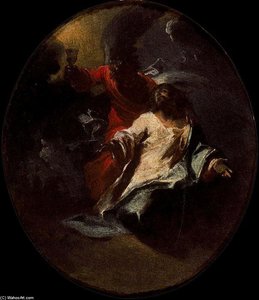
The true brilliance of Bazzani lies in his ability to use technique as a vehicle for emotion. His brushwork is famously loose and spontaneous, often described by historical critics with a polarizing intensity that bordered on the barbaric. Yet, within this perceived roughness lies a sophisticated mastery of movement and atmosphere. In masterpieces such as The Ecstasy of St Therese, he utilizes light not merely to illuminate, but to sanctify, creating a sense of spiritual transcendence that pulls the viewer into the very heart of the miracle. Similarly, in The Agony of Christ in the Garden, his ability to capture sorrowful contemplation through swirling, nebulous forms demonstrates a precursor to the expressive freedom found in much later movements.
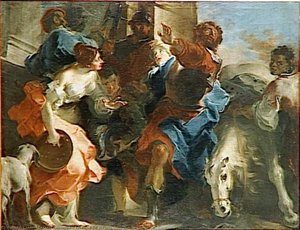
His repertoire was as diverse as his influences, ranging from the dramatic biblical narratives of La Fille de Jephthé—where dynamic movement and rich color palettes command the eye—to more intimate religious scenes. This versatility was supported by his prestigious role within the Mantuan court, where he served as a faculty member and eventually the director of the Accademia di Belle Arti. In this capacity, Bazzani was not merely a painter but a guardian of artistic excellence, shaping the next generation of artists while navigating the complex political and cultural landscape of the ducal court.
Historical Significance and Artistic Foreshadowing
Though often categorized within the Rococo movement, Bazzani’s work possesses an idiosyncratic darkness and a psychological depth that sets him apart from the purely decorative artists of his time. His fascination with the interplay of light and shadow, and his willingness to embrace a more rugged, emotive style, suggest a visionary who was looking far beyond the eighteenth century. There is a palpable tension in his canvases—a struggle between order and chaos, tradition and innovation—that resonates with the turbulent spirit of modern art.
The historical importance of Giuseppe Bazzani extends beyond his immediate contributions to the Mantuan school. He stands as a vital link in the evolution of European painting, embodying a bridge between the heavy drama of the Baroque and the more fluid, expressive tendencies that would eventually find their voice in Expressionism. By refusing to settle for the easy grace of his age, Bazzani created a body of work that remains hauntingly relevant, inviting every generation to witness the profound power of the human spirit captured in paint.
Giuseppe Bazzani
1690 - 1769 , Italy
Quick Facts
- Artistic Movement Or Style: Rococo
- Artists Or Movements Influenced By This Artist: ['Expressionism']
- Artists Who Influenced This Artist:
- Giovanni Canti
- Rubens
- Date Of Birth: 1690
- Full Name: Giuseppe Bazzani
- Nationality: Italian
- Notable Artworks:
- Saint Anthony & Christ
- LA Fille de Jephte
- Place Of Birth: Mantua, Italy
Related Articles

Rococo's Radiant Legacy: 10 Masterpieces for Your Home |
Indulge in the elegance of Rococo! Explore 10 masterpieces by Fragonard, Boucher & Watteau. Discover the stories behind these iconic paintings and bring timeless art to your home with museum-quality reproductions from .

The Subdued Radiance of Pastel: Exploring Nuance & Emotion in Art
Explore the nuanced world of pastel art! Discover its history, techniques & emotional power with expert insights from ArtsDot.com. Find museum-quality reproductions and learn about collecting this delicate medium.

The Rococo Aesthetic: Opulence, Rebellion & the Pursuit of Pleasure in 18th-Century Art
Explore the opulent world of Rococo art! Discover its origins, key artists like Watteau & Boucher, and lasting influence on design. Expert insights for collectors & enthusiasts.

The Subtleties of Pastel: A Comprehensive Exploration of Technique, History & Emotional Resonance
Explore the captivating world of pastel art! Discover its rich history, Impressionistic masters like Degas, emotional power & unique techniques. Find museum-quality reproductions at ArtsDot.

El Greco's Masterpieces: Explore 25 Iconic Paintings & Spiritual Visions | ArtsDot
Journey through El Greco's 25 most iconic paintings! Explore the spiritual depth & dramatic beauty of this Spanish Renaissance master. Discover art history, techniques & find museum-quality reproductions for your home at ArtsDot.com.