

 Preview
 Send
Send Share
Share
 Details

 Download
 Similars
 X-Ray
X-Ray Diaporama
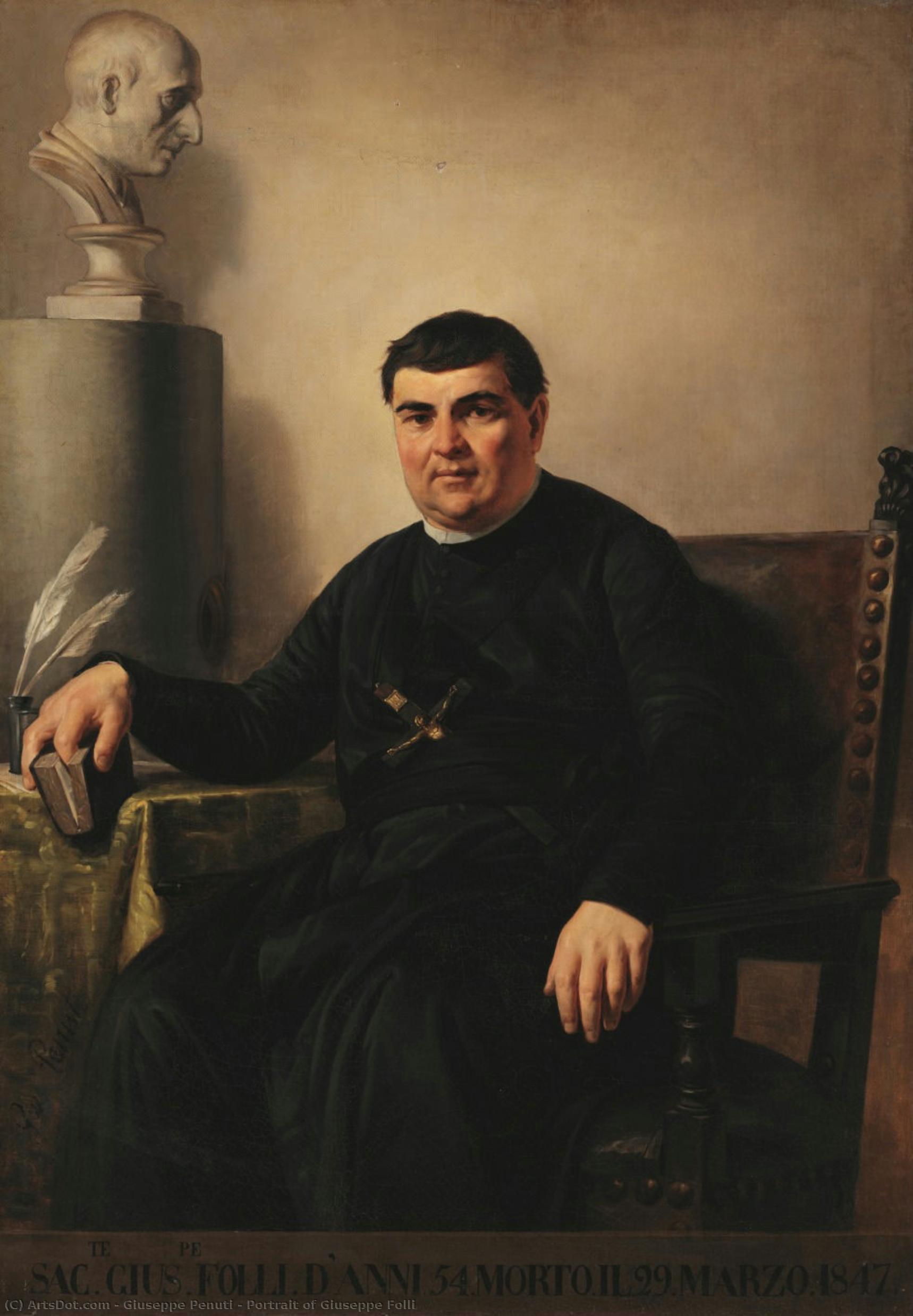
Portrait of Giuseppe Folli
 Academic Realism
 1847
1847 148.0 x 104.0 cm
 Ca’ Granda – Ospedale Maggiore Policlinico
 Read More
Purchase a high-resolution, enhanced digital image, far superior to the online preview.
Each file is meticulously prepared by our in-house specialists using advanced tools and expert manual retouching. We ensure every image has exceptional clarity, precise color accuracy, and fine detail.
The final file is delivered via email within 72 hours, optimized for immediate use in professional, editorial, and print environments. This is the same quality trusted by top-tier design studios, publishers, and galleries.
Digital Image
Download a high-resolution file for personal display, printing, and creative projects. ( Buy Print Buy Hand Made Painting)
Included in Every Digital Image Order
Expert Digital Delivery, Guaranteed
When you choose ArtsDot.com, you're not just getting an image - you're receiving a professionally enhanced digital artwork, crafted with precision and backed by a satisfaction guarantee. Here's everything that comes with your order, automatically:

Fast Email Delivery
Your high-resolution digital image file will be emailed to you within 72 hours of ordering - ready for immediate use.

AI-Enhanced Digital File
Your artwork is professionally optimized using advanced AI tools and manual editing, ensuring maximum detail, clarity, and color accuracy.

Free Lifetime Re-Delivery
Accidentally deleted or lost your file? No worries - we'll resend it to you anytime, free of charge.

No Import Fees - Ever
Enjoy your artwork instantly with zero customs, duties, or delivery fees - digital downloads are always tax-free.

Color Accuracy Guarantee
We ensure your digital image reflects the original colors as closely as possible using professional tools and color management.

60-Day Satisfaction Guarantee
If you're not satisfied with your digital image, we'll revise it or refund 100% within 60 days - no questions asked.

100% Money-Back Guarantee
Not satisfied? Get a full refund within 60 days of receiving your digital file - no questions asked.

Bulk Order Discounts
Buy 3 images, save 10% - Buy 5, save 15% - Buy 10+, save 20%. Great for creative projects, galleries, and agencies.
Related Artworks
Artist Biography
Constant Troyon: Bridging Porcelain and Pastoral
August 28, 1810, marked the birth of Constant Troyon in Sèvres, a town inextricably linked to the exquisite world of porcelain. His early life was far removed from the delicate artistry of the Royal Manufactory, however; he began his career as a decorator, meticulously applying intricate designs to countless pieces of china. This demanding apprenticeship instilled within him an appreciation for detail and precision – qualities that would later profoundly shape his approach to painting. For decades, Troyon’s hands were immersed in the world of miniature ornamentation, a seemingly disparate path that ultimately provided a crucial foundation for his artistic development. It wasn't until he reached twenty-one that he dared to pursue his own vision as an artist, embarking on a journey across France, capturing landscapes with a nascent talent and a growing desire to break free from the constraints of his previous profession.
The turning point in Troyon’s career arrived through the mentorship of Camille Roqueplan, a respected painter and a key figure within the burgeoning Barbizon school. Roqueplan recognized Troyon's potential and introduced him to the circle of artists who were challenging the established Salon system and seeking inspiration from nature itself. This exposure proved transformative, leading Troyon away from purely decorative work and towards a more direct engagement with the world around him. He began to study the techniques of his fellow Barbizon painters – Jules Dupré, Théodore Rousseau, and others – absorbing their emphasis on plein air painting and their commitment to capturing the authentic essence of the French countryside.
The Influence of Dutch Masters
A pivotal moment in Troyon’s artistic evolution occurred during a visit to the Netherlands in 1846. Inspired by the works of Paulus Potter, Aelbert Cuyp, and Rembrandt, he recognized a new path for his art. Potter's celebrated “Young Bull” ignited within him a fascination with animal painting – a subject that would ultimately become his signature style. Cuyp’s luminous landscapes, imbued with a sense of atmospheric depth and light, offered a model for Troyon’s own depictions of the rural world. And Rembrandt’s masterful use of chiaroscuro—the dramatic interplay of light and shadow—provided him with a powerful tool to convey mood and emotion. These encounters weren't merely stylistic influences; they represented a fundamental shift in Troyon’s artistic philosophy, moving away from idealized representations towards a more grounded and observational approach.
Returning to France, Troyon began to translate these Dutch lessons into his own work. He meticulously studied the behavior of livestock – cows, horses, sheep – patiently observing their movements, postures, and expressions. This dedication to realism was coupled with an intuitive understanding of color and light, allowing him to capture not just the physical appearance of animals but also their spirit and vitality. His paintings were no longer simply depictions of creatures; they were imbued with a sense of life and immediacy that captivated viewers.
A Master of Animal Portraiture
Troyon’s fame rests primarily on his extraordinary ability to portray animals with remarkable sensitivity and accuracy. He wasn't interested in merely reproducing their outward appearance; he sought to capture their essence, their personalities, and their relationship to the landscape. His paintings are characterized by a profound understanding of animal behavior – a keen awareness of their movements, gestures, and expressions. He achieved this through countless hours spent observing animals in their natural habitats, patiently studying their habits and nuances.
His subjects ranged from majestic cattle grazing in sun-drenched meadows to humble sheep huddled together against the wind. He rendered each animal with a remarkable level of detail, paying close attention to the texture of their coats, the sheen of their eyes, and the subtle shifts in their posture. Yet, despite this meticulous realism, his paintings never feel stiff or lifeless. Instead, they radiate warmth, vitality, and an undeniable sense of connection between the animals and the surrounding environment. His work became immensely popular in Britain and America, where it was celebrated for its authenticity and emotional resonance.
Legacy and Historical Significance
Constant Troyon’s artistic journey is a testament to the power of observation, dedication, and a willingness to embrace new influences. Initially trained as a porcelain decorator, he ultimately forged a unique path as one of the most celebrated animal painters of his era. His paintings not only captured the beauty of the French countryside but also offered a profound insight into the lives of animals – revealing their intelligence, sensitivity, and inherent dignity.
While often overshadowed by the more flamboyant figures of the Barbizon school, Troyon’s contribution to French art is undeniable. He demonstrated that landscape painting could be both realistic and emotionally evocative, and his masterful depictions of livestock helped to establish a new standard for animal portraiture. His legacy endures today, inspiring artists with his unwavering commitment to observation, his profound understanding of nature, and his ability to capture the essence of life in all its forms. He died in 1865, leaving behind a body of work that continues to captivate viewers with its beauty, authenticity, and enduring charm.
giuseppe penuti
1810 - 1877 , Italy
Quick Facts
- Artistic Movement Or Style: Barbizon School
- Artists Or Movements Influenced By This Artist: ['Barbizon School']
- Artists Who Influenced This Artist:
- Camille Roqueplan
- Paulus Potter
- Aelbert Cuyp
- Rembrandt
- Date Of Birth: August 28, 1810
- Date Of Death: February 21, 1865
- Full Name: Constant Troyon
- Nationality: French
- Notable Artworks:
- Young Bull
- The Raft of the Medusa
- Place Of Birth: Sèvres, France

