 Preview
 Send
Send Share
Share
 Details

 Download
 Similars
 X-Ray
X-Ray Diaporama
 Stats
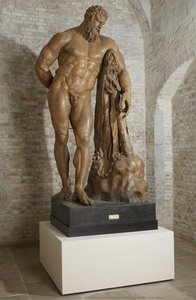
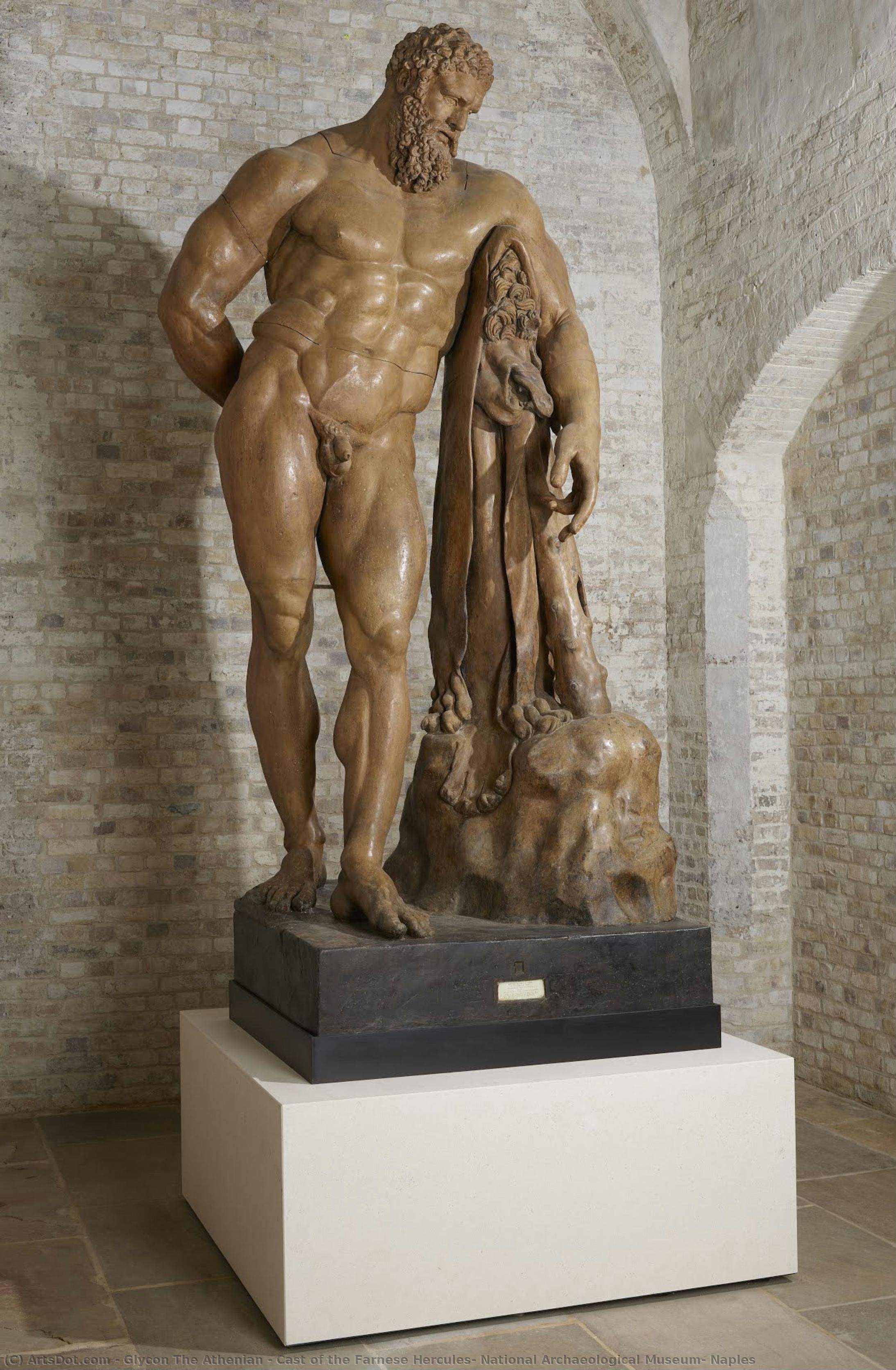
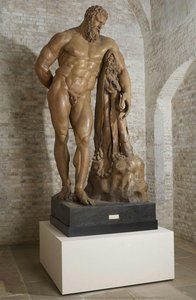
StatsCast of the Farnese Hercules; National Archaeological Museum, Naples


 Read More
Giclée / Art Print
Museum-quality giclée or canvas print with fast production and flexible finish options. ( Buy Hand Made Painting Switch to Digital Image)




































Pick from our preset sizes that match the artwork's original proportions.

You may enter your own dimensions to fit a specific frame or space. If your selected size does not match the original image's proportions, we will either crop the artwork or extend the image with a mirrored or solid-fill edge. A digital mockup will be sent for your approval before production begins.
Please note that the on-screen preview does not reflect the actual cropping or extension. Only the mockup will accurately show the final composition.
While custom sizes are available, we recommend selecting a dimension from the predefined list to preserve the original proportions.
Worldwide Delivery () in 2 weeks instead of standard 4/5 weeks. (8 September)

Free Worldwide Express Shipping

High-Quality Linen Canvas

Full Shipping Insurance

Customs Tax Refund Guarantee

True Color Matching Guarantee

100-Day Return Policy (Defects Only)

100% Money-Back Guarantee

Bulk Discount Offer
 Glass option is only available in size under 110 CM

Cast of the Farnese Hercules; National Archaeological Museum, Naples
Giclée / Art Print
Reproduction Size
-


Total Price
$ 63
Related Artworks
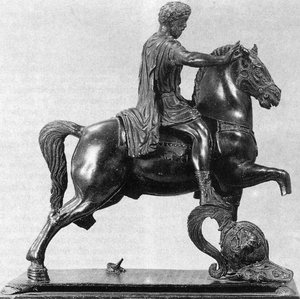
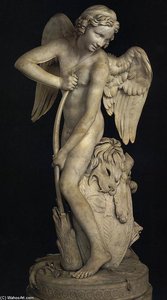
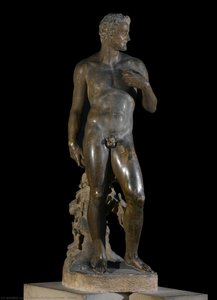
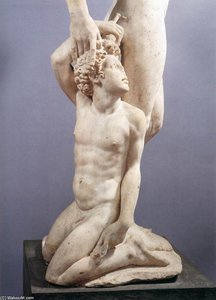
Artist Biography
The Master of Motion: The Legacy of Lysippus
In the golden age of Greek sculpture, few names command as much reverence as Lysippus, a visionary whose hands breathed life into cold bronze and unyielding marble. Emerging from Sicyon around 395 BC, he was the scion of a profound artistic lineage, born to Lysistratus and the grandson of the esteemed sculptor Botheas. While history often whispers his name alongside the legendary Glycon the Athenian—whose signature graces some of the most iconic Roman copies—it is through the revolutionary spirit of Lysippus that we truly understand the transition from the rigid idealism of the Classical period to the breathtaking naturalism of the Late Classical era.
Lysippus was not merely a craftsman; he was an innovator who fundamentally altered how the human form occupied space. Before his emergence, sculpture often felt static, bound by a sense of eternal stillness. However, Lysippus possessed the uncanny ability to capture the anima, or the soul, within his subjects. He is credited as the pioneer who first dared to represent the nude body in motion, breaking away from the stiff postures of his predecessors to embrace a more fluid, rhythmic vitality. His mastery was most evident in his refinement of the contrapposto pose, a technique where weight is distributed unevenly across the limbs, creating a subtle twist in the torso that suggests a figure caught in a fleeting moment of existence.
A Revolution in Form and Technique
The technical prowess of Lysippus extended far beyond simple aesthetics; he was a master of complex medium and method. His repertoire was vast, spanning the delicate intricacies of ivory and precious stones to the monumental challenges of large-scale bronze casting. Legend even suggests he developed a groundbreaking method of casting statues in multiple pieces that were later seamlessly assembled, allowing for greater structural complexity and more daring poses. This technical ingenuity allowed him to achieve a level of naturalism that seemed almost supernatural to his contemporaries.
His influence radiated through the ancient world, shaping the very definition of beauty for centuries. His achievements can be seen in several key areas:
- The Introduction of Dynamic Realism: By mastering the interplay of tension and relaxation in the human musculature, he moved sculpture toward a more lifelike representation.
- Portraiture and Power: He was the preferred sculptor for the most powerful figures of his age, famously capturing the likeness of Alexander the Great, imbuing the conqueror's portraits with a sense of youthful energy and divine destiny.
- Material Versatility: From the ethereal beauty of ivory depictions of Aphrodite to the commanding presence of marble gods like Apollo, his ability to manipulate different textures set a new standard for excellence.
Historical Significance and Eternal Echoes
The impact of Lysippus’s work is perhaps most poignantly felt in the Roman era, where his Greek originals served as the blueprint for an entire movement of imperial art. The famous Farnese Hercules, a monumental marble copy discovered in the Baths of Caracalla, stands as a testament to his enduring legacy. Though the Roman version is an enlarged interpretation, it carries the unmistakable DNA of Lysippus’s original vision—the heavy, weary strength of the hero resting against his club, a composition that speaks of both immense power and profound exhaustion.
As a teacher to luminaries such as Chares of Lindos, Lysippus ensured that his revolutionary techniques would be passed down through generations, cementing his place in the pantheon of great masters. His work bridged the gap between the divine and the human, making the gods feel reachable and the heroes feel mortal. Even today, when we gaze upon the fluid lines and expressive vitality of classical sculpture, we are seeing the world through the eyes of Lysippus, the man who taught stone how to move.
glycon the athenian
Greece
Quick Facts
- Artistic Movement Or Style: World Goes Pop
- Artists Or Movements Influenced By This Artist: ['Influenced by pop art and contemporary social commentary']
- Artists Who Influenced This Artist: ['Influenced by diverse artists within the World Goes Pop movement']
- Date Of Death: Living
- Notable Artworks: ['Various works featured in The World Goes Pop exhibition']
- Place Of Birth: WahooArt
Related Articles

Bronze Sculptures That Defined Art History | ArtsDot
Journey through art history with our Top 10 bronze sculptures! Explore masterpieces by Rodin, Michelangelo & more. Discover stories behind iconic statues and find museum-quality reproductions for your home decor at ArtsDot.com.
Echoes of Antiquity: Exploring Themes & Techniques in Classical Art Masterpieces
Explore the timeless beauty & profound themes of Classical art! Discover Greek & Roman masterpieces, Neoclassical revivals, and the enduring influence on artistic movements. Expert insights & high-quality reproductions at ArtsDot.

The Enduring Form: Exploring Themes & Techniques in Sculpture Across Historical Periods
Explore the rich history of sculpture from ancient masterpieces to contemporary innovations. Discover key techniques, influential artists & investment potential for discerning art collectors.
The Enduring Allure of Marble in Art History: From Classical Sculpture to Modern Abstraction
Explore the captivating history of marble sculpture from ancient Greece to modern art. Discover renowned artists like Canova & Michelangelo, carving techniques, and investment insights at ArtsDot.

Bronze Age to Modern Masters: 10 Sculptures That Redefined Art | ArtsDot
Journey through art history with 10 legendary bronze sculptures – from Michelangelo's David to Rodin’s Thinker. Explore the stories, techniques & timeless beauty of these masterpieces. Find museum-quality reproductions & elevate your home decor on ArtsDot.com.