 Send
Send Share
Share
 Details

 Download
 Similars
 Diaporama
Food Parcel for an Imprisoned Soldier


 Read More
Giclée / Art Print
Museum-quality giclée or canvas print with fast production and flexible finish options. ( Buy Hand Made Painting Buy Image)




































Pick from our preset sizes that match the artwork's original proportions.

You may enter your own dimensions to fit a specific frame or space. If your selected size does not match the original image's proportions, we will either crop the artwork or extend the image with a mirrored or solid-fill edge. A digital mockup will be sent for your approval before production begins.
Please note that the on-screen preview does not reflect the actual cropping or extension. Only the mockup will accurately show the final composition.
While custom sizes are available, we recommend selecting a dimension from the predefined list to preserve the original proportions.
Worldwide Delivery () in 2 weeks instead of standard 4/5 weeks. (18 August)

Free Worldwide Express Shipping

High-Quality Linen Canvas

Full Shipping Insurance

Customs Tax Refund Guarantee

True Color Matching Guarantee

60-Day Return Policy (Defects Only)

100% Money-Back Guarantee

Bulk Discount Offer
 Glass option is only available in size under 110 CM

Food Parcel for an Imprisoned Soldier
Giclée / Art Print
Reproduction Size
-


Total Price
$ 63
Collectible Description
A Poignant Moment Frozen in Bronze
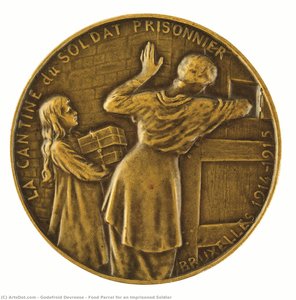
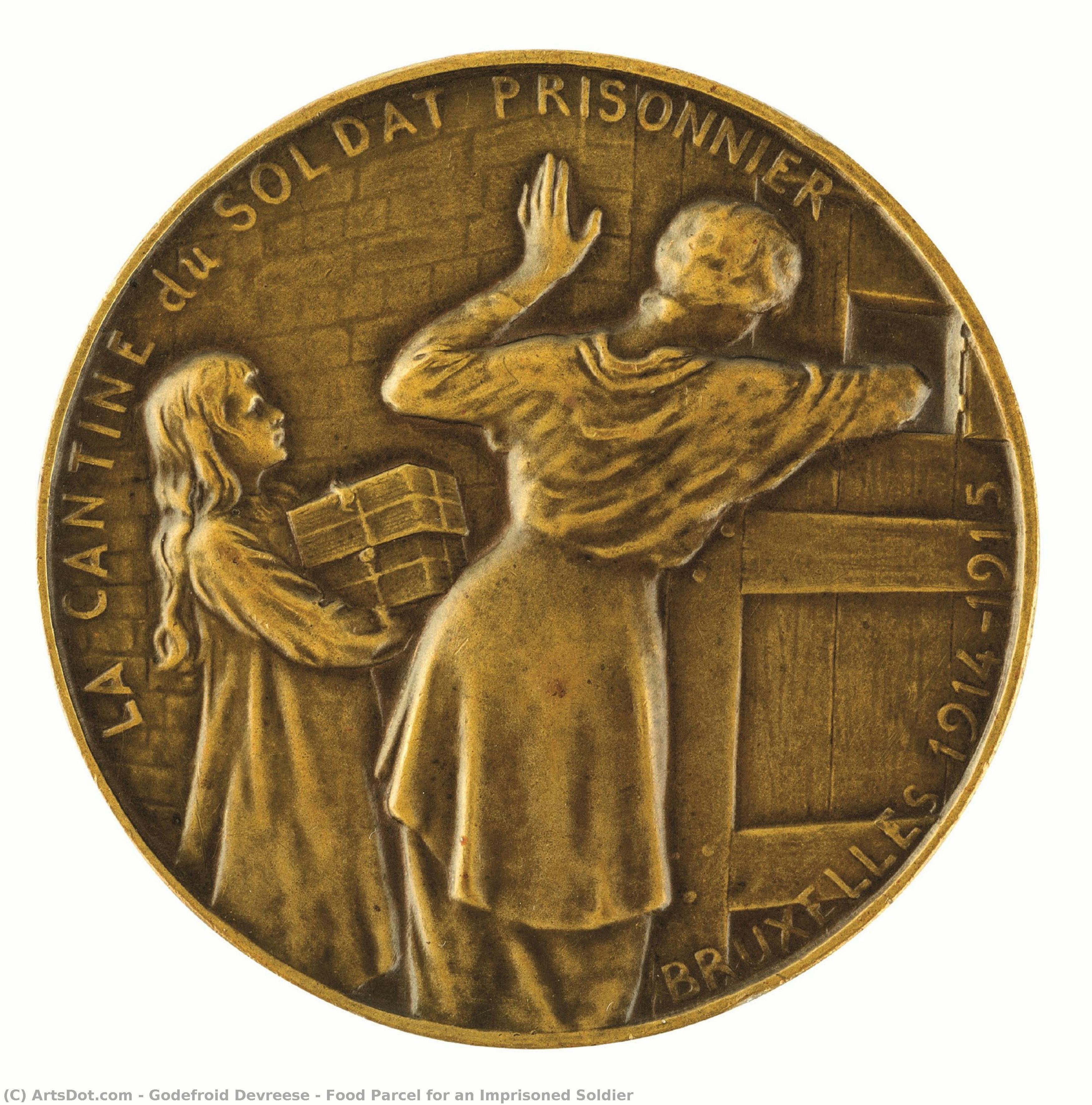
In the evocative sculpture Food Parcel for an Imprisoned Soldier, the Belgian master Godefroid Devreese captures a profound moment of human connection amidst the shadows of conflict. Created in 1915, a year deeply embedded in the turmoil of the First World War, this bronze work transcends mere representation to become a silent testament to compassion. The piece depicts two women standing in close proximity, their figures intertwined with a sense of shared purpose and quiet urgency. One woman holds a crate or box—the titular food parcel—a heavy symbol of sustenance and hope being sent to those held behind enemy lines. As they gaze upward, perhaps toward a distant horizon or a departing messenger, the viewer is drawn into their shared vigil, feeling the weight of the world pressing upon these solitary figures.
Symbolism and the Human Spirit
Beyond its physical beauty, Food Parcel for an Imprisoned Soldier serves as a powerful allegory for resilience. The act of sending food to an imprisoned soldier is not merely a logistical gesture but a profound symbolic bridge between the home front and the battlefield. It represents the refusal to let the bonds of family and humanity be severed by the cruelty of war. Devreese masterfully uses the presence of the background figure and the simple bench to ground this monumental emotion in a recognizable, earthly reality. The composition suggests that even in the most desolate circumstances, the impulse to care for one another remains an unshakeable force.
For collectors and interior designers alike, this piece offers more than just aesthetic value; it provides a focal point of deep emotional resonance. A high-quality reproduction of this work brings a sense of historical gravity and soulful elegance to any space, whether placed in a curated gallery setting or as a centerpiece in a sophisticated study. It invites conversation, prompting observers to reflect on the enduring nature of empathy and the quiet heroism found in everyday acts of kindness. To possess such a piece is to hold a fragment of history that celebrates the triumph of the human spirit over the darkness of its era.
Related Artworks
Artist Biography
A Sculptor Rooted in Compassion: Exploring the Legacy of Godefroid Devreese
Godefroid Devreese (August 1861 – August 31, 1941) stands as a quietly influential figure within Belgian sculpture of the early twentieth century. Born in Courtrai, Belgium, his artistic journey unfolded against the backdrop of significant social and political transformations—a period marked by burgeoning nationalism and anxieties surrounding industrialization—influences that undeniably shaped his oeuvre. While Devreese’s name might not resonate with mainstream art history as loudly as some contemporaries, his sculptures possess a profound emotional resonance and offer valuable insights into the humanist concerns prevalent during his time. His formative years were steeped in the artistic traditions of Flanders, where he honed his skills under the tutelage of prominent sculptors. This grounding in classical aesthetics combined with a burgeoning fascination for Impressionistic techniques—particularly evident in artists like Claude Monet and Pierre Auguste Renoir—established the stylistic bedrock upon which his subsequent creations would rest. He embraced realism as a primary tool, prioritizing meticulous observation and anatomical accuracy to convey emotion and narrative depth. Unlike many sculptors of his era who sought grandeur or heroic narratives, Devreese consistently focused on portraying human vulnerability and empathy.The Mastery of Form and Medal
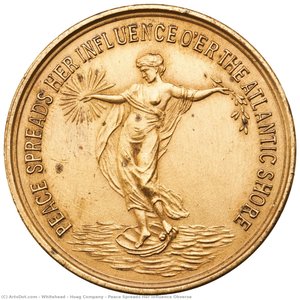
Beyond the larger dimensions of statuary, Devreese was a master of the intimate and the precise. He was an accomplished Belgian medallist, producing over 200 medals that showcased his ability to translate complex narratives into miniature relief. His work in this medium allowed him to explore the delicate interplay of light and shadow on metal, creating commemorative pieces that captured the essence of historical figures and significant events.- Medallic Precision: His repertoire included portrait plaques for notable figures such as Marshall Foch (1920), Herbert Hoover (192 and Woodrow Wilson (1928), demonstrating his ability to capture character through subtle relief.
- Diverse Subjects: While renowned for portraits, his skill extended to low reliefs, statues of animals, and monumental works that breathed life into cold stone and bronze.
- Commemorative Art: His participation in international exhibitions, such as the Brussels International Exposition, highlighted his role in documenting the cultural zeitgeist through numismatic art.
Humanity in Bronze: The Emotional Core
Perhaps Devreese's most enduring contribution to the artistic landscape is his sculpture “Food Parcel for an Imprisoned Soldier,” a poignant depiction of compassion and solidarity during wartime. Executed in 1936, this piece was showcased at the Olympic Art Competition in Berlin—a testament to the universal language of his art. In this work, the artist moves away from the purely decorative or the strictly political, instead focusing on the raw, tender connection between individuals caught in the machinery of conflict. His technique often drew inspiration from the expressive fluidity of Auguste Rodin, yet he maintained a distinctively Belgian sensibility that favored a certain quietude and groundedness. This stylistic blend allowed him to create works that felt both modern in their emotional honesty and classical in their structural integrity. Through his hands, bronze and stone became vessels for humanitarian sentiment, ensuring that even as the world moved toward the turbulence of the mid-twentieth century, the values of empathy and social solidarity remained etched in the permanent record of art history.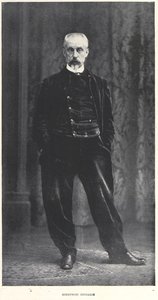
godefroid devreese
1861 - 1941 , Belgium
Quick Facts
- Artistic Movement Or Style: Early 20th Century Sculpt
- Date Of Birth: August 1861
- Date Of Death: August 1941
- Full Name: Godefroid Devreese
- Nationality: Belgian
- Notable Artworks:
- Food Parcel for an Imprisoned Soldier
- Untitled (DD2GA3)
- Place Of Birth: Courtrai, Belgium
Related Articles

Bronze Age to Modern Masters: 10 Sculptures That Redefined Art | ArtsDot
Journey through art history with 10 legendary bronze sculptures – from Michelangelo's David to Rodin’s Thinker. Explore the stories, techniques & timeless beauty of these masterpieces. Find museum-quality reproductions & elevate your home decor on ArtsDot.com.

Bronze Sculptures That Defined Art History | ArtsDot
Journey through art history with our Top 10 bronze sculptures! Explore masterpieces by Rodin, Michelangelo & more. Discover stories behind iconic statues and find museum-quality reproductions for your home decor at ArtsDot.com.

The Enduring Legacy of Bronze: A Historical & Artistic Exploration for the Collector
Explore the rich history & enduring appeal of bronze sculpture with expert insights for collectors at ArtsDot. Learn about casting techniques, iconic artists, collecting tips & contemporary interpretations.
The Enduring Legacy of Bronze: History, Technique & Artistic Expression for the Collector
Explore the rich history & enduring appeal of bronze sculpture with expert insights for collectors at ArtsDot. Learn about casting techniques, iconic artists, and collecting tips.
The Enduring Legacy of Bronze Sculpture: A Collector's Guide to Form & Cultural Significance
Explore the rich history & enduring appeal of bronze sculpture with expert insights for collectors at ArtsDot. Learn about casting techniques, iconic artists, and collecting tips to build a discerning art collection.