 Preview
 Send
Send Share
Share
 Details

 Download
 Similars
 X-Ray
X-Ray Diaporama
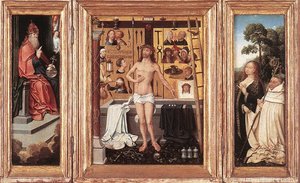
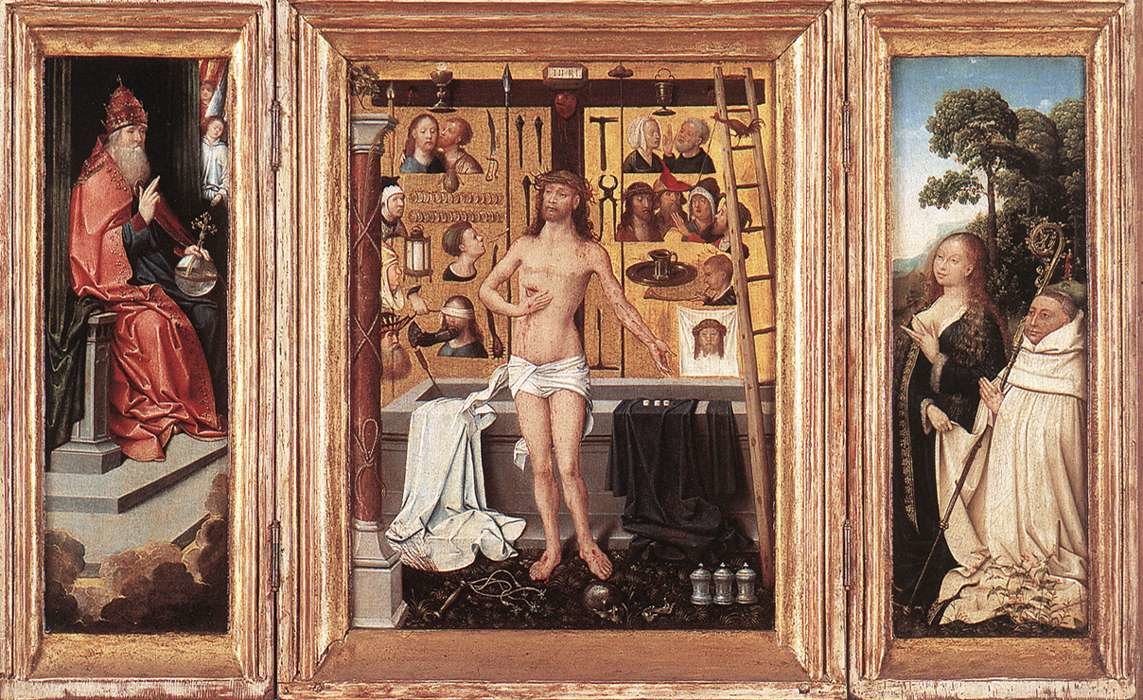
Triptych of Abbot Antonius Tsgrooten
 Read More
Hand Made Oil Reproduction
Hand-painted oil on canvas in your size and frame, made to order by our artists. ( Buy Print Buy Image)




































Pick from our preset sizes that match the artwork's original proportions.

You may enter your own dimensions to fit a specific frame or space. If your selected size does not match the original image's proportions, we will either crop the artwork or extend the painting with additional hand-painted elements. A digital mockup will be sent for your approval before production begins.
Please note that the on-screen preview does not reflect the actual cropping or extension. Only the mockup will accurately show the final composition.
While custom sizes are available, we recommend selecting a dimension from the predefined list to preserve the original proportions.
After order, ArtsDot.com team will email client for instructions and provide a mockup preview
Worldwide Delivery () in 3/4 weeks instead of standard 5 weeks. (20 August). No compromise on quality.

Free Worldwide Express Shipping

High-Quality Linen Canvas

Full Shipping Insurance

Customs Tax Refund Guarantee

True Color Matching Guarantee

60-Day Return Policy (Defects Only)

100% Money-Back Guarantee

Bulk Discount Offer
 Glass option is only available in size under 110 CM

Triptych of Abbot Antonius Tsgrooten
Reproduction Medium
Reproduction Size
-


Total Price
$ 263
Related Artworks

Artist Biography
Goossen van der Weyden: A Flemish Renaissance Master
Goossen van der Weyden (c. 1455 – 1543), grandson of the celebrated Rogier van der Weyden, stands as a pivotal figure in the artistic landscape of the Burgundian Netherlands during its golden age. While overshadowed by his father and grandfather’s fame, Goossen nonetheless carved out a distinguished career as an altar painter and sculptor, contributing significantly to the stylistic evolution of Flemish art and cementing his legacy as one of the foremost practitioners of Antwerp Mannerism.Early Life and Artistic Training
Information regarding Goossen's formative years remains scarce, reflecting the typical limitations of archival records during the Renaissance period. However, scholarly consensus suggests he was born in Antwerp around 1455, inheriting a family tradition steeped in artistic excellence. Rogier van der Weyden’s workshop served as his initial training ground, immersing him in the techniques and aesthetic principles that would define his distinctive style. This apprenticeship instilled within him a profound understanding of perspective, drapery folds, and anatomical accuracy – elements crucial to capturing the emotional depth and realism characteristic of Flemish painting at the time.The Antwerp Mannerist Style: Innovation Amidst Tradition
Goossen’s artistic output firmly establishes him as a champion of Antwerp Mannerism, a stylistic movement that emerged in the early 16th century and reacted against the idealized beauty of Early Renaissance art. Unlike his predecessors who favored harmonious compositions and serene depictions, Goossen embraced expressive distortions—particularly in drapery folds—to convey psychological tension and emotional intensity. This deliberate departure from convention was fueled by influences from Italian Mannerism, notably Michelangelo Buonarroti’s sculptural innovations and Raphael’s masterful use of illusionistic perspective. However, Goossen skillfully blended these foreign ideas with Flemish artistic traditions, resulting in a uniquely compelling visual language.Notable Works: Altarpieces and Sculptural Commissions
Goossen's reputation rests primarily on his monumental altarpiece commissions—particularly the magnificent ‘The Gift of Kalmthout’ for St. John Baptist Church in Antwerp. This ambitious undertaking showcases Goossen’s mastery of spatial illusionism, creating a breathtaking panorama that transports viewers into the biblical narrative. The intricate drapery folds and subtly rendered musculature demonstrate his meticulous attention to detail and underscore his commitment to anatomical realism—a hallmark of Flemish art during Mannerist fervor. Beyond painting, Goossen undertook sculptural commissions for various churches and aristocratic patrons, producing evocative figures imbued with expressive dynamism and conveying profound spiritual contemplation. His sculptures exemplify the same stylistic principles that underpinned his paintings, solidifying his position as a versatile artist adept at manipulating form and texture to communicate emotion.Legacy and Historical Significance
Goossen van der Weyden’s contribution to Flemish art transcends mere stylistic innovation; he embodies the spirit of intellectual curiosity and artistic experimentation that characterized the Renaissance. His work served as an inspiration for subsequent generations of artists, shaping the trajectory of Antwerp Mannerism and influencing the broader artistic discourse of Europe. Although his output is comparatively modest compared to his father's prolific oeuvre, Goossen’s unwavering dedication to craftmanship and his masterful execution of complex visual concepts ensured that he would be remembered as a significant voice within the artistic panorama of his era—a testament to the enduring power of individual talent amidst the grandeur of collective achievement.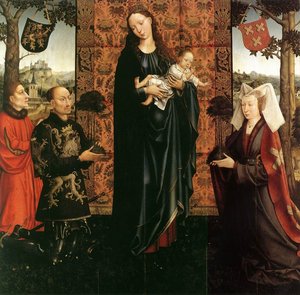
goossen van der weyden
1455 - 1543
Quick Facts
- Artistic Movement Or Style: Flemish Renaissance
- Artists Or Movements Influenced By This Artist: ['Brussels & Antwerp styles']
- Artists Who Influenced This Artist: ['Rogier van der Weyden']
- Date Of Death: 1543
- Full Name: Goossen van der Weyden
- Nationality: Flemish
- Notable Artworks:
- The Gift of Kalmthout
- Triptych Antonius Tsgroot
- Place Of Birth: Brussels, Belgium